The most useful part of this Paris experience is its focus on the details that guide a meal from the first place setting to the final course. You’ll learn why French table manners exist, how they changed over time, and how to host or attend a dinner with confidence.
I like the small maximum of four people, which gives you room to ask questions. I also like the practical angle: the class can help you shop for tableware in Paris without making costly mistakes. The main drawback is its narrow focus. If you want sightseeing, food tasting, or a meal, this is not that kind of activity.
In This Review
- Key points
- What You Actually Learn in 90 Minutes
- Why the Four-Person Limit Matters
- French Place Settings, Explained Clearly
- From Old Rules to Modern Dining
- A Paris Evening at 26 Rue Spontini
- What the Price Means at $82.80
- Who Will Get the Most From This Class?
- Tatiana’s Teaching Style
- Booking Details That Matter
- Should You Book Table Manners a la française?
- FAQ
- How long does Table Manners a la française last?
- What time does the experience start?
- Where does the class begin?
- Where does the activity end?
- How many people can join?
- Is free cancellation available?
Key points
- A 90-minute lesson at 7 pm: A compact evening activity that fits neatly into a Paris schedule.
- A maximum of four participants: The small group leaves space for personal questions and patient explanations.
- French place-setting details: Learn where to put utensils, glasses, and napkins.
- Useful before shopping: The class may help you choose French tableware with more confidence.
- Historical and practical instruction: You’ll study both the reasons behind the rules and how to use them.
- Hosted by Tatiana in English: Her teaching combines formal presentation with personal experience.
What You Actually Learn in 90 Minutes

This is a lesson about the social language of the French table. It looks at rules people often notice but rarely understand: where each utensil belongs, how glasses are arranged, where the napkin goes, and what a proper place setting communicates.
That makes the class more useful than a quick list of do’s and don’ts. You are not simply memorizing a set of positions. You are learning the logic behind them, along with the customs of hosting and attending a formal dinner.
Tatiana covers table manners from beginning to end. The class is designed to help you feel comfortable at a dinner party, not just survive a restaurant meal. That distinction matters. Restaurant etiquette and home entertaining overlap, but hosting involves extra choices and responsibilities.
You can expect the teaching to include both historical background and practical instruction. The historical part explains how French dining customs developed and changed. The practical side brings those customs into the present, where old rules may be adapted rather than followed rigidly.
The class also gives you a chance to ask about small points that guidebooks usually skip. One participant had questions about both major table-setting choices and tiny finishing details. That is exactly the sort of setting where a private or small-group lesson earns its place.
You can also read our reviews of more tours and experiences in Paris.



Why the Four-Person Limit Matters
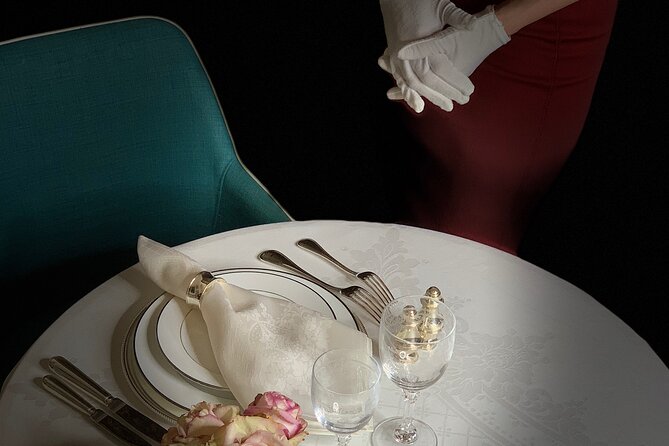
A group of four changes the feel of the class. You are not sitting in a large lecture with limited time for questions. Instead, the format gives you a better chance to stop Tatiana and ask about a point that applies to your own home, a formal dinner, or an upcoming shopping trip.
That is especially helpful because table manners can be full of small distinctions. You may understand the basic placement of a fork, yet still wonder about a glass, a napkin, or the overall balance of a setting. In a larger group, those questions can be rushed. Here, the format is built for them.
The small size also suits different levels of experience. You might already know a few European dining customs and want to refine them. Or you may be starting from scratch and need a calm explanation of the basics.
Tatiana’s teaching style is described as relaxed, patient, and professional. Those qualities matter in a subject that can easily feel stiff or intimidating. You should be able to ask direct questions without worrying that they are too basic.
The limit of four is also worth noting when you are booking with friends or family. A party larger than four may not fit into one session. The supplied information does not say if larger groups can be arranged separately, so you should not assume that they can.
French Place Settings, Explained Clearly
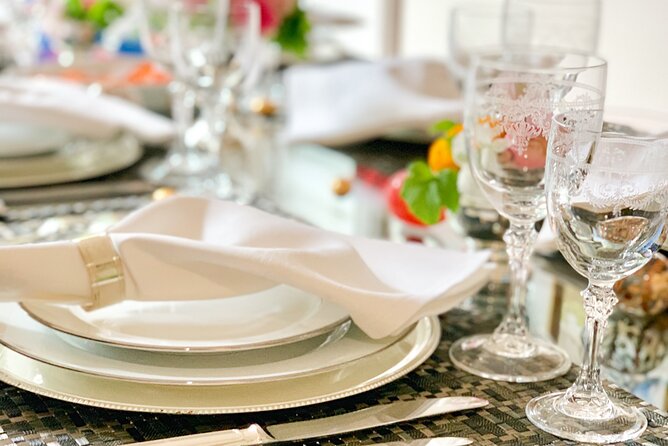
The most concrete part of the lesson concerns the place setting. You learn how French table arrangements work and how to position the main pieces correctly.
That includes:
- Utensils
- Drinking glasses
- The napkin
- The wider arrangement of a French place setting
These are not decorative details alone. A well-planned place setting helps a host organize a meal and gives the diner quiet clues about how the meal will proceed. Once you understand the arrangement, a formal table becomes easier to read.
The class can also be useful if you plan to buy tableware in Paris. French shops offer plenty of attractive choices, and it is easy to buy something beautiful that does not work well with the setting you want. Learning the basics first may help you avoid expensive errors in the size, style, or arrangement of pieces.
I particularly like this shopping benefit because it connects the class to the rest of your trip. You are not only collecting an interesting cultural lesson. You may also leave with a better eye for table linens, cutlery, glasses, and related pieces.
Still, keep your expectations sensible. The information confirms that the class teaches proper French place settings and related details, but it does not promise a shopping tour or assistance inside specific stores. If shopping is your main reason for booking, treat the class as preparation rather than a guided retail outing.
From Old Rules to Modern Dining
French table manners did not appear all at once. They developed over time, and the class explains how they have changed. That historical angle gives you a better sense of which customs are firm, which are flexible, and why some details still matter.
I find this useful because rules without context can feel arbitrary. When you understand the social purpose behind a custom, it is easier to remember and use. You also gain a more realistic view of etiquette as something that evolves with daily life.
The class does not appear to be a museum-style history talk. Its purpose is practical. Historical material supports the main goal, which is to help you behave with confidence at a French dinner party.
You may also find that this perspective helps you compare French customs with those from your own culture. The lesson is about French manners, but it can sharpen your awareness of how dining traditions differ from one country to another.
Because the format lasts only about an hour and a half, the presentation must stay focused. You should expect a compact overview, not a full academic study of European dining. That is a strength for most people visiting Paris, but a limitation for anyone seeking a long specialist course.
A Paris Evening at 26 Rue Spontini
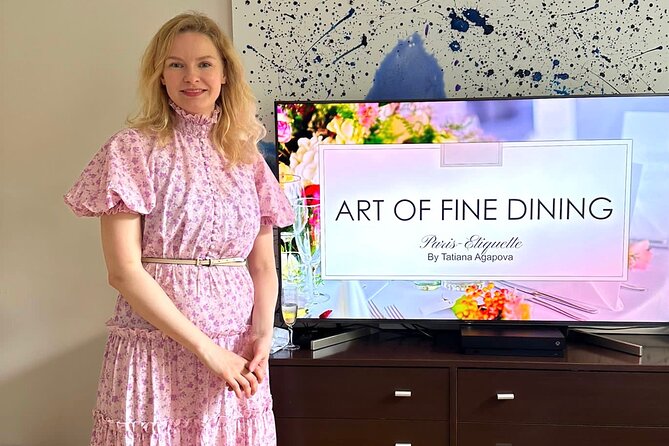
The class begins at 7 pm at 26 Rue Spontini, 75016 Paris. It ends at the same meeting point, so you do not need to plan for a separate finish location.
The address is in Paris’s 16th arrondissement. The activity information says it is near public transportation, which makes it easier to reach without arranging a private vehicle. You should still allow enough time to find the building and arrive before the scheduled start.
The evening timing is practical. You can spend the day sightseeing and use this as a focused cultural activity later on. The catch is that the class may compete with dinner plans. Since the session ends back at its starting point after roughly 90 minutes, you will need to plan your evening meal around it rather than expect the class itself to provide one.
This is also a useful choice for a repeat visit to Paris. First-time visitors often fill their evenings with major monuments and popular dining spots. A short lesson in a residential part of the city offers a different way to connect with local customs.
The information does not specify a view, meal, tasting, or walking route. Do not book this expecting a sightseeing stop in the usual sense. You are going to a class, and the value comes from the instruction.





What the Price Means at $82.80
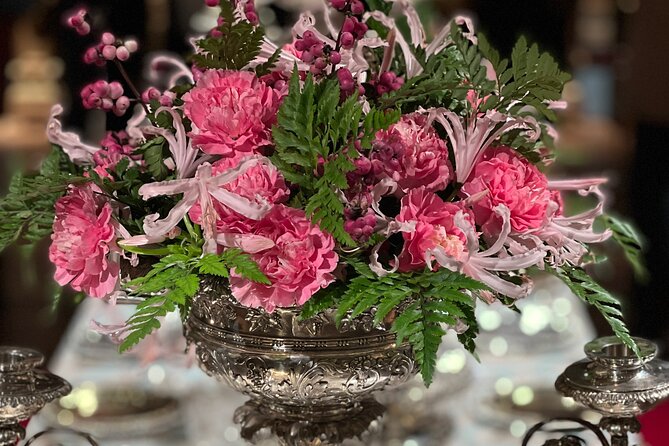
At $82.80 per person, this is not a low-cost add-on. For 90 minutes, the listed price works out to about $55.20 per hour. That is a meaningful amount for a short activity, especially if you are comparing it with a museum visit or a casual food experience.
The small group helps explain the value. A maximum of four people creates a more personal setting than a large public lecture. You are paying for focused instruction, time for questions, and a subject that can be hard to learn from a standard guidebook.
The price makes the most sense for you if you care about hosting, formal dining, French design, or tableware shopping. It is also a better fit if you plan to use the advice beyond this one trip. Someone preparing for dinner parties at home could get more lasting value than someone looking only for a quick Paris memory.
For a visitor who simply wants to eat French food, the cost may feel high. This activity does not include a meal according to the information provided. It gives you skills and cultural context instead.
I would compare it with the price of a private lesson rather than with a sightseeing ticket. The four-person limit and the chance to ask detailed questions make that the fairer comparison. The decision comes down to how much you value personal instruction in this particular subject.
Who Will Get the Most From This Class?
This class suits you best if you fit one or more of these descriptions:
- You enjoy French culture beyond monuments and museums.
- You want to host more polished dinner parties at home.
- You are planning to buy tableware in Paris.
- You feel uncertain about formal place settings.
- You like asking detailed questions in a small group.
- You want an English-language activity that takes less than two hours.
It may also suit couples, friends, or family members who want a shared cultural activity without committing to a full-day tour. Since most people can participate and service animals are allowed, the activity has broad practical appeal.
It is less suitable if you want movement, food, or entertainment built into the experience. The subject is specific, and the format is instructional. That narrow focus is either the reason to book or the reason to pass.
The recorded rating is 5.0 from five ratings, with praise centered on the educational content, small-group setting, relaxed presentation, and Tatiana’s patience. Those are the qualities I would weigh most heavily. They tell you more about the likely experience than the promise of learning manners alone.
Tatiana’s Teaching Style
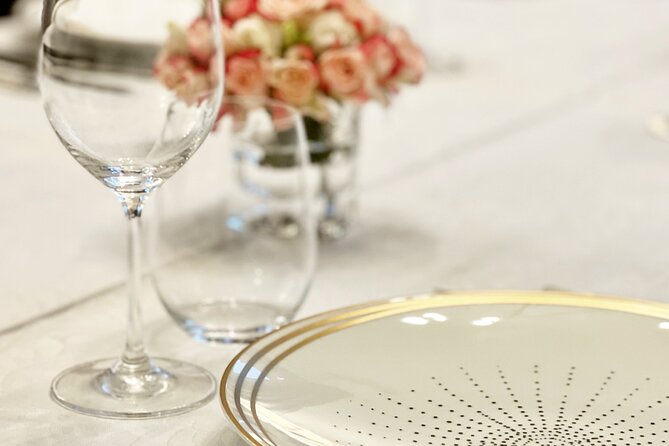
Tatiana is the named host and teacher. Her role is central because the class depends on explanation rather than a large set of attractions.
You can expect a professional presentation in English, but not a cold or rigid one. The teaching is described as friendly, understandable, and patient. That combination is important for etiquette, where an overly formal tone can make people afraid to ask questions.
Tatiana also brings lived experience to the subject. That suggests the class is not limited to abstract rules. You should expect examples connected to actual hosting and dining situations, although the available information does not list specific sample menus or demonstrations.
The small group makes her teaching style more useful. If you have a question about a particular utensil, glass, napkin, or hosting choice, you have a reasonable chance to ask it directly.
I would arrive with questions ready. Think about the parts of formal dining that make you hesitate. You might ask about setting a table for a dinner party, buying pieces in Paris, or understanding the order and purpose of items in a French place setting.
Booking Details That Matter
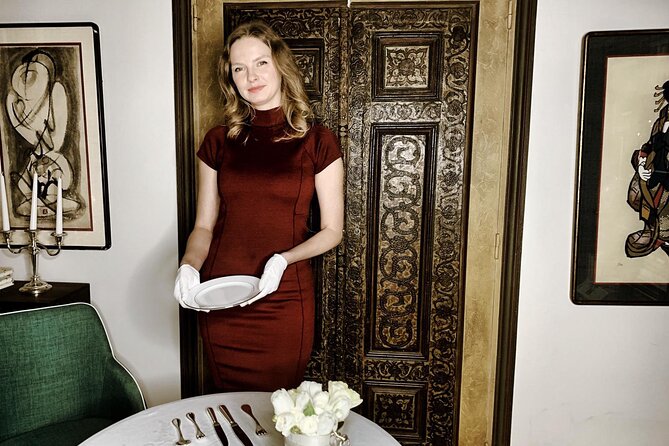
Confirmation is provided when you book. The ticket is mobile, and the experience is offered in English.
The meeting point is fixed at 26 Rue Spontini, and the activity returns there at the end. The scheduled start is 7 pm, with an approximate duration of one hour and 30 minutes.
Most people can participate, and service animals are allowed. The activity is near public transportation, though no specific transit route is supplied. Check your route before leaving and allow time to locate the address.
Free cancellation is available if you cancel at least 24 hours before the local start time. If you cancel less than 24 hours ahead, you will not receive a refund, and changes made inside that window are not accepted.
Should You Book Table Manners a la française?
Book this class if you want a focused lesson in French dining culture and will put the information to use. The strongest reasons are the four-person limit, the chance to ask detailed questions, and the practical guidance on place settings and tableware shopping.
I would especially recommend it before buying French dishes, glasses, linens, or cutlery. Learning first could save you from choosing pieces that look right in a shop but do not suit the table you want to create.
Skip it if you are seeking a meal, tasting, walking tour, or landmark visit. At $82.80, the price is easiest to justify when you value personal instruction and plan to carry the skills home.
For the right person, this is a useful Paris evening: short, specific, and tied to everyday culture. It gives you something more lasting than another photograph, provided French dining customs genuinely interest you.
FAQ
How long does Table Manners a la française last?
The class lasts approximately one hour and 30 minutes.
What time does the experience start?
The scheduled start time is 7 pm.
Where does the class begin?
It begins at 26 Rue Spontini, 75016 Paris, France.
Where does the activity end?
The activity ends back at the meeting point.
How many people can join?
The experience has a maximum of four participants.
Is free cancellation available?
Yes. You can cancel for a full refund up to 24 hours before the local start time. Cancellations or changes made less than 24 hours before the start are not accepted for a refund.