REVIEW · BORDEAUX
Private Bordeaux History Tour with a glass of Bordeaux wine.
Book on Viator →Operated by Bordeaux Free Walking Tours · Bookable on Viator
Bordeaux has a way of making history feel walkable. This private walking tour gives you a focused, personal route through major sights, plus an included glass of Bordeaux wine at the end. I especially like how it hits the city’s big landmarks without turning into a chaotic crowd shuffle.
The only real drawback to plan for is this is mostly an outdoor walk, and entrance into monuments isn’t included, so don’t count on getting inside every stop.
In This Review
- Key things that make this tour worth your time
- Getting your bearings with a private 2-hour walk
- Saint-André Cathedral and Tour Pey-Berland: where the story starts
- Rue Saint-Catherine, Rue du Loup, and the English thread in Bordeaux
- Place du Palais: design choices you can actually see
- Porte Cailhau: a gateway built for power and prosperity
- Place de la Bourse and the Miroir d’Eau: city wealth made visible
- Grand Théâtre de Bordeaux: neoclassical drama you can walk around
- Place Gambetta and Passage Sarget: gates, gardens, and Belle Époque shopping
- Church of Notre-Dame at Place du Chapelet and Allees de Tourny’s planning power
- Monument aux Girondins and ending at Place des Quinconces
- Price and value: what $90.36 per person really buys you
- Who should book this Bordeaux history walk
- Should you book this Bordeaux History Tour with a wine glass?
- FAQ
- How long is the Bordeaux history tour?
- Is this a private tour?
- What’s included in the price?
- Is entrance to monuments included?
- What language is the guide?
- Where do you start and end the tour?
- Do I get a mobile ticket?
- Is there a glass of wine during the tour?
- Can I cancel for a full refund?
- Are service animals allowed?
Key things that make this tour worth your time

- Private pace: only your group, so you can ask questions and linger when something catches your eye
- UNESCO start at the cathedral: Saint-André sets the tone fast, and it’s free to view
- A smart mix of streets and squares: you connect architecture to the way Bordeaux actually grew
- Gateway stories in stone: Porte Cailhau explains why Bordeaux mattered to kings and trade
- Wine included at the end: you finish with a local pour instead of rushing off
- Guides who tailor explanations: recent tours praised guides like Victor and Emma for making connections clear
Getting your bearings with a private 2-hour walk
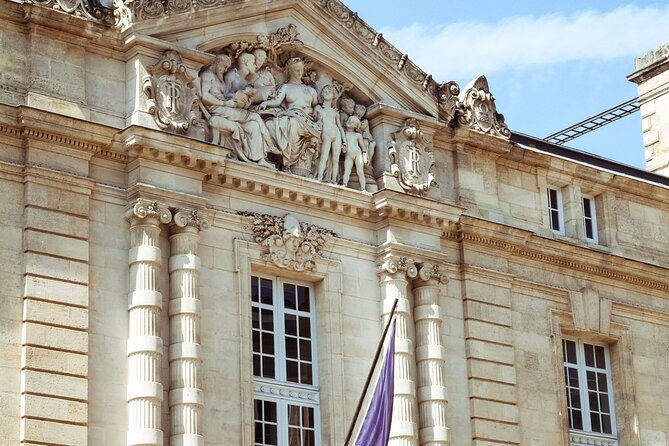
This tour is designed to get you oriented fast. You start at Bordeaux Cathedral (Cathédrale Saint-André) and end at Place des Quinconces, with a route that’s easy to follow on foot and built around the city’s most recognizable historic sites.
Because it’s private, you’re not competing for space in front of statues or doing the classic headcount drift. You can also adjust the vibe a bit—ask for more detail if you’re into architecture, or keep it moving if you want the highlights and a quick wrap-up. The whole experience runs about 2 hours, which is long enough to connect the dots, but short enough that you won’t feel like you’ve been stuck on a guided leash all day.
One more practical note: the tour is in English, and you’ll use a mobile ticket. If you like knowing exactly where you’re going, this format helps—especially in a city where the best walking routes often don’t match the fastest car routes.
You can also read our reviews of more private tours in Bordeaux


Saint-André Cathedral and Tour Pey-Berland: where the story starts

The walk kicks off at Cathédrale Saint-André de Bordeaux, a UNESCO World Heritage site and one of the clearest “anchor points” in the city. Expect Gothic drama: a strong façade with intricate carvings, and a soaring sense of space once you’re in the cathedral’s orbit.
This stop isn’t just about admiring the stone. Your guide frames the cathedral as a living witness to Bordeaux’s big historical moments—like royal weddings. In particular, it’s tied to the union of Eleanor of Aquitaine and King Louis VII, a detail that gives you a “why this place mattered” feeling right away.
From there, you move into the Tour Pey-Berland area. Even if you don’t focus on climbing or strict architectural measurement, you’ll get the big picture: Bordeaux’s religious and civic identities grew together, and the cathedral district reflects that close relationship.
What I like here is that you’re learning while you’re still fresh. You’re not trying to remember half the city before your first real explanation hits.
Rue Saint-Catherine, Rue du Loup, and the English thread in Bordeaux
Next comes the area around Rue Saint-Catherine, including the Tour Pey-Berland / Rue Sainte-Catherine stretch and a quick stop for Rue du Loup. Rue Saint-Catherine is a big deal because it’s the longest pedestrian street in Europe (and you’ll feel it). You also get the time-layer effect: it’s been a main route since Roman times, then later transformed into a modern shopping street. That blend is exactly how you should experience central Bordeaux—history running under your feet, not behind glass.
At Rue du Loup, the guide shifts to the Middle Ages and focuses on how Bordeaux became connected with England. This is a helpful angle because it breaks the usual “France-only” museum vibe. The guide turns a street name into a story about power and influence—who controlled what, and how that shaped what you can still see today.
And yes, you’ll walk more than you “stand and stare” here. That’s the point. Streets like this are where Bordeaux’s layers show up in daily life: commerce, movement, and architecture sharing the same narrow space.
A small consideration: if you’re expecting long monument viewing time or museum-style interiors, you’ll need to recalibrate. This section is built for understanding the city’s skeleton, not for collecting stamps.
Place du Palais: design choices you can actually see
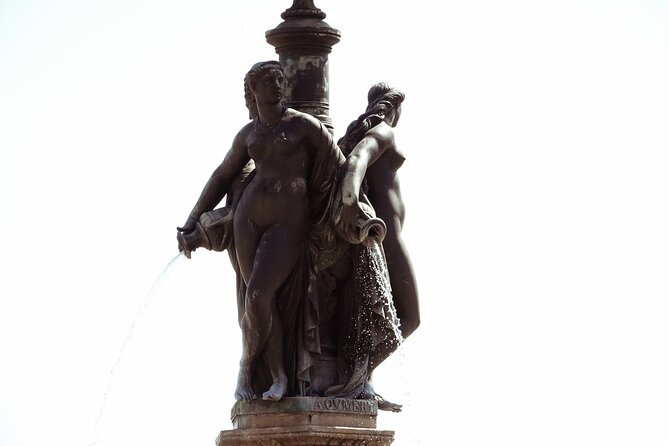
At Place du Palais, you get a focused look at how the square was designed and why. Even if you’ve never studied urban planning, you’ll probably notice things like alignment, how buildings frame sightlines, and how public space was meant to function.
This stop works well mid-tour because it slows you down just enough to notice structure. It’s easy to breeze past a square on your own. With a guide, the place becomes part of the “reasoning process” behind the city’s layout.
Porte Cailhau: a gateway built for power and prosperity
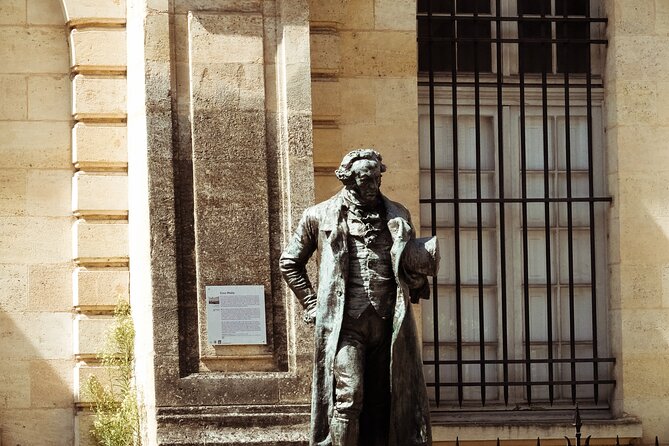
Then you hit Porte Cailhau, one of the most photogenic moments of the whole route. This 15th-century gateway was built to honor King Charles VIII’s victory at Fornovo, and it once served as the main entrance to the city.
What makes Porte Cailhau special on this tour is the mix of style and function. You’ll see how the gateway blends Gothic and Renaissance elements, then you’ll get the strategic angle—why a defensive entry point could also act like a propaganda billboard for prosperity. The guide makes it feel like architecture wasn’t only art; it was messaging.
There’s also a practical advantage here: Porte Cailhau is a great “orientation marker.” Once you’ve seen it with explanation, you’ll likely feel more confident navigating nearby streets afterward.
You can also read our reviews of more historical tours in Bordeaux




Place de la Bourse and the Miroir d’Eau: city wealth made visible
At Place de la Bourse, you’re in the historical heart where Bordeaux’s prominence as a trading port becomes more than a vague fact. The highlight here is Place de la Bourse and the Miroir d’Eau, the water feature that has you noticing reflections and scale.
This is one of those stops where your brain starts behaving like a local. You see the square as a stage set for wealth, shipping, finance, and civic pride. You’re also learning to read the space, not just photograph it.
Your guide keeps it moving, which I like, because you’re seeing a mix of monumental views without spending so long in one place that the rest of the route gets rushed later.
Grand Théâtre de Bordeaux: neoclassical drama you can walk around
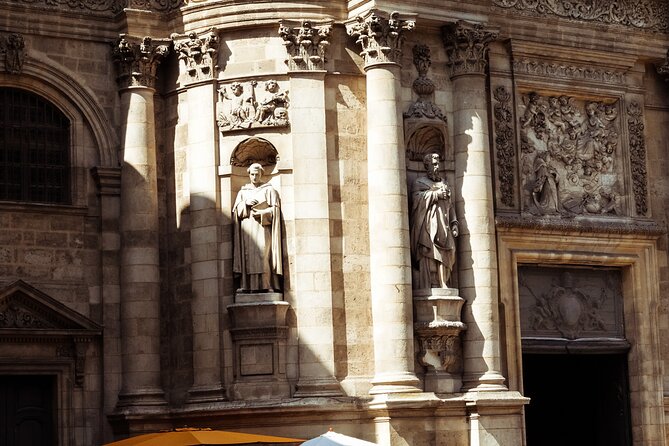
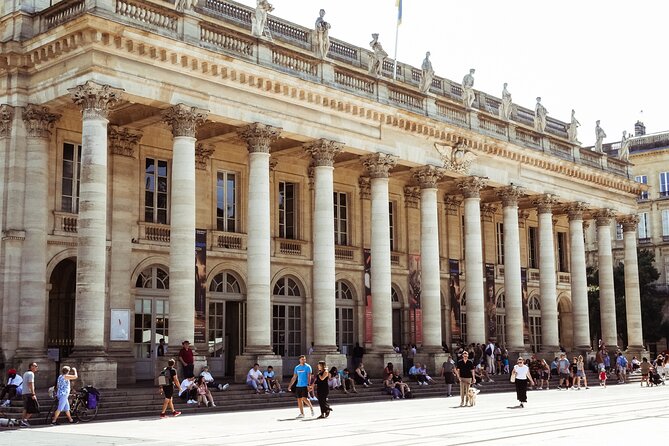
A short hop later is the Grand Théâtre de Bordeaux, built in 1780 and designed by architect Victor Louis. This stop is a highlight for anyone who likes theatre buildings, because you get both the exterior statement and hints of what’s inside.
Outside, you’ll focus on the majestic colonnaded façade and the statuary of the nine muses and goddesses. Inside, the guide describes the opulence—grand staircase, and that famous chandelier vibe. Even if you don’t go in, the explanation helps you understand why this building matters to Bordeaux’s cultural identity.
I also think this stop is a good “energy check.” After walking through churches, gates, and squares, a large civic cultural landmark refreshes the feel of the tour and helps you stay engaged.
Place Gambetta and Passage Sarget: gates, gardens, and Belle Époque shopping
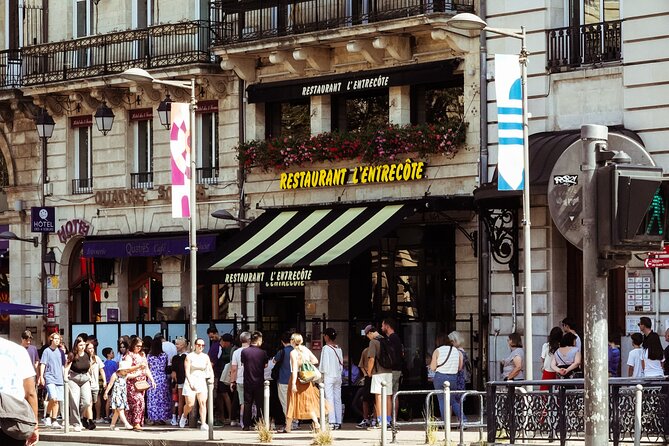
At Place Gambetta, the tour gives you a quick history lesson that changes how you see the square. You learn it was once the city’s western gate, later becoming part of an 18th-century urban transformation. There’s also a connection to political events—its role during the French Revolution is highlighted, and the gardens provide a calm contrast to that past.
Then you move through Passage Sarget, a late 19th-century covered passage named after banker and philanthropist Jean-Alexandre Sarget. It’s inspired by Parisian arcades, and you’ll notice details like the glass roofing and intricate ironwork. The guide also explains the social side: it used to be a hub for luxury boutiques and intellectual gatherings, and today it still functions as a walkway with shops and cafés.
This is one of the best “micro” stops on the route. It’s compact, but it shows how Bordeaux liked to modernize without abandoning its character. And because it’s covered, it’s a smart place to pass through if weather turns on you.
Church of Notre-Dame at Place du Chapelet and Allees de Tourny’s planning power
Next up is Place du Chapelet, anchored by the Church of Notre-Dame. The church dates to the 17th century and is known for its impressive organ, with performances that can still bring the space to life.
This stop adds an art-and-memory layer too: the church is noted as the site of a famous painter’s funeral in the 19th century. Even without going inside, the guide helps you connect the building to people, not just dates.
After that comes Allées de Tourny, a tree-lined avenue tied to a key figure behind Bordeaux’s transformation. The guide highlights that his influence didn’t stop in Bordeaux—his ideas also shaped urban development in Paris. That’s a useful detail because it positions Bordeaux as part of a bigger French urban story, not a city stuck in its own lane.
If you’re someone who likes to understand why cities look the way they do, this stop pays off. You’ll start noticing planning choices rather than just architecture.
Monument aux Girondins and ending at Place des Quinconces
The tour finishes at Place des Quinconces with Monument aux Girondins, a dramatic memorial to the Girondin deputies who perished during the French Revolution. Expect powerful symbolism—sculptures representing liberty, triumph of the Republic, and Bordeaux’s maritime heritage.
This last stop is effective because it gives meaning to the scale of the square. It’s not just “a big monument in a big plaza.” Your guide ties the art and the story to civic pride and the city’s identity as a port.
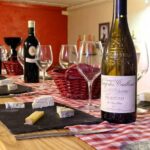
Then, after the walk, you get the part that makes this tour feel like a real local outing: a glass of Bordeaux wine at a partner bar. This is a smart pairing with the history route. You’re not wine-buzzed at the start; you finish with it—meaning your brain has already made connections about the city. The wine becomes a simple reward, not a distraction.
Price and value: what $90.36 per person really buys you
At $90.36 per person for about 2 hours, the value is mostly about three things:
- You’re paying for a private guide and a route that’s efficient. You hit landmark after landmark without needing to figure out the connections yourself.
- You get structured context at each stop—so the buildings feel like more than backdrops for photos.
- You get a wine glass included, which adds a real “end of tour” payoff.
Also, the tour is booked about 40 days in advance on average, which usually signals steady demand. Popular doesn’t automatically mean worth it, but in this case it lines up with the high satisfaction score (5/5 and 100% recommended in the summary).
One more note: entrance into monuments isn’t included. That doesn’t make the tour bad—it just means your experience is built around learning and viewing from outside or in public areas. If you specifically want lots of interior tickets, you’ll need to plan separate visits.
Who should book this Bordeaux history walk
I think this is a great fit if you:
- want a fast, guided orientation to Bordeaux’s historic core
- like history that connects to what you can see on the street
- prefer private pacing over squeezing into a large group
- appreciate finishing with a practical local moment—here, a wine glass
It may be less ideal if you:
- expect long museum-style stops or lots of paid entrances
- hate walking for extended segments (it’s a walking tour)
- want a wine-focused tour first and history later
Should you book this Bordeaux History Tour with a wine glass?
If you want Bordeaux to make sense quickly, this is an easy yes. The route covers the kind of landmarks that shape the city’s identity—cathedral district, major squares, a signature gateway, and a grand cultural landmark—while the guide ties everything together. The included wine gives you a clean, satisfying finish instead of ending the walk with nothing but your phone battery.
Just go in with the right expectations: it’s built for outdoor sightseeing + clear explanations, and monument entrances aren’t part of the price. If that matches your style, you’ll leave with a sharper understanding of Bordeaux—and a glass of local wine to toast it.
FAQ
How long is the Bordeaux history tour?
The tour lasts about 2 hours.
Is this a private tour?
Yes. It’s private, meaning only your group participates.
What’s included in the price?
It includes a private historical walking tour, an English-speaking guide, a glass of Bordeaux wine at a partner, and a platform element described as a company recommendation at the end of the tour.
Is entrance to monuments included?
No. Entrance inside the monuments is not included.
What language is the guide?
The tour is offered with an English-speaking guide.
Where do you start and end the tour?
You start at Bordeaux Cathedral (Cathédrale Saint-André de Bordeaux, Pl. Pey Berland, 33000 Bordeaux) and end at Place des Quinconces.
Do I get a mobile ticket?
Yes. The tour offers a mobile ticket.
Is there a glass of wine during the tour?
Yes. You receive a glass of Bordeaux wine at the partner after your tour.
Can I cancel for a full refund?
Yes—free cancellation is available if you cancel at least 24 hours in advance of the start time.
Are service animals allowed?
Yes. Service animals are allowed.