REVIEW · PARIS
Paris: Marais without crowds. Guided Tour.
Book on GetYourGuide →Operated by Discover Walks · Bookable on GetYourGuide
Marais changes character every block. This guided walk keeps it small-group and story-driven, from Place des Vosges to the Pletzl. You get more than sights—you learn how this neighborhood reinvented itself while keeping layers you can still read in the streets.
I love that the tour connects architecture to real people. You’ll spend time at places tied to major Paris moments—from Victor Hugo’s home to Hôtel de Sully and the route through the Jewish quarter around Rue des Rosiers—and you’ll also get the modern scene (art galleries, designer workshops, and the culture that took off here).
One thing to note: this is a walking tour, and you won’t go inside every landmark. It’s designed for viewpoints, street-level stories, and good pacing, not a museum-with-seating kind of day.
In This Review
- Quick hits before you go
- Meeting at Saint-Paul, then walking the Marais like a local
- Place des Vosges and the early Marais streets: aristocrats first, tourists later
- Victor Hugo’s house and Hôtel de Sully: how Paris keeps repurposing old power
- Hôtel de Sens, plus the maze of lanes where you notice the details
- Rue des Rosiers and the Pletzl: Jewish Paris, Ashkenazi and Sephardic layers, and WWII reality
- The Marais vibe: fashion, LGBT history from the 1980s, and designer corners
- 90 minutes that actually feel manageable: pace, group size, and your guide’s pink-vest magic
- Price and value: $17 for context, not just landmarks
- Should you book this Marais without crowds tour?
- FAQ
- How much does the Paris Marais without crowds guided tour cost?
- How long is the tour?
- Where do I meet my guide, and what’s the closest metro?
- What language is the tour in, and how big are the groups?
- Is the tour run rain or shine?
- Do you go inside buildings and landmarks?
- What is the cancellation policy?
Quick hits before you go
- A 90-minute Marais walk focused on why locals love it (not just what to photograph)
- WWII and Jewish Paris context worked into the neighborhood, especially around the Pletzl area
- Stops you can’t easily connect on your own, like Victor Hugo’s house and the Hôtel sites
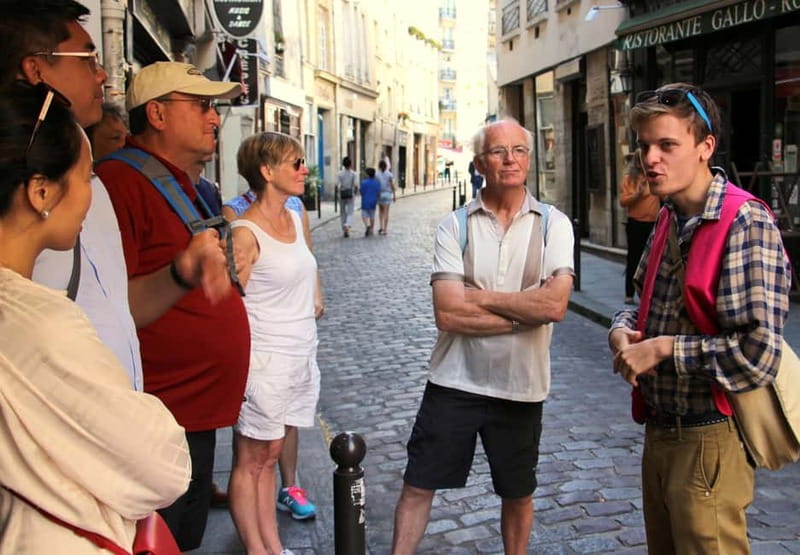
- Small groups (around 12, up to 20 with a second guide) so you actually hear your guide
- English tour, rain or shine, with a guide wearing a pink vest so you can spot them fast
- Lots of people-watching, including how to tell the difference between regulars and first-timers
Meeting at Saint-Paul, then walking the Marais like a local
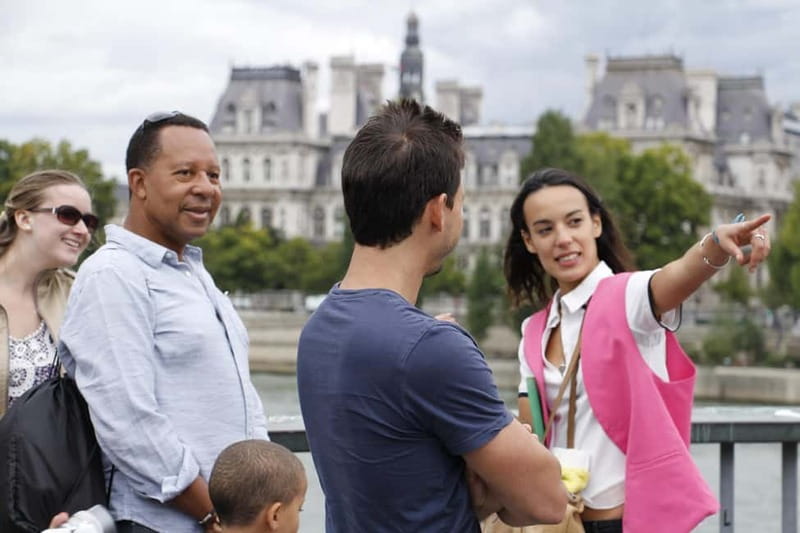
The tour starts at 10 Rue des Nonnains d’Hyères, with the closest metro station Saint-Paul. Look for your guide in a pink vest and they start right on time, which matters in a place like Le Marais where streets can get chaotic if you’re late.
If you miss the start, you’re not totally stuck. The backup meeting point is 1 Rue du Figuier. That little plan matters when you’re doing Paris on your own schedule and the city is doing its own thing with foot traffic, lights, and crosswalk delays.
What you’ll feel early is the difference between seeing Marais and understanding it. The guide doesn’t just point out famous buildings. They explain how the neighborhood’s “pockets” formed and why certain blocks became magnets for culture, fashion, and community over time.
You can also read our reviews of more guided tours in Paris



Place des Vosges and the early Marais streets: aristocrats first, tourists later
One of the smartest things about this tour is the order. You start near Le Village Saint-Paul and head toward Place des Vosges, then keep moving through the older lanes.
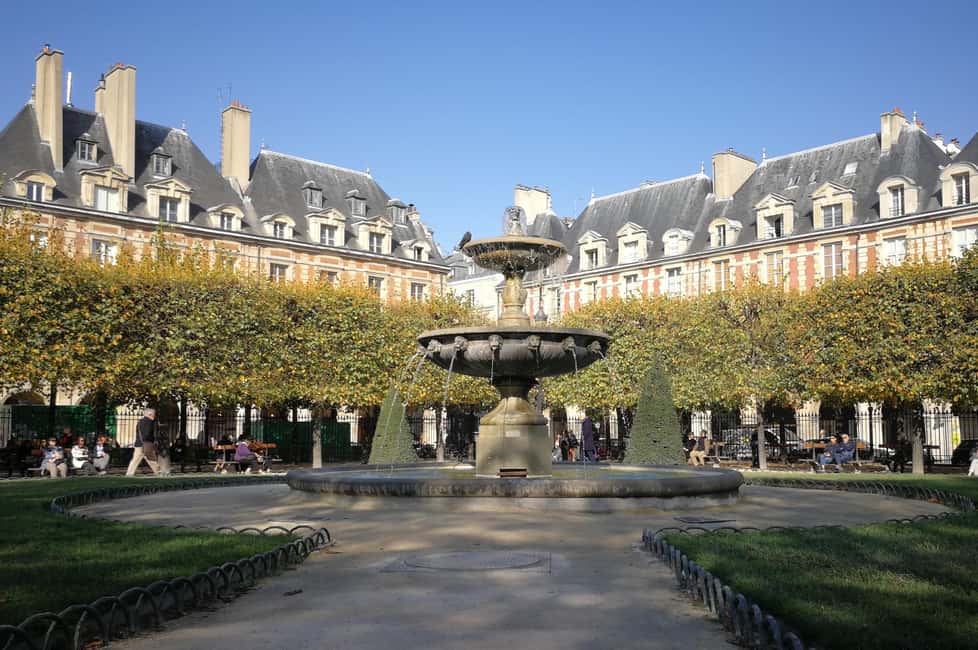
At Place des Vosges, the setting alone tells you a lot. It’s the kind of place that makes you slow down without trying. You get a sense of the pre-Revolution vibe—stone, symmetry, and a feeling that power once sat comfortably here. The guide also ties it to the fast, extravagant lifestyle of the aristocrats before the French Revolution. That context helps the square stop being just a pretty postcard.
Then you move on through the smaller streets that feel like they’re slightly off the main tourist grid. This is where you start seeing “medieval pockets” in a real way—curving routes, older street plans, and those architectural details that are easy to miss if you’re just scanning for the next big landmark.
If you’re the type who likes to orient fast (you want your bearings, not a scavenger hunt), you’ll like how this tour builds a mental map. It gives you a framework you can use later when you wander on your own.
Victor Hugo’s house and Hôtel de Sully: how Paris keeps repurposing old power
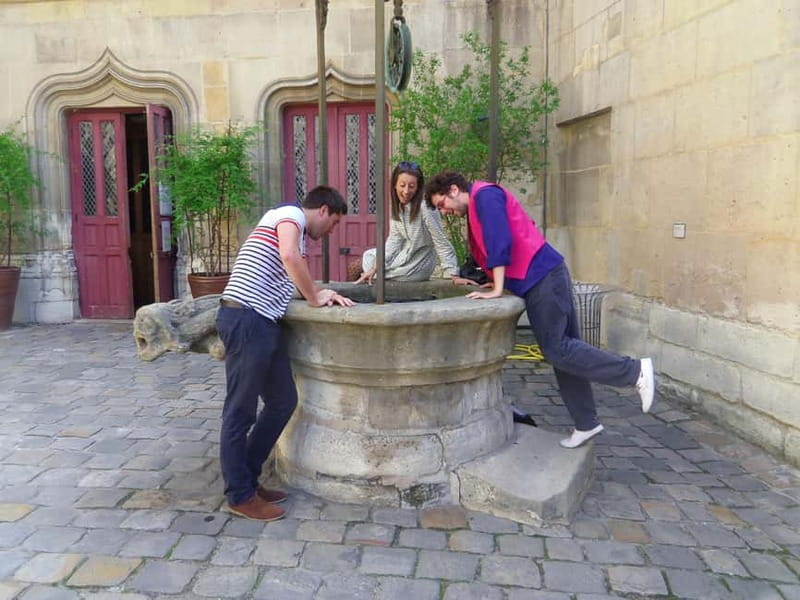
From Place des Vosges, the walk continues into the world of famous names and preserved addresses. Victor Hugo’s house is one of the stops, and it works because it’s more than a label. The guide uses it as a doorway into how Marais held status, then transformed over centuries.
Next comes Hôtel de Sully—another site where you can see the neighborhood’s “aristocratic mansion” mindset. Hôtel buildings in the Marais often feel like they’re meant to be lived in quietly, with privacy and grandeur at the same time. You’ll learn what made these properties special and how that older lifestyle influenced the neighborhood’s later transformation.
A practical note: the tour focuses on outside views and street-level context. You’re not being rushed from facade to facade, but don’t expect a lot of interior time. If you’re hoping for maximum inside access, this may feel a bit like window-shopping for history.
Still, that approach has value. In 90 minutes, you get a clear storyline that would take much longer (or much more research) to put together yourself.
Hôtel de Sens, plus the maze of lanes where you notice the details
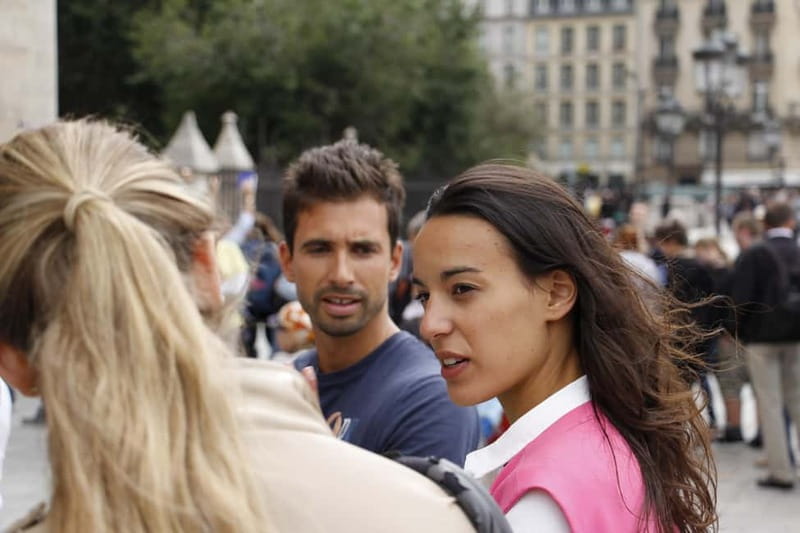
You’ll also stop at Hôtel de Sens, and this is a good moment to slow down and look. With the route already set up, Hôtel de Sens becomes part of a pattern: Marais wasn’t one uniform district. It was built out of different phases, different institutions, different uses, all folded into the same neighborhood frame.
The guide’s style here matters. They’re not trying to impress you with facts—they’re using facts to teach you how to read the street. Once you understand what you’re looking at, the Marais starts rewarding you even when you’re not at a formal stop.
This is also where people-watching becomes fun. The guide points out the difference between locals and visitors in a way that feels observational, not rude. You’ll notice how people move, what they photograph, and what they miss because they’re staring up at the wrong details.
Rue des Rosiers and the Pletzl: Jewish Paris, Ashkenazi and Sephardic layers, and WWII reality
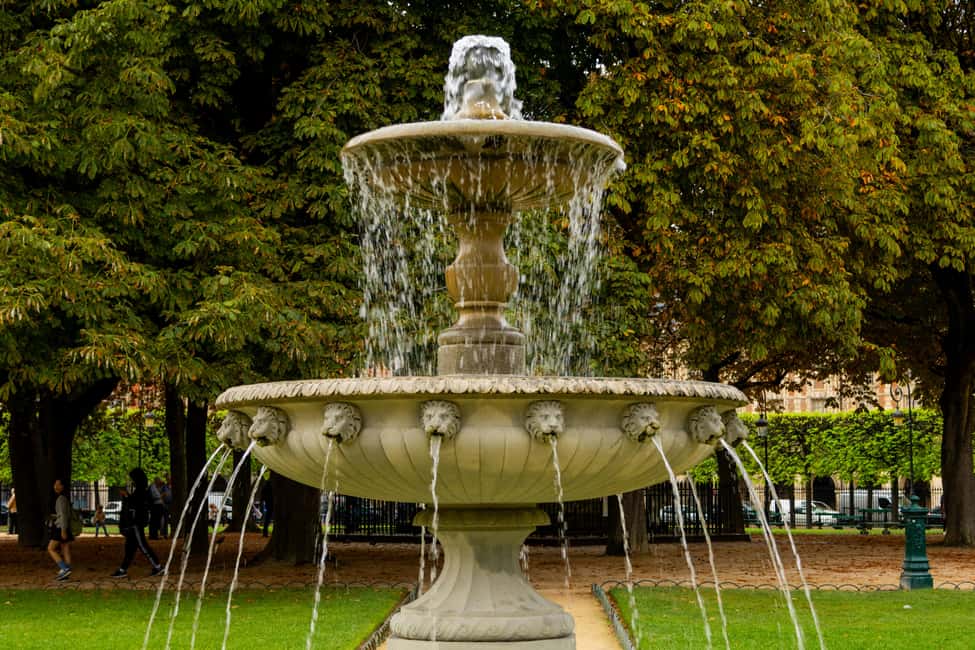
The heart of the tour is the Jewish chapter of the Marais. You’ll walk through Rue des Rosiers and reach the Pletzl, and the guide gives you enough history to make today make sense.
You get WWII context and Nazi persecution stories, but the tour doesn’t stop at tragedy. It connects those events to present-day culture—so the neighborhood doesn’t feel like a history exhibit. You’ll also learn about the communities that shaped Jewish life here, including Ashkenazi and Sephardic cultures.
Rue des Rosiers is also one of those streets where the atmosphere does some of the storytelling for you. The tour includes stops and mentions of iconic local spots, including l’as du falafel, which helps you connect history with everyday life. That’s a big part of why this tour feels useful: it shows you how the neighborhood’s identity is still in motion.
If you care about respectful storytelling (especially around sensitive WWII material), you’ll appreciate the way the guide handles the topics as part of the neighborhood’s lived reality—not as a one-off lecture.






The Marais vibe: fashion, LGBT history from the 1980s, and designer corners
One reason this tour is popular with repeat visitors is that it captures Marais as a living neighborhood, not just a “sights” list.
You’ll hear about how Marais became a hub in the early 1980s for LGBT culture, and how that cultural shift shaped what visitors see today. You’ll also get the mix that makes Le Marais so addictive: art galleries, food stops, and designer workshops tucked among older stone streets.
And yes, the tour leans into the social side. The guide talks about the neighborhood’s cast—fashionable people, curious people, and the clueless visitors from the provinces. That part can sound goofy until you’re standing there and realizing how accurate it is. People watching in the Marais is basically a sport, and this tour teaches you how to do it without losing the thread of the history.
The tour also feeds a common local dream: every Parisian’s secret fantasy of living in Le Marais. The guide explains why—how the neighborhood feels at once elegant and human, creative and historical, private and public.
90 minutes that actually feel manageable: pace, group size, and your guide’s pink-vest magic
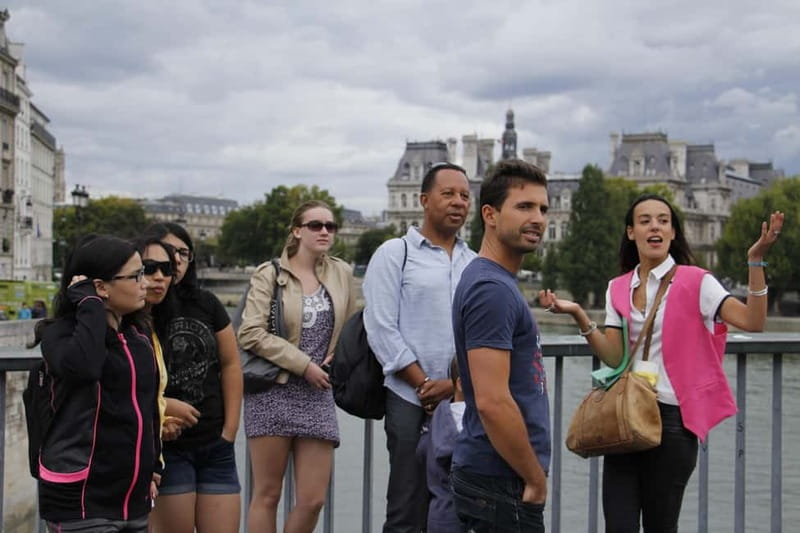
This is 90 minutes on foot, and that duration is a sweet spot. Long enough to connect the dots. Short enough that you’re still fresh for lunch and exploring afterward.
Group size is kept small on purpose. Expect around 12 people, and if the tour grows up to 20, there’s a second guide to keep things smooth. That structure matters because Le Marais is a place where you want to see details close up and ask questions without shouting.
You also get an English live guide. Your guide starts right on time and wears a pink vest, so it’s not a guessing game.
From the experience reports you can infer one consistent theme: the best part is the guide’s approach. People mention guides like Garrett, Max, Leo, Philippe, Josephine, Laura, Achille, Edmund, Kevan, Gerrit, and Victoria. Even with different personalities, the tour style stays the same—good pacing, clear explanations, and plenty of room for questions.
Rain or shine is part of the deal. So if the forecast looks sketchy, don’t assume the tour will cancel. Plan for walking. Bring what you need to stay comfortable and you’ll be fine.
Price and value: $17 for context, not just landmarks
At $17 per person for a 90-minute small-group walk, the value is in what you’re not paying for: you’re not buying a stack of ticket admissions or a long day tour. You’re paying for guidance that turns the neighborhood into a story you can remember.
The best value comes from the mix of:
- Major anchor stops (Place des Vosges, Victor Hugo’s house, Hôtel de Sully, Hôtel de Sens)
- The Jewish Paris focus (Rue des Rosiers and the Pletzl, including WWII context)
- Modern culture threads (LGBT history from the 1980s, plus galleries and designer workshops)
- Time with a local guide in a small group
One trade-off: you won’t go inside everything. That means you’re spending your time on streets and perspectives rather than interior rooms. If you mostly want interior access, you might feel less satisfied. But if you want context you can carry into the rest of your day in Paris, this is priced like a practical win.
Should you book this Marais without crowds tour?
If your goal is to see Le Marais with less crowd chaos and more meaning, I’d book it. It’s especially good for first-timers who think Paris starts and ends with the Eiffel Tower and Louvre, and for return visitors who want a neighborhood-level education.
This is also a strong choice if you like tours that teach you how to read what you’re looking at—architecture, street patterns, and cultural shifts—so you can keep exploring afterward without feeling lost.
Pass on it only if your ideal tour is heavily indoors, or if you’re hoping for lots of interior ticket time at every stop. This one is made for walking, for context, and for the kind of Paris experience you can build on.
FAQ
How much does the Paris Marais without crowds guided tour cost?
The tour is listed at $17 per person.
How long is the tour?
The tour lasts 90 minutes.
Where do I meet my guide, and what’s the closest metro?
You meet at 10 Rue des Nonnains d’Hyères, and the closest metro station is Saint-Paul. Your guide will be wearing a pink vest.
What language is the tour in, and how big are the groups?
The tour is in English. Groups are usually around 12 people, and can go up to 20 (with a second guide added when that happens).
Is the tour run rain or shine?
Yes. The tour runs rain or shine, and you should expect to walk the full time.
Do you go inside buildings and landmarks?
No. The tour is designed so you do not go inside all buildings and landmarks.
What is the cancellation policy?
You can cancel up to 24 hours in advance for a full refund.