REVIEW · PARIS
Paris: Kids in the Kitchen – Croissant
Book on GetYourGuide →Operated by MUCURISA · Bookable on GetYourGuide
The most appealing part of this croissant class is its home-kitchen approach. You learn with simple tools you can use again at home, not factory equipment, and the lesson connects the croissant to its Austrian beginnings before bringing the story back to Paris.
I like the small group of up to four and the clear focus on children and families. I also like that the class is designed for hands-on participation, not just watching a pastry expert work. The main consideration is the $182 per person price for 90 minutes, plus the climb to a fifth-floor apartment with no elevator.
In This Review
- Key points
- A croissant lesson with an Austrian twist
- What happens during the 90-minute class
- Why the small group matters
- Inside a Parisian apartment
- The value of home-style baking tools
- A good fit for young children
- Price, timing, and what you receive
- What the feedback tells me about the experience
- Who should book this croissant class
- Should you book it?
- FAQ
- How long does the croissant class last?
- Where does the class take place?
- Is the apartment accessible by elevator?
- How many people can join the class?
- What languages are available?
- Is the class suitable for young children?
- What is included in the price?
- Can I cancel or pay later?
Key points
- Austrian roots, French pastry: Learn that the croissant began in Austria before becoming a French icon.
- Home-style equipment: Work with ordinary kitchen tools, making the method easier to repeat at home.
- Built for young children: The activity is specially designed for families, with children from about age three in mind.
- Four-person maximum: A tiny group gives you more room to take part and ask questions.
- Private apartment setting: The class takes place in a real Parisian home rather than a large cooking school.
- English or Spanish instruction: You can choose between two teaching languages when checking availability.
A croissant lesson with an Austrian twist
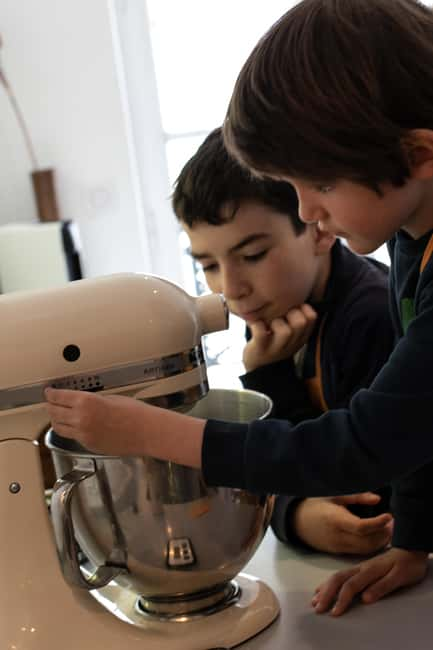
Many visitors arrive in Paris thinking of the croissant as purely French. This class starts by correcting that assumption. The pastry was created in Austria, and the opening part of the lesson uses that fact to set up a short trip through the story of viennoiseries, the family of yeast-raised and layered pastries that includes the croissant.
That bit of context matters, especially for children. It gives the baking project a simple story: a pastry can cross borders, change over time, and become closely linked with a new place. You are not signing up for a long lecture, though. The history supports the cooking and does not replace it.
The class lasts 90 minutes, so the pace is compact. You begin with la mise en place, the French kitchen term for preparing and arranging ingredients and tools before cooking. This is a useful habit to teach young bakers because it makes the process feel orderly rather than mysterious.
The exact recipe stages are not set out in detail, so I would not book this expecting a full professional pastry course. You should expect an introductory, practical lesson that explains the basic croissant process and the wider viennoiserie tradition. The emphasis is on taking part and learning enough to continue at home.
You can also read our reviews of more tours and experiences in Paris.



What happens during the 90-minute class
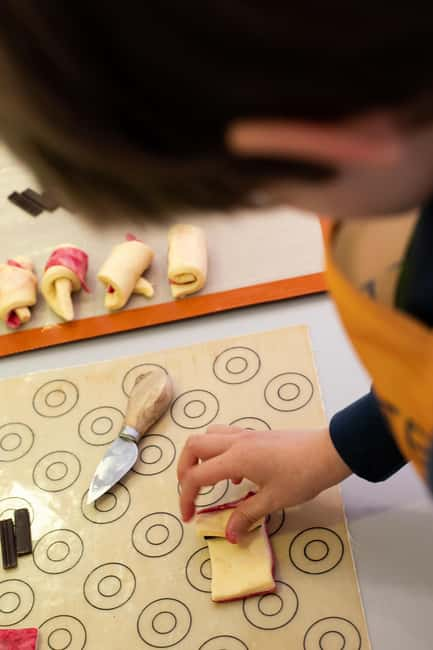
The lesson begins with the setup. You work through the main materials needed for the activity and get ready at the kitchen counter. An apron is lent to you, which is handy for families with children who tend to treat flour as a decorating material.
From there, the instructor introduces croissants and the related pastry tradition. The historical note about Austria gives the class a little more character than a standard recipe demonstration. You learn why the pastry has a broader Central European connection before it became part of everyday French food culture.
The practical work follows. Since the class was created for children from around age three and for family groups, the format is intended to be approachable rather than technical. The use of home-style tools is important here. You are not watching a machine do the difficult work in a commercial bakery. You are being shown a method that can be recreated in an ordinary kitchen.
That does not mean making croissants at home becomes quick. Croissant dough takes care and patience, and this short class cannot cover every possible problem in great depth. Still, it can give you a better sense of the ingredients, order of work, and general technique. If you have never made viennoiseries before, that first practical look can be more useful than simply eating a finished pastry.
The session ends with tasting, along with coffee or tea. The supplied feedback makes clear that children are expected to have an active role. One family from the United States reported that two sons had a lot of fun making the croissants and found the instructor patient and kind. That is a useful signal for parents: the class is not aimed only at adults who already enjoy baking.
Why the small group matters
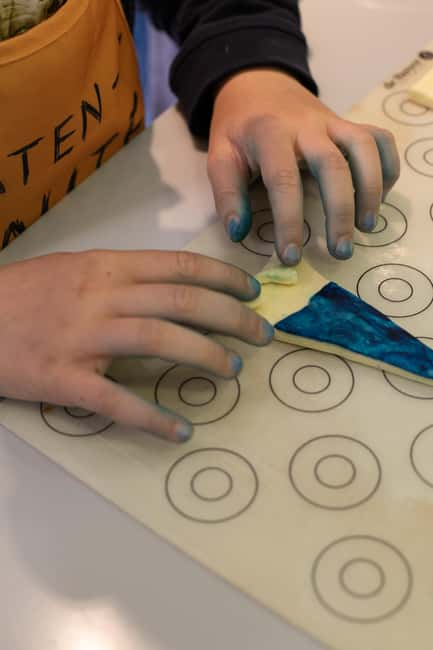
The limit is four participants. That is one of the strongest features of the experience because pastry work can become frustrating when several people are trying to use one counter or watch one demonstration. In a group this small, you should have a better chance to see what is happening and get help when a step feels unclear.
The small format also suits families. A young child may need a slower explanation, a little encouragement, or a chance to repeat a task. A group of four gives the instructor more room to respond than a large workshop would.
The class is also suitable for private bookings such as family gatherings, friend groups, and anniversaries. This can change the value calculation. At $182 per person, the class is expensive for a short activity if you are comparing it with a casual pastry lesson or a bakery visit. For a private family occasion, however, the apartment setting and limited group size may make the cost easier to justify.
There is no named instructor in the available information, so you cannot choose a particular teacher in advance. The class is offered in English and Spanish. If language is important for your family, confirm your preferred language and the available start time before booking.
Inside a Parisian apartment
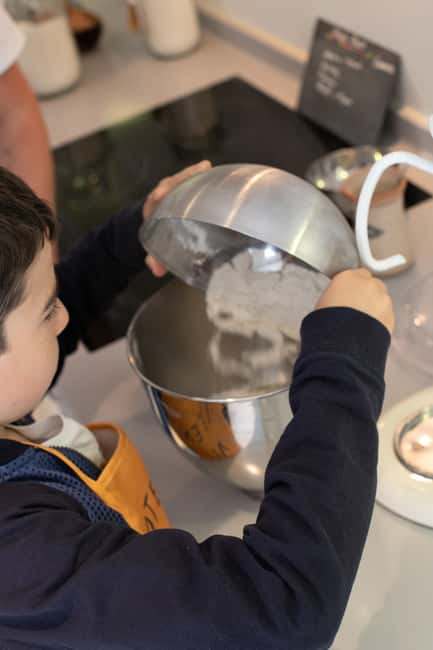
The setting is a private Parisian apartment. That gives the class a more personal feel than a purpose-built cooking studio, and it fits the goal of showing you a local-style experience. You are not being placed in a large room with a line of identical workstations.
The trade-off is access. The apartment is on the fifth floor and there is no elevator. You will need to be comfortable climbing the stairs, and this is worth considering for grandparents, anyone with limited mobility, or a family carrying bags and managing small children.
The meeting instructions direct you to a separate page explaining how to reach the apartment. Read those directions carefully before setting out. The location is in the Paris region, but the supplied information does not identify a nearby Metro station or give a precise street address in the activity details, so you should rely on the provider’s meeting instructions rather than assume the apartment is beside a major landmark.
A private home can also feel less formal. That may be exactly what you want for a family activity, but it is different from a polished culinary school. Go for the chance to cook in an intimate setting, not for restaurant-style service or professional bakery equipment.
The value of home-style baking tools
The phrase simple tools as at home is more important than it first appears. Professional bakeries use equipment that can make dough handling faster, more consistent, and less tiring. That equipment can be impressive, but it does not help much if you want to repeat the recipe in your own kitchen.
Here, the point is to show you a process that feels possible at home. You can pay attention to how the work is organized and how the pastry is handled without assuming you need a commercial mixer or specialized machinery. For parents, this also makes the activity more educational. Children can see that baking depends on preparation and care, not just on pressing a button.
You should keep your expectations sensible. A 90-minute workshop cannot turn you into a pastry chef, and the materials included are intended for the class itself. The value is in the method, the shared activity, and the confidence to try the pastry again later.
If you enjoy baking, this practical angle may be the best reason to choose the class. If you only want to eat an excellent croissant, a good Paris bakery will cost far less. This experience charges for instruction, time with a small group, and a memorable family activity.





A good fit for young children
The program was developed especially for children starting at age three and for families. Children under two are not suitable for the activity. That age guidance is useful because a croissant lesson requires some attention, handling of ingredients, and time in a kitchen.
The class should appeal most to families who want their children to do something rather than simply follow adults around Paris. It also suits young bakers who enjoy mixing, shaping, and tasting. The feedback from the American family is especially helpful here: the children took part directly and the instructor was patient with them.
Still, parents should think about their own child’s temperament. The activity is only 90 minutes, which helps keep it manageable, but pastry preparation is not a race. A child who dislikes waiting or following several stages may need more support from an adult.
The design also makes the class a possible choice for an anniversary or family gathering. You get a shared task, a little food history, and a final tasting in one short visit. It is more personal than booking a general group tour, though the fifth-floor stairs remain a real practical issue.
Price, timing, and what you receive
The listed cost is $182 per person. That is a high price for a 90-minute activity, so I would compare it with what you want from your Paris schedule rather than judging it as a simple pastry purchase.
Included are the main materials, a borrowed apron, and coffee or tea. You are paying for the class structure, the private apartment setting, the small group limit, and the chance to work with an instructor. The maximum of four is a real benefit, especially when young children need attention.
The price makes the most sense in three situations:
- You want a family activity centered on food rather than sightseeing.
- You value a private or very small group setting.
- You are interested in learning a method you can try again at home.
It makes less sense if you are seeking the cheapest introduction to French pastries, a full-day cooking school, or a professional-level lesson. The class is short and introductory. I would view it as a special family experience, not as a bargain baking course.
You can reserve now and pay later, which helps if your Paris schedule is still changing. Cancellation is free up to 24 hours before the activity for a full refund. Check the available starting times before committing, since the class has a fixed 90-minute format.
What the feedback tells me about the experience
The available rating is 5 out of 5 from three reviews, with two written comments provided. The strongest praise centers on the hands-on format, the children’s enjoyment, and the instructor’s patient manner.
That combination is more useful than a simple perfect score. Parents often worry that a cooking class will turn into a demonstration where children stand at the edge of the room. The comments here point to the children actually making croissants and having fun with the work.
A Spanish-language comment also describes the activity as very enjoyable, educational, and highly suitable for small children. That supports the idea that the class works well for families looking for an easy cultural activity with food at its center.
The sample is small, so I would not treat the rating as proof that every family will have the same experience. The instructor’s patience may be especially valuable for children, while adults seeking advanced pastry instruction could find the lesson too basic. The available information also does not provide enough detail to judge the final pastry quality, the precise recipe, or the amount of dough each participant handles.
Who should book this croissant class
I would recommend it most strongly to families with children around three and older who want a short, active Paris experience. It is also a good match for friends or relatives who prefer a private apartment setting and want a shared activity for an anniversary or special gathering.
It is less suitable for anyone who cannot manage five flights of stairs. It may also disappoint experienced bakers looking for detailed professional techniques, specialized equipment, or a long lesson covering every stage of laminated dough.
For the best experience, arrive ready to take part. Read the meeting directions in advance, allow time for the stairs, and confirm the teaching language that suits your group. If your child is young, keep the goal simple: learn a few ideas, help with the pastry, and enjoy the tasting.
Should you book it?
Book this class if you want your family to make something together in a real Paris apartment, with a tiny group and tools you can use again at home. The Austrian background, home-style method, and child-focused format give it more substance than a quick pastry demonstration.
Skip it if $182 per person feels too steep for 90 minutes, if the fifth-floor walk-up is a problem, or if you want advanced baking instruction. For families who value participation over sightseeing, the price can be reasonable. For everyone else, a bakery stop will be the better deal.
FAQ
How long does the croissant class last?
The activity lasts 90 minutes.
Where does the class take place?
It takes place in a private Parisian apartment in the Ile-de-France region of France.
Is the apartment accessible by elevator?
No. The apartment is on the fifth floor and the building has no elevator.
How many people can join the class?
The group is limited to four participants.
What languages are available?
Instruction is available in English and Spanish.
Is the class suitable for young children?
Yes. The experience was specially developed for families and children starting at about age three. Children under two are not suitable.
What is included in the price?
The price includes all main materials, a borrowed apron, and coffee or tea.
Can I cancel or pay later?
You can cancel up to 24 hours in advance for a full refund. You can also reserve now and pay later.