REVIEW · PARIS
Ohlala Croissants in Paris!
Book on Viator →Operated by Aten-Te Aute · Bookable on Viator
Making croissants in a private apartment near Nation station gives you a side of Paris that a pastry-shop stop cannot. You learn how the laminated dough, known as pâte feuilletée levée, is shaped into the city’s favorite breakfast pastry, then eat what you have made. I like the six-person limit and the warm, personal setting with instructors such as Carlos, Maria, and Nuby. The main consideration is the short 90-minute format, which leaves little room for a slow, full-day pastry course.
I also like that coffee, tea, ingredients, tools, and an apron are included. You can take pictures and videos throughout the class, and the apartment is close to public transportation. Finding the entrance at 22 Pass. du Génie may feel unusual at first since it is down an alley, so allow a little extra time to locate the meeting point.
In This Review
- Key points at a glance
- A croissant lesson inside a Parisian home
- What you learn about French pastry
- A step-by-step look at the 90-minute class
- Why the six-person limit matters
- Meeting Carlos, Maria, and Nuby
- Eating your own croissants
- Value for your Paris schedule
- The practical details that affect your choice
- Who should book this croissant class
- Should you book Ohlala Croissants in Paris?
- FAQ
- Where does the croissant class take place?
- Which part of Paris is the meeting point in?
- How long does the experience last?
- Is the class offered in English?
- How many people can join the class?
- Are ingredients and baking tools included?
- Is an apron provided?
- Are coffee and tea included?
- Is alcohol included?
- Can I take pictures or videos?
- Where does the activity finish?
- Can I cancel and receive a refund?
Key points at a glance
- A private apartment near Nation station: The class takes place in a real Parisian home in the 12th arrondissement, not a large cooking school.
- Croissant dough from scratch: You work with the laminated dough used for French breakfast pastries.
- Maximum of six people: The small class size allows for more direct help, especially useful for beginners.
- Coffee, tea, and your finished pastry: You make the croissants, then eat what you prepare during the session.
- Hosts with a personal touch: Carlos, Maria, and Nuby lead the class, with advice about Paris food and drinks also part of the experience.
- A strict cancellation rule: The booking is non-refundable, so choose your date carefully.
A croissant lesson inside a Parisian home
The most appealing part of this experience is its setting. You are not sitting in a polished demonstration kitchen watching a chef work from a distance. You meet the instructor at a private apartment at 22 Pass. du Génie, in Paris’s 12th arrondissement, near Nation station, and take part in a small hands-on class.
That setting changes the mood. A private home feels more personal than a commercial cooking studio, and the class is capped at six people. If the group is smaller, you can expect even more direct attention. One booking had a solo participant, turning the class into a very personal session with Nuby. That kind of lucky small group can make it easier to ask questions and get help with each step.
The address is down an alley, so do not let the entrance surprise you. The unusual approach is part of the apartment setting, but it also means you should not rush from the Metro exit to the door. The experience is near public transportation, with Nation station as the useful reference point, but the information provided does not give a precise walking time from the station.
You can also read our reviews of more tours and experiences in Paris.



What you learn about French pastry
The class focuses on croissants, but it also gives you a little pastry vocabulary and context. Your instructor explains the difference between viennoiseries and French pastry, along with the background of this well-known French breakfast tradition.
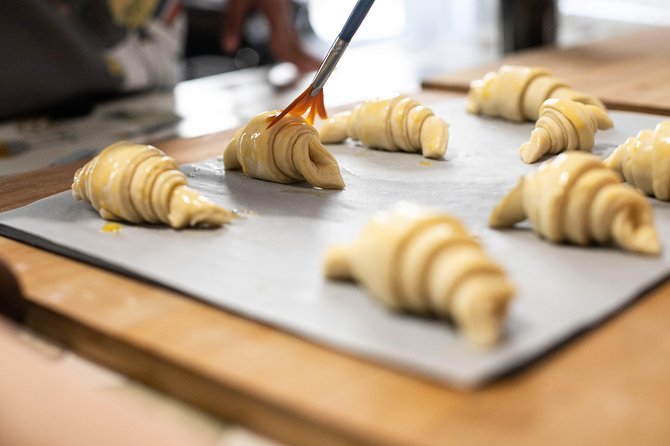
The practical centerpiece is pâte feuilletée levée, the laminated dough used for croissants and related breakfast pastries. Lamination is what gives a croissant its layered structure. You work through the dough-making process and learn how it becomes the familiar crescent-shaped pastry.
The supplied details do not promise a complete professional pastry curriculum, and the 90-minute length matters here. You should think of this as a compact introduction rather than a full bakery apprenticeship. Still, it covers the part most visitors want: making croissants from scratch and understanding the basic process well enough to try it at home.
That balance suits a short Paris visit. You get a cultural activity with a clear result, without giving up half a day of sightseeing. If you already bake often, you may want a longer or more technical course. If you are a beginner, the shorter format keeps the lesson friendly and manageable.
A step-by-step look at the 90-minute class
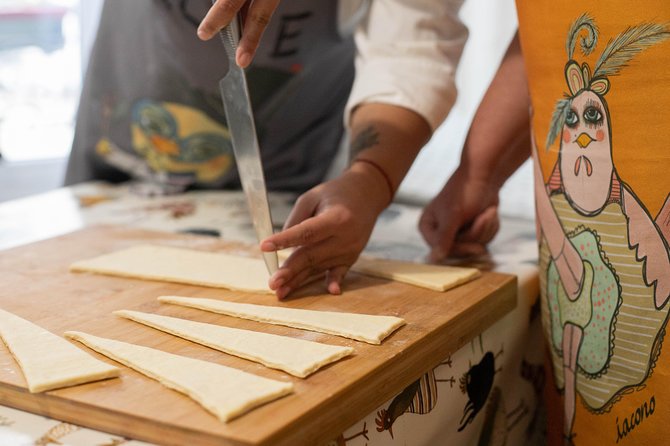
The experience lasts about one hour and 30 minutes and ends back at the meeting point. You start by meeting the instructor and settling into the apartment. Coffee or tea is served, which gives the session an easy, social beginning and a natural drink to enjoy with the pastry later.
Next comes the introduction to the ingredients, tools, and dough. Everything needed for the class is provided, and an apron is loaned for your use. That is useful for visitors who are packing light or who do not want to carry baking equipment around Paris.
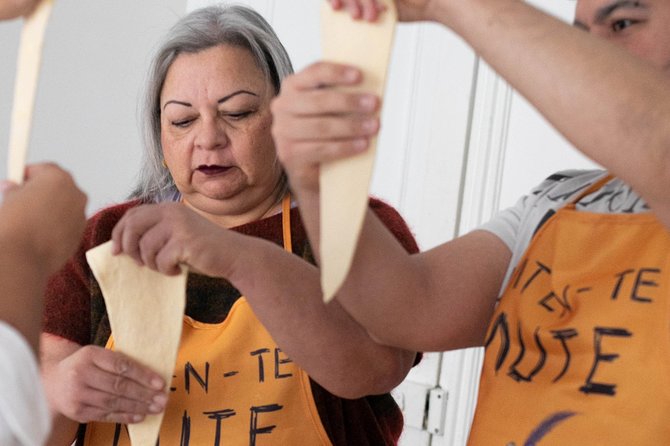
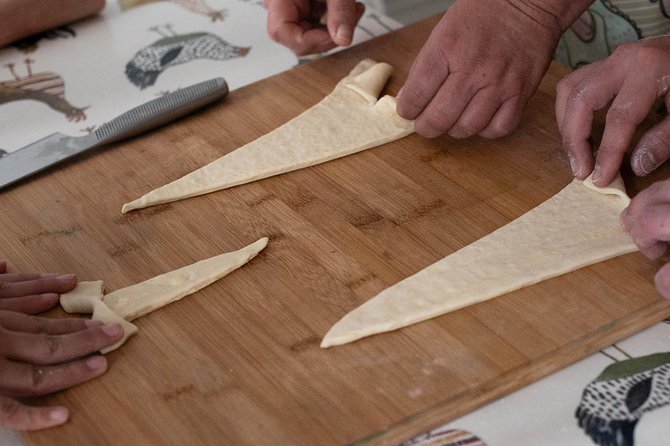
The heart of the lesson is the laminated dough. You learn how bakers prepare the dough used for croissants and how that dough is worked into the final pastry. The class is designed for participation, not just watching. You should expect to handle the dough and follow the instructor’s directions at each stage.
The precise timing of each technical step is not given, so the class may focus on selected parts of the process within the 90-minute window. That is normal for a short workshop. Croissant dough normally involves careful preparation, and the course’s purpose is to show you the method in a practical form rather than reproduce every stage of a bakery’s production schedule.
You then shape the croissants and finish the session by eating what you made. This is one of the strongest features of the class. You do not simply take notes and leave with a recipe. The reward is immediate, and the final pastry gives you a useful sense of how your work turned out.
Pictures and videos are welcome, so you can record the process for later reference. That is especially helpful if you hope to repeat the recipe at home. Ask before interrupting a technical step, but the experience specifically allows photography and video.
Why the six-person limit matters
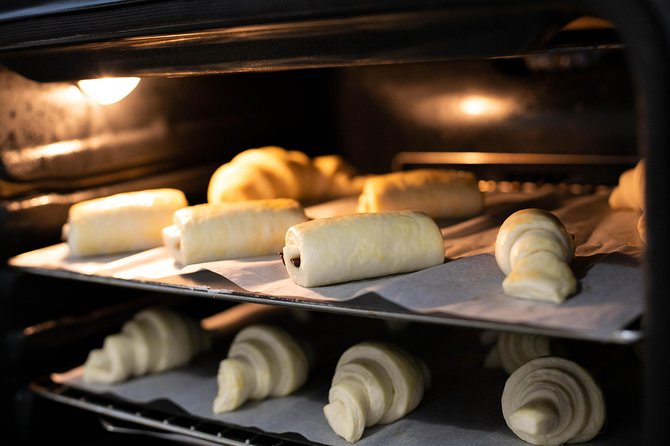
A maximum of six people is a real advantage for a baking lesson. Croissant dough can be tricky, and small details matter. In a large class, you might have to wait for help or follow a demonstration from across the room. Here, the instructor can give more individual attention.
The class has worked well for complete beginners. Carlos and Maria have taught people with no prior croissant-making experience, guiding them through the process from the beginning. That makes this a good pick if you enjoy cooking but do not normally bake, or if you want an activity that does not require previous pastry skills.
Small groups also make it easier to talk with the hosts. One group of six received recommendations for food and drinks in Paris during the class. That extra conversation can be valuable, especially early in your visit, when local suggestions may shape the rest of your trip.
There is one practical limit. A small class does not guarantee a private booking unless you are the only person booked. The advertised maximum is six, so you may share the apartment with other participants. Still, the cap keeps the scale intimate compared with a large culinary school.
Meeting Carlos, Maria, and Nuby
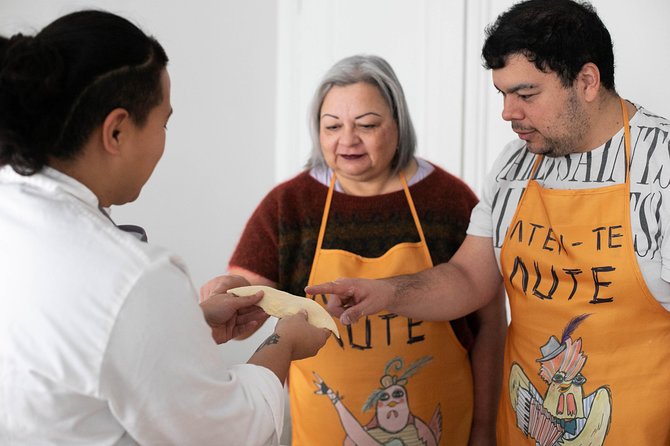
The instructors are a big part of the experience. Nuby has led a one-person class, while Carlos and Maria have taught beginners together. The feedback points to a relaxed teaching style and a pace that does not rush people through the process.
Carlos also gives Paris food and drink suggestions, which adds value beyond the pastry itself. You should not treat these recommendations as a formal food tour, since the class remains centered on croissants. But a helpful host can give you ideas for where to eat or drink after the lesson.
The personal nature of the class means the experience may vary slightly depending on who leads it and how many people attend. That is not a flaw, but it is worth understanding. This is a home-based class with human interaction, not a fixed stage show with an identical script every time.




Eating your own croissants
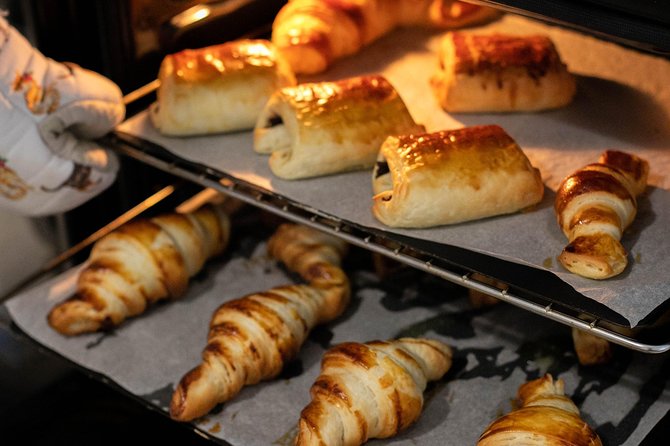
The class includes croissants as the dessert, along with coffee and tea. The simple menu is exactly what fits this activity. You are not signing up for a multi-course meal, and alcohol is not included.
Eating the pastry you made is more satisfying than receiving a pre-baked sample. You can connect the taste and texture to the steps you just completed. If your shaping is not perfect, that is part of the fun. Croissants have a way of looking more professional in a bakery window than they do on a first attempt.
The class also gives you a practical test. You can see which parts of the process feel easy and which require more practice. The people who joined as beginners were able to follow the lesson and leave with a better sense of how to make croissants at home.
Coffee and tea help turn the tasting into a proper Paris breakfast moment. Since the experience is in the 12th arrondissement rather than beside the best-known central sights, it also gives you a reason to visit a part of the city outside the usual sightseeing circuit.
Value for your Paris schedule
No tour price is provided here, so I cannot give you a fair cost comparison or say that it is cheap or expensive. To judge the value when you book, look at what is included: about 90 minutes of instruction, a small group, all ingredients and tools, a loaned apron, coffee or tea, and the croissants you make.
You are also paying for the setting and the host’s time. A standard bakery purchase will cost far less, but it will not teach you the process or place you inside a Parisian apartment. A longer cooking school course may offer more technical detail, but it may also take more time from your sightseeing day.
I would see this as a good-value choice for someone who wants one focused food activity rather than a broad cooking program. The value is strongest if you care about making the pastry yourself, enjoy small groups, and plan to use what you learn at home.
The short duration is useful for an itinerary. You can fit the class into a morning or afternoon without losing an entire day. On the other hand, do not book it expecting a long, leisurely bakery workshop with several recipes. The supplied menu is simply croissant, and the session concentrates on that one pastry.
The practical details that affect your choice
The experience is offered in English, so you can follow the lesson without needing French pastry vocabulary. Confirmation is received at the time of booking, and the activity ends where it starts.
The meeting point is 22 Pass. du Génie, 75012 Paris, France. Since the apartment is down an alley, check the address before leaving and allow enough time to find the entrance. Its location near Nation station makes it a sensible choice if you are staying in or visiting the eastern part of central Paris.
The class has a maximum of six participants, but it requires a minimum number to operate. If that minimum is not met and the provider cancels, you are offered another date or experience, or a full refund.
Your own cancellation terms are much less flexible. The experience is non-refundable and cannot be changed for any reason. If you cancel or request an amendment, the amount paid will not be refunded. This is important: do not book until your Paris schedule is firm.
Alcohol is not included, and there is no indication that it is part of the activity. Coffee and tea are provided instead. All ingredients and related tools are supplied, so you do not need to bring baking equipment.
Who should book this croissant class
I would recommend it to first-time bakers, couples, families, friends, and solo visitors who want a personal Paris activity. The six-person limit works well for people who prefer conversation and direct instruction over a large group format.
It is also a smart choice for anyone planning to recreate the experience at home. The permission to take pictures and videos gives you a chance to record useful steps, and the hands-on format helps you remember the process better than a demonstration alone.
Food lovers will appreciate the local setting, but you do not need to be a serious pastry fan. The class is built around one familiar French food, and the lesson gives you a manageable way to connect with it.
I would be more cautious if you want a full pastry-school experience, a long menu, or a flexible booking policy. The session is brief, the menu is limited to croissants, and cancellations are not refundable. Those are not minor details when you are fitting activities into a busy Paris trip.
Should you book Ohlala Croissants in Paris?
Book it if you want to make a classic French pastry in a small, friendly setting and eat the result before you leave. The private apartment, English instruction, small group, included equipment, and helpful hosts give it a personal feel that you will not get from simply buying a croissant at a bakery.
I would especially book this early in your visit if you value local food advice. The hosts may point you toward places for food and drinks, and you can use those suggestions during the rest of your stay.
Skip it if you are looking for a full-day pastry course or need the option to change plans. For most visitors who want one practical, tasty activity, though, this is a focused way to spend 90 minutes in Paris. The consistently strong rating of 4.8 from five reviews fits the experience described: beginner-friendly, intimate, educational, and delicious.
FAQ
Where does the croissant class take place?
The class takes place at a private Parisian apartment at 22 Pass. du Génie, 75012 Paris, France.
Which part of Paris is the meeting point in?
The apartment is in Paris’s 12th arrondissement, near Nation station.
How long does the experience last?
The class lasts approximately one hour and 30 minutes.
Is the class offered in English?
Yes. The experience is offered in English.
How many people can join the class?
The class has a maximum of six participants.
Are ingredients and baking tools included?
Yes. Ingredients and related tools are provided for the class.
Is an apron provided?
Yes. An apron is loaned for use during the experience.
Are coffee and tea included?
Yes. Coffee and/or tea are included.
Is alcohol included?
No. Alcoholic beverages are not included.
Can I take pictures or videos?
Yes. You are welcome to take as many pictures or videos as you like during the experience.
Where does the activity finish?
The activity ends back at the meeting point.
Can I cancel and receive a refund?
No. The experience is non-refundable and cannot be changed for any reason. If the minimum number of participants is not reached and the provider cancels, you will be offered another date or experience, or a full refund.