REVIEW · PARIS
Ohlala Crêpes in Paris!
Book on Viator →Operated by Aten-Te Aute · Bookable on Viator
Paris may tempt you to eat every meal out, but this class gives you something useful to take home: the skill to make Breton galettes and French crêpes yourself. In 90 minutes, you learn the basic preparation, cook several items, and sit down to eat the results.
I like the small maximum of six people, which should make it easier to see the cooking and ask questions. I also like the personal touch from guides such as Laura, Christian, and Nube, who have been praised for their friendly teaching. The main thing to check is the meeting point, since the information gives both 14 Rue des Coutures Saint-Gervais and Passage du Génie near Faidherbe-Chaligny Metro.
In This Review
- Key points to know before booking
- Why this Paris cooking class is worth your time
- Starting with French mise en place
- Making the Breton galette
- Finishing with a chocolate crêpe
- The teaching style and named guides
- Eating together at the end
- Location, timing, and the meeting point
- Who will enjoy this class most
- Booking details and the cancellation risk
- Should you book Ohlala Crêpes in Paris?
- FAQ
- Where does the crêpe-making class start?
- Where does the activity end?
- How long does the class last?
- How many people can join the class?
- What food do you make?
- What is the difference between a galette and a crêpe?
- Is the class available with a mobile ticket?
- When will I receive confirmation?
- Can I cancel or change my booking?
Key points to know before booking
- You make both savory and sweet dishes: Prepare a Breton galette with ham, egg, and cheese, then finish with a chocolate crêpe.
- The class lasts about 90 minutes: It is short enough to fit into a busy Paris day, but long enough for hands-on cooking and a shared meal.
- The group is capped at six people: This is a better setup for personal guidance than a large demonstration class.
- You learn the basic French distinction: Galettes use buckwheat flour, while sweet crêpes use plain flour.
- Named guides add a personal feel: Laura, Christian, and Nube have each been praised for friendly, clear instruction.
- Check the address before setting out: The booking details identify 14 Rue des Coutures Saint-Gervais, while the overview refers to Passage du Génie near Faidherbe-Chaligny Metro.
Why this Paris cooking class is worth your time
A food class can be more useful than another restaurant meal. You still get to eat, but you also leave with a method you can repeat at home. That matters with crêpes, since the ingredients are familiar and the basic technique is practical for a Sunday breakfast, a quick dinner, or a meal for friends.
This class focuses on two sides of French crêpe culture. The sweet crêpe is the familiar dessert-style version, made with plain flour. The galette comes from Brittany and uses buckwheat flour, known in French as blé noir. It is usually savory rather than sweet.
The contrast gives the class a clear shape. You learn how one batter leads to a simple sweet dish, while another creates a hearty meal. The menu is not overly complicated, which is good for beginners. You can pay attention to the texture, pan work, and timing instead of trying to manage a long list of recipes.
The advertised price is $97.44 per person. That is not cheap for a 90-minute activity, especially when compared with the cost of buying a crêpe at a street stand. The value comes from the instruction, the hands-on practice, the meal, and the small group. If you only want something quick to eat, this is poor value. If you want a Paris food memory that also gives you a skill to use later, the price is easier to justify.
You can also read our reviews of more tours and experiences in Paris.



Starting with French mise en place
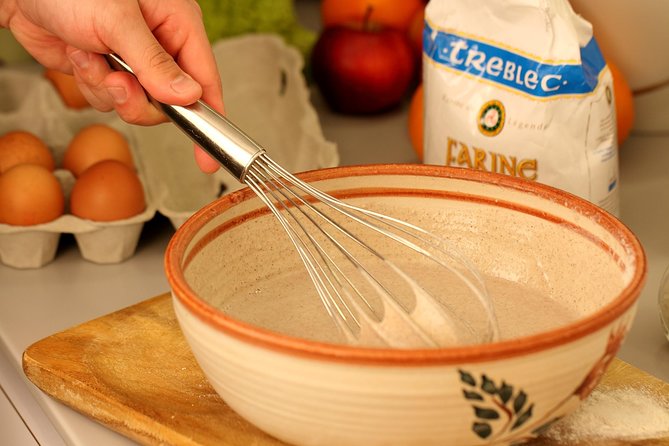
The class begins with la mise en place, the French habit of preparing and arranging ingredients before cooking. This is a small phrase with a useful lesson behind it. Crêpe making looks easy, but the process becomes smoother when the batter, fillings, pan, and tools are ready before you begin.
You should expect the instructor to introduce the ingredients and explain the difference between galette and crêpe. The historical introduction also reaches back to the 13th century, giving the food a bit of context without turning the class into a lecture.
That balance is important. You are not signing up for a formal culinary school session. You are signing up to cook, eat, and understand what makes these two French specialties different. The history helps explain why a galette belongs to Brittany and why the two names should not be treated as interchangeable.
Since the class is limited to six people, you should have a better chance to watch the demonstrations and take your turn. The exact arrangement of the cooking stations is not provided, so I would not assume that every person gets a separate full-size workstation. Still, the group limit suggests a more direct format than a large public lesson.
Making the Breton galette
The galette is the most distinctive part of the menu. It is made with buckwheat flour rather than plain flour, and the class describes it as gluten free. If you need to avoid gluten for medical reasons, ask the provider about preparation conditions before booking, since the supplied information does not explain how the kitchen handles cross-contact.
The standard filling here is ham, egg, and cheese. It is a classic combination because it turns a thin pancake into a complete savory meal. The egg gives the galette its visual center, while the ham and cheese add salt and richness.
I like this choice for a class because it teaches you more than a plain pancake. You must think about when to add the filling, how to fold the galette, and how to cook it without losing the delicate texture. Those are the small decisions that make the difference between a soft, well-finished galette and a dry or broken one.
The buckwheat batter also gives you a chance to notice how flour changes the result. It has a deeper flavor than a standard sweet crêpe, and the class connects it directly to Brittany. You are learning a dish with a regional identity, not simply a generic French pancake.
Finishing with a chocolate crêpe
After the savory course, you make a sweet crêpe with chocolate. The simple filling is a sensible choice for a short class. Chocolate is familiar, popular, and easy to enjoy even if your cooking attempt is not perfectly shaped.
The sweet crêpe also lets you compare the batter with the buckwheat galette. Plain flour creates a different taste and texture, and the contrast reinforces the main lesson of the class. You do not need a long ingredient list to understand the difference.
One useful benefit is that the technique transfers easily to home cooking. The class is not only about producing one attractive plate in Paris. It is about learning a repeatable process. One participant specifically found the instruction helpful for getting started with crêpes at home, which is exactly the practical result you should hope for.
You also have the chance to take photos as you cook. That makes the class useful for people who like to remember the steps visually, though photographs are best treated as a bonus rather than a substitute for listening to the instructor.
The teaching style and named guides
The guides connected with this class include Laura, Christian, and Nube. Their teaching styles may vary by date, but the feedback gives you a useful picture of what to expect. Laura has been praised for showing the process clearly and for helping beginners feel ready to make crêpes at home.
Christian has been described as passionate about the subject and able to make the class both educational and delicious. Nube has been praised for being friendly and accommodating. These details matter because a short cooking lesson depends heavily on the person leading it.
A good instructor keeps the pace moving while still giving you time to try the steps yourself. The class is only about an hour and a half, so it cannot cover every regional variation or advanced technique. Its strength is a warm introduction to two basic French dishes.
The class is also described as suitable for private bookings, including family and friend gatherings, anniversaries, corporate groups, and private events. If you are arranging a small celebration, the format may work well. For a standard booking, the group size remains capped at six people, which should help preserve the personal feel.



Eating together at the end
The meal is part of the point. You cook a galette with egg, cheese, and ham, then make a chocolate crêpe, and eat them together. That shared finish gives the class a social rhythm. You are not simply watching a chef prepare food while you stand aside.
The available feedback repeatedly praises the combination of learning and eating. One family found the class educational and delicious from beginning to end. Another participant liked making several items and eating them during the session. I would expect the meal to be filling enough as a light lunch or snack, but the information does not promise a larger menu or additional courses.
That limitation is worth keeping in mind. The class centers on crêpes and galettes, so do not book it expecting a broad survey of French cooking. You get focused instruction on one food family, with both sweet and savory examples.
For many people, that focus is a strength. A class that tries to teach sauces, pastry, bread, and several main dishes in 90 minutes would likely leave you with little usable knowledge. Here, you can concentrate on one technique and leave with a clear idea of how to repeat it.
Location, timing, and the meeting point
The activity is in Paris and is described as centrally located. The stated start address is 14 Rue des Coutures Saint-Gervais, 75003 Paris, France. The overview also refers to Passage du Génie near Faidherbe-Chaligny Metro.
Because those details do not match, check your confirmation carefully before you leave. Confirmation is sent at booking, and that message should be your final guide to the exact meeting place. Arrive with enough time to sort out the address rather than trying to find it at the scheduled start.
The activity ends at the meeting point. That is convenient because you do not need to arrange a second pickup or find your way across Paris afterward. It also means you can plan a nearby meal, walk, or museum visit after class, provided you allow time for the activity to finish.
The class lasts approximately one hour and 30 minutes. Since it is short, it can fit neatly into a morning or afternoon plan. I would avoid placing an important timed attraction immediately afterward, since cooking classes can run slightly over when people are still finishing their food.
The experience is available with a mobile ticket, which keeps your booking information on your phone. It is also near public transportation, though the provided details do not specify a particular line beyond the reference to Faidherbe-Chaligny Metro.
Who will enjoy this class most
This is a good choice for first-time cooks, families, couples, and friends who want an activity rather than another sightseeing stop. The recipes are approachable, and the class gives you something to do with your hands. Children may enjoy it, but the supplied information does not give a minimum age, so confirm age rules before booking for a young child.
It also suits repeat visitors to Paris. If you have already seen the major sights, a small food lesson can give your day a different pace. One participant taking a third trip to Paris chose the class specifically to focus on experiences, and that is a sensible way to use it.
The format may appeal to people who prefer smaller groups. With a maximum of six, you should have a better chance to interact with the guide than in a large commercial kitchen. The tradeoff is that the class may feel more intimate and less polished than a purpose-built cooking school. The available information describes a charming apartment setting for one session, but it does not guarantee the same room or setting for every date.
You should skip this activity if you are looking only for a cheap meal, need a long and advanced cooking course, or dislike fixed booking terms. It is also not the right pick if your schedule cannot handle a possible meeting-point check or a 90-minute commitment.
Booking details and the cancellation risk
The price is $97.44 per person, and the activity is often reserved about 25 days ahead. That booking pattern suggests you should not wait until the last moment if your dates are fixed, particularly if you want a small group.
The experience is non-refundable and cannot be changed for any reason. If you cancel or request an amendment, you will not receive your payment back. This is the biggest practical drawback, so book only when your Paris schedule is firm.
There is one exception controlled by the provider. The class needs a minimum number of participants. If it is canceled because that minimum is not reached, you will be offered another date or experience, or you will receive a full refund.
The provider is Aten-Te Aute. Confirmation arrives at the time of booking, and the activity accepts a mobile ticket. Keep that confirmation available, especially because of the two different meeting-point references.
Should you book Ohlala Crêpes in Paris?
Book this class if you want a small, hands-on food activity that teaches both a savory Breton galette and a sweet crêpe. The strongest reasons are the six-person limit, the chance to cook rather than only watch, and the practical recipes you can try at home.
The $97.44 price makes sense for someone who values instruction and a personal Paris memory. It makes less sense if you are simply hungry and want the lowest-cost crêpe in town. Check the address, confirm any dietary needs, and make sure your schedule is stable before paying.
For a family outing, a friends’ activity, or a repeat visit built around local food, I would consider it a worthwhile choice. You leave with a meal, a regional food lesson, and a skill that can keep Paris on your table after you fly home.
FAQ
Where does the crêpe-making class start?
The stated start address is 14 Rue des Coutures Saint-Gervais, 75003 Paris, France. The overview also refers to Passage du Génie near Faidherbe-Chaligny Metro, so check your booking confirmation for the exact meeting point.
Where does the activity end?
The class ends back at the meeting point.
How long does the class last?
The activity lasts approximately one hour and 30 minutes.
How many people can join the class?
The maximum group size is six people.
What food do you make?
You make a savory galette from Brittany and a sweet crêpe. The galette includes egg, cheese, and ham, while the sweet crêpe includes chocolate.
What is the difference between a galette and a crêpe?
The class explains that a galette uses buckwheat flour, also called blé noir, while a sweet crêpe uses plain flour. The galette is the savory version associated with Brittany.
Is the class available with a mobile ticket?
Yes. The activity includes a mobile ticket.
When will I receive confirmation?
Confirmation is received at the time of booking.
Can I cancel or change my booking?
No. The experience is non-refundable and cannot be changed for any reason. If the provider cancels because the minimum number of participants is not met, you will be offered another date or experience, or a full refund.