REVIEW · PARIS
Occupation and Liberation of Paris
Book on Viator →Operated by Interkultur Paris · Bookable on Viator
Paris reveals a darker face on this tour. From a popular boulevard café to Place de la Concorde, you trace how German occupation shaped ordinary meals, theater life, banks, hotels, art sales, resistance, and the final battles of liberation. The city’s grand façades become evidence, not just scenery.
I like the small maximum of 12 people, which gives you a fair chance to hear and ask questions. I also like the use of old photographs and personal stories, especially at places such as the Ritz, Drouot auction house, and the Paris Opera area.
The main consideration is language: this tour is conducted in French. An English tour may be possible by contacting Interkultur Paris, but it is not the standard arrangement. The route also requires good weather, so bring sensible shoes and a coat suited to the forecast.
In This Review
- Key points at a glance
- Why this Paris history walk feels different
- Bouillon Chartier and the ordinary city under occupation
- Folies Bergère and the uneasy life of entertainment
- Passage Verdeau and the physical atmosphere of the period
- Hôtel Drouot, art sales, and stolen Jewish property
- The 9th arrondissement town hall and everyday resistance
- Maison Dorée and the money behind occupation
- Pathé Opéra and cinema under German control
- Place de l’Opéra and the German command structure
- Place Vendôme, the Ritz, and the face of collaboration
- Rue de Castiglione and the final days of German control
- Place de la Concorde and the visible marks of liberation
- What the $25.44 price gets you
- Language, pace, and practical planning
- Who should book this Occupation and Liberation tour
- Should you book it?
- FAQ
- Where does the tour begin?
- Where does the tour end?
- What time does the tour start?
- How long does the experience last?
- What language is the tour conducted in?
- How much does the tour cost?
- How large is the group?
- Are admission tickets included?
- Can I cancel for a full refund?
- What happens if the weather is poor or the minimum group size is not met?
Key points at a glance
- A wartime route through central Paris: Begin on Boulevard Poissonnière and finish at Place de la Concorde.
- Eleven focused stops: Cafés, theaters, banks, cinemas, hotels, government buildings, and memorials all add a different piece to the story.
- History told through daily life: The tour covers food, entertainment, money, art, denunciations, resistance, and military control.
- Strong local guidance: Thierry Heil leads the experience, while Brad has also guided some tours.
- French-language format: You need a good working knowledge of French unless an English arrangement is confirmed in advance.
- Good value for a specialist tour: At $25.44 per person for about 2 hours 15 minutes, the price is modest for a small-group history walk.
Why this Paris history walk feels different
Many Paris tours use famous buildings as a backdrop for kings, painters, and grand architecture. This one asks a harder question: what did those same streets mean between 1940 and 1944, when German forces occupied the city and French people made daily choices under pressure?
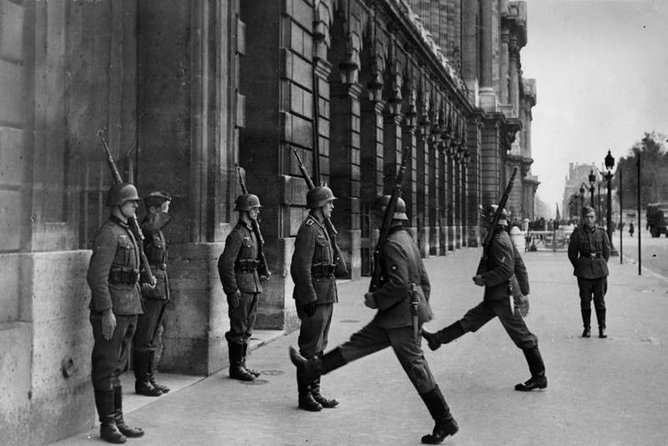
You begin at 32 Boulevard Poissonnière at 2:00 pm. The route moves south toward the Opera district, Place Vendôme, Rue de Castiglione, and Place de la Concorde. That progression matters. You start with everyday life and the public world of food and entertainment, then move toward finance, official power, luxury, military headquarters, resistance, and liberation.
I appreciate that the tour does not treat the Occupation as one simple story. You hear about collaboration and resistance, but also about people trying to eat, work, perform, trade, or simply get through the day. That makes the subject more human and less like a list of dates.
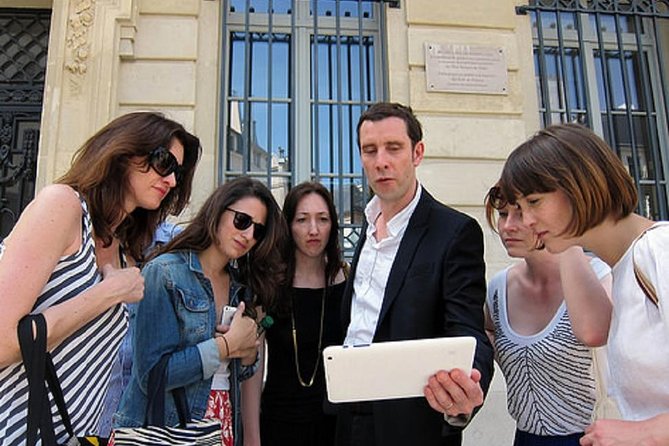
The guide’s method is particularly useful for this kind of walk. Thierry Heil is described as an historian who uses clear explanations, anecdotes, photographs, and testimonies tied to the exact places where events unfolded. Brad has also led the tour and is noted for giving a broad overview while answering questions. If you enjoy asking questions as you go, the 12-person limit should help.
You can also read our reviews of more tours and experiences in Paris.



Bouillon Chartier and the ordinary city under occupation
The first stop is Bouillon Chartier Grands Boulevards, a historic restaurant setting used here to discuss daily life during the Occupation. You spend about five minutes at the location, with admission included at no extra cost.
This opening gives the tour a useful human scale. Before discussing armies and governments, you consider dramatic incidents and the practical routines of people living under restrictions. A restaurant is a good place to begin because food shortages, altered habits, and public behavior help explain how occupation affected people who were not directly involved in combat.
Do not expect a long indoor visit or a meal as part of the tour. The stop is brief, and its purpose is interpretation. You are there to connect the location with stories, not to sit down for lunch.
Folies Bergère and the uneasy life of entertainment
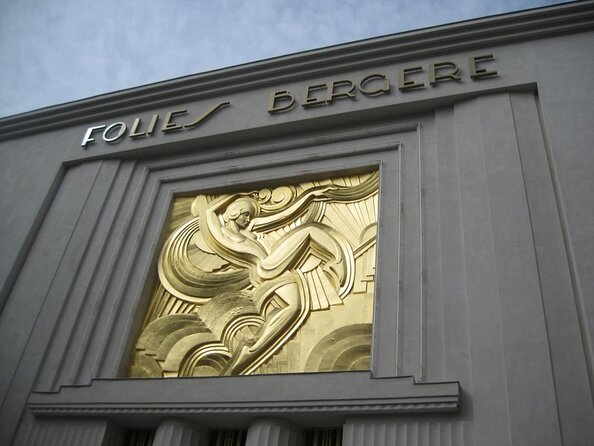
A few minutes later, the tour reaches the Folies Bergère. The seven-minute stop looks at artistic life under German control, including stars, music halls, and cinemas.
This is one of the more revealing parts of the route because it complicates the usual image of a silent, frozen city. Performances continued. Artists worked. Audiences gathered. Yet entertainment took place inside a political system shaped by censorship, German presence, and propaganda.
The value here lies in the questions the guide raises. Who could perform? Who could attend? What did it mean for a theater or music hall to remain open? You are not simply told that Parisian culture continued. You are shown how cultural activity could coexist with occupation, compromise, fear, and official control.
Passage Verdeau and the physical atmosphere of the period
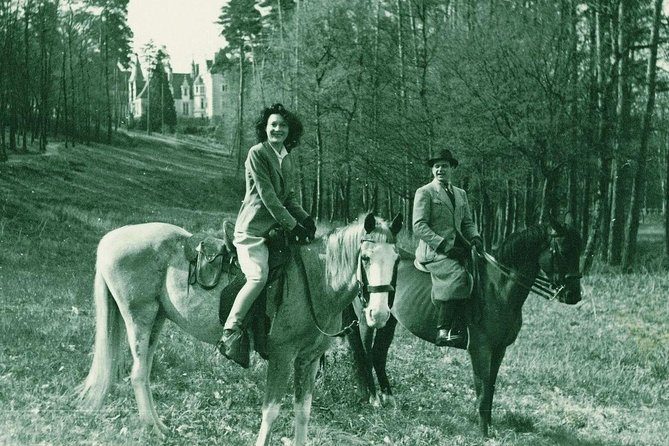
Passage Verdeau is another short stop, lasting about five minutes. Its covered passage retains an atmosphere and decoration that can help you picture the commercial world of the period.
Across from the passage, you also hear about a building that housed a brothel requisitioned by the German army. This is an uncomfortable detail, but it shows why place-based history can be more powerful than a general lecture. The past is tied to ordinary addresses, not only to monuments and battlefields.
The stop is brief, so the guide must move quickly. If you want every detail about the passage itself, you may need to ask a question or return later on your own. Still, the combination of surviving surroundings and difficult stories gives this section a sharp edge.
Hôtel Drouot, art sales, and stolen Jewish property
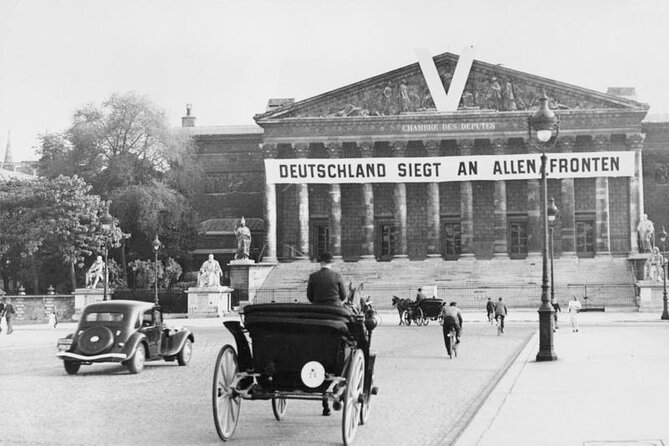
At Hôtel Drouot, you spend about ten minutes examining the auction house’s role during the Occupation. A considerable number of everyday objects and works of art were sold there during the period.
This stop introduces one of the tour’s most serious subjects: the theft and forced sale of Jewish property. The story is not limited to paintings by famous artists. Everyday belongings mattered too. Furniture, household objects, jewelry, and personal possessions could be taken, sold, or passed through the market.
The guide also tells the remarkable story of a German art dealer working for the Reich. That detail gives the discussion a human figure and a clear connection between the Paris art market and German authorities.
I find this stop especially useful because it connects economic activity with persecution. An auction house can look neutral from the outside. During wartime, though, the question of who owned an object, how it reached the market, and who profited from the sale becomes central.



The 9th arrondissement town hall and everyday resistance
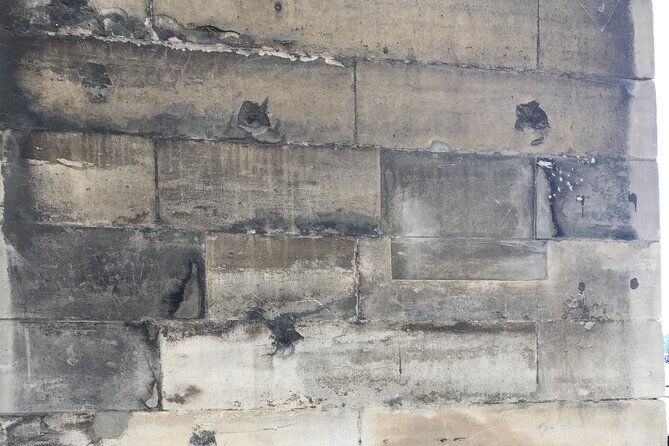
At the Mairie of the 9th arrondissement, the subject shifts toward resistance. The guide uses the town hall and the story of one employee to discuss how local officials could help, resist, or make difficult choices.
The tour also addresses denunciations and what might be called ordinary resistance in France. That is an important distinction. Resistance was not limited to famous networks or armed attacks. It could involve acts by civil servants, workers, neighbors, and people who helped others while trying to avoid attracting attention.
This ten-minute stop should appeal to anyone who wants a more careful view of French society during the war. The story is not presented as a simple division between heroes and villains. Institutions contained people with different motives, and ordinary residents faced risks that varied from one situation to the next.
Maison Dorée and the money behind occupation
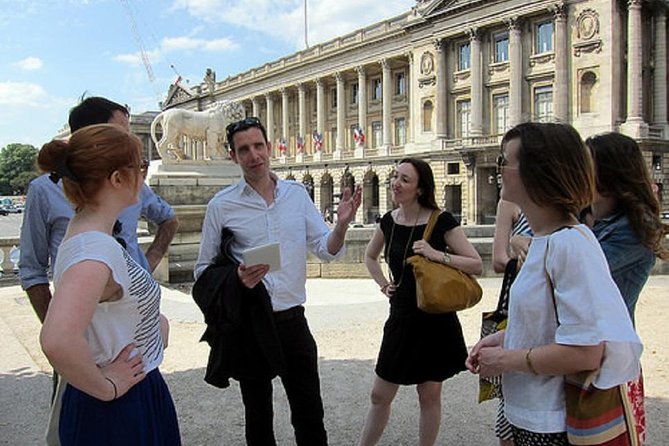
Near Maison Dorée, now associated with BNP Paribas, the tour turns to banks and finance. Before that, the guide discusses the Paris stock exchange, the armistice agreements between France and Germany, and the political and economic results that followed.
This is a useful pause from military stories. Occupation was maintained not only by soldiers and police. It also depended on agreements, money, supplies, institutions, and business decisions. Learning about banks helps you see how control worked across the city.
The stop lasts about ten minutes. The subject can be more abstract than the stories at the Folies Bergère or Hôtel Drouot, so this is a place where clear explanation matters. According to the supplied descriptions, Thierry Heil is especially effective at laying out complicated subjects in direct language and connecting them to the buildings around you.
Pathé Opéra and cinema under German control
At Pathé Opéra Premier, you see an example of a cinema requisitioned for German soldiers. The stop lasts about ten minutes and gives you another way to consider the separation between the French public and occupying forces.
Nearby, the tour discusses a building associated with one of the major exhibitions in Paris promoting antisemitism. This pairing is stark. One site shows how entertainment spaces could be redirected for military use. The other shows how exhibition halls could be used for propaganda.
You should listen closely here, since the route covers several linked ideas in a short time: cinema, military privilege, propaganda, and antisemitic politics. The point is not merely that German soldiers watched films. It is that public cultural spaces could be reorganized to serve the occupying power.
Place de l’Opéra and the German command structure
The next stop is BRED Banque Populaire, Espace patrimonial, near Place de l’Opéra. You spend about ten minutes examining why the square was so symbolic during the Occupation.
The Kommandantur was located here, and the Café de la Paix and the Opera add further stories. These buildings placed military authority, social life, and cultural prestige within the same public space.
This is a good moment to look around rather than stare only at the guide. Notice how a grand civic square can hold several competing meanings at once. For German officers, it was a place of authority and visibility. For Parisians, it remained part of the city’s daily life. For the resistance and later the liberation forces, it became part of a city that had to be reclaimed.
Place Vendôme, the Ritz, and the face of collaboration
At Place Vendôme, the tour spends about fifteen minutes on one of its fullest sections. You begin with the jewelry shops on Rue de la Paix, then move to the Ministry of Justice, a resistance network established opposite it, and the Ritz hotel.
The Ritz was a major center of collaboration and occupation, with well-known figures regularly visiting. The subject can be tempting to treat as glamorous wartime gossip, but the tour places it within the wider question of who gained access, influence, and comfort while much of the population lived under constraint.
The discussion of jewelry shops adds an economic angle. Luxury goods, German officers, wealthy clients, and changing ownership all help explain how occupation affected Paris’s most prestigious commercial district.
I would give this section your full attention. Fifteen minutes is longer than most stops, but there is still a lot to cover. The Ritz, the Ministry of Justice, resistance activity, and the jewelry trade each could fill a separate talk.
Rue de Castiglione and the final days of German control
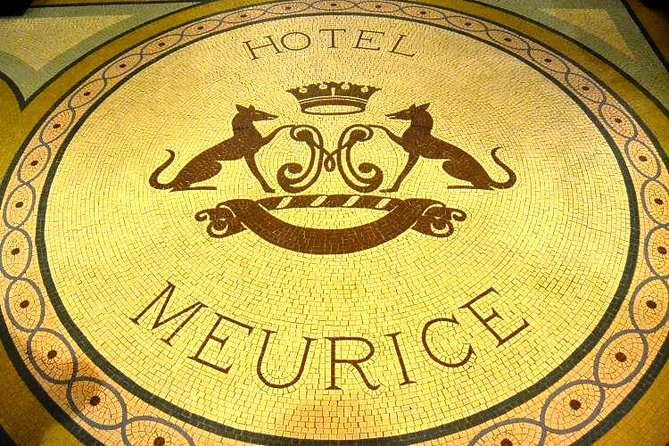
On Rue de Castiglione, the focus moves to the large hotels that housed German army headquarters. Behind the Meurice hotel, you hear about the main people connected with these locations and the battles that ended with liberation.
This section links the administrative side of occupation with the fighting that brought it to an end. Hotels were not just places for wealthy visitors. In wartime Paris, some became command centers, offices, and homes for officers.
The stop lasts about ten minutes. Since the area is filled with grand buildings, it can be easy to focus on architecture and miss the military meaning. The guide’s photographs and anecdotes help you picture the street during the final battles rather than seeing it only as an elegant shopping district.
Place de la Concorde and the visible marks of liberation
The walk ends at Place de la Concorde after about fifteen minutes there. The square still carries traces of the battles of liberation through memorial plaques honoring soldiers, resistance fighters, and civilians.
From the terrace, old photographs of the square and nearby places help you compare the wartime scene with the Paris you see today. The guide also returns to several famous people connected with the period.
Ending here gives the tour a clear shape. You begin with ordinary life and move through entertainment, money, persecution, local administration, German command, collaboration, resistance, and combat. At the end, memorial plaques bring the focus back to individual lives.
The finish is practical too. Place de la Concorde is central, near major transport links and many other Paris sights. You can continue sightseeing from here without having to retrace the route.
What the $25.44 price gets you
At $25.44 per person, this is a strong price for a 2-hour-15-minute specialist tour, particularly with a maximum of 12 people. You are paying for a focused historical explanation rather than entry to a museum or a major monument.
The value depends on your interests. If you already know the Occupation well and prefer to explore silently, you may find the walk too guided. If you want to understand how the period affected actual streets and institutions, the cost is modest.
All listed stops have free admission, so there are no extra site-ticket costs built into the route. The real value comes from the guide’s preparation, the old photographs, and the way separate locations are connected into one story.
The tour is usually booked about 25 days ahead. That advance pattern suggests you should plan early if the date and French-language format suit your schedule, especially since the group limit is small.
Language, pace, and practical planning
The tour begins at 2:00 pm and ends at Place de la Concorde. The full duration is approximately 2 hours 15 minutes, with stop times ranging from five to fifteen minutes.
You should expect an outdoor route with frequent pauses. Wear shoes you can walk in and check the weather before leaving. The experience requires good weather, and a cancellation caused by poor conditions can result in another date or a full refund.
The standard tour is in French. If you want English, contact Interkultur Paris before booking or as early as possible. Do not assume that an English guide will be present at the regular departure.
The activity is near public transportation, and service animals are allowed. Most people can participate, but the supplied information does not give a detailed accessibility statement for the route, so ask the provider if you have specific mobility needs.
Free cancellation is available up to 24 hours before the local start time for a full refund. Changes or cancellations made inside that 24-hour window are not accepted for a refund. A minimum number of people is also required, and if that minimum is not met, you are offered another date or experience, or a full refund.
Who should book this Occupation and Liberation tour
I recommend this walk if you want history tied to real addresses and if you enjoy listening to a guide explain difficult subjects with care. It is a good fit for visitors who have already seen the major monuments and want to read Paris through the events of the 1940s.
It also suits French speakers who want a local-language experience. One American participant specifically chose French-language tours to experience Paris more as Parisians do, which is a useful reminder that this is not simply an English tour with a French setting.
You should think twice if you need a fully English experience confirmed in advance, dislike outdoor walking, or want long visits inside each building. The stops are short, and many are viewed from public streets.
Should you book it?
Book this tour if the Occupation and Liberation of Paris are more than a passing interest. Thierry Heil brings together daily life, art theft, finance, propaganda, resistance, collaboration, and military history in a route that stays focused and manageable.
The strongest reasons to go are the small group, the old photographs, the many place-specific stories, and the chance to see famous areas through a difficult chapter of French history. Confirm the language before paying, plan for good weather, and arrive ready to listen closely. At $25.44, it offers unusually good value for a specialist history walk.
FAQ
Where does the tour begin?
The tour begins at 32 Boulevard Poissonnière, 75009 Paris, France.
Where does the tour end?
The tour ends at Place de la Concorde, 75001 Paris, France.
What time does the tour start?
The scheduled start time is 2:00 pm.
How long does the experience last?
The tour lasts approximately 2 hours 15 minutes.
What language is the tour conducted in?
The standard tour is conducted in French. You can contact Interkultur Paris about an English-language tour.
How much does the tour cost?
The listed price is $25.44 per person.
How large is the group?
The tour has a maximum of 12 participants.
Are admission tickets included?
Each listed stop has free admission. The experience uses sites and locations along the route rather than charging separate entry fees for the stops.
Can I cancel for a full refund?
Yes. You can cancel at least 24 hours before the experience start time for a full refund. Cancellations or changes made less than 24 hours before the start are not refunded or accepted.
What happens if the weather is poor or the minimum group size is not met?
If poor weather causes cancellation, you are offered another date or a full refund. If the minimum number of participants is not reached, you are offered another date or experience, or a full refund.