REVIEW · NARBONNE
Narbonne: visit the Archbishops’ Palace and Cathedral
Book on GetYourGuide →Operated by Marion Quart · Bookable on GetYourGuide
Narbonne’s power is all in the details. In a tight 2 hours, you’ll move from medieval grandeur to Roman-era streets, then finish at the market heart of Les Halles. I especially liked the way Marion Quart helps you see how the Archbishops’ Palace and the cathedral connect as one story, not two separate stops. One thing to consider: several major add-on interiors cost extra if you want the Donjon, museum, or treasure room.
You also get a smart flow through places people usually skip. The cloister views, the monumental organ area, and the sculpted altarpiece make the cathedral feel tangible, not just impressive on paper. The via Domitia stop adds a useful before-and-after moment for understanding where Narbonne fits in older networks. If you prefer only inside-the-building time, expect some outdoor pacing and courtyard wandering.
This is a great format if you want focus, not fatigue. With a private group and a guide who keeps the pace lively (Marion’s style is professional, passionate, and easy to follow), you’ll come away with clear takeaways. The main caution is simple: you’re paying for a curated walking experience, and the most-ticketed spaces are separate.
In This Review
- Key highlights worth your attention
- Narbonne’s Archbishop’s Palace and Cathedral: why this 2-hour loop works
- Meet at Les Halles, then follow Narbonne from market life to sacred stone
- Via Domitia: the Roman thread you can actually point to
- Archbishop’s Palace façade, Grand Staircase, and the courtyards that show power
- Into the cloister: Saint-Juste and Saint-Pasteur Cathedral from the right angle
- Inside the cathedral: vaulted ceilings, a monumental organ, and layered altarpieces
- Promenade des Barques, Pont des Marchands, and the finish at Les Halles
- What you get vs what costs extra: the €12 ticket for select interiors
- Price and time value: is $23 for 2 hours worth it?
- Language, group size, and comfort: planning around how the tour runs
- Who should book this Narbonne Archbishop’s Palace and Cathedral tour
- Should you book this tour?
- FAQ
- Where is the meeting point for the tour?
- How long is the Narbonne Archbishop’s Palace and Cathedral visit?
- What’s included in the tour?
- What is not included, and what costs extra?
- Do I need to buy my ticket in advance?
- What languages are offered by the guide?
- Is the tour wheelchair accessible?
Key highlights worth your attention
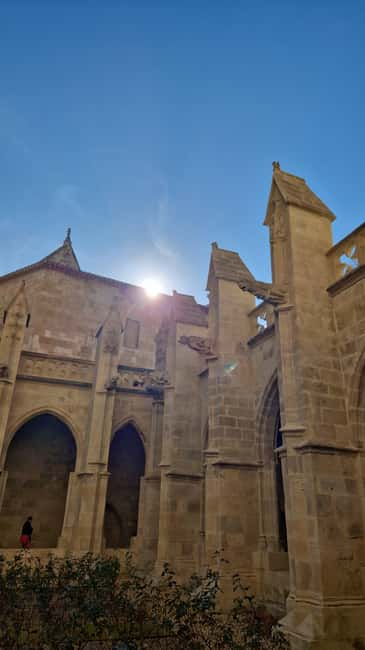
- Archbishops’ Palace courtyards and the Grand Staircase set the stage fast
- Cloister + gargoyle views that frame the cathedral from the right angle
- Saint-Juste and Saint-Pasteur Cathedral with its famous vaulted ceiling height
- Monumental organ and altarpieces spanning the 17th and 14th centuries
- Via Domitia for the city’s older Roman connections
- Promenade des Barques to Les Halles and Pont des Marchands to finish with local life
Narbonne’s Archbishop’s Palace and Cathedral: why this 2-hour loop works
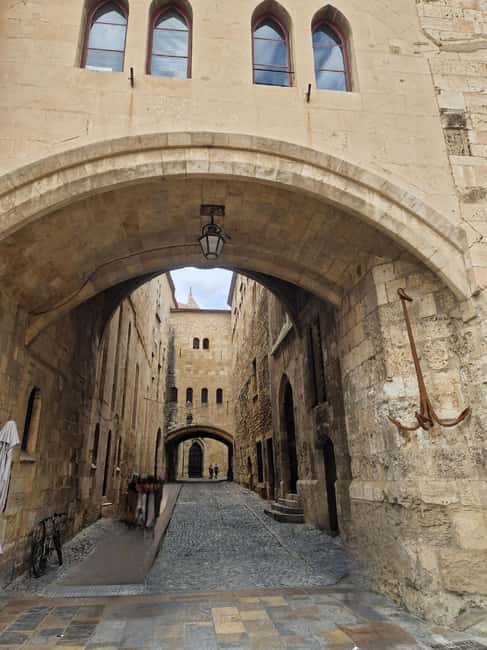
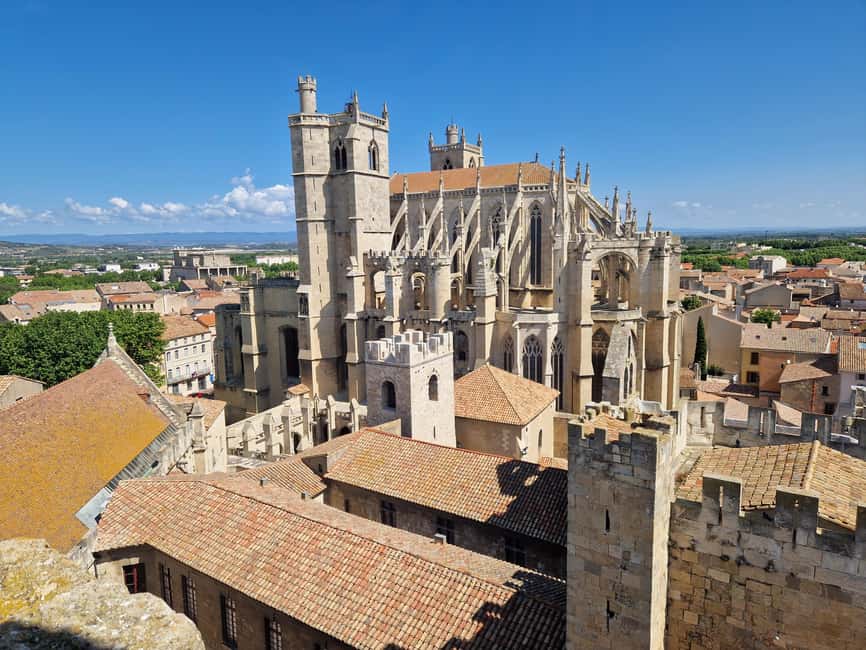
Narbonne is the kind of city where one building explains another. This tour is designed around that idea: you start with power and residence at the Archbishops’ Palace, then you walk into the cathedral complex that once served as a religious and civic center.
I like the pacing because it’s short enough to keep your attention, but long enough to make the architecture feel connected. You’re not just looking up at stone; you’re moving through courtyards, passages, and the cloister so the cathedral’s layout makes sense. That matters in Narbonne, where the layers are close together.
For 2 hours and about $23 per person, the value is in the guided interpretation. You get a structured route through multiple zones: palace, cathedral, cloister, a garden, and the market area that locals still use.
You can also read our reviews of more tours and experiences in Narbonne.


Meet at Les Halles, then follow Narbonne from market life to sacred stone
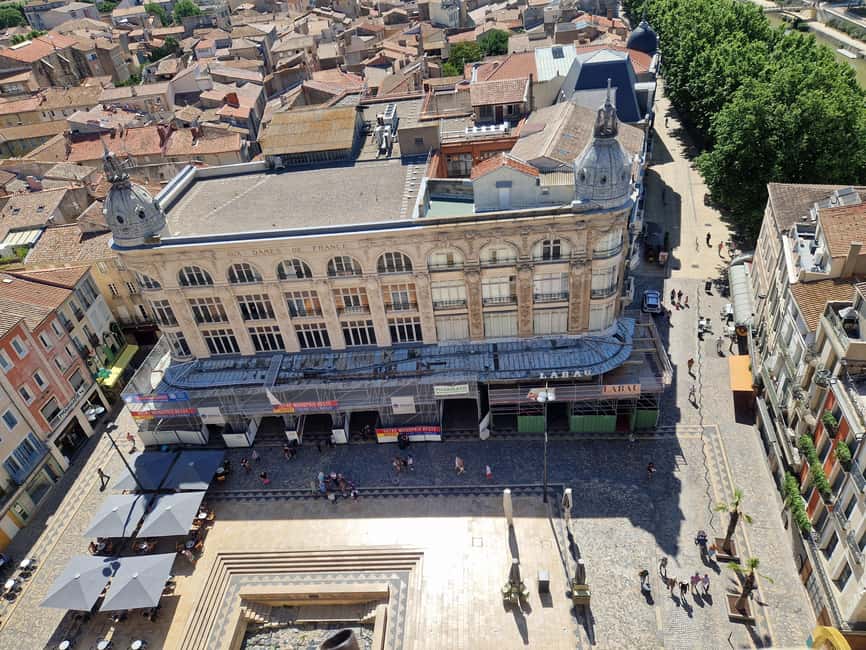
Your tour meeting point is practical and central: meet in front of the main entrance to Les Halles de Narbonne, near the war memorial. Your guide will be wearing a green neckerchief with a professional card. That visual cue helps when the streets are busy.
From there, you start by orienting yourself with today’s city layout—on the area around the former Palais des Archevêques, the Archbishops’ Palace. You’re basically learning how Narbonne’s past fits into your current walk, which is one of the fastest ways to enjoy a city without feeling lost.
This first stage matters because it explains why these places aren’t isolated monuments. The market area connects to how the city worked day to day, while the palace and cathedral show where authority and worship were centered. You’ll feel the shift as the streets tighten into stone courtyards.
Via Domitia: the Roman thread you can actually point to
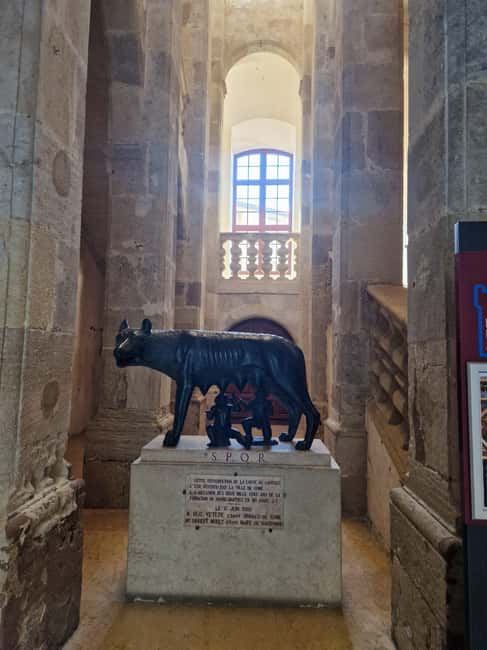
One of the most useful stops on the route is Via Domitia. Even if Roman history isn’t your main hobby, this pause gives you a clear anchor. You’re reminded that Narbonne wasn’t only a medieval center. The city was positioned along older movement routes that shaped commerce, travel, and settlement.
What I like here is that it’s not treated like a lecture. The tour frames Via Domitia as a “where we are in time” moment. That helps you understand why later buildings ended up where they did, and why Narbonne stayed important.
If you’ve got limited time in the area, this is a good add-on because it widens your mental map. Instead of treating the tour as only cathedrals and palaces, you also get a sense of long-distance connections.
Archbishop’s Palace façade, Grand Staircase, and the courtyards that show power
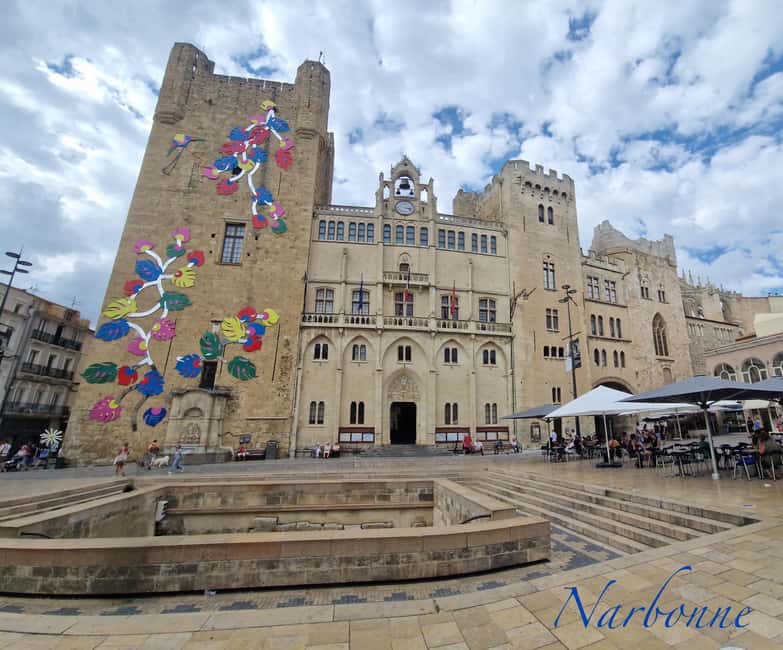
The palace visit is the backbone of the experience. You’ll begin around today’s Place de l’Hôtel de Ville, where the façade of the former palais des archevêques gives you plenty to read if you know what to look for. The guide’s job is to help you notice details you’d otherwise walk past.
Then you enter the main courtyard and see the Grand Staircase. Courtyards like this aren’t just pretty. They show how authority was performed—where important people gathered, where movement was staged, and how a residence functioned as a center of influence.
Expect a guided walk through exterior and interior courtyard space, with an emphasis on how the palace and cathedral sit as neighbors in daily life, not distant landmarks. You also pass through the Passage de l’Ancre and visit the archbishop’s garden as part of that same flow. That variety keeps the palace from feeling like one long hallway moment.
Possible drawback? If you’re hoping for a lot of museum-style content inside rooms, the tour focuses more on courtyards, passages, and key architectural features. Some add-on spaces are available with a separate ticket later (more on that below).
Into the cloister: Saint-Juste and Saint-Pasteur Cathedral from the right angle
Next comes the cathedral area, and the route choice makes a difference. You’ll follow the footsteps of the archbishops to the cathedral—Saint-Juste and Saint-Pasteur—and you’ll cross the cloister where gargoyles tower above you.
I love cloisters because they act like a visual switch. Outside, you’re surrounded by the city’s noise and scale. In the cloister, you’re suddenly aware of vertical lines, stone textures, and the way light moves across carved surfaces. Seeing those gargoyles from this in-between space makes them feel like part of the building’s system, not random decoration.
From here, the tour shifts to the interior experience without losing the sense of structure. You’ll be guided toward the cathedral’s signature spaces and you’ll understand why the cloister is an essential “transitional” part of the visit.
If you get motion-sensitive in older buildings, take your time in the cloister. Stone can create uneven footing, and you’re spending time looking up and around.


Inside the cathedral: vaulted ceilings, a monumental organ, and layered altarpieces
Once inside, the cathedral’s defining trait shows up quickly: the height of the vaulted ceiling. The space is known for that vertical scale, and the guide helps you appreciate it in a way that’s actually usable. You’re not just staring at the roof—you’re learning what to notice when you’re trying to understand how the interior is built to move your eyes upward.
The tour also brings you to the monumental organ, which is a great anchor for what this building was meant to do. Music wasn’t a side feature. It helped shape ceremony and the emotional tone of worship.
You’ll also stop for two types of altarpieces:
- A 17th-century altarpiece
- A 14th-century sculpted altarpiece, which the guide presents like a picture book of carved scenes and details
I like that pairing because it shows continuity and change. You see how different periods used art to guide meaning, and you get a sense of what remained important enough to keep refining over time.
One practical note: cathedrals often have cooler temperatures than the street, and the acoustics can change how sound carries. If you tend to miss spoken details, you’ll likely benefit from staying close to your guide and following the route cues.
Promenade des Barques, Pont des Marchands, and the finish at Les Halles
The ending is where this tour becomes more than architecture. You’ll take a stroll along the Promenade des Barques, which leads to the Halles—the emblematic meeting place of the Narbonnais.
Then you continue around the Pont des Marchands area. This is a smart choice because it reconnects the earlier story of power and worship to the place where everyday life kept happening. Even if you visit the cathedral and palace and feel you’ve learned a lot, the walk to Pont des Marchands gives your brain a place to land.
Les Halles is also the kind of local stop that helps you remember the city afterward. You can use it as a timing marker for the rest of your day—grab a snack, pick up something small, or just watch how people move through the market space.
What you get vs what costs extra: the €12 ticket for select interiors
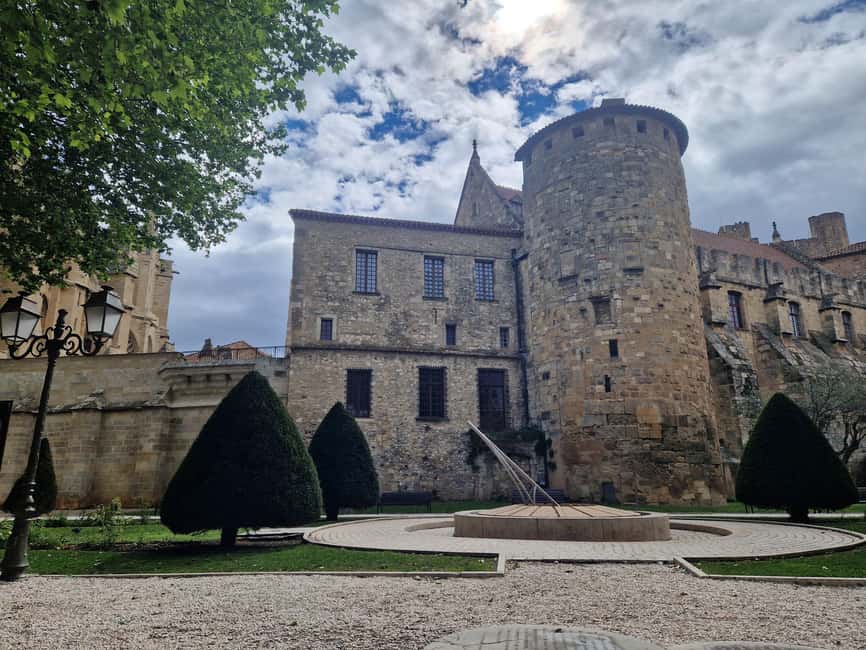
The main tour includes access to key areas:
- Via Domitia
- Archbishops’ Palace (exterior and interior courtyards)
- Passage de l’Ancre
- Cloister
- Cathedral (interior and exterior)
- Archbishop’s garden
- Promenade des Barques – Pont des Marchands
- Access to Les Halles
Not included are a few ticketed add-ons:
- Admission to the Donjon
- Entrance to the town’s museum
- Entrance to the cathedral’s Treasure Room
Those additional admissions are available if you purchase a €12 admission ticket. If you’re a collector-type of visitor—someone who wants to see everything in one pass—check whether the Donjon, museum, and Treasure Room matter to you. If you’re more focused on architecture and the main cathedral/palace story, you may not need the extra ticket.
Price and time value: is $23 for 2 hours worth it?
For $23 per person with a guide, the value comes from three things: structure, interpretation, and coverage.
First, structure. In two hours you cover multiple “must-not-miss” zones: palace courtyards, cloister, cathedral interior highlights, plus the walk to the market area. That beats trying to self-plan a tight route in a foreign city.
Second, interpretation. The cathedral’s big features—the vaulted ceiling, organ, and both altarpieces—are impressive on their own, but the guide helps you notice what makes them meaningful. That’s where guided time becomes worth paying for.
Third, coverage that still feels paced. You’re not stuck in one building for the full two hours. You get breaks in courtyard and cloister spaces, then a city-walk finish.
If you’re comparing costs, remember the €12 ticket is separate for certain interiors. Still, the core tour gives you a lot of “see it and understand it” time for the base price.
Language, group size, and comfort: planning around how the tour runs
This is a private group tour, guided by Marion Quart. The tour language is French and Sangro. If you speak English and don’t read French well, you’ll still get the visual experience, but understanding the spoken context will depend on the language support offered on your booking.
The group type being private usually means you can move at a more comfortable pace and ask clarifying questions, which is especially handy for architecture. Also, the tour is wheelchair accessible, so it’s worth considering if mobility access is a priority for you.
One more planning thought: since the route includes courtyards, cloister areas, and outside walking to Promenade des Barques and Pont des Marchands, wear shoes that handle stone surfaces and keep you steady.
Who should book this Narbonne Archbishop’s Palace and Cathedral tour
I think this tour fits best if you want:
- A focused introduction to Narbonne’s power center at the cathedral and archbishops’ palace
- Architectural stops you can actually explain afterward
- A route that mixes sacred sites with the living city (Les Halles)
It’s especially good for history-minded visitors who like the big picture but still care about specific details. Marion’s guide style is professional and enthusiastic, with an easy way of sharing information that doesn’t feel heavy. If you prefer a guide who makes things understandable without overcomplicating them, this one is a solid match.
If you’re an absolute cathedral maximalist who wants only the deepest museum-level interiors and donjons, you might still enjoy this tour but you’ll probably want to add the €12 ticket to cover the extra spaces.
Should you book this tour?
If you have around half a day in Narbonne and you want a guided route that connects palace, cathedral, and the city market ending, I’d book it. It’s built for people who want clarity fast: what you’re seeing, why it matters, and how the spaces relate.
I’d also book it if you’re traveling with someone who likes history but gets bored with long lectures. The stops are concrete—Grand Staircase, cloister with gargoyles, vaulted ceiling height, organ, altarpieces—and the walk ends in a place you can enjoy afterward.
Skip or reconsider only if you strongly prefer a museum-only visit, or if you’re expecting that every major interior space is included without extra admission. The €12 ticket is your fork in the road.
FAQ
Where is the meeting point for the tour?
Meet in front of the main entrance to Les Halles de Narbonne, near the war memorial. Your guide will be wearing a green neckerchief with a professional card.
How long is the Narbonne Archbishop’s Palace and Cathedral visit?
The tour lasts about 2 hours.
What’s included in the tour?
It includes Via Domitia, the Archbishops’ Palace (exterior and interior courtyards), Passage de l’Ancre, the cloister, the cathedral (interior and exterior), the archbishop’s garden, the Promenade des Barques to Pont des Marchands, and access to Les Halles.
What is not included, and what costs extra?
Admission to the Donjon, the town museum, and the cathedral Treasure Room are not included. Those admissions are available with the purchase of a €12 admission ticket.
Do I need to buy my ticket in advance?
You can reserve now and pay later, so you can keep your plans flexible.
What languages are offered by the guide?
The live tour guide offers French and Sangro.
Is the tour wheelchair accessible?
Yes, the tour is wheelchair accessible.