REVIEW · PARIS
Montmartre. The artist village+its unique charm. My hood.
Book on GetYourGuide →Operated by Paris through my eyes · Bookable on GetYourGuide
Montmartre still feels like Paris’s secret attic. This tour is built around Montmartre’s artist-village streets and the kind of local storytelling you only get from someone who lives there—Nadine, German and based in the neighborhood. You’ll also get a small-group experience in English or German, with lots of chances to ask questions and shape the pace.
I love how the route keeps you moving from iconic sights to quieter backstreets, then tops it off with the hill’s panorama. You get a hilltop payoff at Sacré-Cœur, and the walk frames why Montmartre mattered to artists long before it became a postcard stop. One thing to consider: this is a walking tour up a hill, so expect uphill steps and uneven streets—it’s not suitable for wheelchair users and it’s not recommended for people over 95.
In This Review
- Key things you’ll notice fast
- Why Montmartre Still Feels Like an Artists’ Village
- Meet Nadine and Get a Local-First Walking Tour
- Starting at Boulevard de Clichy: Set Your Bearings Early
- Montmartre Streets and Photo Stops: See the Famous Pieces Differently
- The 30-Minute On-Foot Walk: Neighborhood Texture Over Rush
- 18th Arrondissement Stops: A Different View of Paris City Life
- Sacré-Cœur at 130 Meters: The Best Part Is the Breath of Air
- Price and Timing: Is $42 Good Value?
- Who This Tour Is For (and Who Should Think Twice)
- Tips to Make Your Two Hours Work
- Should You Book Montmartre Through My Eyes?
- FAQ
- How long is the Montmartre Through My Eyes tour?
- What is included in the price?
- Which languages are the guides available in?
- What is the group size limit?
- Where do we meet and where do we end?
- Is this tour wheelchair-friendly?
- What kind of shoes should I wear?
- Are there items you don’t allow during the tour?
- Is free cancellation available?
Key things you’ll notice fast
- An insider with an outsider’s lens: Nadine’s German background adds context to what makes Paris feel uniquely Paris.
- Hidden corners, not just the main angles: you’ll hit photo stops and calmer streets beyond the most crowded paths.
- Artists’ legends, tied to real streets: you’ll hear how Montmartre shaped big names like Renoir and Dalí.
- The Sacré-Cœur viewpoint at 130 meters: the higher you go, the more the city opens up under you.
- A small group capped at 8: easier conversation, more personal guidance.
Why Montmartre Still Feels Like an Artists’ Village
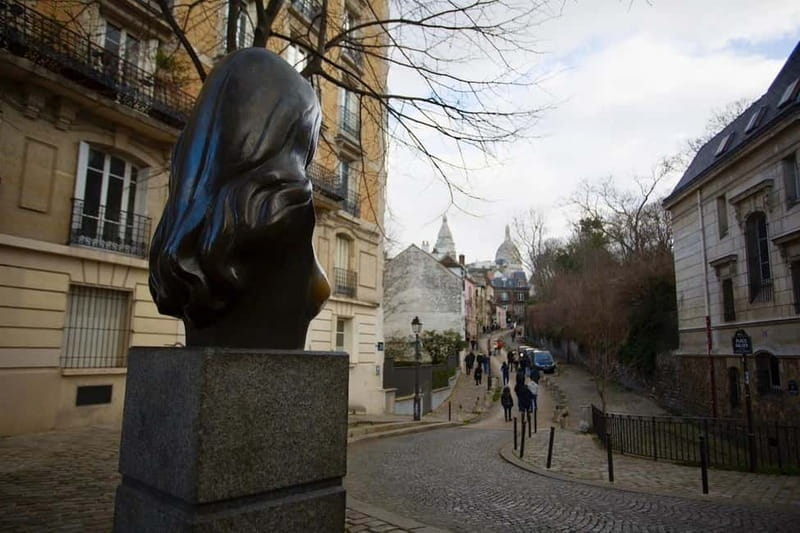
Montmartre has a way of making you look twice at the same street. Even today, the neighborhood carries the feel of the old artist village: narrow lanes, steep gradients, and little corners that seem too specific to be staged. The stories matter, too. Montmartre is linked to major creative figures—people like Pierre-Auguste Renoir, Dalida, Salvador Dalí, Vincent van Gogh, Pablo Picasso, and Henri de Toulouse-Lautrec. Learning why those names belonged here gives you a different kind of attention as you walk.
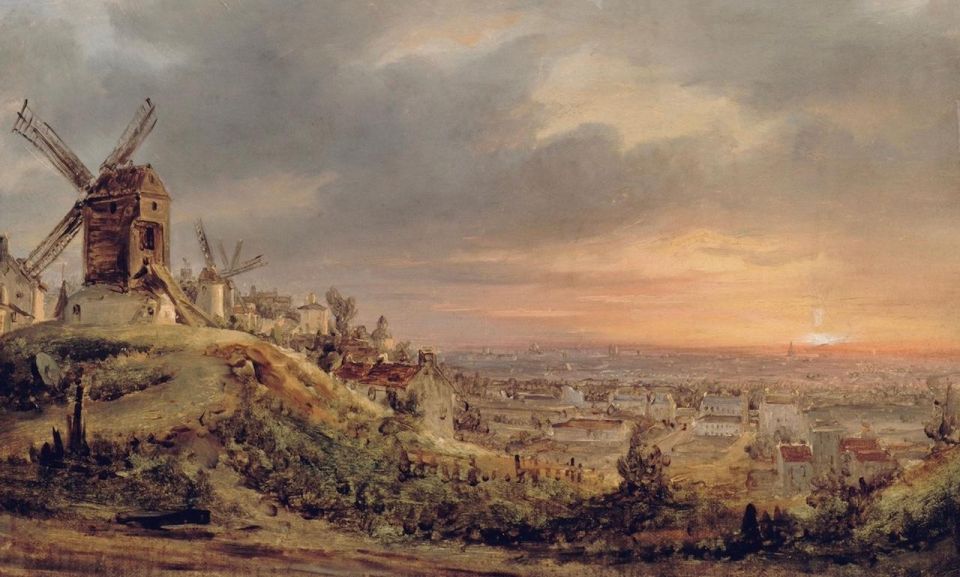
Another detail that helps the neighborhood click: up until around 1900, Montmartre had more than 30 windmills scattered across the hill. You won’t be strolling past working windmills today, but knowing the hill used to be shaped by wind power changes how you interpret the terrain you’re climbing. The area isn’t just “pictures and souvenir shops.” It’s built on old work rhythms, studios, and a community that grew around creativity.
You can also read our reviews of more tours and experiences in Paris.



Meet Nadine and Get a Local-First Walking Tour
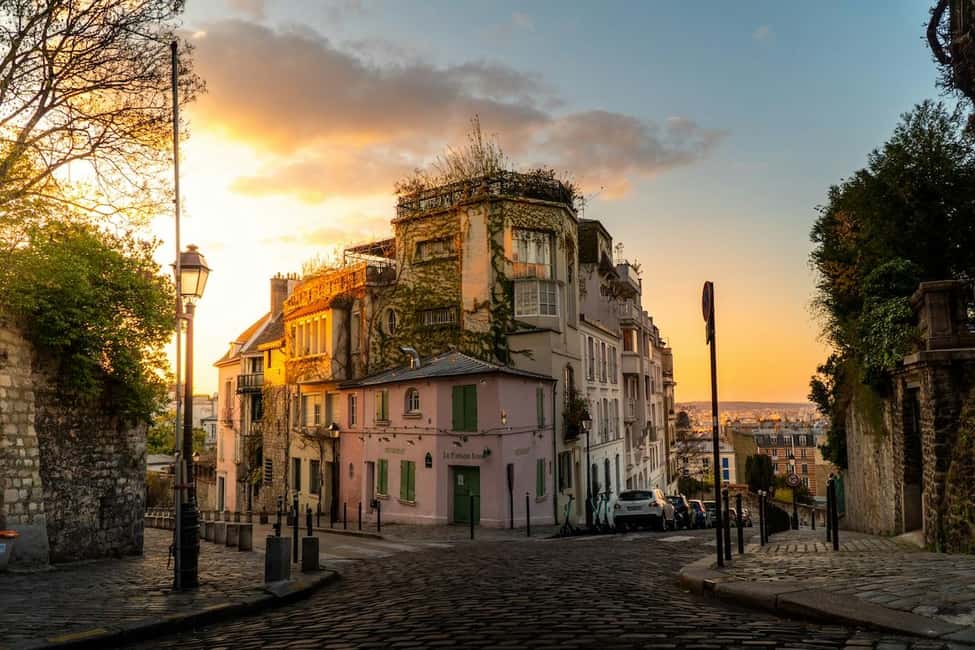
This experience runs with a live guide in English and German, and the “through my eyes” approach is the point. Nadine isn’t just reciting facts. She brings what she sees day to day and blends it with a wider understanding of how the rest of the world experiences Paris. As a German living in the 18th arrondissement area, she naturally explains things from both angles: what feels normal locally, and what feels special to visitors.
That matters because Montmartre is easy to misunderstand. Many first-timers arrive expecting a single, locked-in vibe. This tour helps you notice the layers instead: where the neighborhood shifts from iconic viewpoints to everyday street life, and where “Paris postcard” ends and a real neighborhood starts.
You’ll also appreciate the pacing if you’re the type who likes questions. The small group size—limited to 8—means you’re not shouting to be heard, and you can get answers that actually fit what you care about.
Starting at Boulevard de Clichy: Set Your Bearings Early
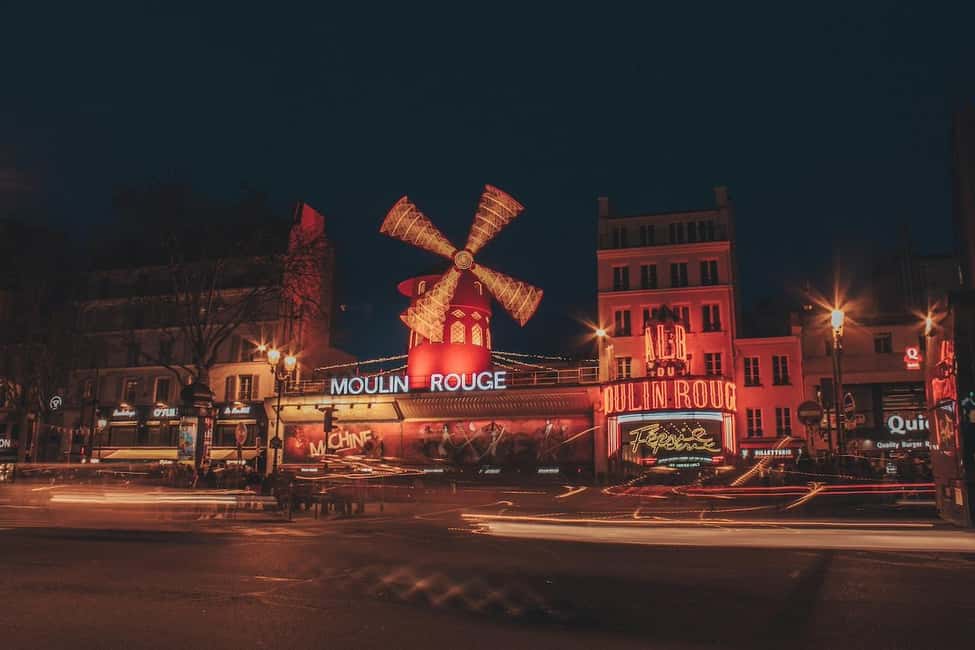
The tour uses one of two meeting points on Boulevard de Clichy: 82 Bd de Clichy or 88 Bd de Clichy. Meeting locations can vary depending on which option you book, so double-check your confirmation and plan to arrive a bit early.
Why I like this kind of start: Boulevard de Clichy gives you a practical “base” before the climb. Before you’re surrounded by steep lanes and crowd pull, you have a moment to orient yourself in the wider 18th arrondissement area. It’s the kind of setup that helps you later understand which streets you’re walking and why the Sacré-Cœur sits where it does.
If you can choose timing, a mid-morning start works well for this area’s walking rhythm—one of the nice things about a 2-hour format is that it keeps your day flexible. You can still do other Paris plans after.
Montmartre Streets and Photo Stops: See the Famous Pieces Differently
Once you begin exploring, expect a guided walking segment through Montmartre with built-in photo stops and commentary (about 15 minutes in this early stretch). This part is designed to get you into the neighborhood’s logic quickly: where views open up, which corners feel intimate, and how the hill’s shapes affect what you see.
You’ll be shown more than just the obvious “stand here, take photo” moments. The idea is to lead you into hidden parts of Paris, off the busiest tourist loops. That’s the difference between collecting images and actually learning the place.
A small practical note: photo stops in Montmartre can involve quick pauses while you adjust positions on stairways or narrow sidewalks. If you’re traveling solo or with someone who’s always camera-ready, it helps to keep your shoes comfortable and your hands free for balance.
The 30-Minute On-Foot Walk: Neighborhood Texture Over Rush
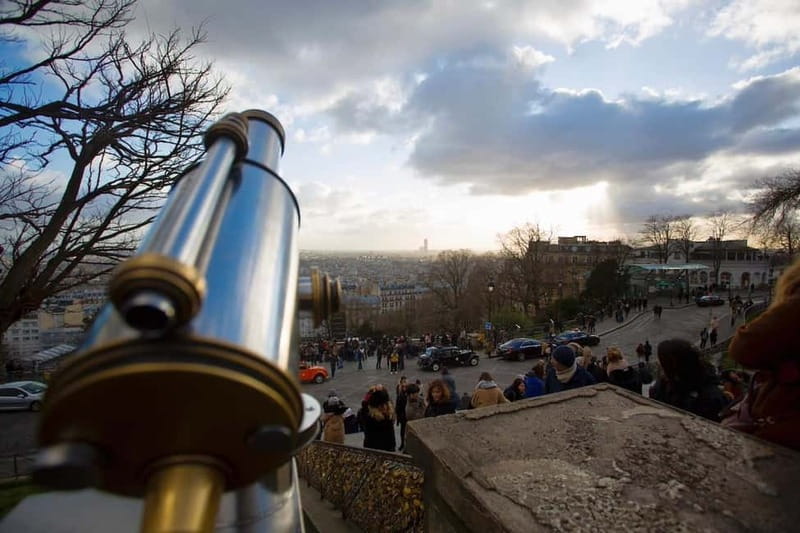
There’s a solid walking block built in (about 30 minutes) that focuses on moving through the area on foot rather than hopping between stops. This is where you start to feel Montmartre as a functioning neighborhood instead of a theme park.
As you walk, keep an eye on the street rhythm. Montmartre’s charm isn’t only the big landmarks—it’s how streets slope, how people use the edges of buildings, and how small view angles appear without warning. When the guide points out what to look for, suddenly the hill doesn’t feel like a single direction toward a single destination. It feels like a set of short discoveries stacked together.
This part also benefits you if you like conversation. In a small group, it’s easier to ask follow-up questions—like how the artist community changed over time, or why certain places still feel like they’re holding onto the past.





18th Arrondissement Stops: A Different View of Paris City Life

After that initial Montmartre introduction, the tour includes a shift toward the broader 18th arrondissement atmosphere, with another photo stop and guided sightseeing for around 20 minutes. This segment is valuable because it prevents Montmartre from feeling like a bubble.
Even if you’re only here for a short time, you’ll want your “Montmartre time” to connect back to real Paris. This is one way to do it: you’re not just climbing toward a viewpoint and then rushing away. You’re also seeing how the neighborhood sits within the city’s everyday texture.
One more thing I like about this structure: it balances anticipation. You’re not immediately dropped into the biggest landmark. You get context first, so when Sacré-Cœur arrives, it lands harder—because you understand what you walked through to reach it.
Sacré-Cœur at 130 Meters: The Best Part Is the Breath of Air
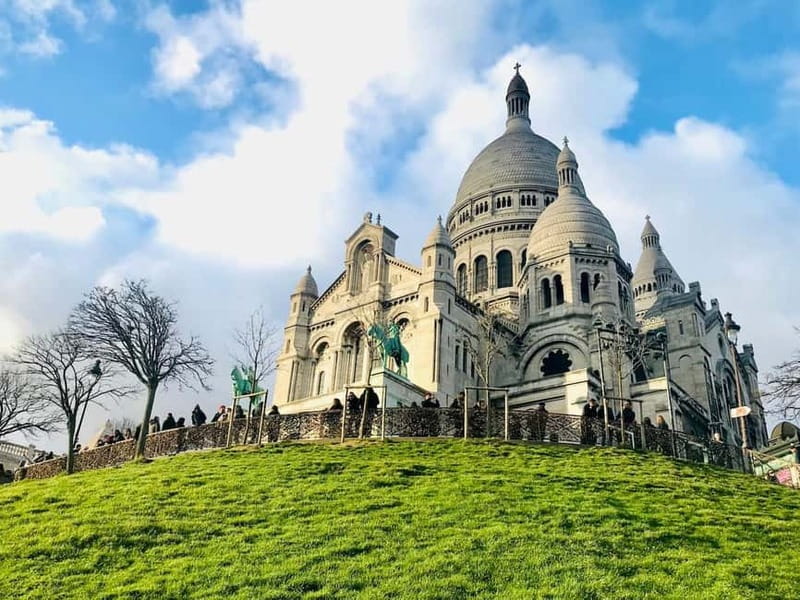
Sacré-Cœur is the payoff, and the tour builds it in carefully. You’ll have a break time plus a photo stop and guided visit (about 20 minutes total in this stage). The hill rises to 130 meters, which makes it one of the highest viewpoints in Paris.
When you reach that height, the experience changes instantly. The views are the obvious draw, but the best part is how open the city feels when you’re above rooftops. It’s also a moment where the guide’s context can matter: instead of treating Sacré-Cœur like a checklist item, you’re able to understand it as the hill’s crown—an ending that makes sense after the climb.
Practical consideration: the area around Sacré-Cœur can get busy. This tour keeps you moving with purposeful stops, but you should still expect crowds near the main viewpoint. The upside is that the guide helps you find your angles and keep the visit from turning into a frustrating “wait in line and shuffle forward” situation.
Price and Timing: Is $42 Good Value?
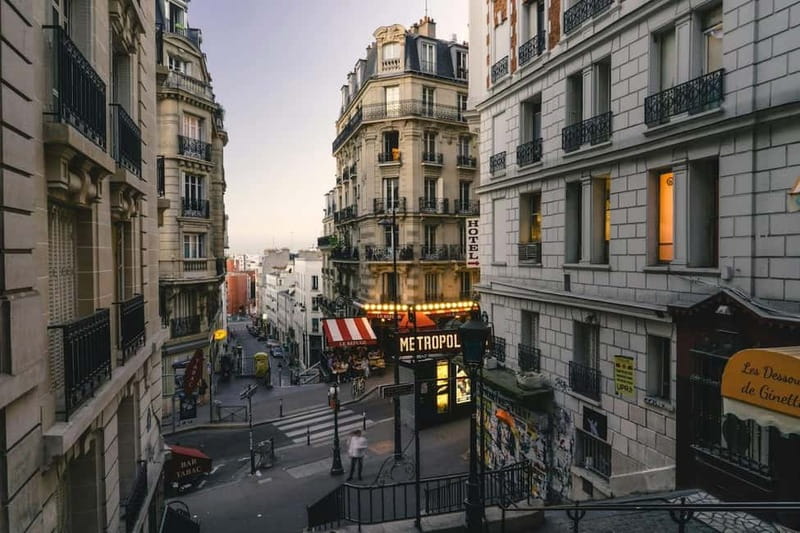
At $42 per person for a 2-hour guided walking tour, the value depends on what you want from Montmartre.
If your goal is to see the big-name sites and walk around on your own, this might feel like “just another tour.” But if your goal is to get the meaning behind the streets—the artist village background, the windmill-era context, the off-the-beaten-path corners—then the guide becomes the product. You’re paying for the ability to interpret what you’re looking at while you’re still in the moment.
The small group cap at 8 participants is part of the value equation. With fewer people, you can ask questions and get responses that aren’t rushed. Also, the tour is offered in English and German, which is a real benefit if you want more than fragmented translation.
Finally, the timing matters. Two hours is long enough to feel like you explored, but short enough that you can still fit other Paris essentials the same day. That flexibility is underrated—Paris days get packed fast.
Who This Tour Is For (and Who Should Think Twice)
This tour fits best if you:
- want a guided walk rather than self-guided wandering
- enjoy learning neighborhood context, not just taking photos
- like smaller groups where you can actually talk to the guide
- appreciate a guide with a mix of insider detail and outside perspective
It’s not a great fit if you need:
- wheelchair access (the tour is not suitable for wheelchair users)
- travel conditions that avoid heavy walking and steps
- a low-impact option (the hill is part of the whole point)
You’ll also want to consider age and mobility. The tour is explicitly marked as not suitable for people over 95, and the route naturally includes uphill walking.
Tips to Make Your Two Hours Work
A walking tour only feels good if your logistics don’t fight you. Plan on comfortable shoes, because Montmartre’s streets and steps are not the place for flimsy footwear. If you’re sensitive to steep climbs, pace yourself early—don’t wait until you’re already tired.
Also, think about your mindset. Montmartre rewards curiosity. If you show up ready to ask questions and watch street-level details, the guide’s storytelling will connect the dots fast. If you show up only expecting the obvious skyline shots, you may feel like you’re “missing something” because the tour spends time on less-famous corners.
One more small value tip: bring your own questions. Whether you’re curious about why the hill mattered to artists or what Montmartre looked like before windmills disappeared, having even a couple of prompts helps you get more out of the guide’s perspective.
Should You Book Montmartre Through My Eyes?
I’d book this if you’re trying to understand Montmartre, not just visit it. The mix of artist-village context, careful photo stops, and a hilltop finish at Sacré-Cœur makes it a smart 2-hour choice. The English/German live guide, plus the intimate group size, is the kind of setup that improves your odds of having a genuinely personal experience.
You might skip it if you want a flexible self-paced stroll, you dislike walking hills, or you need wheelchair-friendly accessibility. But for most people who can handle a moderate walking route, this is a strong way to see Montmartre with clarity—and to leave with the sense that you actually learned the neighborhood.
FAQ
How long is the Montmartre Through My Eyes tour?
The tour lasts about 2 hours.
What is included in the price?
You get a guided walking tour, with a guide who brings an insider/outsider perspective.
Which languages are the guides available in?
The live tour guide speaks English and German.
What is the group size limit?
The group is limited to 8 participants.
Where do we meet and where do we end?
There are two possible starting points on Boulevard de Clichy (82 Bd de Clichy or 88 Bd de Clichy), and the meeting point may vary depending on the option booked. The tour ends at Parv. du Sacré-Cœur (two drop-off locations).
Is this tour wheelchair-friendly?
No. The tour is not suitable for wheelchair users.
What kind of shoes should I wear?
Comfortable shoes are recommended because this is a walking tour.
Are there items you don’t allow during the tour?
The tour does not allow weapons or sharp objects, and alcohol and drugs are not allowed.
Is free cancellation available?
Yes. You can cancel up to 24 hours in advance for a full refund.