REVIEW · PARIS
Montmartre/Sacre-Coeur/Paris- Artistic & Bohemian Epicenter
Book on Viator →Bookable on Viator
Montmartre feels like a living art studio. This bohemian walk threads through Sacré-Cœur, Place de Tertre, and the hill-town lanes that inspired artists, filmmakers, and everyday Parisians. Expect street art, real neighborhood texture, and stops tied to French pop culture.
I love how the small group (max 15) keeps things personal, not rushed. I also love the mix of art-history storytelling with hands-on street-life moments, like watching sketch artists work in Place de Tertre and getting references to Montmartre scenes from Amélie along the way.
One consideration: the Sacré-Cœur area can have long entry lines, and Montmartre is hilly with cobblestones. If you’re sensitive to waiting or uphill walking, plan for a slower pace and bring patience.
In This Review
- Key things that make this Montmartre walk worth it
- Montmartre: the hill you walk up for the art and the attitude
- Your guide matters: local storytelling, not a lecture
- Stop-by-stop: what you’ll see from Sacré-Cœur down to the artist lanes
- 1) Basilique du Sacré-Cœur: the uphill payoff and the best view moment
- 2) Rue Lepic: impressionist footsteps and Amélie scene spotting
- 3) Place du Tertre: watching artists work in real time
- 4) La Maison de Dalida: a star’s home and a transnational story
- 5) Le Bateau-Lavoir: where early 20th-century artists met
- 6) Place des Abbesses: Art Nouveau details and everyday village life
- 7) Windmills of Montmartre: the 17th-century reminder of working life
- How long is it, and how to pace your day
- Price and value: what $48.37 buys you in Montmartre
- What to expect walking (and what could slow you down)
- Who should book this Montmartre walk?
- Should you book it?
- FAQ
- What is the duration of the tour?
- How much does the tour cost?
- Where does the tour start and end?
- Is the tour offered in English?
- Is a mobile ticket provided?
- How big is the group?
- Are there admission fees included for the main stops?
- Is coffee or tea included?
- Is the tour suitable for most travelers?
- Are service animals allowed?
Key things that make this Montmartre walk worth it
- Place de Tertre, with artists working live, including instant sketches you can request
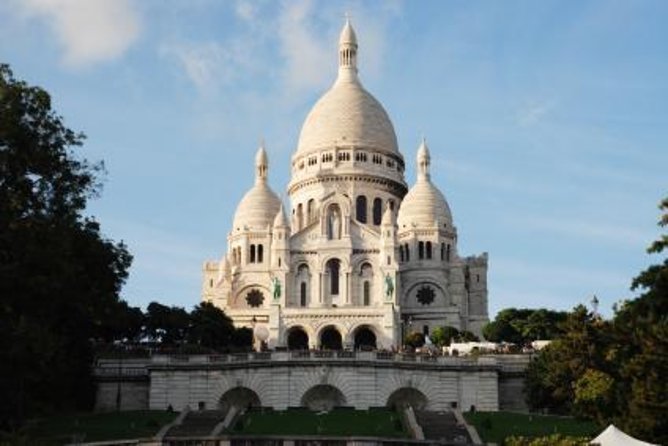
- Sacré-Cœur for city views plus a calm uphill walk through old, cobbled streets
- Rue Lepic film and art stops, including Amélie locations and impressionist-inspired routes
- Dalida’s Maison and the story of her Egyptian origins and Miss Egypt title
- Le Bateau-Lavoir and Picasso connections, including a pass by Picasso-related studio history
- Small-group guiding from locals, with examples like Jill and Matt known for clear, story-first pacing
Montmartre: the hill you walk up for the art and the attitude
Montmartre isn’t just a postcard neighborhood. It’s a working-feeling hill where art shows up in the streets, in the layout of the lanes, and in the way people linger around artists’ corners. This tour leans into that. It doesn’t treat the area like a museum with one-size-fits-all explanations.
You’ll start near Place des Abbesses and work your way toward Sacré-Cœur, so you’re naturally building the “uphill-to-a-view” experience as you go. Along the way, you’ll hit key artistic nodes: places where painters gathered, street art where the neighborhood still speaks loudly, and a few Montmartre addresses that pop in your mind after you’ve seen them.
What makes this work for you: the route connects landmarks with the feelings and creative energy of the neighborhood. You don’t just stand and look; you learn what the streets meant to artists—then you walk through the same vibes yourself.
You can also read our reviews of more tours and experiences in Paris.



Your guide matters: local storytelling, not a lecture
The tour is led by a local Paris guide who’s an art lover and a Montmartre village resident. That matters more than it sounds. When the guide knows the neighborhood from everyday life, the walk feels like conversations on a street corner instead of a timed slideshow.
Recent guides named in feedback include Jill and Matt. The common thread is the pacing: they know their history but avoid the minutia that can drain the fun. In particular, one standout point from feedback: Jill’s stories made it feel like you were hearing from residents—past and present—and she’s the type to guide you with energy but still keep moving when it counts.
Also, this is a small-group format, up to 15 people. That means you can ask questions and get answers that fit what you’re actually curious about. It also means the guide can adjust on the fly. One example: customization showed up when a guest’s cousin was an emerging opera singer, and the walk included stories that connected composers such as Satie to the area. You might not have the same reason, but the takeaway is good: the guide isn’t stuck in a script.
Stop-by-stop: what you’ll see from Sacré-Cœur down to the artist lanes
This is a walk built around six to seven major moments, with extra street-level details that help you connect the dots. Here’s how each stop plays for your eyes and your understanding.
1) Basilique du Sacré-Cœur: the uphill payoff and the best view moment
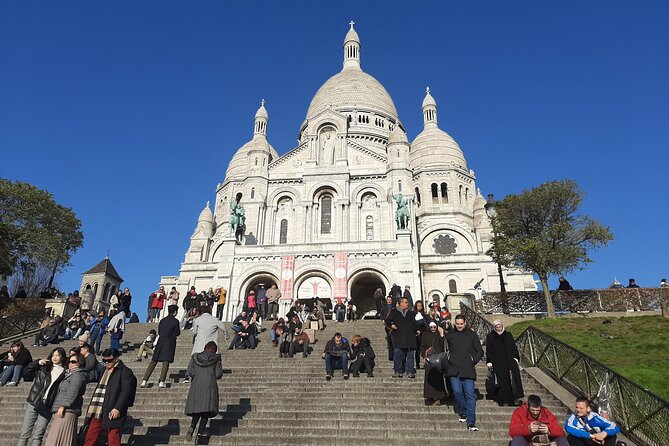
You start at Basilique du Sacré-Cœur de Montmartre, following a route that mixes history, architecture, and street art with lively neighborhood atmosphere. Expect an uphill walk through calm cobbled old streets—the kind of streets that make Montmartre feel like its own tiny world.
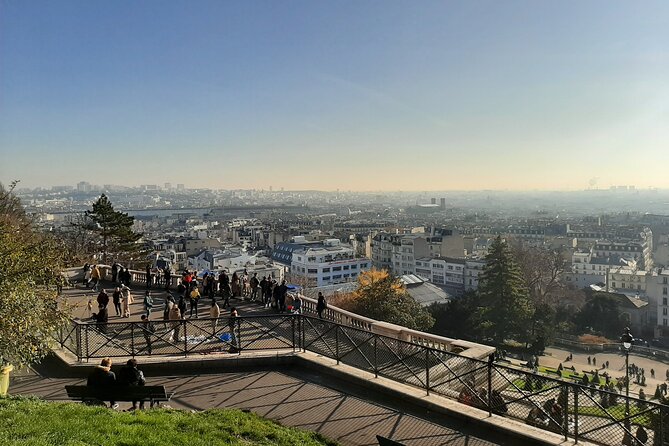
The key moment here is the view. Once you reach the basilica area, you’re rewarded with a wide panorama over Paris. Even if you’ve seen photos before, the real view helps you understand why artists and dreamers gravitated to this hill.
A practical note: Sacré-Cœur has known crowding during peak times. Even when the tour includes time near the basilica, you may still face a queue for entry or moving around. If you’re booking for a busy day, treat patience as part of the plan.
Admission at this stop is listed as free for the tour, so you’re not signing up for surprise entrance fees here.
2) Rue Lepic: impressionist footsteps and Amélie scene spotting
Next up is Rue Lepic, where you walk in the footsteps of impressionist artists drawn to local scenes. The street works as a bridge between “art history” and “living neighborhood.” It doesn’t stay in the past.
This is also where the tour leans into pop-culture recognition: you’ll see spots used in the French film Amélie. If you know the movie, it helps you connect the landscape to a story. If you don’t, it still functions as a way to see Montmartre as something that creators keep returning to.
For you, this stop is about awareness. Once you spot the kinds of corners that show up in films and paintings, the rest of the walk becomes easier to read. You start noticing shapes, sightlines, and the way buildings frame street life.





3) Place du Tertre: watching artists work in real time
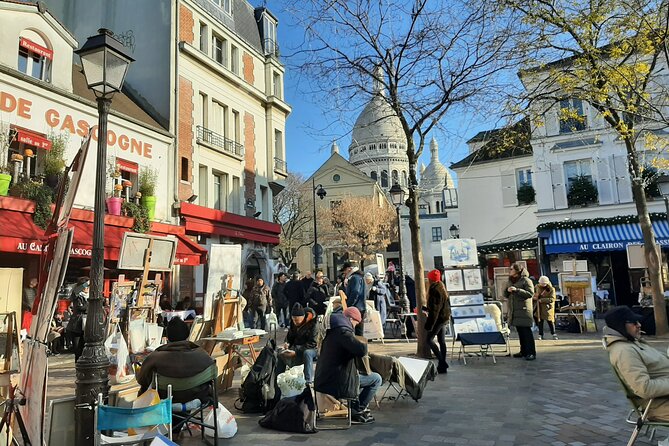
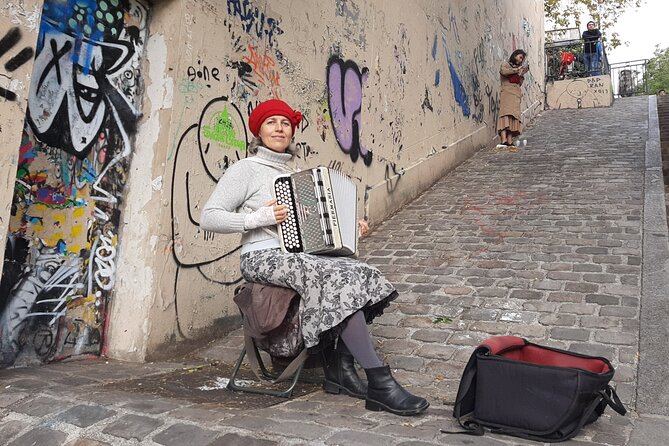
Place du Tertre is one of the most vivid parts of Montmartre. This is where local artists are at work, and you can admire them making instant sketches on demand. That’s the payoff of visiting this neighborhood with a guide rather than wandering alone: you get the context for why this square matters, while also getting the entertainment of watching the craft happen.
If you want a sketch, plan to pay directly to the artist. The tour doesn’t list pricing for drawings—just that sketching happens at the traveler’s request—so ask before you commit.
One more thing: this square can be busy. You’ll do best if you treat it as a show with moments. Step back when needed, watch how the artist’s process works, then move on before the crowd energy starts to feel like a rush.
4) La Maison de Dalida: a star’s home and a transnational story
Then you’ll visit La Maison de Dalida, tied to the French/Italian singer Dalida, who was born in Egypt and also held the title Miss Egypt in the mid-1950s. This stop gives you a different flavor of Montmartre’s arts world—less about painter circles and more about celebrity-era culture and creative identity.
You’re not going to get museum-style artifacts here. You’re reading the neighborhood through an address and a story. That’s useful if you like connecting people to places, because it turns a street corner into something with a name and a timeline.
Admission details at this stop are listed as free for the tour.
5) Le Bateau-Lavoir: where early 20th-century artists met
Le Bateau-Lavoir is a major artistic reference point. It was a popular meeting place for famous early 20th-century artists. The tour also brings in Picasso’s connection: Picasso first came to Paris in 1900, fell in love with the city and its energy, and the walk includes a pass by Picasso’s studio in Montmartre.
This stop helps you see Montmartre as more than one style or one era. You’re moving from impressionist inspiration to the energy of early 1900s art circles. It’s a good rhythm change between scenic views, street squares, and recognizable addresses.
Again, admission at this stop is listed as free.
6) Place des Abbesses: Art Nouveau details and everyday village life
Place des Abbesses is where the meeting point is set, and it’s also a smart start location because it gives you a neighborhood anchor. Expect Art Nouveau attractions and a sense of village life—Montmartre as a lived-in community, not just an attraction zone.
If you’re coming early, spend a few minutes just watching how people move through the square. You’ll feel the neighborhood more clearly once the walk begins, especially with the hill-and-streets route that follows.
7) Windmills of Montmartre: the 17th-century reminder of working life
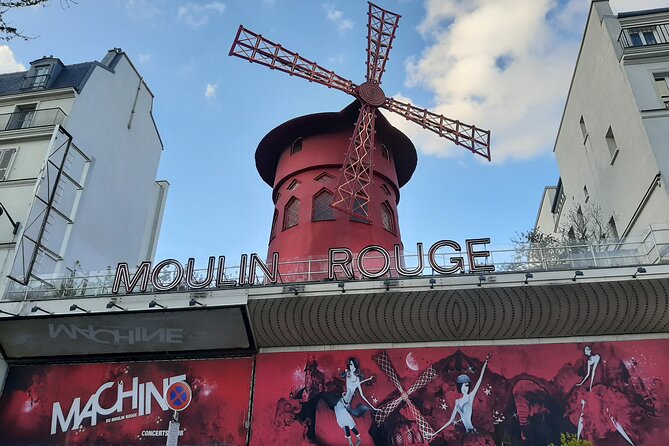
The walk also includes Montmartre’s windmills, including mention that the first windmill dates to the 17th century. That time marker matters. It reminds you Montmartre wasn’t always the artist brand—it was also a working-class village north of the city.
So while you’re seeing the creative and cinematic Montmartre, you’re also keeping a thread of everyday history. It makes the neighborhood feel layered: agriculture and work, then art and imagination, and now tourism mixed with real local life.
How long is it, and how to pace your day
This tour runs about 2 hours. That duration is ideal for a first Montmartre visit because it’s long enough to feel the neighborhood, but short enough to keep the rest of your Paris day flexible.
Because the route includes uphill cobbled streets and a climb toward Sacré-Cœur, I’d plan it when you don’t have to rush into something else immediately afterward. If you’re the kind of person who likes to linger for photos and street scenes, give yourself breathing room.
Also: coffee and/or tea are not included. The tour style is more walking and storytelling than a sit-down meal. If you want a caffeine break, plan to buy it on your own before or after.
Price and value: what $48.37 buys you in Montmartre
At $48.37 per person, this is a mid-range price for a short, local-guided walk. The value comes from four things that actually affect your experience:
- Local guide time for about two hours, with a small group (max 15)
- English language guiding
- A tight route with multiple major stops, including Sacré-Cœur, Place du Tertre, Rue Lepic, Dalida’s home, Le Bateau-Lavoir, and the Abbesses area
- Free admission noted for stops (the tour listing shows admission ticket free for the key site components)
Where it may not be a bargain for you: if you only want photos and don’t care about art stories, you might feel like you could do parts on your own. But if you like understanding why these places matter—especially through art and film references—then the guide’s interpretation is the real product.
One more practical reality: this tour tends to be booked ahead. On average, it’s booked about 29 days in advance, which is a hint that the small group fills up. If your travel dates are fixed, don’t wait until the last week.
What to expect walking (and what could slow you down)
This isn’t a museum shuffle. It’s an outdoor neighborhood walk with real street conditions.
Based on the tour description and on-the-ground realities of Montmartre, here’s what can affect your pace:
- Uphill walking toward Sacré-Cœur means your legs will feel it
- Cobbled streets can be slower and more tiring than flat pavement
- Weather can change quickly. Feedback included stormy and windy conditions, so a light wind-resistant layer helps
- Sacré-Cœur crowds can affect how quickly you move around the basilica area
None of this is a deal-breaker—it just means you should go in with the right mindset. Treat it like neighborhood time, not a sprint.
Who should book this Montmartre walk?
I think this tour fits best if you:
- Love art history connections but want them delivered as stories you can carry through the streets
- Want Montmartre film spotting, especially Amélie references
- Prefer small-group guiding and a walk led by a local resident
- Like a mix of major landmarks and street-level texture, not just big-name sights
- Enjoy markets and artists-as-craft moments, like watching sketch artists at Place du Tertre
It may be less ideal if you:
- Want long, museum-style time inside buildings
- Have mobility limits and don’t want uphill cobblestones (the tour says most travelers can participate, but the physical reality of the route still matters)
- Hate waiting in queues, since Sacré-Cœur area crowding can happen
Should you book it?
Yes, if you want Montmartre to feel like a place with creators, not just a list of stops. This walk does a rare thing: it ties the neighborhood’s visual energy to specific stories—impressionist inspiration, Amélie scene locations, Dalida’s identity, and the early-1900s art circle echoes around Le Bateau-Lavoir and Picasso references.
I’d especially book it if you’re traveling in English and you like the idea of a local guide who keeps it moving and conversational. Just bring patience for the Sacré-Cœur area and expect some uphill walking.
FAQ
What is the duration of the tour?
The tour lasts about 2 hours.
How much does the tour cost?
The price is $48.37 per person.
Where does the tour start and end?
It starts at 22 Rue des Abbesses, 75018 Paris, France, and ends at Basilique du Sacré-Cœur de Montmartre, 35 Rue du Chevalier de la Barre, 75018 Paris, France.
Is the tour offered in English?
Yes, it is offered in English.
Is a mobile ticket provided?
Yes, the tour includes a mobile ticket.
How big is the group?
The tour has a maximum of 15 travelers.
Are there admission fees included for the main stops?
The tour information lists admission ticket free at key stops, including Sacré-Cœur, and other stops along the route.
Is coffee or tea included?
No, coffee and/or tea are not included.
Is the tour suitable for most travelers?
Yes, most travelers can participate.
Are service animals allowed?
Yes, service animals are allowed.