REVIEW · GIVERNY
Monet’s Gardens & House-Private Giverny Tour From Paris
Book on Viator →Operated by Parismatic Tour · Bookable on Viator
Giverny feels like a time machine, with Monet as your guide. This private VIP tour gives you front-door hotel pickup plus priority admission so you spend less time waiting and more time looking closely at Claude Monet’s rooms and garden design. My favorite part is the human detail: an art historian guide who explains what you’re seeing as you go, not just what you should already know. The main drawback to weigh is price versus expectations of hands-on guidance throughout; the house is about an hour, Clos Normand is about an hour, and the village time is limited, so you may want a plan for what you’re hoping to do on your own.
You’ll also get the best kind of day-trip rhythm: a smooth car ride out of Paris, a focused set of stops, and enough breathing room to absorb the place without being herded. One more consideration: when the season is less in full bloom (some visitors go in early October), the experience can still be beautiful, but it may not hit the same peak-garden feeling as spring.
In This Review
- Key highlights I’d put at the top
- What Makes This Tour Work So Well
- VIP Day Trip to Giverny: What the Half-Day Feels Like
- From Paris to Giverny With Pickup That Actually Helps
- Monet’s House: How to See More Than Rooms
- Clos Normand and the Water Lilies Connection
- Giverny Village Time: Flowers, Cafés, and Hotel Baudy
- How the Guide Changes the Whole Day
- Time, Crowds, and When You’ll Thank Yourself
- Price and Value: What $520 Buys You Here
- Should You Book This Private Monet Tour From Paris?
- FAQ
- FAQ
- How long is the Monet’s Gardens & House private tour from Paris?
- Is this tour private or shared with other groups?
- Do they pick you up from your hotel in Paris?
- What’s included with the tour price?
- What is the visit time at Monet’s house?
- How long do you spend at Clos Normand?
- Do you get time to explore Giverny village?
- Is lunch included?
- What language is the tour offered in?
- What’s the cancellation policy?
Key highlights I’d put at the top
- Monet’s House visit is timed and efficient: skip-the-line entry helps you start early and settle in.
- An art historian guide anchors what matters: you won’t just walk past the blue sitting room and studio—you’ll understand why they connect to the art.
- Clos Normand is the showpiece: you’ll see the Japanese bridge and lily ponds tied to Monet’s Water Lilies paintings.
- You get village time, not just garden time: Giverny’s flowered houses and art stops are part of the experience.
What Makes This Tour Work So Well
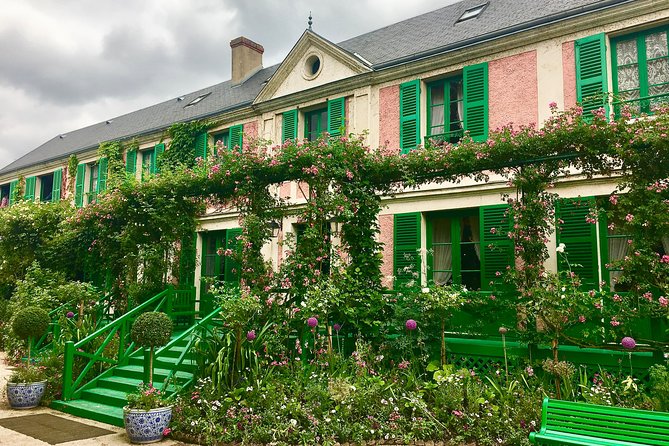
- Priority access at Monet’s House saves time in a place that gets crowded quickly.
- A licensed art historian guide helps you connect the garden layout to Monet’s paintings.
- Front-door pickup and drop-off reduces the “day-trip stress tax” from Paris.
- Clos Normand stops at the right moments for seeing the Japanese bridge and lily ponds.
- Some unstructured time in Giverny lets you wander the village at your own pace.
You can also read our reviews of more private tours in Giverny



VIP Day Trip to Giverny: What the Half-Day Feels Like
This is a true half-day format built around two places that everyone comes to see: Monet’s House and Clos Normand. That matters because Giverny is popular, and the wrong timing turns a dream visit into a queue-and-cope mission.
I like that the experience is private. With only your group in the vehicle, your guide can adjust the pace a bit, answer questions without rushing, and switch between story mode and look-at-this mode when the moment hits. The tone stays relaxed while still being structured enough that you don’t feel lost.
And because this tour is designed from Paris, you get the practical benefit of not figuring out transport, transfers, and ticket timing after a full day of sightseeing. You’re handed a plan, then you’re allowed to enjoy it.
From Paris to Giverny With Pickup That Actually Helps

The tour includes pickup from hotels and private residences inside Paris, and you return the same way at the end. On paper, that’s “just transportation.” In real life, it’s what makes a half-day trip feel like a half-day.
The drive also sets expectations. Guides on this service tend to use the travel time to give context—Monet’s timeline, how Giverny fits into his career, and what to notice once you arrive. That’s a smart use of time because it primes your eyes before you ever step into the rooms and walkways.
One small but important detail: you’re in an air-conditioned vehicle. In warmer months, that keeps the day-trip energy from turning into a sweat marathon before you even reach the gardens.
Who this is for: if you want a smooth departure with minimal logistics, this kind of pickup is a big win. If you’re the type who enjoys building your own schedule and doesn’t mind buses or trains, you might still be tempted to DIY—but you’d be giving up the time and guidance this tour bundles in.
Monet’s House: How to See More Than Rooms
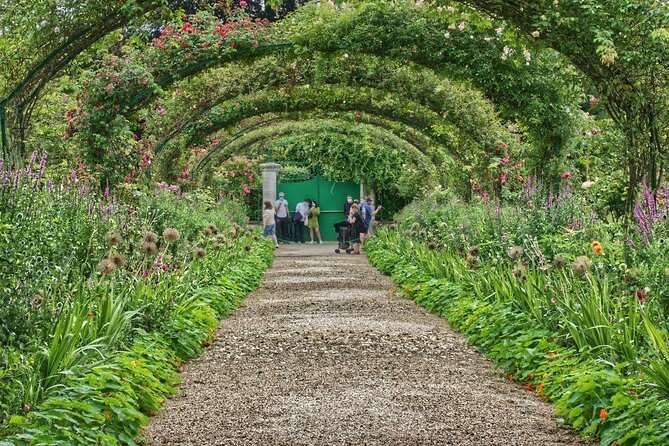
Your first real stop is Claude Monet’s House and Gardens in Giverny, starting with an internal visit to Monet’s home. The visit is about one hour, and it’s focused on the spaces tied directly to his daily life—areas such as the blue sitting room, the dining room, and his studio.
I love this approach because it prevents the common mistake: people tour the house like it’s a museum maze. Here, the goal is to help you understand how Monet lived, how he worked, and how that life connected to the garden that later became part of his artistic world. Even if you’re not a hardcore art-student, the room-by-room framing makes the art feel personal instead of abstract.
Also, there’s a practical advantage: the tour includes skip-the-line access. Monet’s House can be slow on busy days, and “slow” is the enemy of enjoyment when you’re on a half-day schedule. Starting early helps you see things before the maximum crush.
Timing note: the house visit is time-limited by design, so if you like to take your time reading every label, you may want to be selective—focus on the guide’s cues first, then spend your remaining minutes soaking it all in.
Clos Normand and the Water Lilies Connection
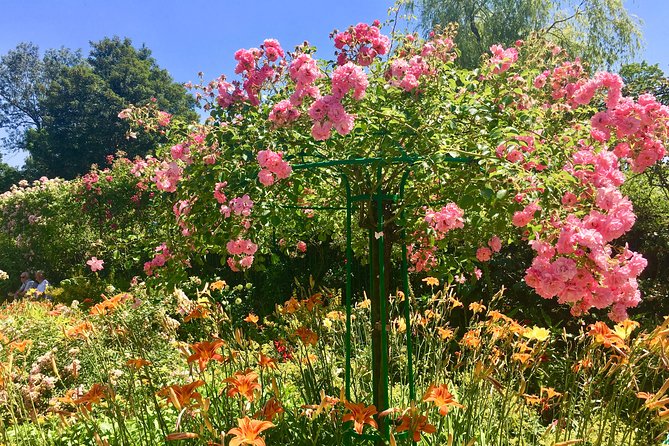
After the house, you move to The Clos Normand (Fondation Claude Monet). This segment runs about one hour, and it’s where Monet’s garden planning shows up as art you can walk through.
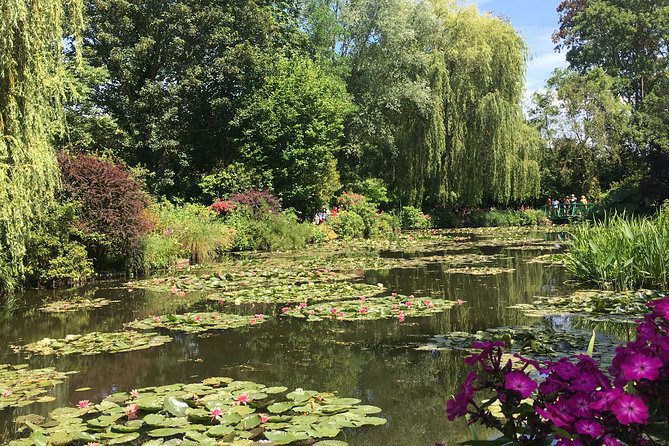
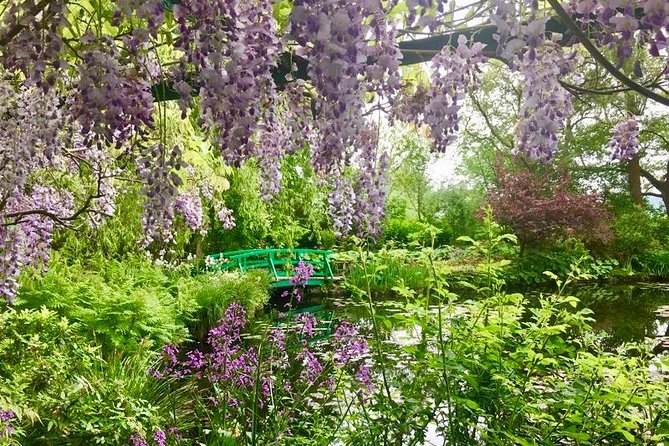
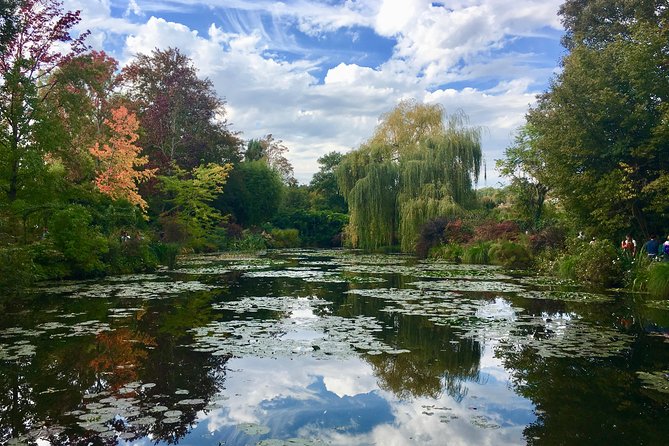
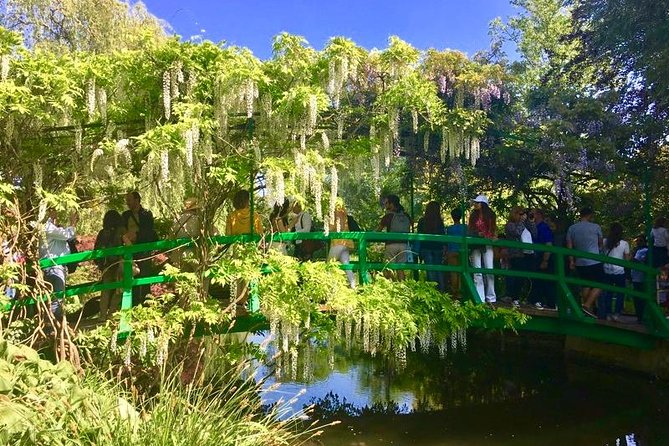
This is the stop built around the most iconic visual ideas: the Japanese bridge and the lily ponds that inspired Monet’s famous paintings, the Nymphéas. What makes this garden special is that it’s not just pretty landscaping—it’s a composed viewpoint. You don’t only look at flowers; you look at sightlines, reflections, and how the space changes as you move.
You’ll also be supported by on-site materials, including a brochure provided by Fondation Claude Monet. That’s helpful when you want a second layer of context while your guide explains the larger story.
A reality check for planning: garden intensity changes with season. One person in early October still found the house and gardens lovely, but their sense of value depended on how much bloom they saw. So if you’re chasing a peak “Water Lilies at full effect” feeling, earlier in the season may deliver more of that classic, garden-heavy look.
What to do with your eyes: when you reach the lily pond area, slow down. The most memorable part is often the moment you realize Monet didn’t just paint what he saw—he shaped what he would see.




Giverny Village Time: Flowers, Cafés, and Hotel Baudy
The tour doesn’t end when you leave the gardens. You get about 30 minutes in the village of Giverny, with free time to walk around and soak in the atmosphere.
This is where the trip expands beyond Monet’s property. You’ll have a chance to admire flowered houses, browse art galleries and cafés, and even spot the famous rose-colored Hotel Baudy, known as a hangout for American Impressionists.
Is 30 minutes a lot? It’s not. But it’s enough to do two useful things:
1) get a feel for the town’s look and vibe, and
2) choose whether you want to come back later for a longer village wander.
One practical note: if you’re planning to buy a snack or meal on-site, keep your expectations flexible. The tour experience is handled by the guide and transport service; food service happens on its own schedule and can vary. If a café moment turns unpleasant, it shouldn’t be a deal-breaker for the rest of the day—but it’s worth knowing you might not love every minute once you’re outside the guided core.
How the Guide Changes the Whole Day
In a trip like this, the guide isn’t extra value. They’re the difference between seeing a famous place and understanding why it matters.
This tour includes a licensed professional art historian guide, and the most praised style is active explanation tied directly to what you’re currently looking at. People name guides like Chris, Anne Laure, Rose Ann, Neda, Andre, Mario, Lucile, Kevin, Claudio, and Christopher, often mentioning traits like humor, prompt timing, and helpful attention to when to enter and what angles to look for.
A couple themes show up consistently in how successful visits feel:
- the guide gives context during the drive so you arrive oriented
- the guide uses timing to reduce waiting inside
- the guide finds a balance between guided stops and time to wander
That said, here’s the trade-off to manage: one visitor expected continuous guiding throughout the entire outing, and felt the guidance was lighter once inside. If that would bug you, be clear before you go. Ask whether your preference is a guided walk at every step or a guided framework with time to explore.
My advice: if you care about art details, tell your guide early what you’re into—composition, impressionism in general, or specifically the Water Lilies story. You’ll get better answers and you’ll feel less like you’re following someone else’s script.
Time, Crowds, and When You’ll Thank Yourself
Crowds are the real storyline in Giverny. This tour helps by packaging the day so you’re not arriving mid-surge with no entry plan.
Priority access and skip-the-line admission help you dodge the longest waits. Also, the guide’s pacing matters because inside the house and garden areas, space is tight. A good guide will keep things moving smoothly while still letting you see what you came for.
If you’re sensitive to crowds, start your day earlier when you can. One guide-style point that comes through in how people talk about this experience: getting there near opening makes a difference.
The trip length is listed as about 5 hours, which usually includes the drive time plus the on-site segments. That’s a workable length for many people because it avoids the trap of “day-trip fatigue” where you’re cranky before the best part.
Price and Value: What $520 Buys You Here
At $520.23 per person, this isn’t a budget afternoon. It’s closer to the category of “pay for the smooth experience” than “do a cheap museum run.”
So what are you buying?
- Private transportation in an air-conditioned vehicle
- Hotel pickup and drop-off in Paris
- Skip-the-line priority admission to Monet’s House
- A licensed art historian guide
- All fees and taxes included
- A private experience with only your group
This adds up when you factor in the hidden costs of DIY: transport time, ticket timing, and the lost value of not having context. One criticism you’ll hear about tours like this is that it can feel pricey if what you wanted was more village wandering or more guided time inside. Another criticism is that people assumed they would get a fully accompanied, step-by-step guided walk for every minute.
That’s why the value question is really about match.
- If you want Monet explained and you hate waiting, this price can feel fair.
- If you only want the garden views and you’re happy to self-navigate, you might feel it doesn’t justify the cost.
My practical rule: if you’re the sort of traveler who gets more out of a guide’s framing than from your own reading, you’ll likely feel this was money well spent.
Should You Book This Private Monet Tour From Paris?
I’d book this if you want a stress-free, art-led day trip with priority access and a guide who connects the house and garden to Monet’s work. It’s a strong fit for first-timers to Monet, art lovers who like context, and anyone who would rather pay to avoid lines and logistics headaches.
I’d think twice if you’re chasing maximum free roaming time, because the house and garden are timeboxed (about an hour each) and the village stop is shorter. Also, if your ideal experience is a constant, guide-walk-at-every-step style, you’ll want to set that expectation up front.
If you’re deciding between “cheaper transport and self-guided tickets” versus “guided priority with a specialist,” pick the one that matches how you travel. This one is built for people who want the Monet story told while you’re standing in the rooms and seeing the bridge and lily ponds that inspired the paintings.
FAQ
FAQ
How long is the Monet’s Gardens & House private tour from Paris?
It runs about 5 hours (approx.), including pickup, drive time, and the on-site visits.
Is this tour private or shared with other groups?
It’s a private tour/activity, so only your group participates.
Do they pick you up from your hotel in Paris?
Yes. Pickup is offered from all hotels and private residences inside Paris.
What’s included with the tour price?
Private transportation, an air-conditioned vehicle, skip-the-line ticket to Claude Monet’s house, a licensed art historian guide, VIP services, and all fees and taxes.
What is the visit time at Monet’s house?
The house visit is about 1 hour, and admission ticket is included.
How long do you spend at Clos Normand?
Clos Normand is about 1 hour, with an admission ticket included.
Do you get time to explore Giverny village?
Yes, you have about 30 minutes to walk around the village. Admission ticket is free.
Is lunch included?
No, lunch is not included.
What language is the tour offered in?
It’s offered in English.
What’s the cancellation policy?
Free cancellation is available if you cancel up to 24 hours in advance for a full refund.