REVIEW · NORMANDY
Le Havre Shore Excursion: Private Day Tour to Juno Beach Sector & Ardenne Abbey
Book on Viator →Operated by Normandy Sightseeing Tour · Bookable on Viator
Normandy feels personal at Juno Beach. This is a private Le Havre shore excursion built around the Canadian story of D-Day, with stops at Juno Beach Center, the Canadian cemetery, and Abbey d’Ardenne.
I love the on-the-ground Juno Beach viewpoints that help you picture where the 14,000 Canadians landed, not just what you read in a guidebook. I also love how the day shifts from museum explanations to name-filled memorials where the scale hits you.
The only drawback is the emotional weight, plus lunch and drinks are on your own, so budget for food and plan your pace.
In This Review
- Key highlights worth your time
- Canadian D-Day Sites From Le Havre: why this day feels focused
- Private pickup at 8:30: the practical rhythm of a shore excursion
- Juno Beach: beach obstacles, two viewpoints, and the scale of landing day
- Juno Beach Centre museum: turning what you saw into human meaning
- Bény-sur-Mer Canadian War Cemetery: maple symbolism and 2,000+ names
- Abbey d’Ardenne: a beautiful building with a brutal memorial garden
- Lunch and driving time: staying comfortable during a long, heavy day
- Price and value: what $837.67 buys you on a private day
- Who should book this private Juno Beach and Abbey d’Ardenne tour
- Should you book this tour or pick something lighter?
- FAQ
- How long is the Le Havre Shore Excursion to Juno Beach and Abbey d’Ardenne?
- What time does the tour start and where is pickup?
- Is this a private tour?
- What stops are included during the day?
- Are admission tickets included?
- Is lunch included in the price?
- What language is the tour offered in?
- What is the worry-free shore excursion guarantee?
- Can I bring a service animal?
- What is the cancellation window for a full refund?
Key highlights worth your time

- Private, port-based day plan with pickup and drop-off in Le Havre, designed for cruise timing
- Juno Beach on location with battlefield obstacles you can still recognize and two different sightlines
- Juno Beach Centre museum time to connect what you see outside with what happened inside
- Bény-sur-Mer Canadian War Cemetery with more than 2,000 Canadian headstones and maple symbolism
- Abbey d’Ardenne memorial garden tied to the execution of 20 Canadian prisoners
- Admissions included for the major stops, so you are not doing extra ticket math mid-day
Canadian D-Day Sites From Le Havre: why this day feels focused

If your cruise brings you to Le Havre and you want the D-Day story told through Canada, this tour has a clean theme. You are not doing a random grab-bag of Normandy stops. You are following one thread: what happened along Juno Beach, and what came after for the men who did not make it home.
I like that the day is structured to go from sight to meaning. You start with places tied to the landings and German defenses, then you move into spaces made for remembrance, where names and memorial details do the heavy lifting.
This is also a good choice if you care about context, not just photos. The route is set up so your guide can explain how terrain and decisions shaped what Canadians faced on June 6, 1944.
You can also read our reviews of more private tours in Normandy

Private pickup at 8:30: the practical rhythm of a shore excursion
You meet in Le Havre at 8:30 am (a pre-arranged location set for your cruise day). The biggest value of a private shore excursion is the reduced hassle: you are not waiting around for a big group to board, and you do not need to fight for a place at the front of a van.
You get a professional driver/guide and transport in a private vehicle. That matters here because you are moving between a beach area, a cemetery, and Abbey d’Ardenne, and you want a calm, guided flow instead of a stop-and-start scramble.
A helpful detail for cruise passengers is the worry-free approach: the operator says they’ll ensure you return to the Le Havre port on time. If your ship is delayed and you cannot attend, you should receive a refund; and if the ship has departed, they’ll arrange transportation to your next port of call.
Also, this tour is private, meaning only your group participates. If your group is small—like a couple or a small family—you tend to get better pacing and more room to ask questions.
Juno Beach: beach obstacles, two viewpoints, and the scale of landing day

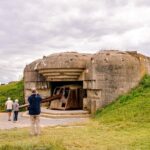
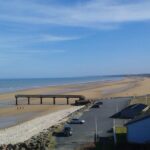
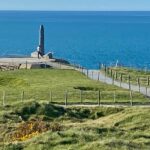
Juno Beach is where the story becomes physical. You spend time on the shore area with access to battlefield context, including remnants of beach obstacles left by German forces. Seeing those details in person makes the battle feel less abstract.
What I really like in this part of the day is the way the guide uses two contrasting vantage points. That is not a gimmick; it helps you understand how the terrain affected visibility, movement, and the flow of the assault. From one angle you grasp the approach, and from another you start to understand how close the fight was to the shoreline.
You also stroll beside D-Day relics placed along the beach. Even when you already know the headline facts, this walk gives your brain places to anchor the timeline. It turns June 6, 1944 from a date on a page into a series of moments tied to real ground.
Practical note: bring layers. Normandy weather can change fast, and your time on the coast may include moments of wind or drizzle even if the day starts nice.
Juno Beach Centre museum: turning what you saw into human meaning

After the beach time, you go to the Juno Beach Centre museum. This stop is where the tour shifts from what you can point at outdoors to what you can understand about the people involved.
The museum experience is built around Canadian D-Day remembrance. You pay tribute to the Canadian forces who fought in Normandy, and you connect the landing sector you viewed outside with the broader story presented inside the exhibitions.
One reason this museum stop works so well is that it sits between your two most emotional sites: the beach and the cemetery. By the time you walk through the Juno Beach Centre, you are ready to absorb details. And by the time you leave it, you have context for what you will see next at Bény-sur-Mer.
For guides, this is often where a good narrative earns its keep. You’ll notice some guides use maps and paced explanations to help you keep your bearings. If you care about understanding tactics and timeline rather than just reading labels, this is the part of the day that typically delivers.
Bény-sur-Mer Canadian War Cemetery: maple symbolism and 2,000+ names

Next comes the Canadian cemetery at Beny-sur-Mer. This is not about dramatic scenery. It is about remembrance, and the design makes that job effortless.
You’ll see commemorative headstones for more than 2,000 Canadian soldiers. Walking among them changes the emotional temperature of the day in a hurry. It is one thing to hear numbers like 14,000 troops landing; it is another to see how many individual lives were cut short.
The entrance has maple symbols, which creates a strong, readable link to Canada even before you start reading. That detail helps a lot if you’re visiting with family members who want the day to feel personal.
A balanced approach is to slow down here. Give yourself time to look rather than rush to “finish the cemetery.” If your guide suggests a path or points out how to read the memorial layout, follow along. Small guidance helps you get more meaning out of the space.
If you are feeling overwhelmed, that is normal. This site is designed for reflection, not speed.




Abbey d’Ardenne: a beautiful building with a brutal memorial garden

The day’s most painful stop is Abbey d’Ardenne. The building and gardens are beautiful, which is exactly why the story lands so hard.
Your guide sets the historical scene of a tragedy tied to Canadian prisoners. You hear how 20 Canadian soldiers were executed by German forces, and you can read epitaphs and memorial details in the garden.
Even if you have visited other memorial sites in Europe, Abbey d’Ardenne has a specific kind of emotional gravity. The contrast between a quiet garden and the cruelty associated with it makes it difficult to treat this as just another stop on a checklist.
Give yourself space here. This is one place where rushing feels wrong. If your group is small, you may find the guide naturally adjusts the pace so people can process the story.
If you’re the kind of traveler who likes to understand how memorials are designed to communicate, this garden also gives you something to observe beyond the facts. The phrasing, arrangement, and use of epitaphs are part of the message.
Lunch and driving time: staying comfortable during a long, heavy day
You’ll have time to eat a traditional French lunch, but it’s at your own expense. That is important to plan for, because the emotional stops can make you hungry without you noticing until later.
In past days, guides have recommended nearby local lunch spots in the villages along the coast. If you want an easy meal that fits the schedule, ask your driver/guide during the drive what’s closest and what’s good that day.
Because this is a private tour, you can also use the driving segments strategically. The schedule includes quiet reflection time as you move between locations, which helps keep the day from turning into constant stimulation.
Comfort tip: wear shoes that work on memorial grounds and outdoor beach areas. You will be standing and walking more than you might expect for an 8-hour day.
Price and value: what $837.67 buys you on a private day
At $837.67 per person, this is not a budget excursion. But it can still be good value if you compare what’s included versus what you’d spend doing it yourself.
Here’s what you’re paying for in a practical way:
- A private driver/guide and private vehicle for the full day
- Port pickup and drop-off in Le Havre, saving you time and stress
- Admission tickets included for the major stops
- A worry-free return approach tied to cruise timing
This tour is also built to avoid the usual shore-excursion problem: spending half your day on logistics instead of on meaning. In a private format, you spend more of the day at places that matter to your specific topic—Juno Beach and Canadian remembrance.
There’s also a feature called group discounts listed for this experience. If you are traveling with others, it can improve value because private transport costs are spread across your group.
One more detail to consider: this tour is typically booked well in advance (on average, about 74 days). If your cruise date is set, booking sooner tends to reduce stress and makes it easier to lock in the day you want.
Who should book this private Juno Beach and Abbey d’Ardenne tour
This tour fits best if you want D-Day history with a clear Canadian focus. It’s especially suited for Canadians, family groups with Canadian WWII connections, and history lovers who want more than quick sightseeing.
It also works well if you appreciate a guide who can pace the day and answer real questions. People have praised guides for being friendly, adjusting the day to the group, and using maps or visuals to keep the story anchored.
If your group includes anyone who gets easily overwhelmed by emotional sites, you may want to prep gently. Abbey d’Ardenne and the cemetery are heavy. You will need a mindset of respect and time.
This is less ideal if you want a light, casual beach day. This is a remembrance day with walking, standing, and a strong emotional arc.
Should you book this tour or pick something lighter?
Book this private tour if you want your Le Havre shore day to mean something and you like a tight itinerary with admissions handled. The combination of Juno Beach Centre, the Canadian War Cemetery, and Abbey d’Ardenne gives you a full loop: battlefield context, museum understanding, and memorial remembrance.
Skip it (or consider a different style tour) if you are looking for minimal emotion or you do not want to spend time outdoors in coastal weather. Also, because lunch and drinks are not included, be ready to budget a bit more than the base price.
If you’re deciding between a big-group tour and a private one, I’d lean private here. The topic is intense, and a private format helps you control the pacing without getting left behind.
FAQ
How long is the Le Havre Shore Excursion to Juno Beach and Abbey d’Ardenne?
The duration is about 8 hours.
What time does the tour start and where is pickup?
The tour starts at 8:30 am in Le Havre. Pickup is from a pre-arranged location, and there is port pickup and drop-off.
Is this a private tour?
Yes. Only your group participates.
What stops are included during the day?
The tour includes Juno Beach, Beny-sur-Mer Canadian War Cemetery, Abbey d’Ardenne, and Juno Beach Centre.
Are admission tickets included?
Yes. Admission tickets are included for each of the listed stops.
Is lunch included in the price?
No. Food and drinks are not included, and the guide’s lunch is not included. Lunch is at your own expense.
What language is the tour offered in?
The tour is offered in English.
What is the worry-free shore excursion guarantee?
The operator says they will ensure you return to the Le Havre port on time. If your ship has departed, they will arrange transportation to the next port-of-call. If your ship is delayed and you are unable to attend, you should receive a refund, based on the stated terms.
Can I bring a service animal?
Yes, service animals are allowed.
What is the cancellation window for a full refund?
You can cancel up to 6 days in advance for a full refund, which means cancel at least 6 full days before the experience’s start time.