REVIEW · NORMANDY
Mont Saint-Michel : Walk with an English-speaking guide
Book on GetYourGuide →Operated by Chemins de la baie du Mont saint-Michel · Bookable on GetYourGuide
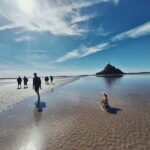
Mont Saint-Michel looks like a stone island from the village, but this barefoot bay walk shows you the place from ground level. You will cross sand, mud, and shallow water, with a guide explaining the tides, plants, wildlife, and old stories tied to the bay. The quicksand lesson adds a little drama, but the outing is designed to handle it safely.
I like the easy loop and the fact that it begins and ends at the Mont’s ramparts. I also like that the price is modest at $23, especially if you have already visited the medieval village and want a different view. The main drawback is practical: the meeting point can be confusing, and you need to arrive ready to walk barefoot in wet conditions.
- Barefoot route: Expect sandbars, mud, shallow water, and possible river crossings below the knee.
- English-only guiding: The live commentary covers tides, bay life, local legends, and quicksand safety.
- Family-friendly format: The loop is described as easy, though you should be in good physical condition.
- Clear meeting landmark: Find the guide at Porte des Fanils, at the foot of the ramparts, with a backpack marked Certified Guide.
- Village access included: You can enter Mont Saint-Michel’s medieval village, but the abbey and museums cost extra.
- Practical clothing matters: Bring shorts, quick-drying clothes, a towel, warm layers, and a full change of clothes.
In This Review
- Seeing Mont Saint-Michel from the Bay Floor
- Finding Porte des Fanils Before the Start
- Going Barefoot Across Sand and Shallow Water
- Learning How Quicksand Works
- Tides, Wildlife, and the Bay’s Living Systems
- Adding Legends to the Stone Walls
- What $23 Buys You
- Who Will Enjoy This Walk Most
- Timing, Weather, and What to Pack
- A Practical Plan for Combining It With the Mont
- The Meeting Point Is the Main Weak Spot
- Should You Book This Mont Saint-Michel Bay Walk?
- FAQ
- Where does the Mont Saint-Michel bay walk start?
- How do I identify the guide?
- Where does the activity end?
- How long does the walk last?
- Is the tour offered in English?
- Do I need to walk barefoot?
- Can the route include water?
- What clothing should I bring?
- Is entry to the abbey included?
Seeing Mont Saint-Michel from the Bay Floor

The usual Mont Saint-Michel visit takes you through gates, lanes, stone stairways, and the abbey above. This outing turns your attention outward. From the foot of the ramparts, you walk into the bay and see how water and sand shape the setting around the famous rock.
That change of viewpoint is the real reason to book. You are not simply adding another guided walk through the village. You are learning how the Mont relates to its tidal surroundings, a setting that can look firm one moment and watery the next.
The walk lasts about 2.5 hours. That is long enough to go beyond a quick photo stop, but short enough to fit around a wider visit to Mont Saint-Michel. I would treat it as a companion activity, not a replacement for the medieval village or abbey.
The route is a small loop, starting and ending at the same point. You will not need to arrange a separate ride back from a remote part of the bay. That simple layout is useful if you are traveling with family or working around a tight sightseeing schedule.
Finding Porte des Fanils Before the Start

Pay close attention to the meeting instructions. The guide waits at the foot of the ramparts, to the right of the left entrance, Porte des Fanils. Look for a backpack labeled Certified Guide.
Do not assume the start is inside the abbey or at the top of the village. The meeting point is outside the walls, near the entrance area. Directions can be easy to misread, particularly if your booking information places Mont Saint-Michel or the abbey more prominently than the actual street-level meeting spot.
I suggest arriving early enough to locate Porte des Fanils without rushing. One late arrival can create a real problem here, since the walk begins at a specific time and the group may already be moving toward the bay. A clear plan is simple: reach the Mont area, find the ramparts, identify the left entrance, and then check to its right for the guide’s marked backpack.
The walk ends back at this same meeting point. That gives you a useful chance to continue exploring the village afterward, change clothes, or move on to another part of your day.
You can also read our reviews of more walking tours in Normandy

Going Barefoot Across Sand and Shallow Water

The tour begins with shoes and boots left behind. You will walk barefoot through the bay, crossing sandbars and mud, with shallow water possible along the route. A river crossing may also be required, depending on its location, but the water is described as below the knee.
This is not a polished boardwalk outing. Your feet will feel the texture of the ground, and your clothes may get wet or muddy. That is part of the point. The bay becomes something you experience through balance, temperature, and changing surfaces instead of only viewing it from a rampart.
You need to wear shorts and quick-drying clothing. Jeans are specifically not suitable, and shoes or boots are not used during the walk. Pack a towel and a full change of clothes. A warm layer is important too, since wind and wet skin can make the return feel cool even if the day began in sunshine.
Bring sunscreen, sunglasses, and a sun hat for bright conditions. Also carry warm clothing and a windbreaker. The mix of sun, wind, and exposed water means you should prepare for more than one type of weather.
Learning How Quicksand Works

Quicksand is the feature many people will remember, but the useful part is learning how to deal with it without panic. The guide points out the quicksand and explains how to get out safely.
You should not treat this as a stunt or a dare. The safe value comes from following the guide’s instructions and moving at the slow pace set for the group. The tour is designed to introduce the bay’s soft ground in a controlled way, not to send you wandering off alone.
The guide’s role matters here. A local guide who works with the bay can explain where the difficult surfaces are and how tides affect the route. You gain context that is hard to get from a view across the water. The experience also helps you understand why the bay demands respect, even when the water looks shallow and the sand appears solid.
The route remains accessible to people who can manage a barefoot walk through wet, uneven ground. The outing is not suitable for wheelchair users, and the instructions call for good physical condition. Children in a baby carrier are accepted, but baby strollers are not allowed.
Tides, Wildlife, and the Bay’s Living Systems

During the loop, your English-speaking guide discusses tidal patterns, the bay’s ecosystem, and the plants and animals found in this setting. These explanations give the walk more purpose than simply getting dirty.
Tides are especially important because the route can include water and a river crossing. The bay’s appearance is not fixed. The guide helps you connect what you see underfoot with the movement of water around the Mont.
The flora and fauna commentary also gives you a reason to slow down. At a quick pace, the bay becomes a stretch of wet sand between you and the ramparts. At a measured pace, you can pay attention to the small details of the ground and water, while the guide explains how the area supports life.
All commentary is in English. If you want a multilingual tour or a self-guided walk, this will not be the right format. For English-speaking visitors, the single-language setup keeps the explanations direct and avoids long pauses for translation.
Adding Legends to the Stone Walls

The guide also covers the history and legends connected with Mont Saint-Michel. You will hear those stories while looking back at the medieval structure from the bay rather than standing among its crowded lanes.
That view gives the old stories a useful setting. The ramparts, towers, and steep silhouette are easier to understand when you see the water and sand that surround them. The walk does not include an abbey tour, but it adds context before or after you visit the upper village.
The medieval village itself is included with the activity. This means you can enter the village as part of your visit, but the abbey and museums are not included. Plan for those separately if they matter to you. The tour price covers the guided bay walk and village access, not every attraction on the Mont.
I would schedule this walk alongside a village visit rather than choosing one over the other. The village gives you the built, historic side of Mont Saint-Michel. The bay walk explains the natural setting that made the site so distinctive.
You can also read our reviews of more guided tours in Normandy



What $23 Buys You

At $23 per person, this is a fairly approachable add-on. The value depends on what you want from Mont Saint-Michel. If you only want a quick photograph and a stroll through the main lane, the walk may feel like extra effort. If you want a hands-on look at the bay and an English-speaking guide, the price is easier to justify.
You are paying for 2.5 hours of guided time, route supervision, explanations about the bay, quicksand instruction, and access to the medieval village. You are not paying for the abbey, museums, transportation, footwear, or clothing.
The tour is also useful for breaking up a standard sightseeing day. Mont Saint-Michel can be visually impressive but physically repetitive if you spend all your time climbing lanes and entering buildings. Walking outside the walls gives you a different rhythm and a closer sense of the setting.
The main cost is not money. It is preparation. You need to bring a towel, spare clothes, and the right clothing, then accept that your feet and lower legs may get wet and muddy. For some people, that is exactly the appeal. For others, it may feel like work after a long day of sightseeing.
Who Will Enjoy This Walk Most
I would recommend this for families with children who can handle a slow barefoot outing, couples looking for something beyond standard sightseeing, and active visitors who enjoy learning by doing. It also suits anyone who has already seen the Mont from above and wants a new angle.
It is a good choice if you like practical explanations. The guide does not just lead you across the bay. You learn about tides, wildlife, quicksand, and the local stories attached to the site.
You should think twice if you dislike mud, cold water, or uneven ground. This is not a dry, gentle stroll in ordinary street clothes. The route is described as easy, but you still need good physical condition and comfort with barefoot walking.
Wheelchair users cannot take part, and strollers are not allowed. A child in a baby carrier can join, which makes the activity more workable for some families, but you should still be prepared to manage wet clothing and changing surfaces.
Timing, Weather, and What to Pack

Starting times vary, so check availability before you build the rest of your day around the walk. The tidal setting makes timing important, and the exact conditions can affect whether a river crossing appears along the route.
Pack as if the weather may change:
- Shorts rather than jeans
- Quick-drying clothes
- A towel
- A complete change of clothes
- Warm clothing
- A windbreaker
- Sunglasses
- A sun hat
- Sunscreen
The clothing advice is not filler. Wet shorts and a strong breeze can make the walk uncomfortable, while a towel and dry clothes make the end much easier. You should also avoid wearing anything you do not want exposed to mud or salt water.
The tour requires bare feet. Do not plan on wearing water shoes, boots, or ordinary walking shoes during the crossing. Follow the guide’s instructions about where to walk and how to handle soft ground.
Free cancellation is available up to 24 hours before the start for a full refund, and you can reserve now and pay later. Those terms are useful if your Normandy plans depend on weather or changing schedules, but they do not remove the need to check the start time and meeting place carefully.
A Practical Plan for Combining It With the Mont

Because the walk begins and ends at the ramparts, you can pair it with time in the medieval village. One sensible plan is to take the bay walk first, then use your dry clothes and the remaining day for the village. Another is to visit the village before the walk, as long as you leave enough time to reach Porte des Fanils and prepare.
The better order depends on your priorities. Starting with the walk leaves the abbey and museums for afterward, but you will need to manage wet clothes. Visiting the village first lets you see the indoor sights while dry, though you must keep an eye on the meeting time.
Do not assume the included village entrance covers the abbey. It does not. If you want the abbey and museums, allow extra time and budget for those visits.
The end point gives you flexibility. Once the loop finishes, you are back where you began rather than stranded at another bay access point. That makes it easier to continue sightseeing or leave the Mont area.
The Meeting Point Is the Main Weak Spot
The experience itself is straightforward, but the meeting instructions deserve care. The start is outside the walls at Porte des Fanils, not in front of the abbey. If your phone or booking app shows the abbey as the broad destination, use the detailed entrance instructions instead.
The guide should be identifiable by a backpack labeled Certified Guide. That is the marker to look for at the ramparts. If you arrive at the wrong side of the Mont, you may lose valuable time getting to the entrance area.
I would save the meeting details before leaving your hotel and arrive early. This is particularly important because the route lasts 2.5 hours and the group cannot easily pause while someone searches through the village.
Should You Book This Mont Saint-Michel Bay Walk?
Book it if you want an active, unusual way to understand the Mont and you are happy to get your feet wet. The English guide, safe quicksand instruction, short loop, and modest $23 price make it a useful companion to the village and abbey.
Skip it if you want a purely historic visit, cannot manage uneven ground, or would rather keep your clothes and shoes clean. The meeting point also requires careful attention.
For the right person, this is one of the simplest ways to see why Mont Saint-Michel is more than a dramatic medieval building. You walk through the bay, feel the sand and water, learn how the tides shape the route, and return to the ramparts with a better sense of the place beneath the postcard view.
FAQ
Where does the Mont Saint-Michel bay walk start?
It starts at the foot of the Mont Saint-Michel ramparts, to the right of the left entrance called Porte des Fanils.
How do I identify the guide?
The guide is recognizable by a backpack labeled Certified Guide.
Where does the activity end?
The loop ends back at the meeting point near the ramparts.
How long does the walk last?
The activity lasts 2.5 hours. Starting times vary, so check availability when booking.
Is the tour offered in English?
Yes. The live tour guide and all commentary are in English.
Do I need to walk barefoot?
Yes. The instructions require you to go barefoot, with no shoes or boots during the walk.
Can the route include water?
Yes. A river crossing is possible depending on its location, with shallow water below the knee.
What clothing should I bring?
Bring shorts, quick-drying clothing, warm layers, a windbreaker, a towel, and a full change of clothes. Sunglasses, a sun hat, and sunscreen are also recommended.
Is entry to the abbey included?
No. The activity includes entry to Mont Saint-Michel’s medieval village, but the abbey and museums are not included.