REVIEW · TOURS FRANCE
Immersive guided tour of Tours in the 13th century.
Book on GetYourGuide →Operated by Epok'Tour · Bookable on GetYourGuide
Tours in the 13th century was not one tidy city. It was split between the bishop’s eastern center, where the cathedral was still being built, and the western Martinopole, a newer religious and commercial district growing around the Abbey of Saint Martin. Mahaut, a costumed guide and the daughter of a crusading militiaman, leads you through that rivalry in a playful 90-minute walk.
I like two things right away. First, the tour gives you a clear character to follow instead of presenting medieval facts as a dry list. Second, it treats women’s roles with more care than the usual sword-and-castle story, showing how Mahaut’s education and military duties challenged simple ideas about medieval life.
The main consideration is language: the live tour is in French. You should also check the meeting point before setting out, since one booking experienced a last-minute change that caused a 15-minute wait and shortened the beginning of the route.
In This Review
- Key Points To Know Before Booking
- Why Medieval Tours Was Really Two Cities
- Meeting Mahaut at Jardin Saint Pierre le Puellier
- Place Plumereau and the Life of the Martinopole
- Rue du Change and the Making of Money
- Tour Charlemagne and the Protection of Pilgrims
- Rue des Halles and the Commercial Heart of the Route
- Tour de l’Horloge and a City Under Pressure
- What the $23 Price Really Buys You
- Who Will Enjoy This Walking Tour?
- Should You Book Epok’Tour’s Medieval Tours Walk?
- FAQ
- How long does the Tours 13th-century guided tour last?
- How much does the tour cost?
- Where does the tour meet?
- What language is the tour conducted in?
- Who leads the tour?
- Which places does the tour visit?
- Is the tour suitable for young children?
- Does the tour operate in bad weather?
Key Points To Know Before Booking
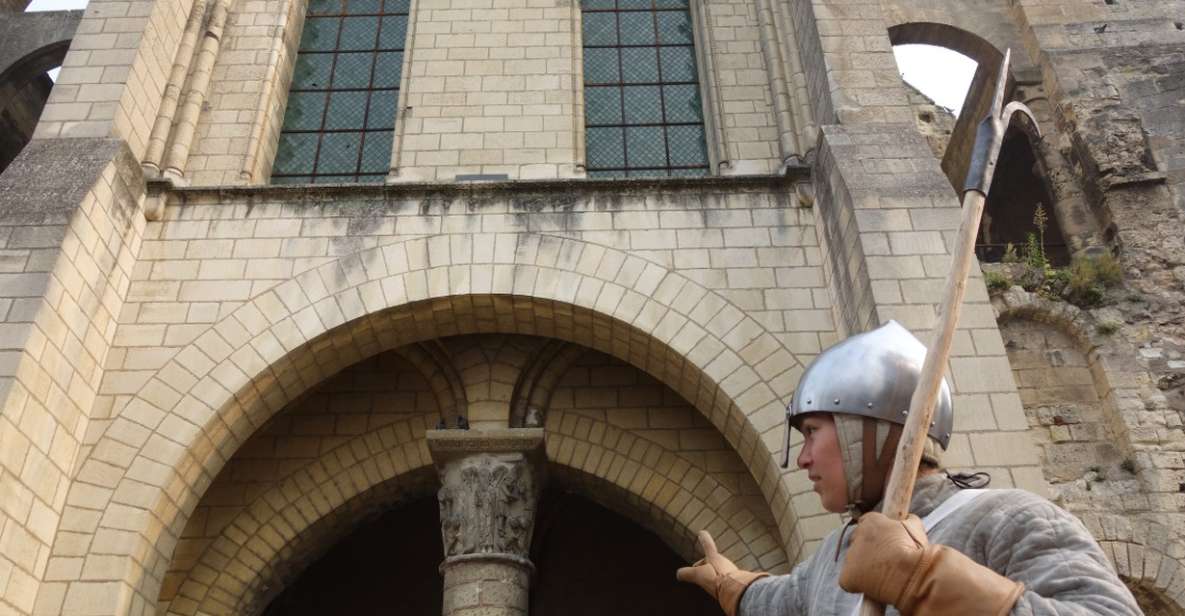
- Mahaut gives the tour a human voice: Her story connects crusades, family duty, education, and daily life in medieval Tours.
- The city’s east-west split is the main theme: You see how the bishop’s district and the Martinopole developed different kinds of power.
- The route covers major Old Tours landmarks: Expect Jardin Saint Pierre le Puellier, Place Plumereau, rue du Change, Tour Charlemagne, rue des Halles, and Tour de l’Horloge.
- The presentation is interactive and playful: The historical costume and character-led format suit families and curious adults.
- You pay $23 for 90 minutes: That is fair value if you want a focused walking tour rather than a long general introduction to Tours.
- Plan for all weather: The walk operates rain or shine and is not intended for children under seven.
Why Medieval Tours Was Really Two Cities
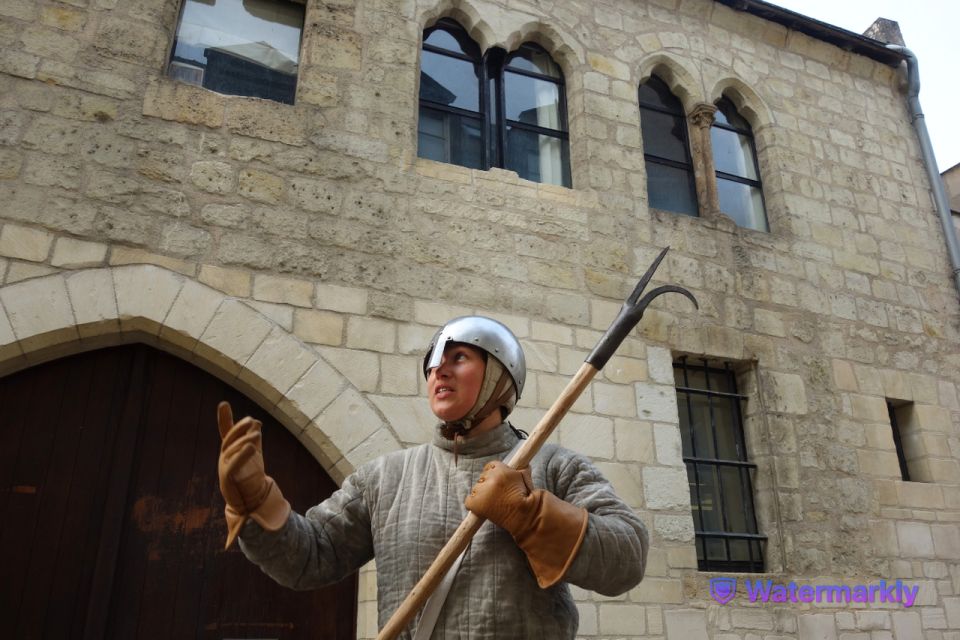
The most useful idea on this tour is the division between the eastern and western parts of Tours. Without that framework, the old streets can feel like a collection of attractive buildings with no clear story. Mahaut helps you see the city as a place where religious authority, royal power, trade, and pilgrimage competed for space.
In the east, the bishop ruled around the cathedral. The cathedral was still under construction during the period covered by the tour, a reminder that major religious buildings took generations to complete. The bishop’s district represented an older center of church authority.
To the west, the Martinopole developed around the Abbey of Saint Martin, which had become a basilica. Saint Martin’s relics drew pilgrims, and pilgrims brought money, trade, and political importance. Merchants had good reason to follow the crowds. Inns, shops, religious services, and protection all mattered when large numbers of people arrived to pray.
This gives the walk a practical edge. You are not simply hearing that Tours was religious. You are learning how relics could shape an entire district and how a pilgrimage center could become an economic force.
The royal government also mattered. During the reign of Philip Augustus, the French crown was strengthening its authority, while local religious powers protected their own interests. The tour presents Tours as a city caught between these forces, with the Martinopole gaining influence and an envious bishop watching its rise.
You can also read our reviews of more guided tours in Tours France

Meeting Mahaut at Jardin Saint Pierre le Puellier
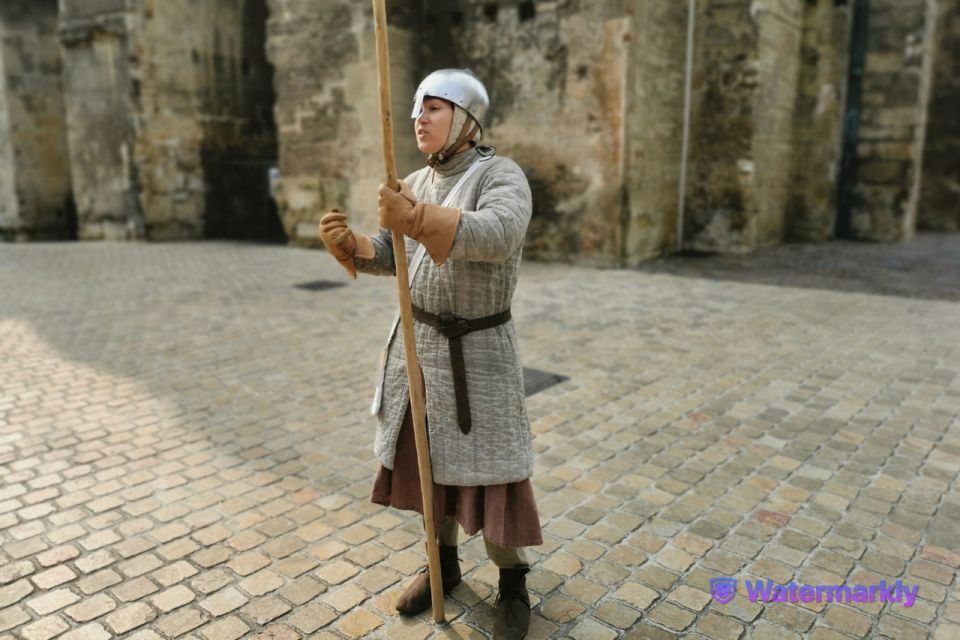
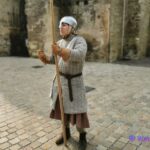
The tour begins at Jardin Saint Pierre le Puellier. Look for Mahaut in her historical outfit. That costume is not just decoration. It establishes the role-playing style from the first minutes and signals that this is not a standard lecture delivered beside a monument.
Mahaut is presented as the daughter of a militiaman who went on crusade. She grew up near the Abbey of Saint Martin and received an unusual education. Her knowledge helped her protect pilgrims who came to the relics, and she even took up arms in her father’s place until he returned.
That story gives you a personal route into larger questions. What did a pilgrimage require? Who protected the visitors? How were local militias organized? What happened when men were absent for war? Instead of treating women as background figures, the tour uses Mahaut to show how necessity could change their duties.
This is especially useful for families with older children. The subject matter includes war, religion, and military service, but the character-led format keeps it active rather than grim. Children under seven are not permitted, and that restriction makes sense. Younger children may find the historical explanations and walking pace hard to follow.
The guide’s approach is deliberately singular and instinctive. You should expect a performance as well as a lesson. If you prefer a strictly chronological lecture with dates repeated in order, this may feel loose. If you enjoy a guide who follows a character and brings the setting to life, the format should work well.
Place Plumereau and the Life of the Martinopole
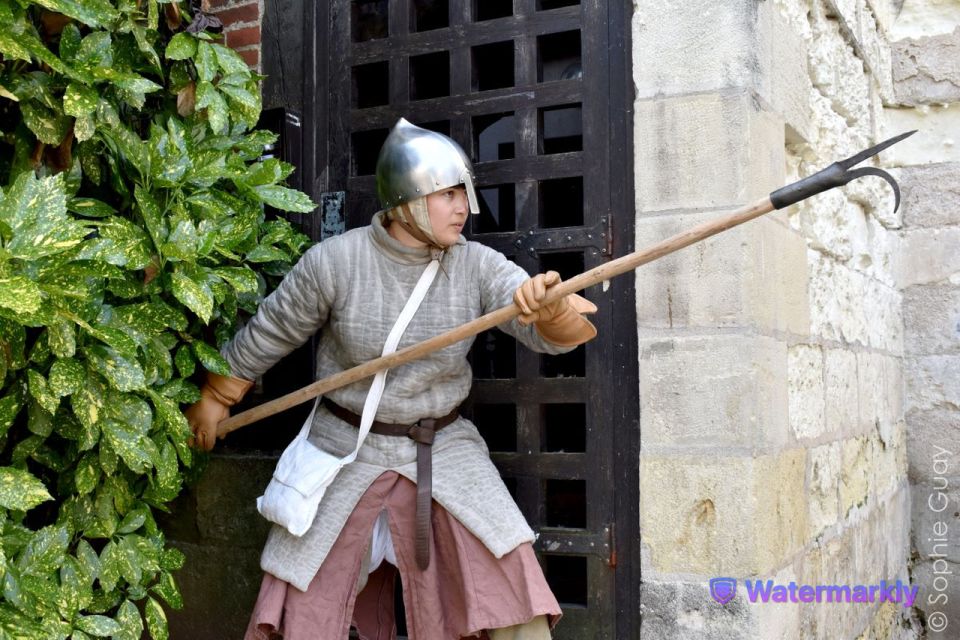
From the opening area, the route moves through the western district and includes Place Plumereau. Today, this is one of the best-known places in Tours, but the tour asks you to picture it within the growing Martinopole rather than as a modern restaurant square.
The important point is development. The district expanded around the basilica and the cult of Saint Martin. Pilgrims arrived for spiritual reasons, but their presence had material effects. Merchants could sell goods, offer services, and build livelihoods around the flow of people.
This is where the tour’s playful method can make a familiar site feel different. You are encouraged to think about who needed food, lodging, directions, protection, and religious assistance. A pilgrimage was not only a private act of faith. It was also a large movement of people through a working city.
The route includes rue de la Rôtisserie, a name that invites attention to food and trade, though the supplied tour information does not promise a tasting or a stop for refreshments. You should eat before or after the walk rather than expect food to be included. Drinks and meals are not part of the $23 price.
Rue du Change and the Making of Money
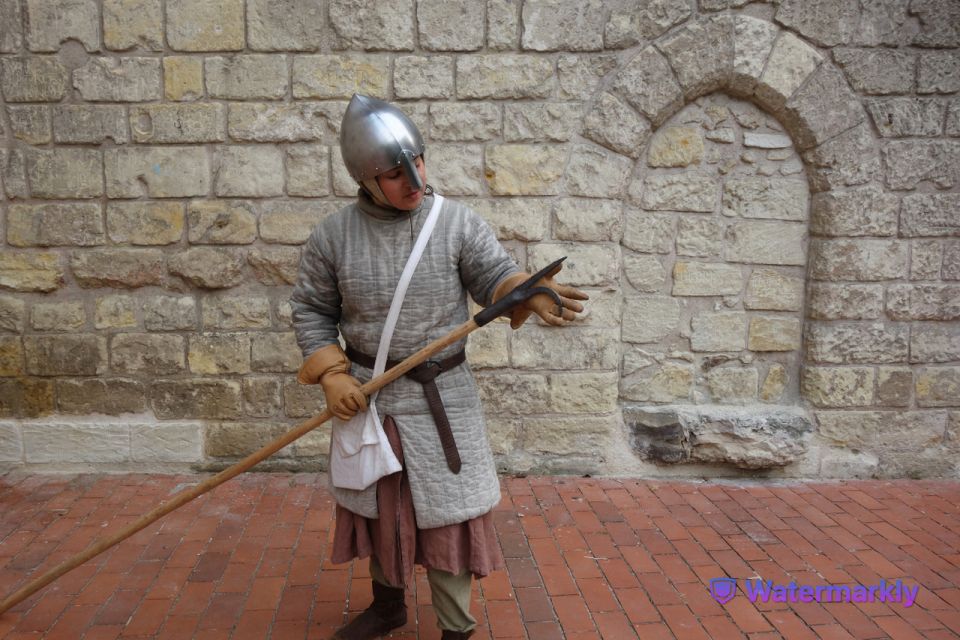
Rue du Change introduces the commercial side of medieval Tours. The tour covers the creation of a new currency, a detail that helps explain how the district’s growth affected more than religion.
Money is not the easiest subject to bring alive on a street corner, but it matters. A busy pilgrimage center needed ways to handle buying, selling, donations, and travel costs. The arrival of a new currency also points to wider political and economic change under the French crown.
You will hear about the merchants who wanted to benefit from the pilgrims and about the political rise of the Martinopole. This is one of the places where the tour moves beyond the familiar picture of medieval towns as poor and isolated. Tours was connected to religious networks, royal authority, trade, and military concerns.
The walk does not promise access to interiors or museum collections. Its value comes from using the streets as evidence. You are asked to read the urban layout and place names while Mahaut explains what kind of activity once shaped them.
Tour Charlemagne and the Protection of Pilgrims
Tour Charlemagne is one of the route’s major points of interest. Here, the focus turns toward protection, authority, and the physical needs of a district filled with pilgrims and relics.
The tour explains the organization of urban militias and the need to protect the population in a kingdom at war. Mahaut’s family story connects directly to this subject. Her father’s absence on crusade is not an isolated adventure. It reflects the way military campaigns could affect households and local communities.
The crusades are treated as part of Tours’ wider story rather than as a separate chapter from daily life. A person might leave for a distant campaign, while someone at home took on new responsibilities. Mahaut’s decision to bear arms in her father’s place gives the subject a personal focus.
You should keep expectations sensible. This is a walking tour, not a staged battle or a weapons demonstration. The historical outfit and interactive delivery create the mood, but the main activity remains listening, walking, and looking at the city.






Rue des Halles and the Commercial Heart of the Route
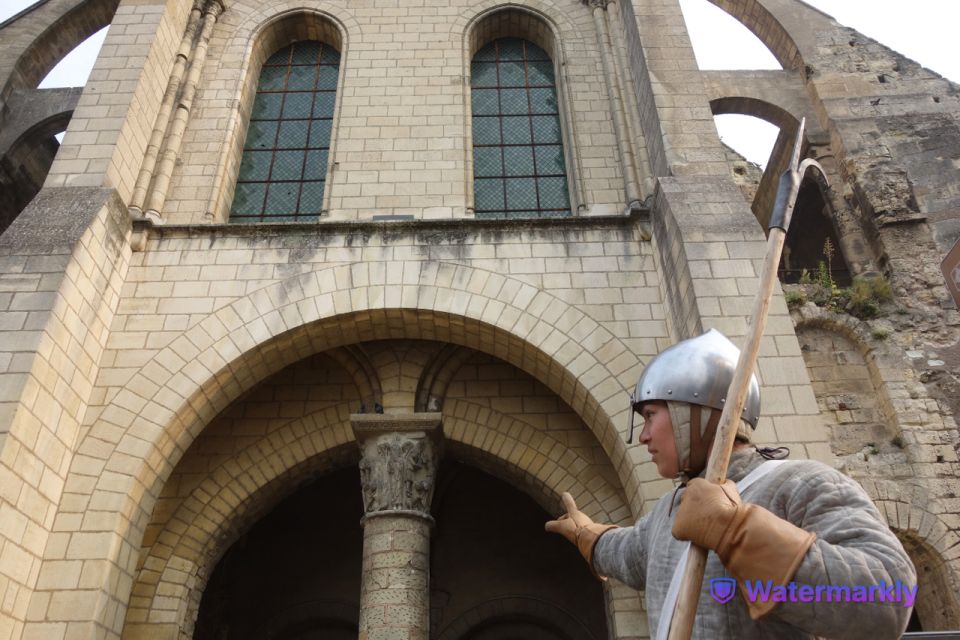
Rue des Halles continues the story of trade and urban growth. By this point, the route has shown you how pilgrimage could support merchants and how the Martinopole gained political weight around Saint Martin’s relics.
I like the way this part of the tour connects commerce to religious life. Medieval visitors needed more than a shrine. They needed places to buy goods, find services, and move through the town safely. The route helps you see the Martinopole as an active district with its own interests, not merely an extension of the cathedral quarter.
This is also a good point to remember that Tours’ importance came from several sources at once. The city had religious authority in the east, pilgrimage power in the west, and royal pressure shaping the wider kingdom. The tour keeps returning to these overlapping forces.
Because the walk lasts only 90 minutes, the treatment of each street is selective. You will not receive a full architectural survey of every building. Instead, you get a compact story that links the named streets and towers to the political and social life of the 13th century.
Tour de l’Horloge and a City Under Pressure
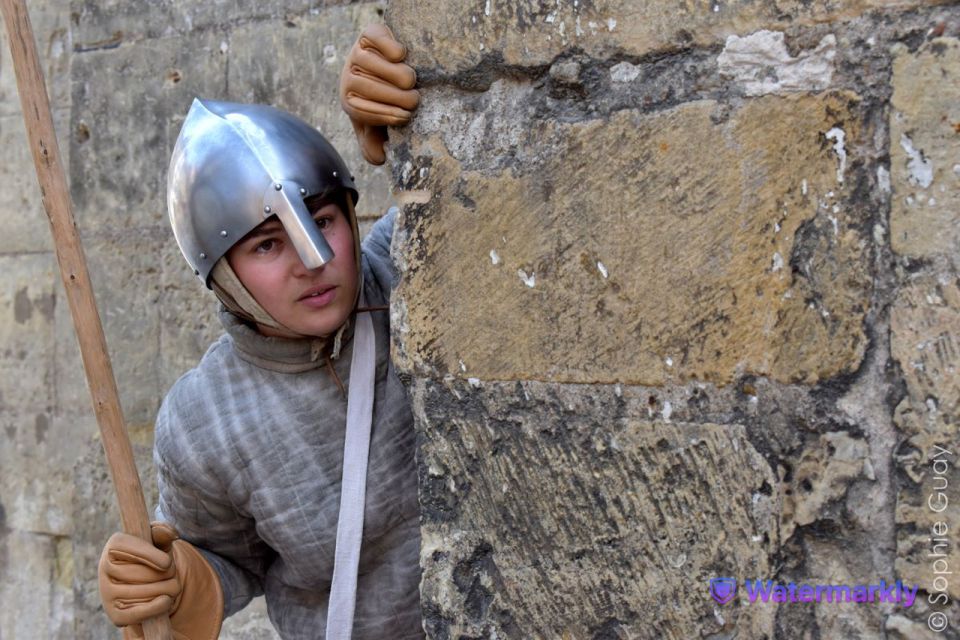
The route ends at Tour de l’Horloge, after also passing the area around rue des Halles and Tour Charlemagne. The final section brings the major themes together: a growing pilgrimage district, a protective militia, a powerful bishop, ambitious merchants, and a monarchy trying to strengthen control.
The story of Tours is not presented as peaceful religious progress. The population and relics needed protection, and the city existed within a kingdom at war. The bishop’s opposition to the rise of the Martinopole adds a local power struggle to the larger tensions.
That combination makes the tour useful for first-time visitors and for people who already know Tours. One local participant had lived in the city for more than 35 years and still found the 13th-century perspective revealing. You should not expect to learn every detail of Tours’ past in one walk, but you can come away with a better explanation for why the western district mattered.
The ending at the tower also gives the tour a clear shape. You begin with Mahaut and her family, follow the religious and commercial growth of the Martinopole, then finish with the political and defensive pressures facing the city.
What the $23 Price Really Buys You
At $23 per person, this is reasonably priced for a professional 90-minute guided walk in central Tours. You are paying for a live French-speaking guide, a prepared historical character, and a route that ties several major sites into one story.
The value is strongest if you want interpretation. You can walk past Place Plumereau, rue du Change, Tour Charlemagne, and Tour de l’Horloge on your own, but the tour gives those places a shared theme. It explains why pilgrims mattered, why merchants followed them, and why two centers of authority developed within the same city.
The price does not include hotel pickup, transport, food, or drinks. That is normal for a short city walk, but remember to reach Jardin Saint Pierre le Puellier independently and allow time to find the guide in costume.
A practical note is worth taking seriously. The meeting location changed at short notice for one booking, and the message arrived late enough to cause a 15-minute wait and a shortened opening. Check your messages close to the start time and confirm the meeting point before leaving your hotel. This is a small risk, but it can matter when a 90-minute tour has a fixed route.
Who Will Enjoy This Walking Tour?
I would choose this tour for families with children aged seven and up, couples who like local stories, and anyone who prefers a character-led visit to a formal historical talk. The interactive tone gives children something to follow, while the themes of money, pilgrimage, women, and power give adults plenty to think about.
It is also a good choice for people who have already visited Tours’ best-known sites. A resident who had taken other guided visits still found Mahaut’s route original and engaging, especially with grandchildren along. That suggests the format can add something even when the city itself is familiar.
French ability is important. The live guide speaks French, and no other language is listed. If you understand only a little French, the costume and route may still be enjoyable, but you could miss the historical detail that makes the tour worthwhile.
The tour is wheelchair accessible, which makes it a practical option for many visitors. The activity takes place outdoors and operates rain or shine, so bring suitable clothing and shoes. The supplied information does not promise shelter or a weather adjustment.
Should You Book Epok’Tour’s Medieval Tours Walk?
Book it if you want a short, unusual introduction to Tours through the eyes of one strong character. Mahaut’s story gives the city an emotional center, while the route explains how Saint Martin’s relics helped create a religious and economic district that challenged the bishop’s authority.
Skip it if you need an English-language guide, dislike role-play, or want extensive access to interiors and monuments. This is a focused outdoor walk, not a full city tour or a museum visit.
For French-speaking families and curious adults, the $23 cost is fair. You get a clear 13th-century theme, several important Old Tours landmarks, and a guide who treats women, pilgrims, merchants, and militias as part of the same story. Confirm the meeting point, arrive prepared for the weather, and you should be ready for a lively lesson in how divided medieval Tours really was.
FAQ
How long does the Tours 13th-century guided tour last?
The tour lasts 90 minutes, or one and a half hours.
How much does the tour cost?
The listed price is $23 per person.
Where does the tour meet?
You meet the guide at Jardin Saint Pierre le Puellier in Tours. She is easy to recognize because she wears a historical outfit.
What language is the tour conducted in?
The live guided tour is conducted in French.
Who leads the tour?
The tour is led by Mahaut, a professional guide presented as the daughter of a militiaman who went on a crusade.
Which places does the tour visit?
The route includes Jardin Saint Pierre le Puellier, Place Plumereau, rue du Change, rue de la Rôtisserie, Tour Charlemagne, rue des Halles, and Tour de l’Horloge.
Is the tour suitable for young children?
Children under seven are not permitted. The activity is designed as an interactive and playful visit for older children and adults.
Does the tour operate in bad weather?
Yes. The tour takes place rain or shine. Hotel pickup, food, and drinks are not included.