REVIEW · MONTPELLIER
Guided Tour of Montpellier City Centre by Electric Bike
Book on Viator →Bookable on Viator
Electric bikes make Montpellier easy to explore. This guided ride connects the old center highlights into one smooth loop on a small-group e-bike. You cover a lot of ground without turning your day into a workout, and the story behind each stop keeps you oriented.
What I like most is the way the route blends classic sights with tight local details. The Tower of the Babote, churches of Saint Roch and Saint Anne, and the Unicorn Fountain come one after another, so you learn as you glide. A possible drawback: this tour really depends on weather, so if conditions are poor, the plan can change.
There’s also a very smart feel to the pacing. The ride finishes near the Water Tower at Promenade du Peyrou, then your guide makes iced tea with a view over the aqueduct, turning the last stretch into a memorable break.
In This Review
- Key things to know before you go
- Electric bikes and Montpellier’s center: a practical match
- Where the tour starts (and how the day ends neatly)
- From Place de la Comédie to the Tower of the Babote
- Near the prefecture: Unicorn Fountain and the Medical School
- The quays of the Verdanson: changing the pace and the view
- Crossing Rue Foch to the Arc de Triomphe
- Promenade du Peyrou and the Water Tower payoff
- Iced tea with an aqueduct view: the tour’s standout moment
- Price and value: what $83.08 buys you
- How safe and smooth it feels on the road
- Who this tour suits best
- Short weather reality check
- Should you book this Montpellier electric bike tour?
- FAQ
- How long is the guided electric bike tour?
- What does the tour cost?
- Is the tour offered in English?
- What’s included and what’s not?
- How many people are in the group?
- What happens if the weather is poor or if I need to cancel?
Key things to know before you go

- Maximum 8 travelers means a quieter ride and easier traffic-focus from the guide.
- Fifteen stages through the center ties together squares, churches, fountains, and viewpoints in one flow.
- English-guided experience with a mobile ticket for simpler day-of logistics.
- Built-in “pause” moment: iced tea prepared by your guide near Promenade du Peyrou.
- Bicycle use included so you don’t spend your time hunting for rentals or worrying about where to park.
Electric bikes and Montpellier’s center: a practical match

Montpellier’s historic center is perfect for an electric bike because the distances are manageable but the streets can still add up fast. In about 3 to 3.5 hours, you get a coherent route that would take you much longer on foot. And since it’s guided, you’re not guessing where to turn or what you’re actually looking at.
This is also a comfort issue. E-bikes reduce effort, which matters if you want photos, time to stop, and still feel fresh at the end. You’re not just riding past buildings. You’re getting the context as you move.
Group size matters too. With a cap of 8 people, the guide can keep the pace controlled and keep eyes on the group. That shows up in the vibe: safer, less chaotic, and more time to ask questions.
You can also read our reviews of more cycling tours in Montpellier


Where the tour starts (and how the day ends neatly)

The meeting point is the Office de Tourisme & des Congrès Montpellier Méditerranée Métropole at 30 Allée Jean de Lattre de Tassigny, 34000 Montpellier. The tour ends back at the meeting point, so you avoid that annoying problem of being dropped somewhere far from where you started.
It’s also listed as near public transportation, which helps a lot if you’re staying outside the center. You can arrive without needing a car or complicated taxi timing.
Once you’re on the e-bike, the day has a clear shape: a loop through the center, then a finish near Promenade du Peyrou with a scenic payoff. That structure is one reason the tour feels efficient rather than rushed.
From Place de la Comédie to the Tower of the Babote
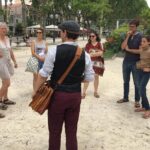
You start by browsing emblematic places in Montpellier’s center with a guided walk element woven into the ride. One of the first anchors is Place de la Comédie, the central square that helps you orient quickly.
Then the route leads you toward the Tower of the Babote, described as a vestige of the ramparts of Montpellier. That detail is worth paying attention to because it changes how you look at the city. Instead of seeing one-off monuments, you start to recognize the layers: old defensive edges, then later civic life.
From there, you move toward the churches of Saint Roch and Saint Anne. Churches can be easy to speed past on your own trip, but in a guided format you get a reason to slow down. You’ll be able to spot them in the broader urban picture instead of treating them like standalone landmarks.
What to watch for: when you’re near historic sites, the best photos often come from the edges of the square, not dead center. Ask your guide where the best angle is before the group moves on.
Near the prefecture: Unicorn Fountain and the Medical School

As the loop continues, you head near the prefecture to see the Unicorn Fountain. That’s one of those Montpellier details that feels whimsical but still belongs to the city’s identity. A fountain like this works well as a mental bookmark: it tells you you’re in the civic core, not just passing through residential lanes.
You also pass by the Medical School. Even if you don’t go inside, this stop gives you a sense of what’s active and modern in the center. Montpellier isn’t only about old stone and old streets; it’s also a city with institutions that shape daily life.
This mid-route segment is a good time to tune into how your guide connects dots. The narration typically helps you connect street corners to bigger themes: where people gathered, how the city expanded, and why certain buildings matter.
Possible consideration: if you’re hoping for long sitting breaks at every stop, this isn’t that kind of tour. It’s built to move through many points, then land your best view at the end.
The quays of the Verdanson: changing the pace and the view

Next up are the quays of the Verdanson. Quays are useful on tours because they shift your surroundings from tight historic blocks to something more open and linear. Even when you’re still traveling in the city center, that change can make the ride feel fresh.
This segment also helps the route make sense. When you see water-adjacent areas in a city, you start to understand how movement and gathering used to work there. The guide’s pacing tends to keep you looking outward, not just down at the bike path.
Then the tour rises toward the Corum. The Corum is a major landmark in Montpellier, and it’s a good contrast to the earlier rampart vestige and church stops. You see how the city developed different kinds of spaces for different needs.
You can also read our reviews of more guided tours in Montpellier


Crossing Rue Foch to the Arc de Triomphe
From the Corum, you cross the entire Rue Foch. Walking that street on foot would feel long. On an e-bike, it becomes a steady corridor where you can keep your eyes open for architecture without constantly stopping.
Then you head to admire the Arc de Triomphe. This is another moment where guidance adds value. It’s not just a monument you snap from one angle and forget. You get a sense of why it’s placed where it is and how it contributes to the city’s visual rhythm.
Rue Foch and the arc together give you a “bigger city” feel inside Montpellier. You start to notice that the route isn’t only about medieval lanes. It includes grander city planning moments too.
Tip for your camera: plan for at least two angles. One from where the group naturally pauses, and one a few steps to the side if your guide allows a quick photo moment.
Promenade du Peyrou and the Water Tower payoff
The journey ends in style on Promenade du Peyrou near the Water Tower, which is described as a symbol of the city of Montpellier. This is the payoff zone of the whole tour.
Promenade du Peyrou is elevated and open, so it gives you breathing room after earlier tighter stops. You’re also positioned well for views, which makes it a strong final location for photos and a relaxed wrap-up.
This end section is one reason the tour feels worth it. You aren’t ending in an office area or a random street corner. You’re finishing in a place that naturally rewards being there on a bike day.
Iced tea with an aqueduct view: the tour’s standout moment

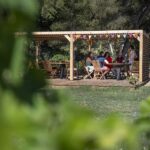
One of the most memorable parts is that you enjoy an iced tea preparation cooked by your guide with a breathtaking view of the aqueduct that stretches over the city. This is the kind of detail that turns a sightseeing ride into something more personal and more fun.
It also fits the timing. Right when you might start to feel “toured out,” you get a sensory reset: a cold drink, a pause, and a view that makes the city feel connected. The aqueduct view is especially effective because it gives you a sense of infrastructure and ambition, not just buildings.
If you get a guide like Sébastien (noted as friendly and information-rich), you’ll likely feel that extra warmth. In the best cases, the iced tea moment isn’t just a snack break. It’s part of the story the guide has been building all ride.
Small practical note: snacks and soda/pop are not included, so plan for your drink moment to be only part of your fuel. If you’re the type who needs a snack midway through a 3+ hour day, bring something small.
Price and value: what $83.08 buys you
At $83.08 per person, this isn’t a “grab-and-go” activity. It’s a guided experience built around e-bike use, a curated loop, and multiple points of interest.
Here’s the value angle that matters: you’re paying for time saved and for interpretation. The route strings together many key stops, including rampart remains, churches, fountains, major boulevards, and a viewpoint finish. Without a guide, you might see these things eventually, but you’d lose the thread that helps you understand what each place represents.
You also get bicycle use included and the admission ticket is free, which helps keep costs predictable. You’re not stacking entry fees on top of the tour price.
For the day, your extra costs are basically personal choices. Since snacks and soda/pop aren’t included, you can decide how you want to handle food without being locked into the tour’s setup.
Also consider booking timing. It’s commonly booked around 14 days in advance, which suggests it’s a popular slot. If your dates are fixed, booking earlier tends to reduce stress.
How safe and smooth it feels on the road
From what you can expect, the guide keeps the group safe from traffic. That’s a big deal on an e-bike tour. Even if riders are comfortable, city streets require tactics: positioning, timing, and knowing when to slow down.
With only up to 8 travelers, that safety focus can be more realistic. The guide can guide the group rather than managing a crowd.
If you’re new to e-bikes, the reassurance here is that the tour is designed to run as a group with a guide leading the route. You’ll still want to stay alert and follow instructions, especially near intersections and busy crossings like the long run on Rue Foch.
Who this tour suits best
This is a great fit if you want a structured overview of Montpellier’s center without spending your entire day walking. You’ll likely enjoy it if you like city sights with enough context to feel smarter afterward.
It’s also a good match for small groups, couples, and solo travelers who want conversation and guidance rather than riding alone. Since it’s offered in English, it’s especially useful if you want explanations without language friction.
It may not be ideal if you strongly prefer independent travel with no guidance or if you expect a totally leisurely schedule with long stops every few minutes. This is a “see a lot, learn as you go” format.
Short weather reality check
This experience requires good weather. If it’s canceled due to poor weather, you’ll be offered a different date or a full refund. So, if your trip is flexible, you’re fine. If your schedule is tight around specific days, keep an eye on conditions.
Should you book this Montpellier electric bike tour?
I think you should book it if you want the most efficient way to understand Montpellier’s center and you like practical sightseeing. The combination of 15 stages, a safe guided ride, and a memorable finish at Promenade du Peyrou with guide-made iced tea makes it feel like more than a simple bike rental.
Skip it if you don’t want any weather dependency, or if you prefer slow, unstructured wandering where you control every turn. Also, if you hate not having snacks and drinks included, you’ll want to plan your own small food stop ahead of time.
If your goal is a focused introduction to Montpellier with a payoff view and zero hassle logistics, this is an easy yes.
FAQ
How long is the guided electric bike tour?
It’s about 3 hours 30 minutes (approx.).
What does the tour cost?
The price is $83.08 per person.
Is the tour offered in English?
Yes, it’s offered in English.
What’s included and what’s not?
The tour includes bicycle use. Snacks and soda/pop are not included, and the admission ticket is listed as free.
How many people are in the group?
The tour has a maximum of 8 travelers.
What happens if the weather is poor or if I need to cancel?
The tour requires good weather. If canceled due to poor weather, you’ll be offered a different date or a full refund. You can cancel for a full refund up to 24 hours in advance.