REVIEW · PARIS
Experience Paris’ Village of Montmartre away from the crowds
Book on Viator →Operated by Discover Walks · Bookable on Viator
Montmartre changes shape when you leave the main flow. This small-group tour targets the older, calmer feel of the neighborhood, with time at Moulin Rouge and Sacré-Cœur plus detours into quieter backstreets where the stories land. You also get a more intimate rhythm than the big-bus style sightseeing.
I especially like the way the guide ties art to what was happening in the streets, from painters to revolution-era characters, so the walk feels like a living timeline instead of a list of names. And I like that the pace leaves room to ask questions, with guide favorites like Anaelle and Harry standing out in how they explain things clearly and with real energy.
One caution: walking is part of the deal. Montmartre is hilly and involves lots of steps and uphill sections, so if you’re slower on your feet, this may feel like too much.
In This Review
- Key highlights for a crowd-free Montmartre stroll
- A small-group Montmartre that lets you actually look around
- From Moulin Rouge to quiet backstreets: the route’s smart rhythm
- Stop 1: Moulin Rouge up close without the worst of it
- Stop 2: Montmartre Village streets that feel like old Paris
- Stop 3: Le Moulin de la Galette and the painters’ trail
- Stop 4: Place du Tertre—Artists’ Square in real time
- Stop 5: Vigne du Clos Montmartre—small vineyard, big views
- Stop 6: Sacré-Cœur (Basilique du Sacré-Cœur) without the full crush
- Price and group size: what $18.10 buys you in real terms
- Logistics that actually matter: where it starts, where you finish, and how long you’ll walk
- Who this tour suits best (and who might want a different plan)
- Should you book this Montmartre away-from-the-crowds tour?
- FAQ
- How long is the Montmartre tour?
- How much does the tour cost?
- Is the tour offered in English?
- What group size should I expect?
- Where does the tour start and where does it end?
- Does the tour include admission to museums or go inside buildings?
- Is it possible to get a full refund if plans change?
Key highlights for a crowd-free Montmartre stroll
- Moulin Rouge first, so you see the icon before it gets swarmed
- Narrow cobblestone lanes and lesser-known corners instead of only the postcard streets
- Artist-square time at Place du Tertre, with you able to watch sketching and portrait work up close
- Le Moulin de la Galette views and context, linked to famous painters you’ll recognize
- Vigne du Clos Montmartre, a tough-to-find local vineyard with Sacré-Cœur in the background
- Small group size (max 21) for a more personal conversation with your guide
A small-group Montmartre that lets you actually look around
Montmartre can feel like one long line of people. What makes this experience different is the small-group format and the choice to start with major landmarks while the streets are still waking up. That alone helps you see things instead of just drifting past them.
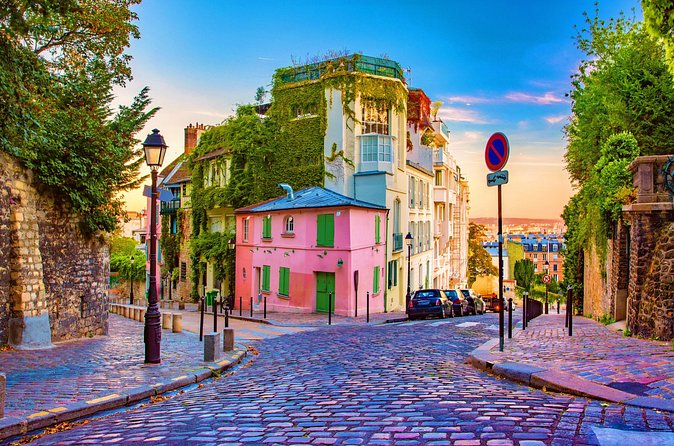
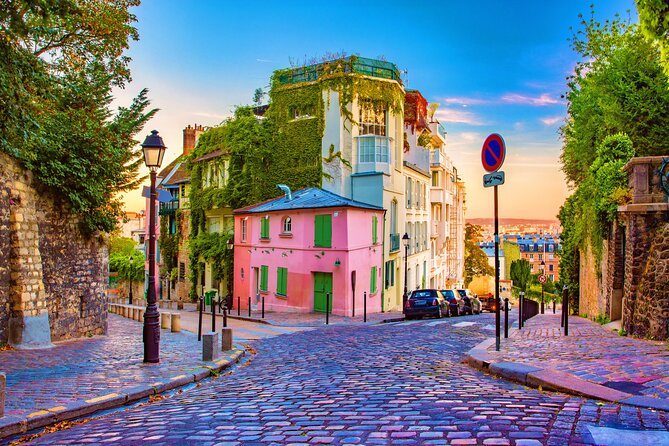
You’ll also notice the tour leans into the neighborhood’s texture: cobblestones, ivy-clad facades, and the kind of street layout that makes Paris feel old even when you’re standing in the present. It’s not about rushing through a checklist. It’s about getting oriented fast, then slowing down as the stories add up.
And because the group stays under control, the guide can respond to what you’re curious about. In the past, guides like Anaelle have been praised for fun facts that stick, and Harry for mixing warmth and humor with solid context. Either way, the vibe is human-scale: questions are welcome, and you’re not stuck listening from the back of a mob.
You can also read our reviews of more tours and experiences in Paris.



From Moulin Rouge to quiet backstreets: the route’s smart rhythm
The tour moves in a logical sweep through Montmartre’s most famous areas, but it’s not one of those tours that keeps you glued to the busiest sidewalks the whole time. You start at Moulin Rouge, then work into the older village-like lanes, then continue toward the vineyard viewpoint and Sacré-Cœur.
That sequencing matters. Moulin Rouge is iconic, but it’s also one of those places where crowds build quickly. Starting there first gives you a calmer look at the cabaret that inspired so many artists.
Then you transition into spaces that feel more lived-in: narrow streets, tucked-away corners, and squares where you can notice small details—how the neighborhood works, not just how it looks in photos. The guide’s theme is consistent: art and the people around it, including references to artists and revolutionaries who shaped the myth and the mood of Montmartre.
Stop 1: Moulin Rouge up close without the worst of it
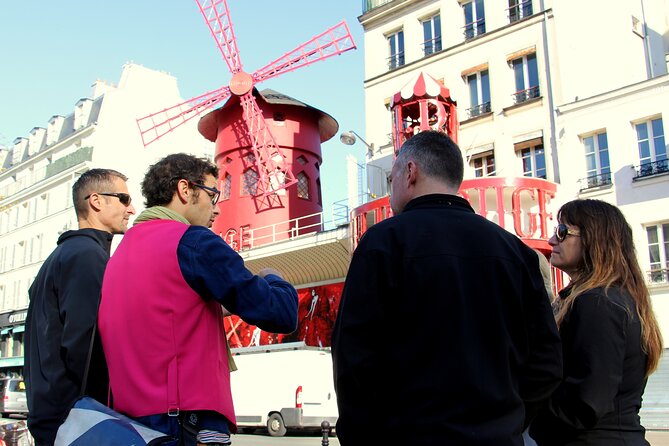
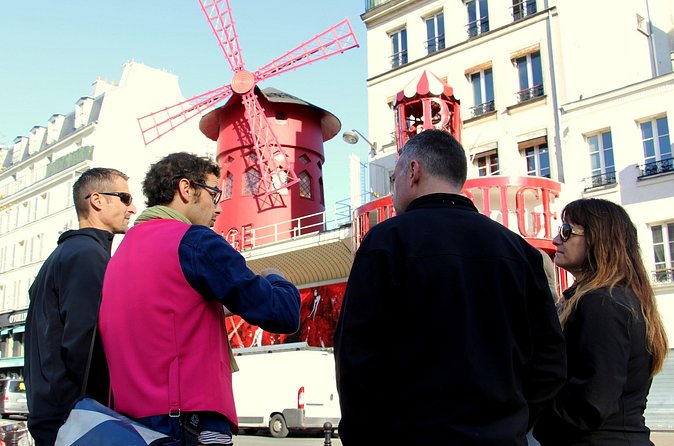
You’ll begin at Cabaret Moulin Rouge, the big red flag of bohemian Montmartre. This is the kind of spot that could easily feel like a photo-op only. The difference here is that you get context right away.
The guide connects the cabaret to Toulouse-Lautrec, who did a lot of painting work tied to the venue and the world around it. That matters because once you know the link, you start seeing why the cabaret became such a powerful symbol—dancers, patrons, the energy of late-19th-century nightlife.
Practical note: this first stop lasts about 10 minutes. It’s short by design. You’re meant to look, absorb, then move on to the quieter lanes so your photos and your headspace don’t get swallowed by the crowds.
Stop 2: Montmartre Village streets that feel like old Paris
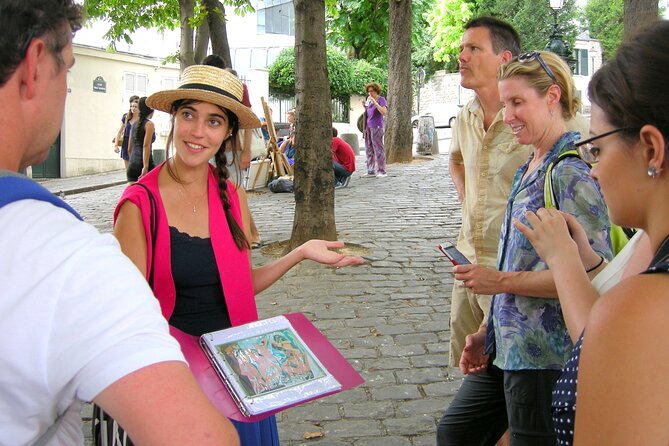
Next comes the Montmartre Village feel: cobblestone lanes, cozy building fronts with greenery, and the sense that you’ve stepped away from the city machine. This is where Montmartre becomes less about the landmarks and more about the texture.
You’ll hear how the area became a haven for artists such as Picasso and Modigliani. The point isn’t to turn this into a museum lecture. It’s to make the neighborhood’s layout part of the story—why artists were drawn here, and why the look of the place kept inspiring new work.
Time here is also about 10 minutes, so it’s a brisk stroll. The good news is that this stop sets you up for what comes next: you’ll recognize the neighborhood’s “grammar” as you walk.
Stop 3: Le Moulin de la Galette and the painters’ trail
Le Moulin de la Galette is one of those Montmartre landmarks that looks instantly familiar, even if you’ve never been. The windmill icon gives the area its silhouette, and the site’s reputation goes beyond being pretty.
You’ll learn how it was once a lively dance hall and how it inspired artworks by Renoir and Van Gogh. That adds a layer of meaning to what you’re seeing right now: it’s not just a windmill photo. It’s a reference point in the evolution of modern art.
Since you don’t go inside buildings, this stop is about observation—watching how the street slopes, how light moves across the cobbles, and how the surrounding paths give you that classic Montmartre feeling even when you’re not in a museum room.





Stop 4: Place du Tertre—Artists’ Square in real time
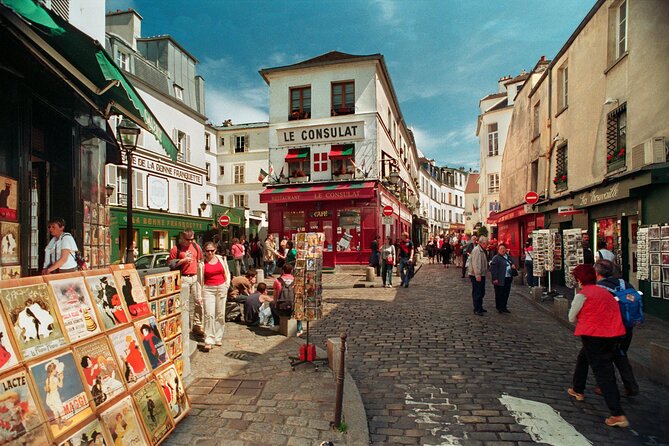
Place du Tertre is the “artists’ square” you’ve probably heard about, and it’s for a reason. Local artists sell their work here, and you can also catch them adding final touches to paintings. If you’re curious, this is also where you might see portrait drawings or caricature-style sketches happening on the spot.
What I like about this stop is that it’s not purely observational. You’re in the market of the neighborhood—watching people practice their craft in front of you. Even if you don’t buy, it’s a more interactive way to experience Montmartre than a quick pass-through.
Keep expectations grounded: this is still a popular area, and you may see crowds here. The advantage is that your guide gives you a frame for what you’re looking at, so it feels like part of the Montmartre story instead of random street performance.
Stop 5: Vigne du Clos Montmartre—small vineyard, big views
Then comes one of the most memorable segments: the Vigne du Clos Montmartre vineyard. The plot is small, and it’s not the kind of place you’d stumble into casually. That’s exactly why it works on this tour. It gives you something Montmartre fans talk about, but most visitors miss.
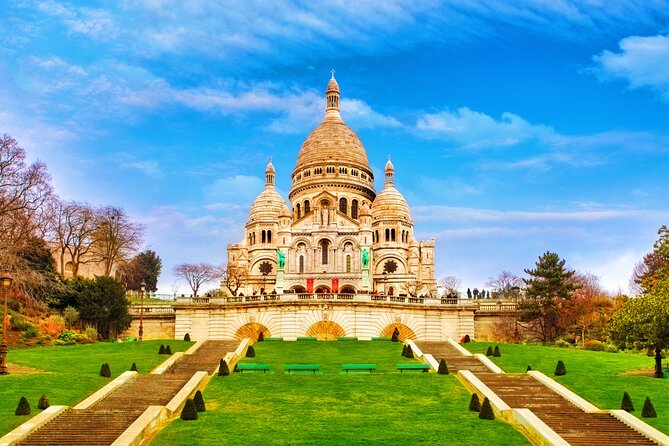
You’ll get a scenic view with vines in the foreground and the white Sacré-Cœur church in the background. This is the moment where the walk’s theme turns from history-and-art into something you can feel in your body: the elevation, the open sightline, and the contrast between cultivated vines and the monumental church.
This stop is also about 10 minutes. That means you should keep an eye on your footing as you move around the area. It’s a viewpoint stop, so you’ll likely want to linger for photos, but don’t plan on hanging out for long. You’re building toward the final big payoff.
Stop 6: Sacré-Cœur (Basilique du Sacré-Cœur) without the full crush
The grand finale is Sacré-Cœur. It’s one of those places where you understand instantly why it’s famous. The white stone effect makes the church look almost unreal against the Paris skyline, and the views spread out in all directions.
The guide helps you connect what you’re seeing with Montmartre’s story: why this area matters, how it became a symbol, and how the neighborhood’s myth sticks to the physical space.
This stop is also about 10 minutes, so it’s designed for a satisfying overview rather than a long sit-down. If you want more time, you can always extend your visit after the tour ends.
Price and group size: what $18.10 buys you in real terms
At $18.10 per person for roughly 1 hour 30 minutes, this is priced like a “get your bearings fast” Montmartre experience. And that’s a fair description. You’re paying for an expert guide, a tight route, and the small-group structure that keeps you from feeling like you’re stuck in a moving crowd.
Two things drive the value here:
- You’re not paying museum fees because the tour does not go inside buildings. That keeps costs predictable.
- The pacing hits major landmarks plus quieter streets. You get both the famous faces and the calmer lanes in one sweep.
Also, this tour is often booked about 33 days in advance on average. If you have a specific day in mind, booking ahead helps you lock in a spot and avoid last-minute searching when Montmartre gets busy.
Logistics that actually matter: where it starts, where you finish, and how long you’ll walk
The tour starts at BlancheParis in Paris and ends at the Basilica of the Sacred Heart of Paris (Sacré-Cœur Basilica), located at 35 Rue du Chevalier de la Barre, 75018 Paris.
Because the route ends at Sacré-Cœur, it’s a convenient follow-up spot for your own wandering. You’ll already be positioned for photos and for heading into nearby streets on your own.
And yes, you’ll be walking. Even though each stop is only about 10 minutes, the transitions add up. One review specifically flagged that it may be too much for elder persons due to the up-and-down streets. So if you have mobility limits, plan conservatively and consider bringing breaks into your plan.
Who this tour suits best (and who might want a different plan)
This experience fits best if you want:
- a guided overview of Montmartre’s landmarks plus its calmer lanes
- storytelling that connects artists and revolution-era vibes to places you can see
- a small group where your questions aren’t an interruption
It may be less ideal if:
- you can’t handle hill walking or frequent stepping between viewpoints
- you prefer long museum time (this tour keeps things outside, with no inside-building visits)
If you’re traveling with someone who needs slower pacing, you’ll want to prepare for the stair-and-slope reality of Montmartre. Even with a guide slowing down, the geography doesn’t change.
Should you book this Montmartre away-from-the-crowds tour?
Book it if you want a smart, human-scale Montmartre introduction that gets you to Sacré-Cœur and Moulin Rouge with fewer headaches, plus time in the neighborhood’s artist and village spaces. The route is short enough to stay manageable, and the guide focus on artists and revolutionaries makes the area feel more meaningful than a generic walking circuit.
Skip it if hill walking is a deal-breaker for you. In that case, you may want a flatter option or a plan with more inside stops.
One last practical note for peace of mind: an issue was reported where a guide did not show up and communication failed. To reduce the odds of a messy start, arrive early at the meeting point and keep your phone ready to confirm details if anything feels off.
FAQ
How long is the Montmartre tour?
It runs for about 1 hour 30 minutes.
How much does the tour cost?
The price is $18.10 per person.
Is the tour offered in English?
Yes, it is offered in English.
What group size should I expect?
It’s a small-group tour with a maximum of 21 travelers.
Where does the tour start and where does it end?
It starts at BlancheParis and ends at Sacré-Cœur Basilica, 35 Rue du Chevalier de la Barre, 75018 Paris.
Does the tour include admission to museums or go inside buildings?
No. Museum fees are not included, and the tour does not go inside buildings.
Is it possible to get a full refund if plans change?
Yes. You can cancel up to 24 hours in advance for a full refund.