REVIEW · PARIS
Discover the Latin quarter
Book on Viator →Operated by Le Vrai Paris · Bookable on Viator
The best thing about this private walk is its focus on the streets between the major sights. You’ll see the Latin Quarter as a living part of Paris, not just a checklist of famous buildings, while Guillaume explains the stories, people, and odd details that are easy to miss on your own.
I like the personal format, since you can ask questions and spend more time on subjects that catch your interest. I also like the route’s finish at the Arènes de Lutèce, an ancient Roman arena that gives the walk a clear historical payoff. The main drawback is price: at $321.68 per person, this is a serious splurge for a 2 to 3-hour walk, especially for one or two people.
In This Review
- Key points to know
- Why the Latin Quarter makes a good walking tour
- Starting at the Fontaine Saint-Michel
- La Sorbonne and the quarter’s academic character
- The Collège de France and serious ideas in public view
- Passing an impressive mausoleum
- Roman Paris at the Arènes de Lutèce
- Guillaume’s guiding style
- How much value do you get for $321.68?
- Weather, walking, and practical planning
- Who will get the most from this walk?
- Should you book Discover the Latin Quarter?
- FAQ
- How long does Discover the Latin Quarter last?
- What language is the tour offered in?
- Is this a private tour?
- Where does the tour start?
- Where does the tour finish?
- Are admission tickets included?
- Can I cancel for a full refund?
Key points to know
- A private walk with Guillaume: You get one guide for your own group, with room to adjust the pace and discussion.
- The Latin Quarter beyond the usual stops: The route links universities, research institutions, religious sites, streets, and Roman remains.
- A strong history-and-anecdote mix: Guillaume uses humor, local tips, and background stories rather than giving only dates and names.
- A useful rainy-day caveat: The tour needs good weather, though the route can sometimes shift indoors if rain becomes heavy.
- An easy point-to-point route: Meet near the Fontaine Saint-Michel and finish at the Arènes de Lutèce.
- Best for curious repeat visitors: It works especially well if you’ve already seen Paris’s headline sights and want a neighborhood walk.
Why the Latin Quarter makes a good walking tour
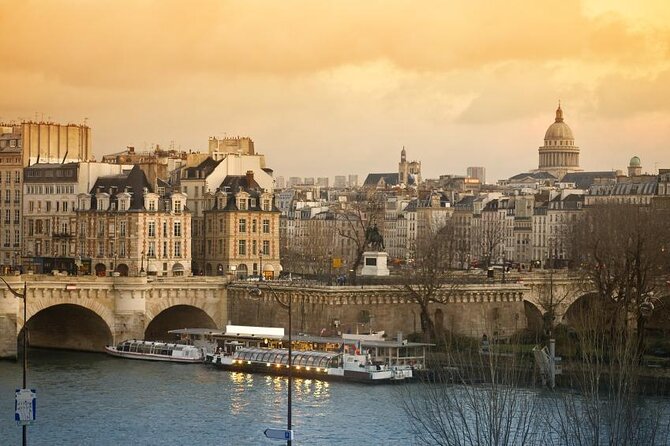
The Latin Quarter is one of Paris’s oldest areas, but its appeal is not limited to grand monuments. Its streets connect the city’s academic past, religious traditions, political memory, and Roman origins in a fairly compact area.
That makes it a good place for a guided walk. On your own, you may notice an attractive building or a quiet square without knowing why it matters. A guide can connect those pieces as you move, so the neighborhood becomes easier to read.
This is also a good choice if you prefer a local district to a major attraction. You will not spend the entire outing waiting in lines or standing in front of one famous façade. The experience is built around walking, listening, asking questions, and noticing details along the way.
The route lasts about 2 to 3 hours. That is long enough to give the area shape without taking up your whole day. Still, this is a walking tour, so you should be comfortable being on your feet and outdoors for much of the visit.
You can also read our reviews of more tours and experiences in Paris.



Starting at the Fontaine Saint-Michel
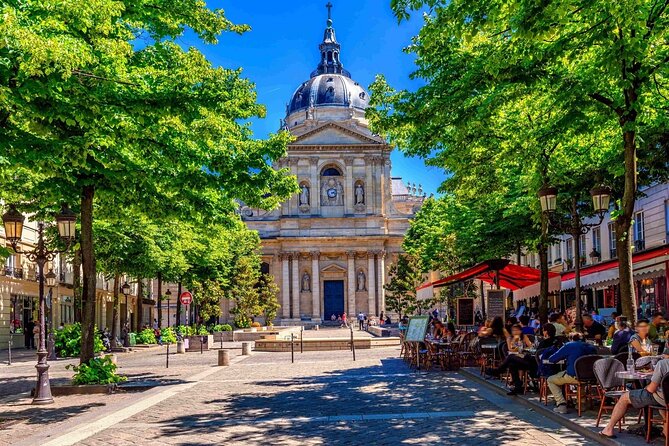
The meeting point is Square Samuel Paty, at 2 Place Paul Painlevé, in the 5th arrondissement. The tour information also identifies the Fontaine Saint-Michel as the start of the walk, so check the final confirmation carefully and arrive with both names available.
The fountain makes practical sense as a starting point. It is an attractive landmark and a clear place to meet, rather than a vague instruction to wait on a particular street. The area is close to public transportation, which helps if you are coming from another part of Paris.
This opening stop is brief, about 10 minutes, but it sets the tone. Instead of beginning with a long lecture, you can get your bearings and start learning how the Latin Quarter fits into central Paris.
I would arrive a little early. The meeting location is in a busy central area, and a few extra minutes give you time to find the square, check your phone, and meet the guide without using up the first part of the tour.
La Sorbonne and the quarter’s academic character
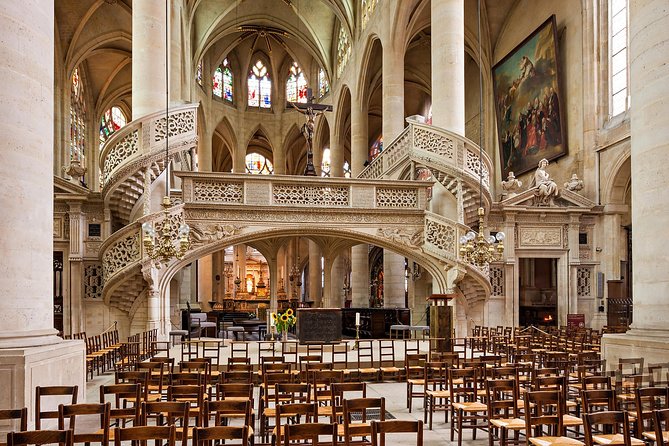
The Sorbonne receives about 30 minutes of attention, making it one of the main stops. Here, Guillaume discusses the universities that give the Latin Quarter its name and much of its identity.
The value is not simply seeing a university building. The Latin Quarter has long been shaped by students, teachers, scholars, and institutions of learning. A guide can explain how those institutions affected the neighborhood and why the area feels different from a purely residential district.
This is one of the parts where a private tour can be more useful than a large group outing. You can ask about the university system, the architecture, or how the area functions today. Guillaume’s style, based on the information available about his tours, combines historical context with present-day information and local advice.
He also appears to adjust the amount of detail to your level of interest. That matters at the Sorbonne, where it would be easy to overwhelm you with academic names and dates. A good private guide should give you enough context to understand the place, then move on before the explanation becomes a classroom lesson.
Do not expect this to be a formal interior university visit. The listed experience focuses on walking and talking about the universities of the area. If entering a specific building is important to you, ask about that before booking.
The Collège de France and serious ideas in public view
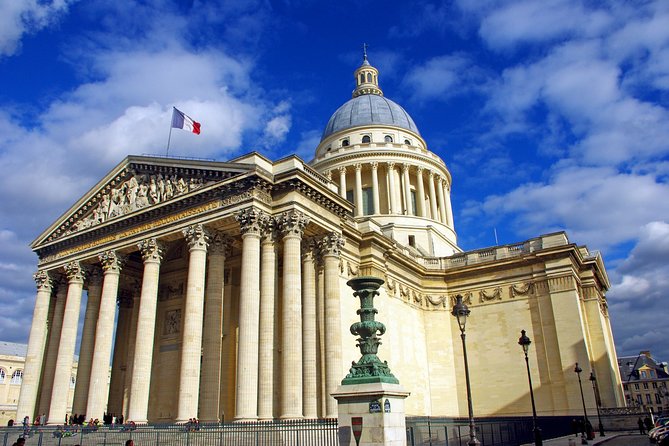
The walk continues to the Collège de France, with about 15 minutes set aside for this stop. It is an important research institute and another example of how much of the Latin Quarter’s character comes from education and scholarship.
The stop is short, but it adds balance to the university discussion. You see that the neighborhood is not defined by one school alone. Several major institutions have helped make this part of Paris a center for study and research.
For you, the main benefit is connection. The guide can place the Collège de France within the wider story of the quarter, rather than treating it as an isolated building. That is a recurring strength of a neighborhood walk: the spaces between landmarks matter as much as the landmarks themselves.
This stop may be less visually dramatic than a fountain or Roman ruin. If you mainly want striking photographs, it could feel modest. If you enjoy learning why a neighborhood developed as it did, the explanation gives the building more weight.
Passing an impressive mausoleum

The route also passes through an impressive mausoleum, though the supplied details do not name it. That means you should treat this as a guided discovery rather than a guaranteed major admission stop.
This kind of brief passage is part of the appeal of the experience. Paris has important sites that you can walk past without realizing their purpose or significance. Guillaume’s role is to point them out and explain why they belong in the story of the Latin Quarter.
Because the exact mausoleum is not identified, I would not book this tour specifically for that one site. Think of it as one piece of a wider route. The appeal comes from the way the stops work together, not from a single monument.





Roman Paris at the Arènes de Lutèce
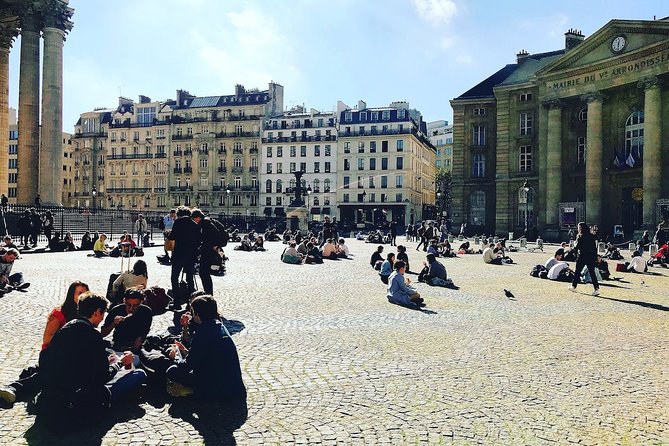
The final stop is the Arènes de Lutèce, at 49 Rue Monge. The tour ends inside these old Roman arenas, which gives the walk a satisfying change of period.
You begin among fountains and academic institutions, then finish with a reminder that Paris reaches back to the Roman era. The arena helps show that the city’s story did not begin with medieval churches, royal power, or modern cafés. Ancient Lutetia is part of the city beneath the later layers.
About 15 minutes are planned here for Roman history. That is enough for a clear introduction, though not a full archaeological tour. You can expect the guide to explain the site and its place in Paris’s past rather than provide an extended formal visit.
Ending here is also practical. You are not returned to the starting point, so the tour functions as a short point-to-point walk. Afterward, you can continue exploring the 5th arrondissement from Rue Monge instead of retracing your steps.
Pay attention to this detail when planning your day. If you have a lunch booking near the Fontaine Saint-Michel, the endpoint is in another part of the quarter. On the other hand, the one-way format can work well if you want to continue onward rather than circle back.
Guillaume’s guiding style
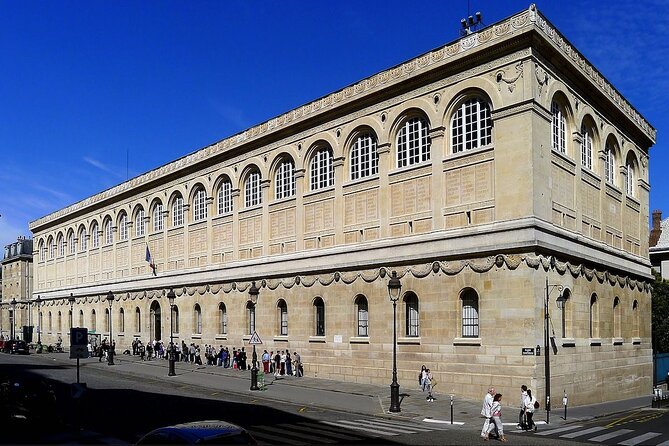
The guide named in the experience is Guillaume. The strongest pattern in the available feedback is his ability to combine facts with side stories, humor, and a sense of the people who shaped the area.
That makes a real difference in a neighborhood like this. A list of dates will not help much if you are trying to understand why a street, school, or monument matters. Guillaume’s approach appears to focus on bringing ordinary streets into the larger story of Paris.
He also seems attentive to the group’s energy and interests. On a private outing, this can make the difference between a good tour and an expensive one. You can ask for more detail, shift toward architecture or history, or keep moving if a subject is not holding your attention.
One especially useful feature is the local advice woven into the walk. Guillaume is described as offering tips for enjoying Paris beyond the tour itself. That can be valuable early in a visit, when you are still deciding which neighborhoods, cafés, museums, or streets deserve your time.
The tour is offered in English. If you want another language, the supplied information does not confirm that option, so ask before paying.
How much value do you get for $321.68?
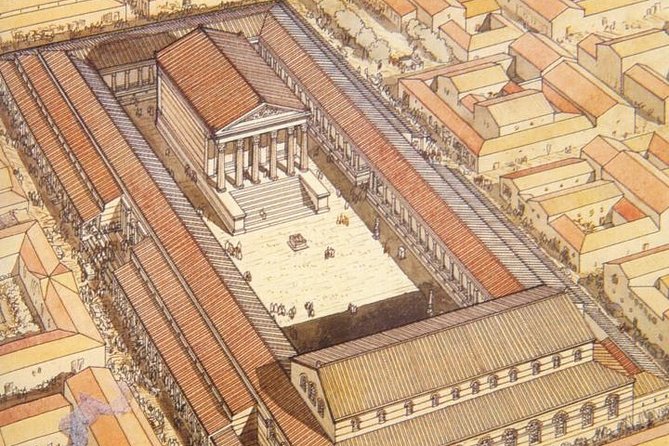
The listed price is $321.68 per person. For a short walking tour, that is high. You are paying for a private guide service, not entrance tickets, lunch, drinks, or transportation.
The price becomes easier to justify if you are traveling as a larger private group and can use any available group discount. It may also make sense for people who place a high value on personal attention and want a custom conversation rather than a standard group script.
For one person or a couple, the cost is harder to defend. You could explore the Latin Quarter independently for very little money, especially since the listed stops have no admission charge. The financial case rests on the guide’s interpretation, route planning, and ability to show you things you might otherwise pass without noticing.
I would compare this with what you want from Paris. If you need a cheap introduction to the quarter, choose a less costly group walk or explore with a guidebook. If you have visited Paris before, dislike crowded sightseeing, and want a thoughtful neighborhood conversation, the private format may be worth the premium.
The tour receives a 4.8 rating from six ratings, which suggests a strong early record but is still a small sample. I would read that as encouraging, not as a guarantee that every guide or departure will feel identical.
Weather, walking, and practical planning
The experience requires good weather. That is important because most of the value comes from walking through the neighborhood, and poor conditions can make a 2 to 3-hour outdoor route uncomfortable.
There is some flexibility in how the time is used. During heavy rain, the guide has adjusted the outing so the group could spend time indoors, including in a church or bar. That is a helpful sign of practical judgment, but it does not remove the weather condition attached to the booking.
Wear comfortable shoes and bring weather protection. The tour does not include bottled water, coffee, tea, or lunch, so plan those yourself. Since the route ends at the Arènes de Lutèce, you can arrange a meal or café stop afterward rather than expecting one during the walk.
Service animals are allowed, the meeting area is near public transportation, and most people can take part. The information does not provide a detailed step-free route or specific mobility guidance, so contact the provider if you need that level of support.
Confirmation is sent within 48 hours, subject to availability. Free cancellation is available until 24 hours before the start time. Cancellations or changes inside that window are not refunded or accepted, and a weather or minimum-group cancellation brings an alternative date or a full refund.
Who will get the most from this walk?
I would recommend this for repeat visitors who have already seen the Eiffel Tower, Louvre, or other headline sights and want to understand a neighborhood at street level. It also suits solo visitors who want a guide but do not want to join a large group.
Families can benefit from the private setup because the guide can adjust the pace and keep explanations suited to the group. The walk may also work well for people who enjoy architecture, universities, ancient Rome, and the small stories behind familiar streets.
It is less suitable if you want a packed sightseeing schedule, interior access to major buildings, or a low-cost activity. The route is deliberately conversational, and several stops are viewed or discussed from outside rather than entered.
If you are visiting Paris for only one day, think carefully before committing several hours and $321.68 per person. The tour offers depth, but it does not cover the city’s biggest headline attractions.
Should you book Discover the Latin Quarter?
Book it if you want a private, story-led walk with an English-speaking guide who can adapt the conversation to your interests. Guillaume’s mix of historical context, humor, local tips, and lesser-noticed sites is the main reason to choose this experience.
The Arènes de Lutèce gives the route a memorable finish, while the Sorbonne and Collège de France explain why this district remains tied to learning. The tour’s strongest feature is not admission to a single sight. It is the way a guide helps you notice the meaning in places you might otherwise pass.
Skip it if the price feels too steep for a short walk or if you prefer to sightsee independently. At this cost, the personal service needs to matter to you. For an intellectually curious visitor, a solo guest, or a small family seeking a calmer side of Paris, it can be a worthwhile splurge.
FAQ
How long does Discover the Latin Quarter last?
The tour lasts approximately 2 to 3 hours.
What language is the tour offered in?
The experience is offered in English.
Is this a private tour?
Yes. Only your group participates in the private activity.
Where does the tour start?
The meeting point is Square Samuel Paty, 2 Place Paul Painlevé, 75005 Paris. The Fontaine Saint-Michel is identified as the opening point, so check your booking confirmation for the exact meeting instructions.
Where does the tour finish?
The walk ends at the Arènes de Lutèce, 49 Rue Monge, 75005 Paris.
Are admission tickets included?
The guide service is included, and the listed stops have no admission ticket charge. Lunch, coffee, tea, and bottled water are not included.
Can I cancel for a full refund?
Yes. You can cancel at least 24 hours before the local start time for a full refund. Cancellations or changes made less than 24 hours before the start are not refunded or accepted.