REVIEW · PARIS
Discover the Champagne through its Terroirs in Paris !
Book on Viator →Operated by Dilettantes · Bookable on Viator
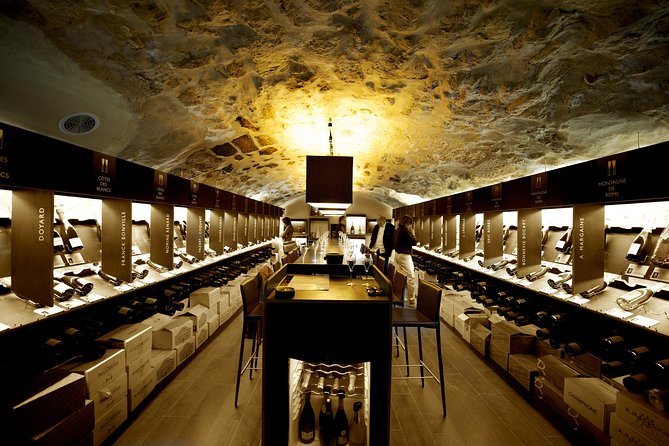
The best part of this tasting is the setting: you leave a small champagne shop and go downstairs into a 17th-century cellar with a cave-like feel. There, you taste three carefully chosen champagnes and learn why the same drink can change with its grapes, soil, growing area, and blend.
I like the small group size of up to eight, which should make questions easy, and I like the fact that each pour comes with useful information about the grower, aromas, and taste. The main drawback is the strict no-fragrance rule, plus the non-refundable booking policy if your plans change.
In This Review
- Key points at a glance
- A cellar tasting beneath Saint-Germain-des-Prés
- What you taste in three 80 ml glasses
- Why terroir changes the taste of champagne
- Grower champagne and a different way to think about the bottle
- The listed Paris areas and what they mean for your day
- The host’s teaching style and what to expect
- Price and value at $79.29
- Prepare your nose before you arrive
- Who will like this Champagne experience
- Should you book it?
- FAQ
- Where does the Champagne tasting begin?
- Where does the experience end?
- How long does the tasting last?
- How many champagnes are included?
- Is the tasting offered in English?
- What food is included?
- What is the minimum age?
- How many people can join the session?
- Can I buy champagne after the tasting?
- Are there fragrance rules?
Key points at a glance
- Three 80 ml champagne pours: Taste three selections drawn from four Champagne terroirs, with the possibility of a small vertical or changing flight.
- A real cellar setting: The tasting takes place below Dilettantes, rather than in a standard bar or restaurant.
- A lesson with every glass: Learn about grapes, terroir, blending, production, and aromas as you taste.
- Small maximum group: With no more than eight people, the session should feel personal and conversational.
- Biscuits included: Sweet or savory biscuits, with bread available on request, give you something simple to eat during the tasting.
- Bottles for later: You can buy champagne at the shop, either to take with you or arrange for delivery.
A cellar tasting beneath Saint-Germain-des-Prés
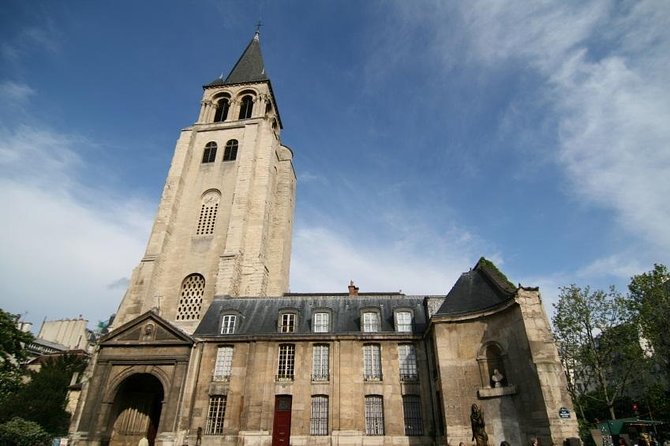
The experience begins at 22 Rue de Savoie in the 6th arrondissement, close to Saint-Germain-des-Prés. You first enter the Dilettantes retail area, then head downstairs into the cellar for the tasting.
That change of setting matters. Champagne can feel abstract when it is presented as a list of grape names and production terms. A low, cave-like room gives the session a sense of place and helps separate it from a quick glass at a hotel bar. It is still a compact tasting, not a full tour of Champagne, but the cellar gives it character.
You need to arrive 10 minutes before the scheduled start. The tasting lasts about one hour and 15 minutes, and the activity finishes back at the same meeting point. Since the room is below street level and the information specifically advises against the experience for people with claustrophobia, consider that before booking.
The maximum group is eight people. That is a useful size for a tasting because you can hear the presenter, look closely at the bottles and fact cards, and ask questions without trying to speak over a large crowd.
You can also read our reviews of more wine tours in Paris


What you taste in three 80 ml glasses
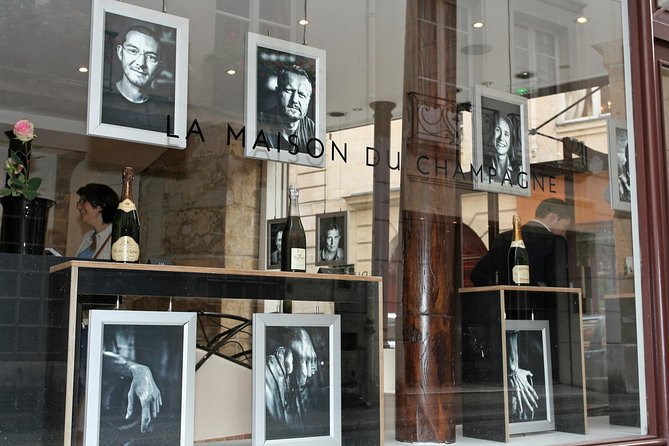
The included tasting consists of three small glasses, each holding 80 ml. That is enough to assess each champagne without turning the session into a long drinking event. You are tasting for contrast, not simply filling a glass and moving on.
The selection comes from three of Champagne’s four terroirs. The description also refers to four different Champagne varietals, so the precise lineup can change. It may be a small vertical tasting, showing how one wine develops across different releases, or an evolving selection built around contrasting bottles.
That flexibility is useful for a specialist shop, but it means you should not book expecting three named cuvées every time. The hand-picked nature of the flight is part of the experience. You may get a comparison based on grape variety, grower, area, vintage, or style.
The serving size also suits people who want to keep sightseeing afterward. You receive three measured pours rather than several full glasses. Champagne can feel light, but it is still alcoholic, and a short tasting with modest portions is easier to fit into a day in Paris.
Biscuits accompany the tasting, with sweet or savory options mentioned. Bread is also available on demand. These are simple additions, not a meal, so you should eat beforehand if you need lunch or dinner.
Why terroir changes the taste of champagne
The central lesson is that Champagne is not one uniform style. The final taste depends on several linked choices and conditions.
The grapes matter first. Champagne is closely associated with different grape varieties, and each brings its own balance of fruit, acidity, structure, and aroma. The tasting introduces the grapes used for each bottle, helping you connect a name on the label with what you smell and taste.
Then comes terroir. In plain terms, terroir is the combination of place and growing conditions that shapes the grapes. The area where the vines grow can affect ripeness, freshness, body, and the character of the finished wine. Comparing bottles from different Champagne terroirs gives you a practical way to notice those differences.
Blending is another key part of the lesson. Champagne may be built from more than one grape, place, or release. The blend is not a minor technical detail. It is one of the main ways a producer creates balance and a house or grower style.
The presenter introduces aromas as well as flavor. That is useful because many first-time tasters focus only on sweetness or bubbles. You will be encouraged to notice the smell before tasting, then compare the nose with the flavor and finish.
Each glass is paired with a fact card containing information about the grower, smell, taste, and other details. I like this format because it gives you something concrete to follow. You can make a note of a bottle you prefer and use the card when deciding what to buy later.
Grower champagne and a different way to think about the bottle
Dilettantes places particular attention on grower champagne. The term generally points to bottles made by the people who grow the grapes, rather than only by large Champagne houses that source fruit from many growers.
For you, the value is not that one approach is automatically better. The point is that grower bottles can show a stronger connection to a particular vineyard, village, or producer. That fits this tasting’s focus on terroir.
The session presents the shop’s project and its grower champagnes before guiding you through the aromas. This makes the tasting useful for anyone who wants to move beyond famous labels and understand why smaller producers can taste different from one another.
You should also expect the selection to favor quality and authenticity rather than a fixed tourist-friendly menu. That is good for curious drinkers, though it leaves the exact bottles unknown until the session. If you have a favorite grape or a particular Champagne area in mind, ask about it during the tasting.
The listed Paris areas and what they mean for your day
The experience information lists Saint-Germain-des-Prés, Samaritaine Paris Pont-Neuf, Odéon and Saint-Michel, the Seine quays, and Les Halles. These are useful landmarks for placing the activity within central Paris, but they should not be confused with a walking tour that stops at each attraction.
The actual meeting point is Rue de Savoie, and the tasting ends there. The cellar is the main event. The nearby districts can help you plan the rest of your day:
- Saint-Germain-des-Prés: A convenient area for combining the tasting with cafés, shops, and a walk through the Left Bank.
- Odéon and Saint-Michel: These nearby districts make it easy to pair the session with central Paris sightseeing.
- The Seine quays: A short stroll by the river can follow the tasting, though you should plan your own route.
- Samaritaine and Pont-Neuf: These landmarks place the experience near the river and the western edge of Île de la Cité.
- Les Halles: This central transport and shopping area is another practical point for arranging the rest of your afternoon.
No transportation is included. You are responsible for getting to Rue de Savoie and for any travel connected with the surrounding sights. The meeting point is near public transportation, which helps, but the activity itself does not provide transfers.


The host’s teaching style and what to expect
The strongest feature here is the teaching. The presenter explains the regions that produce Champagne, the grapes grown in those areas, and the factors that shape the final wine.
This is not simply a setup of three glasses followed by a quick description. The structure gives each pour a purpose. You learn about the grower, smell for specific aromas, taste, and then connect the glass to its place and production method.
The staff are also described as personable and accommodating. One practical example is worth noting: a participant who arrived about 25 minutes late was still given the tasting. You should not count on that courtesy, especially because the instructions ask you to arrive early, but it suggests that calling the shop may help if you run into trouble.
If you get lost walking to Rue de Savoie, keep the contact details handy. The staff have helped with directions by phone. Still, give yourself extra time. A cellar tasting is timed, and arriving late can mean missing the introduction that explains how to compare the wines.
The host names are not provided, so you cannot request a particular presenter. What you can expect is a staff-led session focused on Champagne regions, grape varieties, aromas, and grower bottles.
Price and value at $79.29
At $79.29 per person, this is not a bargain if you measure value by the volume of wine. You receive three 80 ml glasses, biscuits, and about 75 minutes of instruction. You are paying for the setting, the selection, and the explanation as much as for the liquid itself.
I think the price makes more sense for someone who wants a guided introduction rather than just a drink. A knowledgeable host can help you identify differences that are easy to miss when you taste alone, especially if Champagne is new to you.
The small group also improves the value. With a limit of eight, the session is less likely to feel like a crowded commercial demonstration. You have a better chance to ask about a bottle, a region, or a grape and receive a useful answer.
The shop setting adds another practical benefit. If you discover a style you like, you can purchase a bottle to take away or arrange delivery. That turns the tasting into a buying guide. You can taste first, then choose, instead of guessing from a label.
The value is weaker for anyone seeking a full meal, a large number of wines, or a detailed production tour. This is a focused introduction to Champagne terroir in Paris, not a day trip through the vineyards and not a wine-pairing dinner.
Prepare your nose before you arrive
The fragrance rules are unusually strict, but they have a clear reason. Smell is a large part of tasting, and perfume, aftershave, coffee, gum, lipstick, toothpaste, and strongly flavored drinks can interfere with aromas.
You are asked not to wear perfume or aftershave. The provider reserves the right to refuse entry if a fragrance is strong enough to disturb the group, with no refund. Take that seriously. Skip scented products before the session, and avoid coffee, soft drinks, gum, and other intense flavors shortly beforehand.
You are also advised not to brush your teeth too close to the tasting because the acidity can make the experience uncomfortable and affect what you taste. The practical approach is simple: brush earlier, arrive with a neutral palate, and drink water if needed.
This preparation may sound fussy, but it protects the main purpose of the activity. If you want to learn about aromas, you need a clean nose and mouth.
Who will like this Champagne experience
This tasting suits you best if you want:
- A short wine activity in central Paris
- A quiet indoor experience in a historic cellar setting
- A first introduction to Champagne grapes and terroir
- A small group with room for questions
- A chance to compare grower champagnes
- Help choosing a bottle to take home or have delivered
It is also a good fit for couples and small groups who want something more focused than a standard bar stop. The 18-and-over minimum keeps the session aimed at adults.
You should think twice if you dislike enclosed spaces, need a full meal, want a fixed list of famous Champagne brands, or may need to change your booking. The experience is non-refundable and cannot be amended for any reason. If it is canceled because of poor weather or because the minimum number is not reached, you are offered another date or experience, or a full refund.
Service animals are allowed. You should have a moderate level of physical fitness, and the activity is near public transportation, but transportation to and from the attraction is not included.
Should you book it?
Book this if you want to understand why champagnes taste different, not just drink one in Paris. The cellar, small group, fact cards, and clear focus on grapes, terroir, and blending give the hour real purpose.
I would especially recommend it to a curious first-time Champagne drinker or to anyone who wants guidance before buying a bottle. Skip it if you are looking for a large tasting, a meal, or a flexible booking. For the right audience, $79.29 buys a compact lesson, three thoughtfully selected pours, and a better sense of what to look for in your next bottle.
FAQ
Where does the Champagne tasting begin?
It begins at 22 Rue de Savoie, 75006 Paris, France.
Where does the experience end?
The activity ends back at the meeting point on Rue de Savoie.
How long does the tasting last?
The tasting lasts approximately one hour and 15 minutes.
How many champagnes are included?
You receive three small glasses of Champagne, each measuring 80 ml. The selection comes from three of four Champagne terroirs, and the precise lineup may vary.
Is the tasting offered in English?
Yes. The experience is offered in English.
What food is included?
Sweet or savory biscuits are included, and bread is available on demand. This is not presented as a full meal.
What is the minimum age?
You must be at least 18 years old to participate.
How many people can join the session?
The maximum group size is eight people.
Can I buy champagne after the tasting?
Yes. You can purchase champagne to take with you or arrange for delivery.
Are there fragrance rules?
Yes. You should not wear perfume or aftershave, and strong scents can result in refused entry without a refund. You are also advised to avoid lipstick, gum, coffee, strongly flavored drinks, and brushing your teeth too close to the session.