REVIEW · BORDEAUX
Bordeaux : Must-See Attractions Walking Tour
Book on GetYourGuide →Operated by Guydeez Tours · Bookable on GetYourGuide
Bordeaux looks best when you walk it. This private tour strings together the city’s most photo-worthy landmarks in just 2 hours, starting at Miroir d’eau and ending back where you began, with a live guide who keeps the story clear as you go. You get the kind of pacing that fits a first trip, but still feels personal because it’s exclusive to your group.
I especially like the mix of set-piece sights and in-between neighborhoods. Stops like Rue Sainte-Catherine and the Triangle D’Or help you see Bordeaux as more than monuments. The main drawback is time: with lots of quick photo moments and short guided stops, you’ll likely wish you had more time at your favorite place.
In This Review
- Key highlights worth your attention
- Why Miroir d’eau works as your starting point
- The pace of a 2-hour private Bordeaux walk
- Grosse Cloche: a landmark you notice immediately
- Triangle d’Or: where Bordeaux feels like an address, not a postcard
- Place du Palais and Saint-Pierre: squares that make the city legible
- Porte Dijeaux to Place de la Comédie: from old gate to grand performance
- Grand Théâtre to Place de la Bourse: two kinds of grandeur
- Rue Sainte-Catherine and the local finish back at Miroir d’eau
- Price and value: what $29 buys you in Bordeaux time
- What makes the guide experience feel personal
- Who this tour is best for (and who should skip it)
- Should you book the Bordeaux Must-See Attractions Walking Tour?
- FAQ
- How long is the Bordeaux walking tour?
- Where does the tour start?
- Is this a private tour?
- What languages are available for the live guide?
- Can the tour be customized?
- What is included in the $29 price, and what is not included?
- Is reserve now and pay later available?
- Is free cancellation available?
Key highlights worth your attention

- Private, just-your-group tour so the guide can answer your questions and adjust the walk.
- Miroir d’eau start point gives you a memorable first landmark and an easy visual reference.
- Top Bordeaux icons in one circuit including Place de la Comédie, Grand Théâtre, and Place de la Bourse.
- Neighborhood texture through stops like Triangle D’Or and Rue Sainte-Catherine.
- Guide personality and storytelling you may experience with guides such as Pascale or Tegan, praised for enthusiasm and humor.
- Citywide tips beyond the route so you leave with a plan for the rest of your day in Bordeaux.
Why Miroir d’eau works as your starting point

You start at Miroir d’eau, and that’s a smart move. It’s a clear, instantly recognizable place to gather, and it sets the tone for the whole visit: Bordeaux feels elegant, but also human-sized once you’re on foot.
Practically, this kickoff helps you orient fast. Even if you’ve never been to Bordeaux before, you can use the reflections and the open space to understand the geometry of the city around you. It’s also a nice “breather” before you head into the denser historic core, because the guide can introduce how the walk will flow without you feeling rushed from the first minute.
You’ll do an initial photo stop here, and then you’re off. I like that the tour doesn’t waste your first moments with a long wait or a complicated meetup. You’re walking, learning, and snapping pictures almost immediately.
You can also read our reviews of more walking tours in Bordeaux

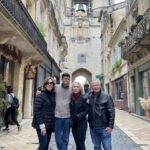
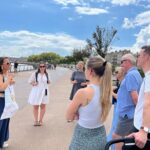
The pace of a 2-hour private Bordeaux walk

This tour is built for a tight window: 2 hours, on foot. It’s not the kind of experience where you sprawl across the city for half a day. Instead, it’s a focused circuit, with short walking legs between stops and guided time at each key spot.
That pacing matters because it changes how you experience Bordeaux. When you only have a couple of hours, you want decisions made for you: where to go, what’s worth noticing, and how to connect the dots. This format does that by pairing big landmarks with short explanations you can actually remember later.
It’s also private and exclusive—there won’t be anyone else in your group. That reduces the typical group-tour trade-off where you’re squeezed for time and attention. A good guide can also tailor questions to what you care about, whether that’s architecture, street life, or how the city evolved.
The one consideration: since the tour moves quickly, you’ll want to pick one or two “must linger” moments in your head. When you find your favorite stop—maybe Grand Théâtre or Place de la Bourse—you’ll likely be glad you saved your best photos and questions for that moment.
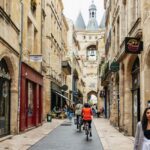
Grosse Cloche: a landmark you notice immediately

Your second stop is Grosse Cloche, another classic Bordeaux anchor. Expect a photo moment and guided viewing, with the guide pointing out the features that make it important and how it fits into the city’s look and feel.
What makes this stop valuable isn’t just the building itself. It’s the way the guide uses it to teach you how to read Bordeaux. Once you understand what the city highlights and why, the rest of the walk becomes easier. You start spotting patterns—how major structures frame streets, how squares connect neighborhoods, and how historic sites still shape movement today.
The drawback of iconic sights is that they can feel generic if you pass them quickly. Here, the short guided tour helps you avoid that. Even with limited time, you get the story behind the photo.
Triangle d’Or: where Bordeaux feels like an address, not a postcard

Next up is Le Triangle d’Or. This is the kind of area that gives Bordeaux a more everyday identity. You get to see a section of the city where style, commerce, and architecture feel connected, not separate.
This stop is useful because it balances the tour. After seeing a landmark like Grosse Cloche, Triangle d’Or shifts your attention to the street level experience—what people walk toward, what storefronts and facades signal, and how the city’s “center” can mean more than one thing.
If you’re traveling with someone who likes shopping streets but doesn’t want a full shopping day, this is a perfect compromise. You’ll get context and a sense of where the city’s prestige concentrates, without turning the walk into a long detour.
Photo stop and guided viewing are both included here, so you’re not just moving through. You’re learning what to notice.
Place du Palais and Saint-Pierre: squares that make the city legible
From Triangle d’Or, you move toward Place du Palais. Think of this as the tour’s “civic” beat—an open space where you can look at the city like a plan, not just a set of photos.
Then you head to Saint-Pierre, Bordeaux. This area gives you a different kind of atmosphere: quieter than the biggest showpiece squares, but still unmistakably central to how Bordeaux organizes itself.
What I like about these two stops is that they change your perspective. You’re not stuck staring at one building type. Instead, you see how plazas and historic zones shape the way people move through the city. A good guide can also help you understand how these areas connect to the larger monuments you’ll see later—so Grand Théâtre and Place de la Bourse don’t feel random when you reach them.
The pacing is quick, but the payoff is mental. By the time you’re done with these squares, you’re better at predicting what you’ll see next.


Porte Dijeaux to Place de la Comédie: from old gate to grand performance

Porte Dijeaux is next, and it’s an excellent “bridge” stop. City gates tend to do two things well: they signal the age of a place and they explain why certain streets follow certain lines.
A guided stop here helps you see beyond the idea of a gate. It gives you a sense of how Bordeaux’s historic boundaries shaped today’s routes and sightlines. Even if you’re not a history buff, this is the kind of context that makes a city feel less like scenery and more like a system.
Then you arrive at Place de la Comédie, one of the big emotional centers of Bordeaux. This is where the city shows off. You get a photo stop and guided tour, and the guide helps you read the square instead of just walking across it.
From there, Grand Théâtre de Bordeaux comes into view. The tour frames the theatre as an architectural masterpiece—exactly the kind of stop that rewards careful looking. With a guide, you know where to focus so the building doesn’t blur into background.
One of the best parts of this segment is the contrast. You go from the gate’s sturdiness and sense of defense to the theatre’s confidence and elegance. The tour naturally teaches you that cities evolve without losing their identity.
Grand Théâtre to Place de la Bourse: two kinds of grandeur
After Grand Théâtre, you’ll reach Place de la Bourse. This is one of the standout moments on the walk, and the guide’s job here is to help you notice what makes it feel so commanding.
Even if you’ve seen photos online, this place lands differently in person because you experience its scale by walking around it. It’s not just a “look once” stop; it’s a spot where the city feels designed for presence.
This part of the tour is also a good reality check. A lot of Bordeaux’s beauty is outward-facing—facades, squares, major landmarks. Place de la Bourse gives you that big-city feeling, but the tour keeps you moving so you don’t get stuck trying to memorize everything at once.
You’ll also do a photo stop here, which is perfect timing. By now, you’ve already learned how the guide wants you to look. Your photos come out better because you’re not just pointing your camera—you’re capturing something you understand.
Rue Sainte-Catherine and the local finish back at Miroir d’eau
Rue Sainte-Catherine is where the tour shifts toward day-to-day Bordeaux. You’ll walk here with a photo stop and guided tour, and the area works well as a closing chapter because it’s the kind of street that helps you imagine spending time in the city, not just visiting it.
This is often the moment where people realize Bordeaux isn’t only about grand monuments. It’s also about movement: storefronts, pedestrian flow, and the feeling that there’s always somewhere to go next.
From Rue Sainte-Catherine, the tour ends by returning to Miroir d’eau. That loop matters. Starting and finishing at the same place makes the whole 2 hours feel complete. You can compare what you noticed earlier to what you see now, and you leave with a clearer map in your head.
It’s also practical: you don’t have to solve transportation at the end while your legs are tired. You finish in a spot that’s easy to orient around.
Price and value: what $29 buys you in Bordeaux time
At $29 per person for a 2-hour private walking tour, the value comes from the combination of three things:
First, it’s private and exclusive, meaning you’re not paying for “someone else’s tour with extra seats.” You pay for attention. Second, you’re guided through major sights you actually want to see, not random stops. Third, your guide provides extra advice for what to do next in Bordeaux, which can save you time later.
Also, the tour includes walking plus public transport (except if you select one of the options). That helps keep the circuit efficient, especially if you’re trying to fit this into a day that already includes meals and other plans.
What’s not included is important too: drinks or food are not part of the price. So plan for a break after the tour. If you want to add ticketed visits to the route, the team offers help booking the tickets for the sights you choose.
Bottom line: $29 is strongest value when you want structure. If you love wandering without guidance, you might feel the price is unnecessary. If you want the highlights explained and a plan for the rest of your day, it’s a solid deal.
What makes the guide experience feel personal
You get a live tour guide in English, Spanish, or French, and the guide can personalize the route based on your interests. That matters because Bordeaux can be experienced in different ways: architecture-forward, street-forward, or city-planning and history-forward. A private format lets you steer a bit instead of accepting a fixed script.
From past guide impressions tied to this tour, people often highlight enthusiasm and strong storytelling. Guides such as Pascale have been praised as passionate about Bordeaux, while Tegan has been singled out for historical knowledge and a touch of humor. That mix is exactly what you want in a fast-paced walking tour: accurate info, delivered in a way that keeps you listening while you’re still moving.
You’ll also benefit from the guide’s familiarity with the area around the stops you care about. That usually shows up as small, practical recommendations—where to go next, how to plan your remaining time, and what to prioritize if your schedule is tight.
If you like asking questions as you walk, this setup is ideal. You can also ask for help making sense of what you just saw: how Place de la Bourse connects to the larger city rhythm, or why a gate like Porte Dijeaux matters when you’re trying to understand Bordeaux’s layout.
Who this tour is best for (and who should skip it)
This experience works especially well if you:
- Are seeing Bordeaux for the first time and want a smart sampler
- Prefer a private pace over crowded group tours
- Want a guide to tell you what matters at each major stop
- Appreciate both grand squares and normal street life
- Need practical advice to plan the rest of the day
You might want to consider another option if you:
- Want long time inside sights or on-site exploring without a clock
- Plan to spend most of your day lingering in just one neighborhood
- Don’t enjoy walking between landmarks, even though this is designed for a 2-hour circuit
Should you book the Bordeaux Must-See Attractions Walking Tour?
If you’re trying to choose between a self-guided “hit the highlights” approach and a guided plan, I’d lean guided for most first-timers. For $29, you’re buying an efficient route, a private experience, and a guide who can turn what you see into something you remember. The starting point at Miroir d’eau and the loop back at the end make the walk feel tidy.
Book it if you want the big sights—Place de la Comédie, Grand Théâtre, Place de la Bourse—plus the more local rhythm of Rue Sainte-Catherine and Triangle d’Or. Skip it if your dream Bordeaux day is slow and lingering, with minimal structure.
One more quick tip: once you know which stop you care about most (the theatre? the squares? the gates?), go in ready to ask your guide one or two targeted questions there. That’s when the private format really pays off.
FAQ
How long is the Bordeaux walking tour?
The tour duration is 2 hours.
Where does the tour start?
The meeting point is Miroir d’eau.
Is this a private tour?
Yes. It’s a private and exclusive tour, with no one else in your group.
What languages are available for the live guide?
The guide is available in English, Spanish, and French.
Can the tour be customized?
Yes. The tour is customizable.
What is included in the $29 price, and what is not included?
The price includes the private walking tour and public transport (except if you select one of the options). There’s also help from the team to book tickets for the visits you want. Drinks and food are not included.
Is reserve now and pay later available?
Yes. You can reserve now and pay later.
Is free cancellation available?
Yes. You can cancel up to 24 hours in advance for a full refund.