REVIEW · BORDEAUX
Bordeaux: Guided Food and Wine Tour with Tastings
Book on GetYourGuide →Operated by Devour Tours · Bookable on GetYourGuide
Bordeaux’s best introduction may come on a plate: this three-hour walk links its medieval streets with canelé, cheese, chocolate, pastries, and wine. You’ll start at Église Saint-Paul and finish near Place Gambetta, with six food stops along the way.
I like the small group, capped at 10, and the way food opens the door to Bordeaux’s past. I also like the mix of everyday eating and polished treats, from a homemade plat du jour to a sommelier-led tasting. The main drawback is that this is a standing and walking tour, with little seating and no fit for wheelchairs, strollers, vegans, or people avoiding gluten.
In This Review
- Key points before you book
- Why this Bordeaux food tour works
- Starting at Saint-Paul and the Big Bell
- Fresh croissants at Boulangerie Louis Lamour
- Canelé, Bordeaux’s signature sweet
- Saint-André Cathedral and Pey-Berland
- A daily special near Bordeaux city hall
- Cheese and French terroir at Chez Delphine
- Chocolate in Bordeaux’s Triangle d’Or
- Dunes Blanches, a newer Bordeaux pastry
- Three regional wines with two local hosts
- What the $116 price really covers
- Practical details that affect your day
- Who should book this Bordeaux food walk?
- Should you book it?
- FAQ
- How long does the Bordeaux food and wine tour last?
- Where does the tour start?
- Where does the tour finish?
- How many people are in the group?
- How many food tastings are included?
- How many wines are included?
- Is the tour offered in English?
- Can people with dietary restrictions join?
Key points before you book
- Nine or more tastes at six stops: The route covers bread, viennoiserie, canelé, a daily dish, cheese, chocolate, cream-filled pastry, and more.
- Three local wines at the finish: Two brothers lead the tasting and answer questions in a local wine bar.
- A useful first look at central Bordeaux: You pass La Grosse Cloche, Bordeaux Cathedral, Pey-Berland, city hall, and the Triangle d’Or.
- A true small-group format: With no more than 10 people, it is easier to hear the guide and ask questions.
- Come hungry and bring water: The food is plentiful, while drinks outside the wine tasting are limited.
- Best for flexible eaters: Vegetarian, pescatarian, dairy-free, non-alcoholic, and pregnancy-friendly adjustments may be possible with advance notice, but vegan, kosher, and gluten-free needs cannot be accommodated.
Why this Bordeaux food tour works
Bordeaux is famous for its wine estates, but you do not need a half-day bus trip to understand the city’s food culture. This tour keeps you in the center and uses bakeries, cafés, cheese shops, patisseries, and a wine bar as its classroom.
That approach matters. You are not simply tasting a list of French specialties. You are learning how Bordeaux eats day to day, how regional products connect to the city, and how its port and trading past helped shape the local table.
The pace is steady rather than rushed. Over three hours, you walk between stops and hear short history lessons around landmarks such as La Grosse Cloche and the Cathedral of Saint André. The route is compact enough to fit neatly into a morning or afternoon, though you should be comfortable walking at a moderate pace.
The guide makes a big difference. Guides named in past departures include Sylvie, Joshua and Josh, Jamie, Nina, and others. The strongest descriptions of the tour focus on the guides’ energy, warmth, and ability to connect food with Bordeaux life. Since the guide is the person tying the stops together, this is more than a series of shop visits.
You can also read our reviews of more food & drink experiences in Bordeaux
Starting at Saint-Paul and the Big Bell
Meet your English-speaking guide in front of Église Saint-Paul at 20 Rue des Ayres. Arrive 15 minutes early and look for a red bag or a Devour Tours sign.
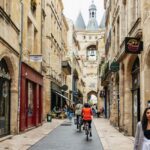
The first named landmark is La Grosse Cloche, or the Big Bell of Bordeaux. You will have a food tasting here, then pass Cassonade before continuing through the old center. This opening gives you an immediate sense of Bordeaux as a walkable city of old streets, church towers, and working food businesses.
The Big Bell is not just a photogenic stop. It is part of the city’s older defensive and civic story, and its presence helps place the tour in Bordeaux’s medieval core. The guide uses the streets and buildings around you to explain how the city grew as a port over more than 2,000 years.
Do not expect a long formal visit inside each landmark. The focus is food, with history woven into the walk. If you want detailed architectural tours of every church and monument, you will need a separate sightseeing visit.
Fresh croissants at Boulangerie Louis Lamour
One of the most appealing stops is with a young baker who makes bread and viennoiserie on site. You can watch croissants being rolled and folded before tasting one.
That small demonstration gives the pastry some context. A croissant is easy to treat as a generic French souvenir, but seeing the layers prepared by hand makes the work behind it clear. You also hear how the pastry made its way to Bordeaux.
The stop at Boulangerie Louis Lamour lasts about 30 minutes, making it one of the longer food visits. That is useful because you are not expected to swallow a bite and hurry away. It gives the bakery visit room to explain technique, ingredients, and local habits.
This is also one reason to skip a large breakfast. The portions add up quickly, and the tour includes several more stops after the bakery.
Canelé, Bordeaux’s signature sweet
Next comes the canelé, a small pastry closely tied to Bordeaux and its wine country. The tour visits a small, owner-operated patisserie that makes fresh canelés each day with natural ingredients.
The canelé has a firm, caramelized outside and a soft center. Its connection to Bordeaux makes it a more useful taste than a random dessert. You are trying something that belongs specifically to this region, not just sampling a famous French pastry found everywhere.
This is the sort of stop I like on a food walk: simple, local, and easy to understand. The shop’s owner-operated character also gives the visit a personal feel, though the supplied details do not promise a long sit-down or a full production tour.
Saint-André Cathedral and Pey-Berland
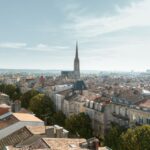
The route passes Bordeaux Cathedral, officially the Cathedral of Saint André, and pauses for about 20 minutes. The cathedral is described as Bordeaux’s most important religious monument and the place where the future King Louis VII married in 1137.
You also stop to look at Pey-Berland, the separate bell tower with its gold-colored top. This is one of the tour’s better pairings of food and place. After a sweet pastry, you get a moment to look up and understand the city’s religious and civic center.
The stop is primarily a pass-by rather than a ticketed interior visit. You should not book this food tour expecting tower access or an extended cathedral lecture. Its value is that the guide makes the monument part of a larger story instead of leaving you to walk past without context.
A few more Bordeaux tours and experiences worth a look
A daily special near Bordeaux city hall
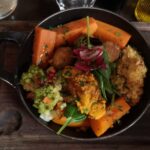
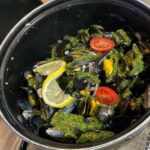
At Remparts Café, only a few meters from Bordeaux city hall, you receive a homemade plat du jour, or daily special. This is a smart choice for a food tour because it moves beyond snack-sized tastes.
The dish reflects what the chef is making that day, using local ingredients and personal judgment. It gives you a glimpse of ordinary French café cooking, rather than only the polished sweets and wine for which Bordeaux is easy to market.
The drawback is that a daily special can vary. The exact dish is not fixed in the information provided, so you should think of this as a chance to taste the kitchen’s current offering, not a guaranteed menu item.
The 15-minute tasting is short, and much of the route involves standing. One past participant suggested that the final wine stop would be more comfortable with seating. That is worth keeping in mind if you prefer a leisurely meal over a moving food lesson.
Cheese and French terroir at Chez Delphine
Cheese is one of the strongest parts of the route. At Fromagerie Chez Delphine, a specialist cheesemonger explains the differences in French terroir and the country’s huge range of cheeses.
The term terroir can sound grand until you taste how much place matters. Milk, soil, climate, aging, and local practice all affect a cheese’s flavor. You get a practical introduction rather than a long classroom talk.
This stop lasts about 15 minutes, but its importance is larger than the clock suggests. France produces more than 1,200 cheeses, so a specialist can help you understand what you are tasting and what to look for later in your trip.
If cheese is one of your favorite foods, this may be the tour’s high point. It is also one of the stops most affected by dietary needs, so tell the operator about restrictions before you arrive.
Chocolate in Bordeaux’s Triangle d’Or
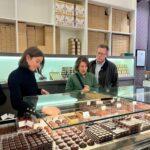
The route then reaches the Triangle d’Or, one of Bordeaux’s best-known central quarters. Here you visit La Maison Darricau, a family chocolate business producing artisanal chocolate since 1915.
This is a third-generation business, which gives the tasting a clear sense of continuity. The stop shows a different side of Bordeaux’s food identity: not just vineyards and rustic cafés, but careful confectionery made by a long-established local family.
The tasting itself lasts around 10 minutes. That is enough for a focused sample, but not a full chocolate-making class. Still, the shop’s age and family ownership make it more meaningful than a quick stop at a generic sweets counter.
Chocolate also provides a useful change of pace after the savory café dish and cheese. The route keeps alternating between substantial food and smaller tastes, so the meal does not feel like one long stream of similar bites.
Dunes Blanches, a newer Bordeaux pastry
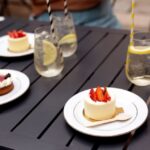
Next door is Dunes Blanches chez Pascal Bordeaux, a newer patisserie named for the distinctive Atlantic coast of the region. The pastry was invented in 2007 by the son of a famous pastry maker.
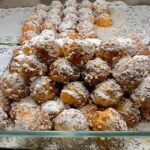
You taste a crunchy puff pastry filled with cream. Its crisp shell and soft filling offer a clear contrast to the canelé and croissant earlier in the route.
This stop shows that regional food is not frozen in the past. Bordeaux has old recipes and long-running shops, but it also has newer creations that have quickly become popular. That balance gives the tour a more honest picture of the city’s food scene.
The visit lasts about 15 minutes. As with the other patisserie stops, expect a tasting rather than a full pastry lesson or a chance to sit down for dessert.
Three regional wines with two local hosts
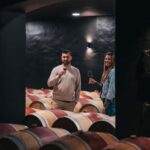
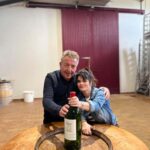
The final major stop is a local wine bar, where two brothers lead a tasting of three regional wines. This is the part many people will be waiting for, but it works best because the food has come first.
You can ask questions about French regional wines and hear the brothers’ personal opinions. The format sounds approachable rather than formal. You are not expected to arrive with a working knowledge of Bordeaux classifications or vintages.
Three wines are enough to compare styles without turning the last 40 minutes into a marathon tasting. The tour does not specify the exact bottles, so do not book it hoping for a particular château or appellation.
This is also not a vineyard tour. You will not leave the city or visit a winery in the countryside. If your main goal is château architecture, cellar visits, and a broad tasting of Bordeaux estates, look at a Saint-Émilion, Médoc, or other half-day wine trip instead.
The tour is not suitable for anyone who does not drink alcohol, and it is restricted to adults aged 18 and over. Non-alcoholic options can be arranged for some dietary or pregnancy-related needs, but confirm this before booking.
What the $116 price really covers
At $116 per person, the tour is not cheap for three hours. It becomes more reasonable when you count the nine or more food tastes, six stops, three wines, guide, and small group.
You are paying for access and organization as much as for the food. A guide connects the baker, cheesemonger, chocolate maker, café, and wine hosts into one readable story. You also avoid the guesswork of choosing several shops and ordering enough at each one to understand what they do.
The small group is important. With a maximum of 10 people, you have a better chance of hearing the guide in a shop or asking a question at the wine bar. Past groups were sometimes as small as five, which makes the walk feel more like an outing with a local than a standard city procession.
Value depends on how you eat. If you would happily visit several specialty shops, order a café meal, buy pastries, and attend a wine tasting on your own, the price can make sense. If you mainly want a cheap snack walk or a serious wine seminar, choose a different format.
Practical details that affect your day
Wear comfortable shoes. This is a walking tour with repeated stops, and the route ends at Place Gambetta rather than returning to the starting church.
Bring water. One useful tip from the experience is that there is plenty of food but not much to drink outside the wine tasting. Eating several pastries and savory samples while walking is more comfortable when you can take regular sips.
Plan for standing. Only one stop was specifically noted as having seating, and the final wine tasting may not offer enough chairs for everyone. If you need regular rest breaks, contact the operator before booking.
Strollers are not allowed, and the tour is not suitable for wheelchairs or people with mobility impairments. You need to walk at a moderate pace without difficulty.
Dietary planning is essential. The tour can adapt for vegetarians, pescatarians, dairy-free diets, non-alcoholic options, and pregnant women if you contact the operator in advance. It cannot accommodate vegan, kosher, or gluten-free diets, and the general suitability information also excludes people with gluten intolerance.
The tour runs in English, with a live guide. Free cancellation is available up to 24 hours before the start, and you can reserve now and pay later, which helps if your Bordeaux plans are still shifting.
Who should book this Bordeaux food walk?
I would book this if you want a first taste of Bordeaux that combines landmarks with local eating. It suits couples, friends, and solo visitors who enjoy asking questions and trying several small portions rather than sitting through one long meal.
It is especially good early in a Bordeaux stay. You get food ideas, neighborhood orientation, restaurant leads, and a basic grasp of the city’s wine culture in one outing. One useful follow-up is the post-tour list of places to eat and the details of the stops, which can help shape the rest of your stay.
The tour also works for people who care about the story behind food. The young baker, owner-run canelé shop, third-generation chocolate business, cheesemonger, and two wine-bar brothers give you real human points of contact.
I would choose another activity if you want a countryside wine day, a formal class, or a visit focused on six wines and detailed tasting technique. Those options go deeper into wine, while this tour spreads its attention across the whole Bordeaux table.
Should you book it?
Book it if you want a compact, food-filled introduction to central Bordeaux and you are comfortable walking, standing, drinking wine, and eating dairy and gluten. The combination of nine or more tastes, six local stops, and three wines gives you more than a basic pastry walk.
Skip it if your diet cannot be accommodated, if you need accessible transport and seating, or if wine estates are your main reason for coming to Bordeaux. For everyone else, the strongest value is the range: you get the city’s landmarks, daily cooking, specialty shops, sweets, cheese, and wine without spending a full day away from the center.
FAQ
How long does the Bordeaux food and wine tour last?
The tour lasts three hours.
Where does the tour start?
It starts in front of Église Saint-Paul de Bordeaux at 20 Rue des Ayres, 33000 Bordeaux.
Where does the tour finish?
The tour finishes at Place Gambetta.
How many people are in the group?
The group is limited to a maximum of 10 participants.
How many food tastings are included?
You receive nine or more different tastes at six food stops.
How many wines are included?
The tour includes a tasting of three local wines.
Is the tour offered in English?
Yes. It includes a live English-speaking guide.
Can people with dietary restrictions join?
The tour can adapt for vegetarians, pescatarians, dairy-free diets, non-alcoholic options, and pregnant women if you provide notice before booking. It cannot accommodate vegan, kosher, or gluten-free diets, and people with gluten intolerance are not suitable for this tour.