REVIEW · PARIS
Best of Paris by Bike with a Local
Book on Viator →Operated by E-scooter / Bike - Rental and City Tours - Guide N' Ride · Bookable on Viator
Paris reveals itself quickly from a bicycle. On this 2 to 3 hour ride, you move from the medieval Pont-Neuf to the Louvre, grand squares, ornate bridges, and the Eiffel Tower without spending the day on foot. Guide Idris leads the route, with clear history, friendly help, and enough flexibility to find another way when streets close for official events.
I like the small-group feel, with no more than 20 people, and I like how much ground you cover for $79. The riverside riding adds a pleasant break from traffic and pavement. The tradeoff is simple: this is an outdoor sightseeing ride, not a museum tour. You will see the Louvre and Eiffel Tower from outside, and you need moderate fitness plus decent weather.
In This Review
- Key points at a glance
- Why a bicycle works so well in central Paris
- Starting at Pont-Neuf and the Seine
- The Louvre’s Cour Carrée and pyramid
- Place de la Concorde and the Grand Palais
- Pont Alexandre III and the best bridge view
- The Eiffel Tower from a quieter riverside angle
- Cruising beside the Seine on the return
- What $79 really gets you
- Who will enjoy this ride most
- Practical details before you book
- Should you book the Best of Paris by Bike?
- FAQ
- How long does the bicycle tour last?
- Where does the tour begin?
- Where does the tour end?
- Does the tour enter the Louvre or Eiffel Tower?
- How many people can join the tour?
- What level of fitness is needed?
- What happens if the weather is poor?
Key points at a glance
- See seven major Paris sights by bike: The route links Pont-Neuf, the Louvre, Place de la Concorde, Grand Palais, Pont Alexandre III, the Eiffel Tower, and the Seine.
- Ride with Idris: He is known for clear explanations, city history, friendly guidance, and finding alternate streets when parts of central Paris are closed.
- Get a quieter Eiffel Tower view: The stop is along the river, away from the thickest crowds, with a useful angle for photographs.
- Make good use of a short visit: Bicycles let you connect several central sights faster than walking while still stopping for photos and explanations.
- Expect outdoor sightseeing only: Entry to the Louvre, Eiffel Tower, and other attractions is not part of the tour.
- Plan for a little exercise: You ride between every stop, so this suits you best if you are comfortable cycling for several hours.
Why a bicycle works so well in central Paris
Paris can look compact on a map, but the distance between its famous sights adds up. Walking from the Louvre to the Eiffel Tower takes time, and the Metro can make you miss the spaces between the landmarks. A bicycle gives you a better middle ground. You cover ground quickly, yet you still see the Seine, bridges, gardens, facades, and broad avenues as you go.
The route also gives your visit a useful shape. Instead of collecting isolated monuments, you follow a line through the center of the city. You begin near the Latin Quarter, cross into the historic heart, pass through royal Paris, and finish with riverside views near the Eiffel Tower.
The ride is not sold as a race. Stops last about 5 to 15 minutes, giving Idris time to explain the setting and giving you time to take photographs. You will still be moving for much of the tour, so bring a practical mindset. This is best for seeing many headline sights and getting your bearings, not for lingering at each one.
The maximum group size is 20. That is not a private tour, but it is more manageable than a large coach group. It also allows the guide to keep the ride together and answer questions along the way. The strongest part of the experience is the combination of local explanation and efficient routing.
You can also read our reviews of more cycling tours in Paris
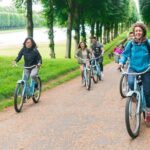
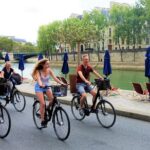
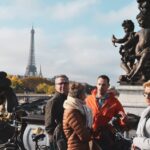
Starting at Pont-Neuf and the Seine
The meeting point is 10 Rue de Pontoise in the 5th arrondissement. The activity returns to this same point at the end, so you do not need to arrange a second pickup location. Confirmation is provided at booking, and the meeting area is near public transportation.
The first stop is Pont-Neuf, despite its name, one of Paris’s oldest surviving bridges. Here you get a view over the Seine toward the Louvre, while the guide explains how the city began to grow around the river. This is a smart opening because it gives you a quick sense of Paris as a river city before the monuments take over.
The Seine is not just scenery. It is the thread that ties the ride together. As you pedal beside the water, you see how bridges, royal buildings, museums, and public squares relate to one another. The first riverside section also helps ease you into the ride before the busier central streets.
The Louvre’s Cour Carrée and pyramid
The Cour Carrée is one of the most rewarding stops on the route. This square courtyard sits within the Louvre complex, yet many people hurry past it while aiming for the glass pyramid. Its orderly facades and enclosed scale give you a clearer idea of the Louvre as a former royal residence and evolving architectural project.
You stop for about 10 minutes and hear how the monument developed. The tour does not take you inside, so your visit here is about architecture, setting, and photographs. That limitation matters if you have never visited the museum. You will not see the galleries, the Mona Lisa, or the museum’s collections during this activity.
Next comes the pyramid, the Louvre’s most recognizable modern entrance. The contrast is part of the appeal: old palace walls surround a glass structure that has become an emblem of modern Paris. Idris explains the building’s story and allows time for pictures.
The pyramid area can be crowded, particularly at popular times. A bicycle tour cannot remove that fact, but it does give you a quick, organized stop rather than leaving you to work out the museum complex on your own. If you plan to visit the Louvre separately, this introduction can help you understand the building before you return for a longer visit.
Place de la Concorde and the Grand Palais
Place de la Concorde changes the mood of the ride. The square is broad, formal, and tied to one of the most dramatic chapters in French history. The guide explains the events that made this place famous, giving context to what might otherwise seem like a large traffic circle with monuments.
You stop for around 10 minutes, but the space deserves your attention beyond a quick photograph. It connects the Tuileries, the Champs-Elysées, and the Seine, and its size helps explain the grand planning of central Paris. You will not enter any attraction here, and admission is not part of the experience.
The route then continues to the Grand Palais for a shorter stop of about five minutes. The building is known for its huge glass roof and ornate Beaux-Arts design. The pause is brief, so think of it as a visual introduction rather than a detailed architectural visit.
This part of the route works well because the bicycle keeps you moving through the city’s grand ceremonial center. On foot, these broad spaces can feel spread out. By bike, you get the scale without losing the pleasure of being outdoors.
Pont Alexandre III and the best bridge view
Pont Alexandre III is one of the visual highlights of the tour. Its elaborate decoration and position over the Seine make it a natural photography stop, and the view from here brings together water, historic buildings, and the broad central avenues.
You spend roughly 10 minutes at the bridge. The guide points out the setting and explains why it is considered one of Paris’s most beautiful crossings. The stop is short, but the bridge offers the kind of scene that can take up several pages of a photo album.
This is also a good example of what a local guide adds. You are not simply being taken to a pin on a map. You get help understanding why the site matters and where to look. The ride’s strongest praise centers on Idris’s ability to explain history without making the tour feel like a classroom.
Street closures can affect central Paris, especially during visits by heads of state or large official events. Idris has shown he can adjust the route when roads are blocked, using alternate streets that still offer interesting sights. That flexibility is useful in a city where traffic plans can change quickly.



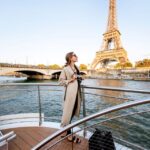


The Eiffel Tower from a quieter riverside angle
The Eiffel Tower is the big finish. Instead of stopping in the thickest crowd beneath the tower, the ride pauses a little away from the main crush, along the river. You still get an iconic view, but the setting is calmer and more useful for photographs.
The stop lasts about 10 minutes. That is enough for pictures and a short explanation, but not enough to visit the tower or ride to its viewing levels. No admission is included. If going up the Eiffel Tower is a major goal, you need a separate ticket and separate time in your schedule.
I like the choice of viewpoint because the tower is often more enjoyable when you can see its full shape from a little distance. The river adds depth to the photograph, and the bicycle lets you approach through a more scenic route instead of simply arriving at a crowded plaza.
Do not expect complete solitude. The Eiffel Tower is one of the most visited monuments in the world, and popular river paths can still have plenty of people. The value is the route and angle, not a promise of an empty view.
Cruising beside the Seine on the return
The return section takes about 15 minutes and follows the Seine with trees and city views. After several stops in the formal center of Paris, this is the part where you can relax into the rhythm of the ride.
Riverside paths provide a welcome change from busy roads and hard city surfaces. You feel the breeze, see the water, and watch Paris pass at a slower pace. This portion also gives you a chance to enjoy the city without listening to a fresh explanation at every corner.
The riding itself is part of the experience, not merely transportation between monuments. That makes the tour a good choice if you want an active morning or afternoon. It also explains why the operator asks for moderate physical fitness. You do not need to be a serious cyclist, but you should be comfortable riding for a couple of hours with stops.
What $79 really gets you
At $79, the tour costs more than renting a bicycle and following a map. You are paying for the guide, the route, the equipment, the organized stops, and the time saved connecting distant sights. The value is strongest during a first visit, when you want an overview before deciding where to return on your own.
You also avoid paying separate admission fees during the ride because you do not enter the Louvre, Eiffel Tower, Grand Palais, or other attractions. That keeps the price focused on sightseeing by bicycle, but it means you should budget extra if you want museum visits or a trip up the tower.
The included bicycles have been described as new, which matters for comfort and confidence. Equipment quality can make or break a city ride. A small group, fresh bikes, and a guide who can alter the route add practical value that a self-guided rental does not provide.
I would not call this the cheapest way to see Paris. I would call it a useful way to cover the central sights in one outing. If you value explanation, structure, and a little exercise, the price is fair. If you prefer slow museum time or dislike cycling in cities, the value drops quickly.
Who will enjoy this ride most
This tour suits first-time visitors who want a broad look at central Paris. It is also useful early in a trip, since the route helps you understand where the Louvre, Concorde, Grand Palais, Eiffel Tower, and Seine fit together.
Families with older children may appreciate the movement and short stops, though everyone in the party needs to manage the cycling. Couples and friends who want photographs without spending a full day indoors should also find the format appealing.
The tour is less suitable if your main goal is art, interior architecture, or a long visit at one monument. You will not enter the Louvre or Eiffel Tower, and each stop is measured in minutes. It is also a poor fit for anyone who cannot comfortably ride a bicycle for several hours.
The experience requires good weather. If rain or other poor conditions cancel the tour, you are offered another date or a full refund. For a normal cancellation, you need to cancel at least 24 hours before the start time for a full refund. Changes or cancellations within 24 hours are not refunded.
Practical details before you book
Wear clothes that allow easy movement and shoes suitable for cycling. Paris can feel warm in the sun and cooler beside the river, so a light extra layer may help, though the supplied details do not specify any required clothing or equipment.
Give yourself enough time to reach 10 Rue de Pontoise. The activity ends back at the same meeting point, which is convenient if you plan dinner or another nearby stop afterward. Since the confirmation is mobile, keep the booking available on your phone.
Allow a full 2 to 3 hours, rather than assuming the shortest advertised time. The exact length may depend on the pace of the group, stops, and road conditions. The group can include up to 20 people, so the ride will not have the feel of a fully private outing.
The experience requires a minimum number of participants. If that minimum is not met, you are offered another date or experience, or a full refund.
Should you book the Best of Paris by Bike?
Book it if you want an active, low-carbon way to see many major sights in a short time. The route is well chosen, the riverside riding breaks up the city traffic, and Idris brings the kind of local explanation that makes the monuments easier to place. The Eiffel Tower viewpoint, the Cour Carrée, and Pont Alexandre III are especially strong moments.
Skip it if you want to enter the Louvre, climb the Eiffel Tower, or spend long stretches studying architecture. This is an outside tour with a steady pace and moderate exercise.
For a first day in Paris, I think the $79 price makes sense if you want orientation, photos, and history in one package. You will not experience every side of Paris, but you will see its grand center from a more active and connected point of view.
FAQ
How long does the bicycle tour last?
The tour lasts approximately 2 to 3 hours.
Where does the tour begin?
It begins at 10 Rue de Pontoise, 75005 Paris, France.
Where does the tour end?
The activity ends back at the meeting point.
Does the tour enter the Louvre or Eiffel Tower?
No. The tour stops outside the attractions, and admission is not included.
How many people can join the tour?
The tour has a maximum group size of 20 people.
What level of fitness is needed?
You should have a moderate level of physical fitness because transportation between stops is by bicycle.
What happens if the weather is poor?
The experience requires good weather. If it is canceled because of poor weather, you are offered a different date or a full refund.