REVIEW · BAYONNE
Bayonne: Private Guided Walking Tour
Book on GetYourGuide →Operated by Travmonde OÜ · Bookable on GetYourGuide
Bayonne’s story is unusually packed into a compact old town. In 90 minutes, this private walk connects the Sainte-Marie Cathedral with royal politics, military design, revolution, empire, and wartime survival. You’ll also get the simple pleasure of crossing narrow cobbled lanes lined with half-timbered houses beside the Nive and Adour rivers.
I like the private format, which keeps the pace flexible and lets you ask about the parts of Bayonne that interest you most. I also like the local angle: guide Charles has been praised for his clear historical explanations and for a useful chocolate-shop tip, a small detail that can improve the rest of your visit.
The main consideration is time. Ninety minutes is enough for a lively introduction, but not for a long museum visit or a slow exploration of every lane. The $369 group price makes the most sense for a larger party, since it covers up to 15 people, and entrance fees are not included.
In This Review
- Key points at a glance
- Starting at Place de la Liberté
- Sainte-Marie Cathedral and the shape of old Bayonne
- Cobblestones, half-timbered buildings, and the two rivers
- Eleanor, Henry II, and Bayonne’s royal story
- Revolution and Empire in a compact city
- Vauban’s defenses and the old ramparts
- Bayonne under Nazi rule
- What the private format is worth
- Timing, language, and practical planning
- Who should book this Bayonne walk?
- Should you book it?
- FAQ
- Where does the Bayonne walking tour meet?
- How long does the tour last?
- Is the tour private?
- What language is the tour conducted in?
- How much does the tour cost?
- Are entrance fees included?
- Can the tour be customized?
- Can I cancel for a full refund?
Key points at a glance
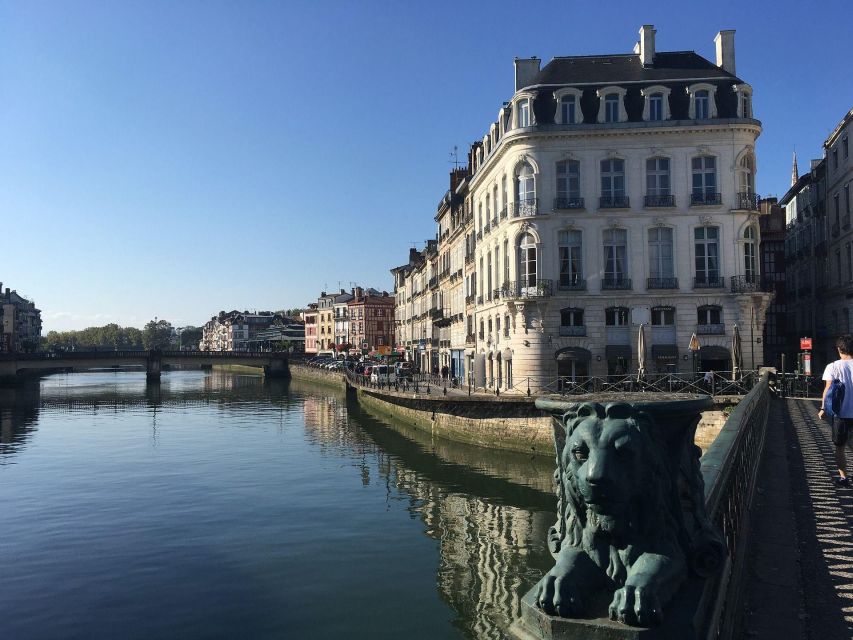
- A 13th-century cathedral with centuries of changes: See how Sainte-Marie developed over time and why it carries UNESCO World Heritage status.
- Bayonne’s royal connections: Learn about Eleanor’s reign with Henry II and the political importance of this corner of France.
- A walk through major turning points: The French Revolution and Empire form part of the historical story, rather than being treated as isolated dates.
- Vauban’s military vision: Hear how the famous military engineer reshaped Bayonne’s defenses and place in history.
- Wartime resilience: The tour addresses Bayonne under Nazi rule, adding a modern and difficult chapter to the walk.
- A genuinely private experience: Your group has its own English-speaking local guide, with some scope to adjust the tour on the spot.
Starting at Place de la Liberté
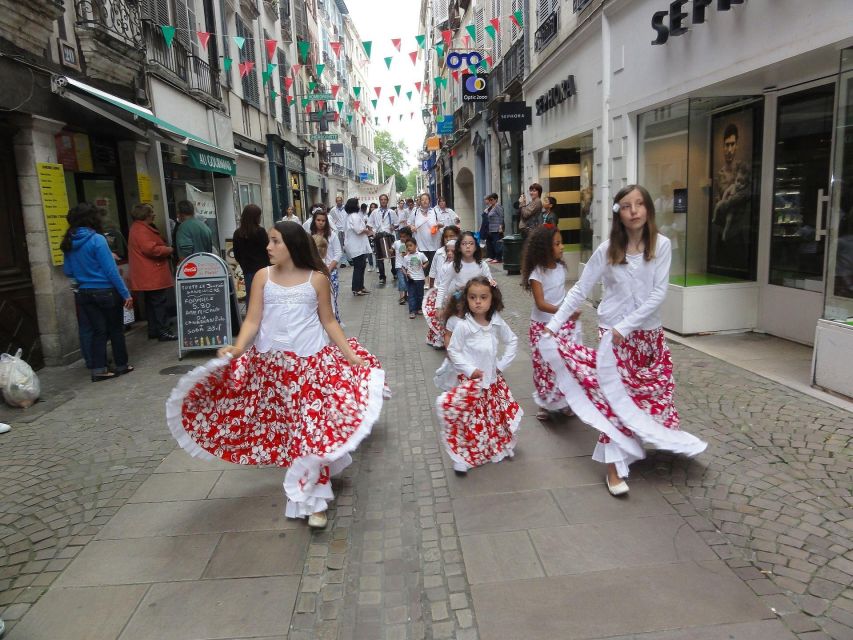
The tour begins at Place de la Liberté in central Bayonne. This is a practical meeting point for a walking tour because you are starting in the historic heart of the city, not at a distant transport stop or outside a large attraction.
From here, your guide can help you get oriented to Bayonne’s unusual setting. The city sits where the Nive meets the Adour, and that meeting of waterways shaped its trade, defenses, neighborhoods, and daily life. I find this sort of introduction useful because it gives the streets a reason for being there. You are not simply looking at old buildings. You are seeing a city formed by rivers and movement.
The private setup matters right away. Instead of keeping up with a large crowd, you can ask why a building looks the way it does, pause for a photograph, or request more attention to a historical period. The guide can make possible adjustments on the spot, although the tour still lasts 90 minutes.
If you are arriving with a family or a group of friends, the meeting point also keeps the outing easy to organize. The group price is fixed at $369 for up to 15 people, so a full group pays about $24.60 per person. For two people, the cost is much higher per head, making this a better value for families, couples who place a high value on private guiding, or groups sharing the bill.
You can also read our reviews of more walking tours in Bayonne


Sainte-Marie Cathedral and the shape of old Bayonne
The cathedral is the clearest architectural anchor of the walk. Sainte-Marie is a 13th-century old cathedral and a UNESCO World Heritage Site, giving the tour a major landmark with both local and international importance.
The useful point here is not simply that the building is old. Your guide focuses on its architectural evolution, helping you read the structure as something that changed over time. A quick outside look can make a medieval church seem fixed and finished. A guided explanation shows you that major buildings often record different periods, ideas, and needs.
You should not book this experience expecting a long cathedral interior visit. Entrance fees are not included, and the supplied details do not promise an interior tour or extended time inside. Think of the cathedral as a key stop in a broader city walk, with the guide supplying the context that makes its stonework and position in Bayonne more meaningful.
The cathedral also gives the tour a strong visual center. After discussing its development, you move back into the surrounding streets, where the contrast between monumental religious architecture and smaller urban buildings becomes easy to appreciate.
Cobblestones, half-timbered buildings, and the two rivers
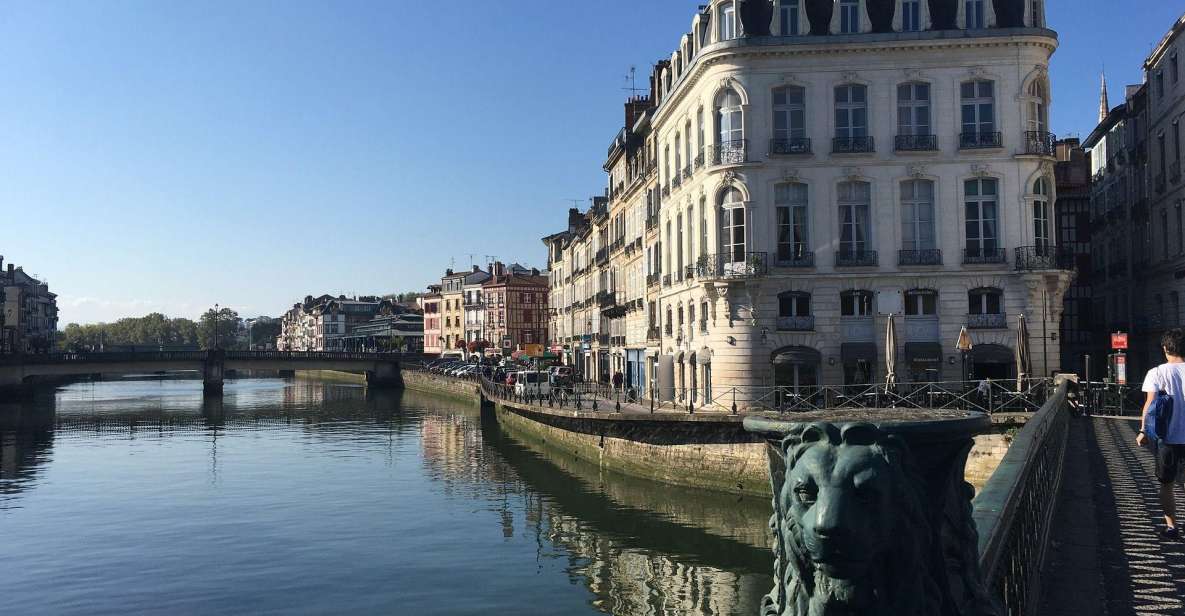
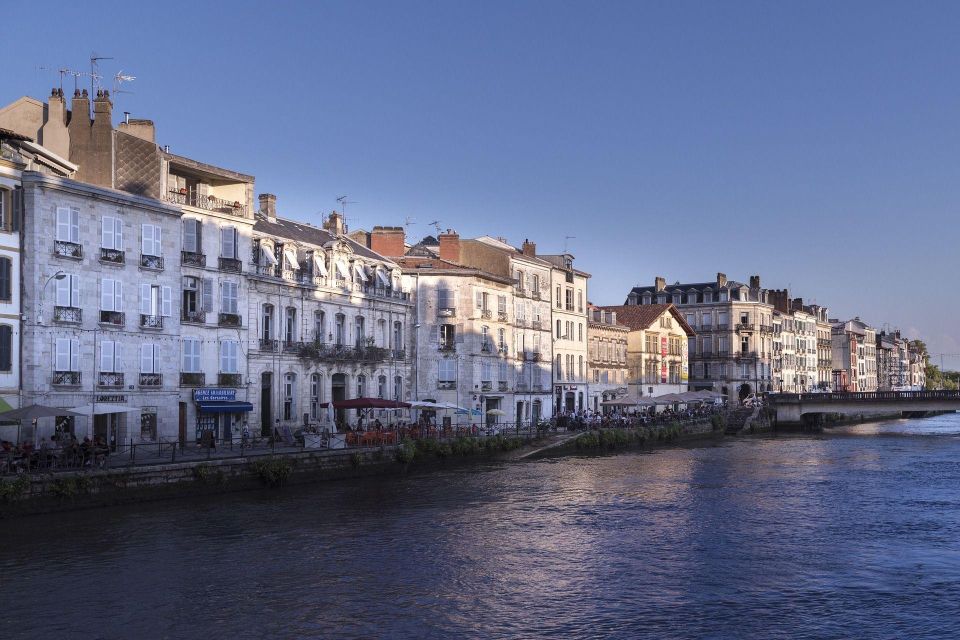
Bayonne’s old town is made for a walking tour. Narrow cobbled streets lead past impressive half-timbered buildings, while riverside restaurants add a more modern, lived-in side to the historic center.
I like this part because it keeps the experience from becoming a parade of dates. You get the texture of the city under your feet and the chance to see how old architecture still frames ordinary life. The half-timbered buildings are not just background scenery. They help explain the scale and character of Bayonne, where lanes, homes, shops, and public spaces fit closely together.
The Nive and Adour are equally important. Their confluence gives Bayonne its setting and helps you understand why this was a place worth defending and governing. The tour does not promise a boat ride, a meal, or a restaurant stop, but the riverside areas add pleasant visual breaks between the historical subjects.
Your guide can also point out places worth returning to after the tour. Charles, one of the guides associated with this experience, has specifically helped visitors find a chocolate shop. That tip is especially fitting in Bayonne, a city known for its chocolate tradition, though the tour itself does not include tastings or purchases. Plan to pay for any food, chocolate, or drinks separately.
Eleanor, Henry II, and Bayonne’s royal story
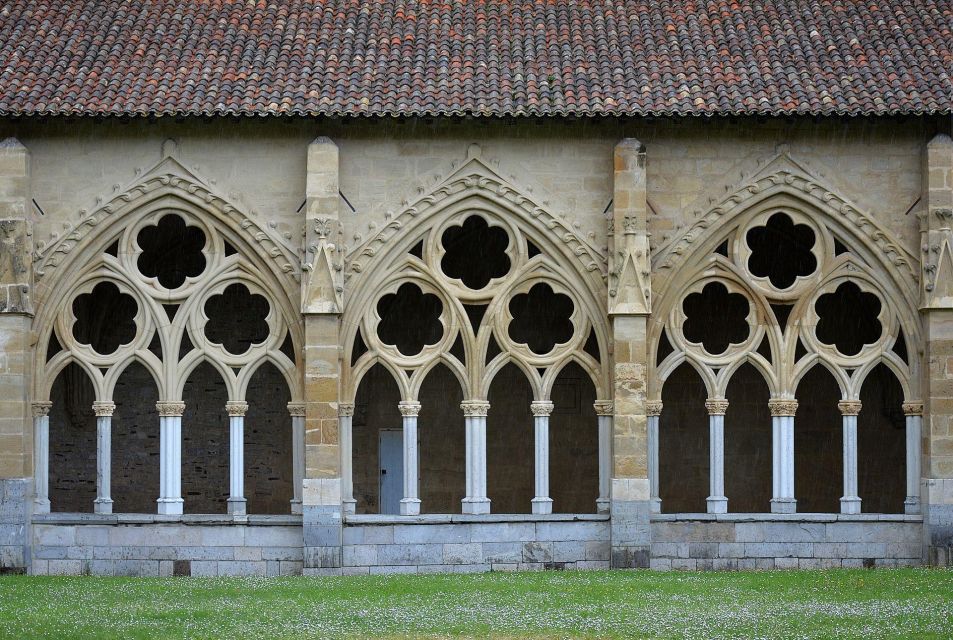
One of the most interesting parts of the tour is its attention to Eleanor’s reign with Henry II. This brings Bayonne into the larger story of medieval power, rather than treating the city as a pretty provincial stop.
A local guide can make this period easier to follow because the history is tied to places you are actually seeing. Royal control was not an abstract matter. It affected trade, administration, defense, and the importance of the city itself. The tour’s strength is the connection between personal rule and urban change.
You should expect a concise explanation rather than a full lecture on Eleanor’s life. With only 90 minutes, the guide has to balance medieval politics against the cathedral, military history, revolution, empire, and the 20th century. Still, this royal chapter gives the walk a useful thread: Bayonne mattered because powerful people and larger states cared about its position.
If Eleanor’s history is your main interest, mention that at the start. The private format gives you a better chance of getting extra attention to this subject than a standard large-group walk would.
Revolution and Empire in a compact city
The French Revolution and Empire are also part of the tour’s historical range. These subjects show how Bayonne experienced the upheavals that changed France’s government, society, and military direction.
I appreciate that the tour does not stop with medieval architecture. Many old-town walks focus only on the oldest buildings, leaving you with a pleasant but thin picture of the city. Here, the Revolution and Empire help connect Bayonne’s past to the wider national story.
The experience cannot cover every political event or military campaign in detail. Instead, you get a local frame for two major periods of French history. Ask your guide how these changes affected Bayonne specifically, since the private format is best used for turning broad national events into local explanations.
This is also where the walk’s short length becomes both a benefit and a limit. Ninety minutes keeps the tour focused and manageable, but you will need to choose what to pursue. If your group has mixed interests, the guide can help keep the story moving while answering the most useful questions.
You can also read our reviews of more guided tours in Bayonne


Vauban’s defenses and the old ramparts
The old ramparts provide one of the most physical links to Bayonne’s military past. Sections remain visible around the outskirts of the old town, and the tour explains how Vauban’s work reshaped the city’s defenses and its place in history.
Vauban is often reduced to the label of famous military engineer. A good explanation goes further, showing how fortifications altered movement, security, and urban form. In Bayonne, the ramparts help you see military planning at city scale. You can connect the surviving defenses with the river setting and the older lanes already visited.
The ramparts may be less polished than the cathedral or riverside streets, but that is part of their value. They give you a sense of the working city behind the postcard view. Do not expect a separate fortress admission or a lengthy fortification hike. The information describes visible ramparts around the old town, not a full military-site visit.
This stop will suit you if you enjoy understanding why a city looks the way it does. It is less important if you want only shopping, food, or interior architecture.
Bayonne under Nazi rule
The wartime section adds a serious modern note. The guide addresses Bayonne’s resilience under Nazi rule, showing that the city’s story did not end with medieval kings or Vauban’s walls.
This is valuable because it prevents the walk from presenting Bayonne as a preserved old town with no difficult past. Historic streets can carry memories from many periods, including occupation and resistance. The subject may be brief within a 90-minute route, but it gives the city a more honest shape.
The available information does not specify particular wartime buildings, memorials, or incidents. You should therefore expect historical interpretation rather than a dedicated museum-style visit. If this period matters to you, ask the guide at the beginning for as much focus as the schedule allows.
For me, this broad time span is one of the tour’s best features. You move from cathedral architecture to royal rule, national upheaval, military engineering, and 20th-century conflict. The result is a useful first orientation to Bayonne, not just a stroll through attractive streets.
What the private format is worth
At $369 per group of up to 15, this is not a budget walk for a solo visitor. The price is easier to justify when divided among a family reunion, a group of friends, or a small private party. A full group pays roughly $24.60 per person, before any entrance fees or purchases.
The value comes from exclusive guiding, not from included admissions or extras. You have an English-speaking local guide with your group only, and you can potentially adjust the emphasis during the walk. That is worth more if you want questions answered, have different ages in your party, or prefer not to follow a fixed large-group script.
For two people, I would compare the price with a less expensive shared walk or a self-guided visit. For six or more people, the numbers become more reasonable, especially if everyone wants history explained rather than simply photographed.
Recent feedback has been especially strong about the guides’ historical and cultural explanations, friendliness, and enthusiasm for Bayonne. Charles has received particular praise for making the city understandable and for offering a practical chocolate-shop suggestion. Those details matter because a local guide can help you use the rest of your time in town better.
Timing, language, and practical planning
The walking time is 90 minutes. Check the available starting times when booking, since the schedule is not fixed in the information provided.
The tour is conducted in English, and the group is private. No other language is listed, so contact the provider before booking if someone in your party needs another language.
Wear shoes suitable for cobbled streets. That is simple advice, but it matters more here than it would on a flat modern boulevard. You will also want to leave room in your plan for photos, a possible chocolate stop after the walk, and a meal near the riverside if that appeals to you.
Entrance fees are not included. The experience is primarily an outdoor walking tour, with the cathedral and historic setting providing the main visual stops. Bring extra money for any admission, food, drinks, or shopping you add afterward.
The booking terms are flexible: you can cancel up to 24 hours in advance for a full refund, and you can reserve now and pay later. Those policies are useful if your Bayonne plans depend on changing travel times.
Who should book this Bayonne walk?
I would choose this tour if you want a fast but serious introduction to Bayonne. It suits first-time visitors who want to understand the city before exploring on their own, history-minded groups, and families who would benefit from adjusting the pace or questions to their own interests.
It is also a good choice for a group that wants one guide rather than several separate tickets and schedules. The maximum of 15 keeps the experience private, though a group that large may need to stay especially close together on narrow streets.
I would look elsewhere if you want a long cathedral interior visit, a food tour, a chocolate tasting, or a full-day exploration. None of those are promised. This is a compact historical walk, with food and shopping tips as useful extras rather than the main event.
Should you book it?
Book it if your group can share the $369 cost and you want Bayonne explained through more than its pretty façades. The combination of Sainte-Marie Cathedral, rivers, ramparts, Eleanor and Henry II, Vauban, the Revolution, Empire, and wartime Bayonne gives the walk a wider reach than its 90 minutes might suggest.
Skip it if you are traveling alone on a tight budget or prefer to wander without a guide. For everyone else, especially groups of six or more, the private format and local historical focus offer a practical way to get your bearings, ask better questions, and leave with a useful plan for the rest of your time in town.
FAQ
Where does the Bayonne walking tour meet?
The meeting point is Place de la Liberté, 64100 Bayonne, France.
How long does the tour last?
The tour lasts 90 minutes.
Is the tour private?
Yes. It is a private group experience, and the local guide is with your group only.
What language is the tour conducted in?
The tour is conducted in English by a live guide.
How much does the tour cost?
The price is $369 per group of up to 15 people.
Are entrance fees included?
No. Entrance fees are not included in the tour price.
Can the tour be customized?
Possible adjustments can be made with your local guide on the spot.
Can I cancel for a full refund?
Yes. You can cancel up to 24 hours in advance for a full refund. You can also reserve now and pay later.