REVIEW · BAYONNE
Bayonne Food Tour: Journey Through Flavors (with food and drinks)
Book on Viator →Operated by Artsyfood · Bookable on Viator
Basque flavors hit fast in Bayonne. You’ll hop from place to place and stack up tastings that feel local, not touristy—especially the sagarnoa cider ritual. I also like that the group stays small, so the guide can explain what you’re seeing and eating as you go.
My second favorite part is the mix: market seafood, a historic trinquet, and then traditional sweets and coffee to close the loop. One possible drawback: you’ll be on your feet for much of the 3.5 hours, and alcohol is only for adults 18+.
In This Review
- Key moments to look forward to
- What this Bayonne Food Tour is really doing
- Rue Port Neuf: the chocolate start that sets the tone
- Les Halles de Bayonne: seafood plus local wine
- Le trinquet Saint-Andre: Basque pelota venue meets tapas
- Rue des Cordeliers: cider house ritual and the sagarnoa pour
- Carreau des Halles: a quick Basque cake pickup
- Rue Poissonnerie: espresso and the last bite
- Price and value: what $114.13 buys you in Bayonne
- Timing, pace, and weather reality
- Who should book this tour
- Should you book Bayonne Food Tour: Journey Through Flavors?
- FAQ
- How long is the Bayonne Food Tour: Journey Through Flavors?
- Is the tour offered in English?
- What food and drinks should I expect during the tour?
- How large is the group?
- Can everyone drink the wine and cider?
- Where does the tour start and end?
Key moments to look forward to

- Sagarnoa from the barrel: you serve yourself cider the traditional way in a cider house
- Les Halles de Bayonne seafood stop: fresh fish and seafood plus a local wine glass
- Le trinquet Saint-Andre: Basque pelota court architecture paired with tapas and cured meats
- Historic Bayonne chocolate: start with tastings in a shop dating to 1854
- Basque cake ending: finish with pastry and a freshly roasted espresso pairing
What this Bayonne Food Tour is really doing

This is a Bayonne food-and-drink walk built around Basque identity. The stops are spread through central streets and food institutions, so you get a real sense of how locals snack, drink, and shop.
It also makes a smart choice on pacing. You’re not doing one “big meal” where everything gets rushed. Instead, you get smaller tastings at multiple places, which keeps the experience fun even when you’re getting full.
And with a cap of up to 12 people (max 15), you won’t feel like cattle in a long line. That matters when the guide is talking through details like tradition, food pairings, and what you’re actually looking at.
You can also read our reviews of more food & drink experiences in Bayonne


Rue Port Neuf: the chocolate start that sets the tone

You begin with a stroll through pedestrian streets in Bayonne at Rue Port Neuf. It’s a pleasant start because you get motion right away, plus some key sightseeing as you walk.
The first true tasting is chocolate in one of Bayonne’s oldest chocolate shops, founded in 1854. Even if you’re not a die-hard sweet person, this stop works because it’s an easy, low-stress way to kick off the flavor theme.
You’ll also pass major landmarks along the route—cathedral and cloister areas are part of what you see—so you’re not just wandering between storefronts. The walking connects the food to the town.
Small watch-out: chocolate is often a lot more intense than people expect. If you’re sensitive to very sweet flavors, pace yourself at the first bite.
Les Halles de Bayonne: seafood plus local wine

Next comes Les Halles de Bayonne, the market area that sets the stomach for the tour. This stop is all about fresh fish and seafood, with your tasting paired with a glass of local wine.
Why this works: a market isn’t only about food. It’s also about texture, smell, and noise—the cues your brain uses to understand place. Here, that energy makes the seafood tastings feel grounded in Bayonne life, not staged.
The tour time at the market is about 45 minutes, which is long enough to sample without feeling dragged. You’ll have time to look around and actually notice how the seafood is presented and served.
Practical tip: markets are busy and floors can be slick. Wear shoes with grip, especially if it’s damp.
Le trinquet Saint-Andre: Basque pelota venue meets tapas

Then you shift gears at Le trinquet Saint-Andre, one of the oldest trinquets in France. For non-locals, a trinquet is basically an indoor court where Basque pelota gets played, and the building itself is part of the experience.
This stop is about architecture and food at the same time. You’ll head inside to a restaurant located within the trinquet, where you sample tapas and cured meats. You’ll also get a glass of wine from the restaurant’s selection.
The idea here is clever: you’re tasting Basque staples while surrounded by a setting that helps explain where the culture lives. Even if you don’t know pelota rules, the court atmosphere gives context.
If you like travel that mixes “see something” with “eat something,” this is one of the best moments on the route.
Possible drawback: this stop is more structured. If you prefer lots of free time to browse on your own, you might wish you could linger longer. You’re there for tasting and explanation, not independent wandering.
Rue des Cordeliers: cider house ritual and the sagarnoa pour

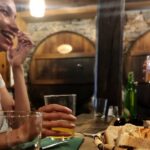
At Rue des Cordeliers, you hit a traditional Basque cider house. This is where the tour earns its reputation for something you won’t do at home.
You’ll taste Basque sheep’s milk cheese paired with quince paste. Then you’ll drink house cider (sagarnoa)—and here’s the main event.
The highlight is the ritual of serving sagarnoa straight from the barrel. You catch the cider as it flows, which turns a simple drink into an actual moment. It feels playful, but it’s also part of hospitality tradition, and that’s why it sticks in memory.
The stop also has the right atmosphere: rustic decor, friendly staff, and a slower rhythm compared to the street-and-market pace.
Practical note for alcohol: the tour says only adults 18+ can have alcoholic beverages. If you’re under 18, you’ll want to plan for tastings that don’t rely on the alcohol portion, though the tour description still centers heavily on cider and wine.
Caution: cider can go down fast. If you’re planning more walking after, drink like you’ve got miles left—because you do.
A few more Bayonne tours and experiences worth a look
Carreau des Halles: a quick Basque cake pickup

Next is a short stop at Carreau des Halles, where you pick up a Basque cake. It’s quick—about 5 minutes—so think of it as a “grab and go” moment that keeps momentum.
This part matters because Basque cake isn’t just dessert. It’s a Bayonne signature baked into the tour’s final chapters. By the time you reach the coffee tasting, you’re ready for that sweet finish.
Tip: if you’re worried about overdoing sweets, this stop is the moment to check the size of your serving. You’ll be glad you did later.
Rue Poissonnerie: espresso and the last bite

Your final stop is at Rue Poissonnerie, visiting an historic Bayonne coffee roaster. You’ll taste a freshly roasted espresso, paired with the Basque cake you picked up earlier.
This pairing is smart: coffee cuts sweetness and refreshes your palate after cheese, cured meats, and cider. It turns the tour into a full-circle “sweet-salty” ending.
The time here is about 30 minutes, which is enough to enjoy the coffee without feeling rushed out the door.
Simple takeaway: if you love coffee, you’ll enjoy the aroma component. Fresh espresso smells stronger than you expect, and it changes how the cake tastes.
Price and value: what $114.13 buys you in Bayonne

At $114.13 per person for around 3 hours 30 minutes, the price isn’t just for walking and sightseeing. It’s really paying for a built-in tasting sequence with drinks and guided context.
Here’s what you’re getting, based on the tour description:
- chocolate tastings at a shop established in 1854
- seafood/seafood tastings at Les Halles de Bayonne, plus local wine
- tapas and cured meats at Le trinquet Saint-Andre, plus wine
- sagarnoa cider from the barrel, plus sheep’s milk cheese and quince paste
- Basque cake
- espresso from a coffee roaster
So you’re not only buying food. You’re also paying for access to the right places and the explanation that makes the tastings feel intentional. When a tour stacks multiple stops that each serve something specific, the cost tends to make sense—especially with a small group.
Could it feel pricey? If you usually snack casually and skip drinks, then yes, you might feel it. But if you’re happy to taste multiple specialties and want a local-feeling route, it’s good value for a half-day.
Timing, pace, and weather reality
This tour is about 3.5 hours, mostly on foot, with standing and eating at each stop. It’s labeled for moderate physical fitness, so don’t plan to bring it in as a “sit-everywhere” activity.
Also, it requires good weather. If it’s canceled due to poor weather, you’ll be offered a different date or a full refund. That’s important because Bayonne streets can get slick or unpleasant when weather turns.
One more timing note: if you book an evening tour (6:00 PM to 9:00 PM), some places like the hall and coffee roaster may be closed. The tour says substitutions will be used so you still get a complete, food-focused experience. That means you’re not stuck with a half-loaded plan.
Who should book this tour
This works best if you:
- want food-first travel, not museum-first
- like Basque culture and want it explained through what people eat and drink
- enjoy tasting menus in an easy, street-friendly format
- prefer small-group experiences over big bus tours
It’s also a nice fit for couples or small friend groups. With group sizes kept tight, the guide can answer questions and slow down when you want more detail.
If you hate standing, or you want a totally alcohol-free plan, you might want to compare it against a purely food-based option. The tour’s signature is wine and cider, so the vibe leans adult.
Should you book Bayonne Food Tour: Journey Through Flavors?
I’d book it if you want a Basque food circuit that feels like it was designed by someone who understands Bayonne, not just someone who bought a checklist.
The strongest reasons to choose it are the stops built around real institutions—market, trinquet, cider house, and a roaster—plus that cider ritual that turns a drink into a story. The small group size also makes the tour feel like a guided walk with tastings, not a production.
If you’re coming to Bayonne for one reason only—food—and you want variety without doing a bunch of separate reservations, this is a solid pick.
FAQ
How long is the Bayonne Food Tour: Journey Through Flavors?
It’s about 3 hours 30 minutes.
Is the tour offered in English?
Yes, it’s offered in English.
What food and drinks should I expect during the tour?
You can expect tastings including chocolate, fish/seafood with local wine, tapas and cured meats with wine, Basque sheep’s milk cheese with quince paste plus sagarnoa cider from the barrel, and a finish with Basque cake and espresso.
How large is the group?
The experience is limited to a maximum of 15 travelers, and it’s described as intimate with up to 12 others.
Can everyone drink the wine and cider?
Alcohol is only for adults 18 years old and above.
Where does the tour start and end?
It starts at Place de la Liberté, 64100 Bayonne, France, and ends back at the same meeting point.