REVIEW · PARIS
Architectural Bourgeois Paris 19th Century
Book on Viator →Operated by Paris Promenade · Bookable on Viator
Paris shows a very different face around Parc Monceau and the 8th arrondissement. This is the Paris of wealthy industrialists, grand apartment buildings, garden follies, railways, churches, and department stores. A historian leads you through the changes that shaped the city during the 19th century and the Belle Époque.
I like the route for two clear reasons: the small group limit of 10 should make it easier to hear and ask questions, and the tour links familiar sights, such as Haussmann’s boulevards and Galeries Lafayette, to the people and money behind them. François, the guide named in the tour information, is comfortable speaking in both French and English and brings a strong focus on Parisian history and culture.
The main drawback is the brisk two-hour format. You cover several locations, but most stops are brief, and this is a walking tour rather than a museum visit. If you want long interior visits or plenty of free time for shopping, you may find the schedule tight.
In This Review
- Key points to know before booking
- Why this corner of Paris matters
- Parc Monceau: a park with theatrical surprises
- Baron Haussmann and the broad streets of modern Paris
- Saint-Augustin Church and a possible Proust detour
- Gare Saint-Lazare and the money of the railway age
- Printemps and Galeries Lafayette: shopping becomes a spectacle
- What $68.65 buys you
- Timing, walking, and language
- Who will enjoy this Paris walk
- Should you book Architectural Bourgeois Paris 19th Century?
- FAQ
- Where does the tour begin?
- Where does the tour end?
- What time does the tour start?
- How long does the experience last?
- Is entry to Galeries Lafayette included?
- How many people can join the tour?
- Can the tour be conducted in French?
Key points to know before booking
- Parc Monceau begins the story: See a colonnade, bridge, pyramid, unusual trees, and grand private residences linked to wealthy Parisian families.
- Haussmann’s Paris is the main theme: The route explains how Baron Haussmann changed the city’s streets, buildings, and public image.
- Five stops fit into two hours: Expect about 30 minutes in the park, 20 minutes at each middle stop, and a final 30 minutes around the department stores.
- François guides in English or French: His historical specialty is 19th-century Paris, with a particular interest in the 8th arrondissement.
- Galeries Lafayette provides the finale: The tour ends inside the famous department store during opening hours, with its grand interior as the last major sight.
- It costs $68.65 per person: The price makes the most sense if you value interpretation and a focused small-group walk rather than admission to several museums.
Why this corner of Paris matters
Many first visits to Paris focus on medieval streets, royal monuments, or Impressionist museums. This walk looks at the city that emerged in the 1800s, when railways, finance, industry, and new forms of shopping changed daily life.
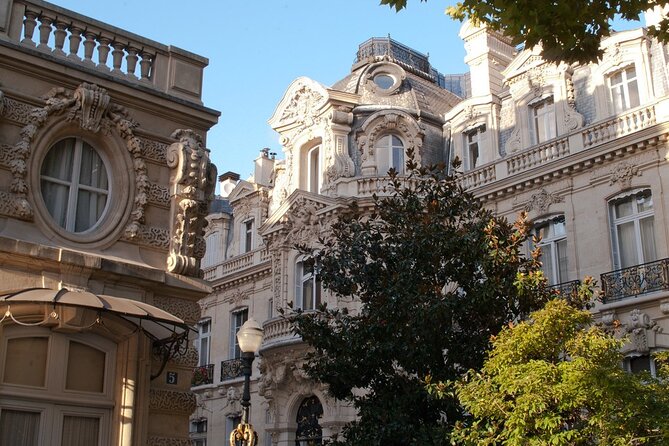
The tour takes place mainly in and around the 8th arrondissement, one of the city’s most polished central districts. Here, the elegant façades are not just decoration. They reflect a period when wealthy families and successful business owners wanted homes that showed their position, while the city government wanted broad streets, better movement, and a more orderly capital.
You will also see how public and private life met. A landscaped park, a church, a railway station, a restaurant, and a department store each tell part of the same story. That makes the route useful for understanding Paris as a living city, not just a collection of famous monuments.
The Belle Époque label often brings to mind cafés, art, and stylish parties. This walk adds the practical side: who paid for the buildings, how people moved through the city, and why the new commercial centers became so important.
You can also read our reviews of more tours and experiences in Paris.



Parc Monceau: a park with theatrical surprises
The first 30 minutes take place in Parc Monceau. This is a strong opening because the park gives you space to look around before moving into the denser streets of Haussmannian Paris.
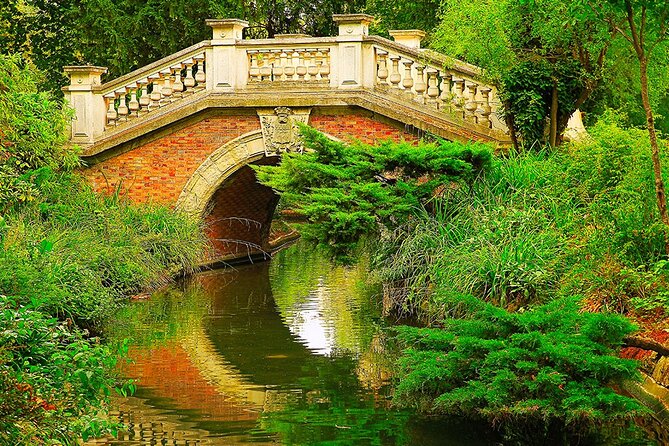
You will see an ancient-looking colonnade, a bridge, a pyramid, and striking trees. These features give the park a slightly theatrical character. It is not simply a green break between city blocks. Its design reflects the 18th and 19th-century taste for decorative garden scenes, historic references, and carefully arranged views.
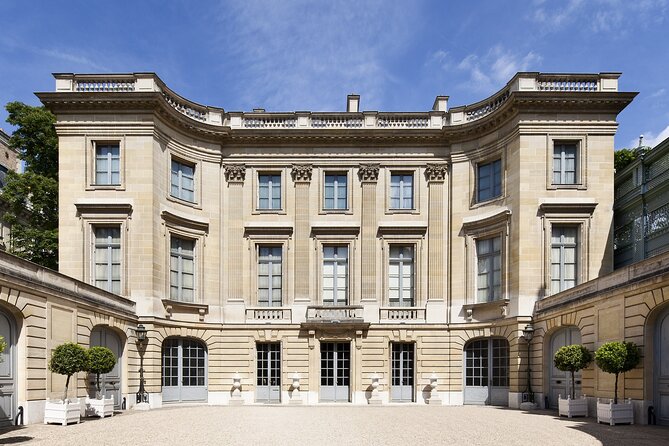
The guide also points out several buildings around the park, including Hôtel Menier, the Pagoda of Mr. Loo, and the private mansion associated with Camondo. These residences help explain how the well-off wanted to live close to the city while maintaining a sense of space and distinction.
This part of the tour is especially good for photography. You can frame the park’s structures, trees, and surrounding façades in ways that feel far removed from the usual postcard views of Paris. Bring a phone or camera, but keep in mind that the purpose of the stop is also explanation. You are not simply being sent off to take pictures.
The park stop may appeal most to you if you enjoy architecture and urban design. If you prefer famous paintings or major monuments, the opening may feel less immediately dramatic. Its interest builds as the guide explains what the park and nearby mansions say about Parisian society.
Baron Haussmann and the broad streets of modern Paris
From the park, the walk pauses at the statue of Baron Haussmann. This is the point where the larger city story comes into focus.
Haussmann’s work changed the visual character of Paris. Wide boulevards, regular apartment façades, and long sightlines replaced much of the older, tighter street pattern. The tour uses the statue as a starting point for reading the neighborhood around you.
You will pass typical Haussmannian apartment buildings and broad avenues. Look up as you walk. The value of this stop lies less in one single monument and more in learning to recognize the repeated features of the buildings around you.
The route also gives you a chance to consider the cost of such change. The new boulevards created a cleaner, more navigable city in many places, but large-scale rebuilding also altered older neighborhoods. The tour description focuses on the man who changed Paris forever, so expect a strong emphasis on Haussmann’s influence rather than a full political study of every consequence.
For you, this stop is useful if you have already seen Paris but never really asked why so many central streets look alike. It turns ordinary façades into historical evidence. The apartment blocks become part of the experience rather than background scenery.
Saint-Augustin Church and a possible Proust detour
Saint-Augustin Church provides the route’s main religious and architectural interior. Built around 1860, it belongs directly to the period under discussion, so you are not stepping away from the 19th-century theme.
The 20-minute stop includes entering the church. That matters because the walk is not limited to exterior façades. You get a chance to see how the era expressed its taste and ambitions in a major place of worship.
The church also adds a change of pace. After the open park and broad streets, the interior gives you a more enclosed setting for the guide’s historical explanation. The exact depth of the visit is not specified, so you should expect an interpreted stop rather than a lengthy architectural study.
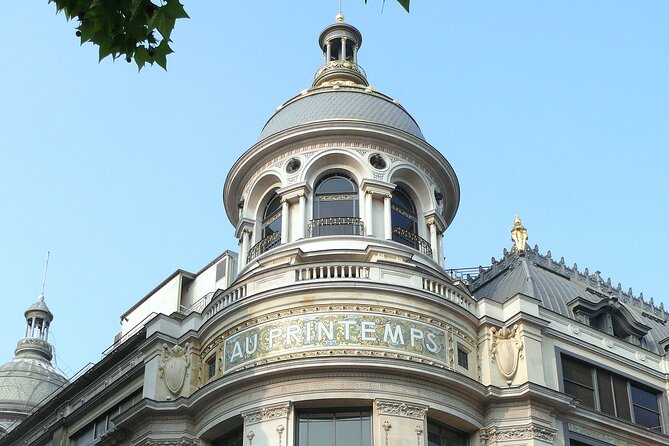
By request, the guide can make a detour past the place where Marcel Proust lived and wrote A la Recherche du Temps Perdu. This is a useful extra for readers and literary fans, but you should ask for it in advance or at the start. The route is already tightly timed, and a detour could affect the amount of time available elsewhere.
That literary connection also shows how the neighborhood had more than financial importance. It was home to people involved in writing, art, business, and public life. The walk presents the 8th arrondissement as a place where those worlds overlapped.
Gare Saint-Lazare and the money of the railway age
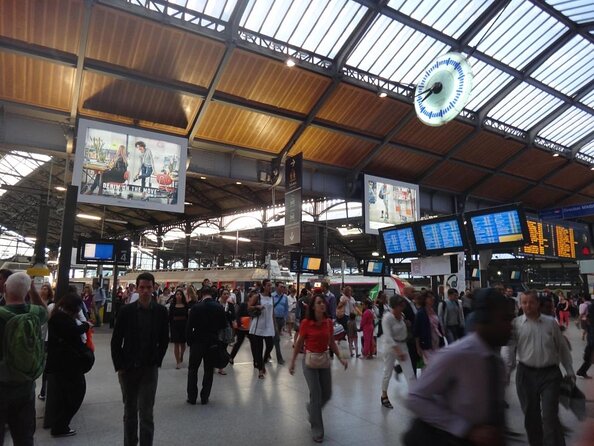
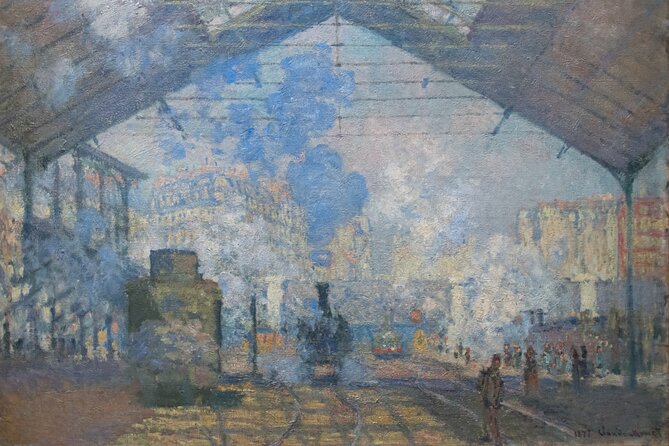
The next 20-minute stop takes you past the back side of Gare Saint-Lazare. This may sound less impressive than approaching the station’s grand front, but it fits the tour’s purpose. The railway is treated as a force that changed both Paris and the fortunes of its residents.
Rail connections helped drive industrial growth and made it easier for people and goods to move. Entrepreneurs who benefited from this new economy often lived in the neighborhoods along the route. The guide connects those commercial changes to the private mansions and apartment buildings you have already seen.
This is one of the more useful parts of the walk because it links architecture to economics. Ornate residences did not appear by accident. They were tied to new wealth, new industries, and the growing importance of transport.
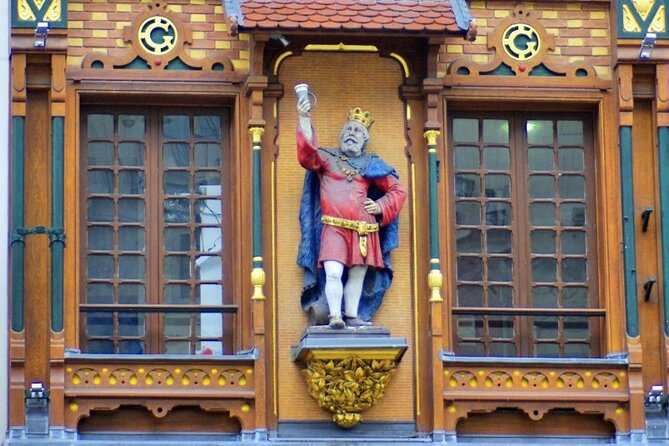
Near the front of the station, you see a notable building associated with Le Roi de la Bière. The same location also includes a McDonald’s, an amusing modern contrast that gives the stop a small dose of everyday Paris humor. It is a reminder that grand commercial addresses keep changing their use, even when the buildings remain.
Do not expect a full station tour. The stop is about the railway’s place in 19th-century Paris, not about exploring every part of Gare Saint-Lazare. If railway history interests you, you will likely want to ask questions. If you are mainly looking for polished architecture, the nearby buildings and the story of new wealth provide the stronger appeal.



Printemps and Galeries Lafayette: shopping becomes a spectacle
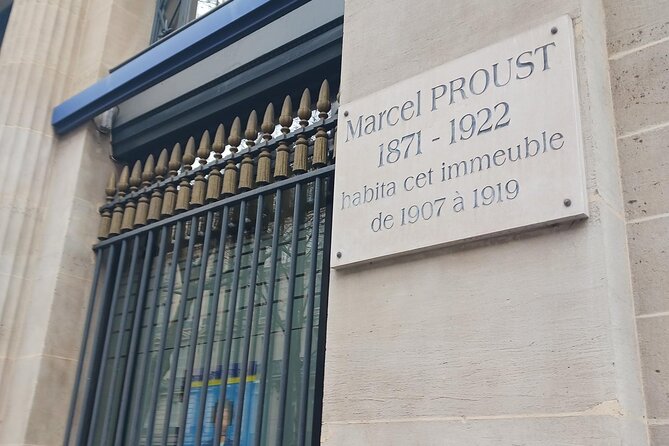
The final 30 minutes focus on the great department stores, or les grands magasins. You pass Printemps and finish inside Galeries Lafayette during opening hours.
This is an important ending because department stores were one of the signature inventions of modern consumer culture. They offered many goods in one grand setting and turned shopping into a public experience. The stores were not merely practical retail spaces. Their architecture and displays were designed to attract attention.
Galeries Lafayette supplies the visual climax. The tour includes entry during opening hours, but the information does not promise a private area, special access, or an extended shopping session. You should think of this as a guided look at a famous department-store interior, followed by the option to continue browsing after the tour ends.
Printemps and Galeries Lafayette also give you a clear sense of continuity. The 19th-century department-store idea still shapes how people shop today, even if the products and brands have changed. The guide’s job here is to connect the grand setting with the period’s social and commercial life.
The ending is convenient if you want to shop, eat, or continue sightseeing around Boulevard Haussmann. The tour finishes at 40 Boulevard Haussmann, the address given for Galeries Lafayette. It does not return you to Parc Monceau, so plan the rest of your day from the department-store district.
What $68.65 buys you
At $68.65 per person, this is not a bargain walking tour in the basic sense. You are paying for a historian-led experience that connects several parts of Paris rather than simply pointing out façades.
The value depends on your priorities. If you can read architecture on your own and do not care about historical explanation, the price may feel high for a two-hour walk. There are no meals, coffee, or tea included, and no private transportation is provided.
I see stronger value if you want context that is difficult to get from a guidebook while walking through an ordinary neighborhood. You visit a park, a church, a station area, and two department stores. None of these stops requires a major separate admission, so the main product is the guide’s interpretation and the carefully chosen route.
The small maximum of 10 also matters. A group this size should be more personal than a large city walk, especially when the guide is explaining details on building façades or answering questions. It does not guarantee a private tour, but it gives the experience a more manageable scale.
The tour is booked, on average, 32 days in advance. That suggests you should not leave it until the last minute if the date matters to you. Confirmation arrives at booking, and the mobile ticket keeps the practical side simple.
Timing, walking, and language
The walk begins at 10:30 a.m. at Monceau, in the 17th arrondissement, and finishes about two hours later at Galeries Lafayette in the 9th. The route covers several stops, so wear shoes suitable for city walking and be ready to remain on your feet for much of the experience.
A moderate level of physical fitness is recommended. No private transportation is included, and the tour is built around walking between locations. The exact distance is not provided, so you should not assume that the short duration means very little walking.
François can speak in both French and English. That is helpful if your group includes people with different language preferences. His stated specialty is 19th-century Paris, and his personal interest in this part of the 8th arrondissement should suit anyone who wants more than a basic list of dates and names.
The tour has earned a four-out-of-five overall rating from four published assessments, so the sample is small. The clearest positive detail is the guide’s friendly manner, strong command of French history and culture, and comfortable use of both French and English. I would treat that as a reason to book for the guide-led interpretation, not as proof that every aspect will suit every person.
Service animals are allowed, and the route is near public transportation. You should still consider the walking requirement and the short stop lengths when deciding if it fits your needs.
Who will enjoy this Paris walk
I would choose this tour if you have already seen the major central sights and want to understand the city’s 19th-century transformation. It suits people who enjoy architecture, urban planning, social history, literature, and the story behind everyday places.
It is also a good match for a first-time visitor who wants a gentle introduction to Haussmannian Paris without spending half a day inside a museum. The route gives you several visual anchors, then lets the guide tie them together.
You may want something else if your main goal is shopping. Galeries Lafayette is included as the final stop, but the tour is not a shopping service. You will have time to continue on your own, though the guided portion is focused on the department store as a 19th-century institution.
The same applies to photography. There are many photo opportunities, especially in Parc Monceau and around the grand façades, but the walk is not designed as a dedicated photo tour. You will need to balance listening with taking pictures.
Free cancellation is available if you cancel at least 24 hours before the local start time. Changes or cancellations made inside that period are not accepted for a refund, so keep the deadline in mind when making plans.
Should you book Architectural Bourgeois Paris 19th Century?
Book it if you want a compact, small-group walk led by a historian who can explain why this part of Paris looks the way it does. Parc Monceau, Haussmann’s boulevards, Saint-Augustin Church, the railway district, and Galeries Lafayette make a well-chosen sequence.
I would especially recommend it to repeat visitors, architecture fans, and anyone curious about the social forces behind Belle Époque Paris. The $68.65 cost is reasonable when you value expert commentary and a group of no more than 10, but less appealing if you want long visits, shopping time, or a low-cost stroll.
Ask about the Proust detour if that literary connection matters to you. Otherwise, arrive ready to walk, look up at the buildings, and let the city’s grand façades tell a story about money, transport, faith, and modern shopping.
FAQ
Where does the tour begin?
The tour begins at Monceau, 75017 Paris, France.
Where does the tour end?
It ends at 40 Boulevard Haussmann, 75009 Paris, at Galeries Lafayette.
What time does the tour start?
The start time is 10:30 a.m.
How long does the experience last?
The tour lasts approximately two hours.
Is entry to Galeries Lafayette included?
Yes. Entry to Galeries Lafayette is included during opening hours.
How many people can join the tour?
The activity has a maximum of 10 participants.
Can the tour be conducted in French?
Yes. François is comfortable speaking in both French and English.