REVIEW · AIX EN PROVENCE
Time flies in this complete tour of Aix-en-Provence
Book on Viator →Operated by Benjamin Reilly · Bookable on Viator
Time flies in Aix when stories hit the streets. This is a small-group walking tour of Aix-en-Provence that moves citywide in 2–3 hours, mixing top sights with quick tastes like a Calisson. If you want a fast, friendly way to get your bearings without missing the big landmarks, this route is built for that.
I love the pacing: lots of short stops, then back out into the streets, so you stay engaged instead of stuck in one spot. I also love the food-culture focus, because you learn what you’re eating (and why) rather than just grabbing sweets.
One consideration: it’s a moderate walking experience. You’ll want good shoes, because it’s still a real stroll through historic streets with plenty of steps.
In This Review
- Key highlights you’ll feel on this Aix walk
- Why this Aix walk is the right length (and why it feels quick)
- Getting your bearings at the Tourist Office (and the practical start)
- Rotonde and Cours Mirabeau: the city’s most photogenic compass points
- Hotel de Caumont, Middle School Mignet, and the genius connections
- Fontaine des Quatre-Dauphins and Eglise Saint-Jean-de-Malte: art, baroque, and fort history
- Calissons, Rue d’Italie, and Passage Agard: tasting Provence the right way
- Place des Prêcheurs and Rue du Puits Juif: plazas and a medieval quarter
- Place Richelme farmers market energy (morning) and people-watching (afternoon)
- Town Hall and Resistance stories: where the city’s present gets personal
- Cathedrale St-Sauveur at the end: the big finish with faith and festival connections
- Food and water details that matter (especially in Provence heat)
- Benjamin Reilly’s guiding style: story, humor, and the kind of questions you’ll ask
- Price and value: $127.03 for entrances, tastings, and a guided route that saves time
- Who this tour suits best (and who might want a different pace)
- Should you book this Aix-en-Provence walking tour?
- FAQ
- How long is the Aix-en-Provence walking tour?
- What’s the group size like?
- Is the tour offered in English?
- What do I get for the included food and drinks?
- Are museum or special sites included during the walk?
- Where do I meet the guide?
- What if the weather is bad?
- What’s the cancellation window for a full refund?
Key highlights you’ll feel on this Aix walk
- Small group (up to 12): more time for questions, not just one-way facts.
- A Calisson taste plus market nibbles: Provence flavor taught in bite-size stops.
- Iconic Aix anchors: Rotonde, Cours Mirabeau, and the cathedral at the end.
- A mix of art, faith, and memory: from a Templar church/fort to Resistance stories.
- Photo moment: a souvenir photo is included, timed with one of the fountains.
- Guide-led street logistics: you’ll get a map and help for what’s next.
Why this Aix walk is the right length (and why it feels quick)
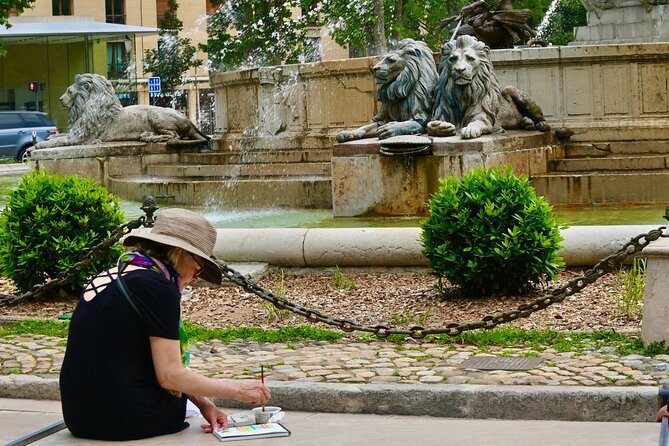
Aix-en-Provence is compact, but it has layers. This tour keeps things moving with an overall 2 to 3 hour format and a maximum group size of 12. That combo matters: you get the core sights without dragging your day into half a morning or afternoon.
The route is designed around frequent, short stops. Instead of long museum time, you get just enough context at each place, then you’re back on the sidewalk to connect the story to the street you’re standing on.
Also, this is the kind of tour people tend to book ahead—on average 45 days in advance. If you’re traveling in high season, that’s a good hint to reserve early.
You can also read our reviews of more tours and experiences in Aix en Provence.



Getting your bearings at the Tourist Office (and the practical start)
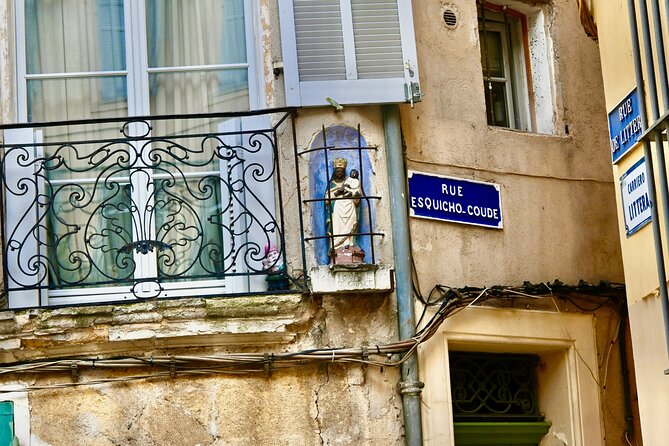
You begin at the Office de Tourisme d’Aix-en-Provence, where the guide sets expectations and gives quick safety notes. It’s not a “show up and rush off” start—this briefing helps you understand how the walk will flow and where to focus your attention.
A useful detail: public toilets are outside the building. Nearby cafés make it easy to grab a last drink or snack before you step into the historic center.
You’ll also get a map and guidance for your next destination. That sounds simple, but on a first day in Aix it’s the difference between confidently wandering and accidentally doubling back.
Rotonde and Cours Mirabeau: the city’s most photogenic compass points
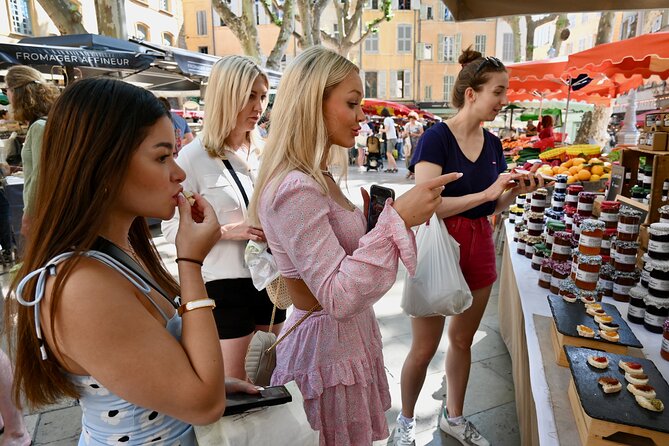
The first sights quickly place you in Aix’s geography and rhythm. At the Fontaine de La Rotonde, you get a geographic and historic overview early on, so later streets make more sense. It’s a smart move because Aix’s charm is partly in how everything connects.
Then you head to Cours Mirabeau, Aix’s main avenue. This is one of those streets where you’ll understand why people call Aix “easy to fall for.” You stroll down the center while learning what makes the boulevard so important to the city’s look and story.
These two stops work as your compass. After them, the rest of the walk feels less like random wandering and more like a guided tour of how Aix grew.
Hotel de Caumont, Middle School Mignet, and the genius connections
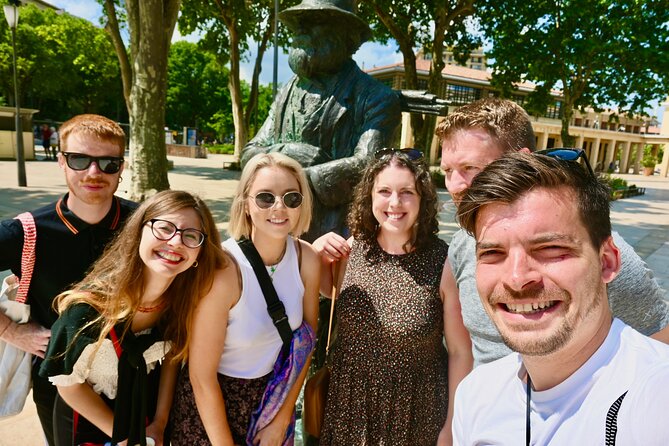
Next comes a quick but telling shift from street life into architecture and famous names. At Hotel de Caumont – Art Centre, you’ll learn secrets of this 18th-century mansion—how it’s set up and what it reveals about the city. One note: admission here is not included, so you’ll mostly experience the exterior/area context rather than paid entry.
Then the tour turns to Middle School Mignet, where the stories connect to 19th-century figures like Paul Cézanne and Émile Zola. Even without formal museum time, these short “who mattered and why” stops add real texture. You start seeing why Aix claims such strong cultural identity.
This section is great if you like history tied to real places, not just dates.
Fontaine des Quatre-Dauphins and Eglise Saint-Jean-de-Malte: art, baroque, and fort history
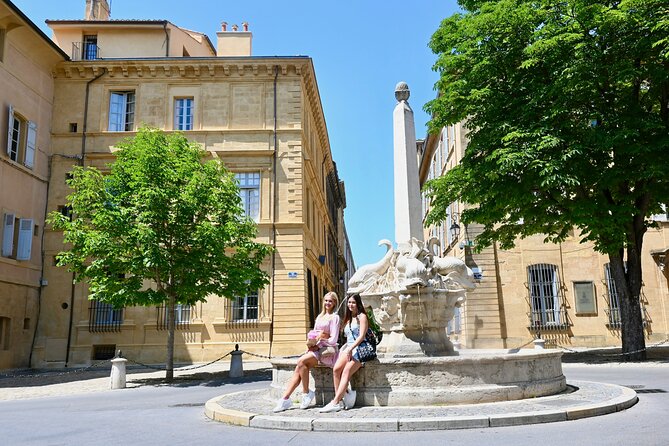
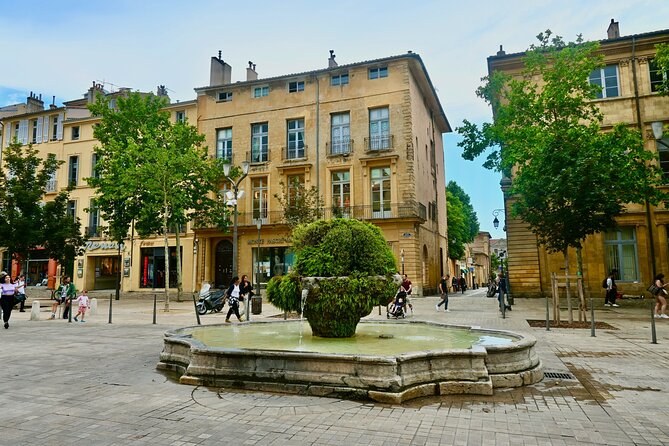
At Fontaine des Quatre-Dauphins, the vibe becomes visual and photo-friendly. You’ll get a close look at the fountain’s Baroque, Italian-inspired design and a photo souvenir moment with it. If fountains are your thing, this is a satisfying stop because it’s both pretty and explained.
Soon after, you visit Eglise Saint-Jean-de-Malte, tied to the Knights Templars. This isn’t only a church stop—it’s presented as a church/fort context. That matters because it helps you read the building correctly: it’s not just religious architecture, it’s also part of older defense-and-faith history.
The tour includes entrance to the church, so you can step inside rather than just look from the outside.




Calissons, Rue d’Italie, and Passage Agard: tasting Provence the right way
Food is baked into the route, not sprinkled on as an afterthought. At Rue d’Italie, you get a taste of a local specialty: the Calisson. It’s not a full meal, but it’s enough to anchor the experience in Provence flavor.
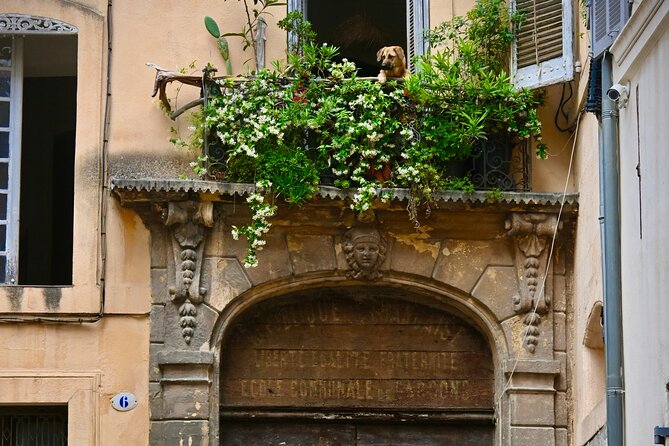
Then you slip into Passage Agard, a private passage that once served as a convent. This is the kind of Aix detail that makes the city feel personal—narrow, tucked away, and full of time layers you’d never spot on your own.
If you care about understanding how Aix’s neighborhoods work, this sequence hits well: a quick sweet, then a hidden corridor that changes how you picture the city’s structure.
Place des Prêcheurs and Rue du Puits Juif: plazas and a medieval quarter
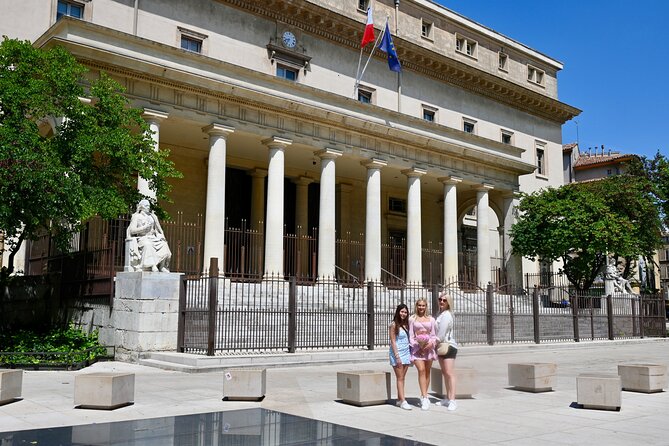
You’ll reach Place des Prêcheurs, where the focus is on the plaza space and notable elements such as the courthouse area and statues. It’s a “watch the city think” stop. Plazas in Aix aren’t just scenery; they’re social centers, and you feel that as soon as you stand there.
Then comes Rue du Puits Juif, with attention on the medieval quarter connected to Provence’s Jewish community and its influence. The tour frames it as a place where history left marks on the region, not just a label on a map.
This section is valuable because it expands Aix beyond the postcard loop. You start to see the city as a crossroads, shaped by many communities over time.
Place Richelme farmers market energy (morning) and people-watching (afternoon)
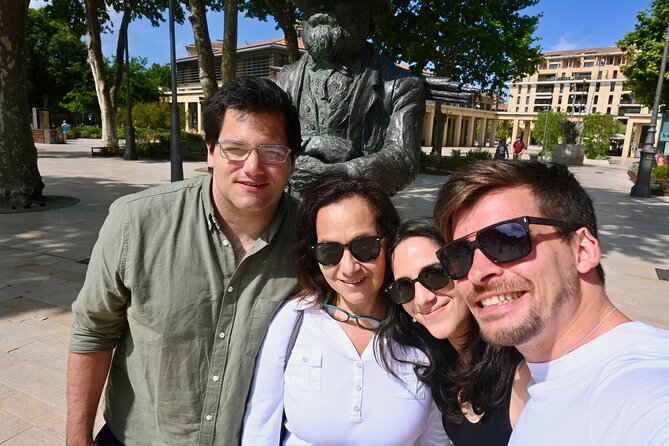
At Place Richelme, you’re given two different vibes depending on timing. In the morning, you can experience the daily farmers market and get tasters there. In the afternoon, the emphasis shifts to people-watching and the rhythm of everyday life.
This is also where the tour’s food-culture component becomes practical. The market stop is built for sampling, and the tour includes the morning tastings. If you’re a foodie, this is the point where Aix starts feeding you more than just facts.
Town Hall and Resistance stories: where the city’s present gets personal
You then head to the Town Hall of Aix-en-Provence, positioned as the heart of local civic power. A quick stop here gives you context for how the mayor’s office runs the show—small time investment, big clarity.
After that, you reach Place des Martyrs de la Resistance, where the focus is on World War II survivor stories and how the US Army liberated the city from Nazi control. It’s one of the more serious moments in the walk, and it helps the tour feel grounded rather than purely aesthetic.
Cathedrale St-Sauveur at the end: the big finish with faith and festival connections
You wrap up at Cathedrale St. Sauveur, with several layers presented in one place. You’ll hear about the cathedral as the center of Christianity in the region for around 1500 years, plus the idea of its open-air concert hall connected to the Opera festival.
There’s also a detail about a hidden statue of the Black Madonna. This kind of “look for this while you’re here” instruction is exactly how a good walking guide makes a famous place feel fresh.
The tour includes entrance to the cathedral, so you’re not just snapping photos at street level—you finish with a real stop inside.
Food and water details that matter (especially in Provence heat)
This tour is built around small, practical food moments. You get:
- A local delicacy taster (the Calisson)
- Farmers market tasters in the morning
- A discount at gelato in the afternoon
If you plan your day around eating, those pieces add up. You don’t need to hunt for snacks between sights; you get the city’s food culture woven into the route.
Water is also handled thoughtfully. Bottled water isn’t handed to you, but you’re told you can fill your bottle at local water sources. That’s a smart, earth-friendlier approach, and it helps you stay comfortable as you walk.
Benjamin Reilly’s guiding style: story, humor, and the kind of questions you’ll ask
Benjamin Reilly is a central part of the experience. The way he presents Aix is personal—he ties people and places together with humor, and he makes space for questions. That matters on a walking tour because the best part isn’t memorizing facts; it’s understanding what you’re looking at.
A useful thing: he’s described as flexible when groups run late, which is a real life detail. If your travel day is messy, that flexibility can save your plans.
One more practical tip: bring a curious mindset. With this format, you’ll get more out of it if you ask the simple questions—why this street matters, why this building looks the way it does, and what you should notice next as you keep walking.
Price and value: $127.03 for entrances, tastings, and a guided route that saves time
At $127.03 per person, you’re paying for a guided, organized route through the historic center, plus several included items. The big value points are:
- Entrance to church and the cathedral
- Local delicacy taster
- Souvenir photo
- Morning market tastings
- Water access guidance (fill stations)
You’re also paying for the “how to see Aix” part: the guide strings together geography, architecture, and culture in a way that’s hard to replicate alone in a couple of hours.
The one cost consideration is Hotel de Caumont. That admission is not included, so you should treat it as an explained stop rather than a guaranteed inside visit.
If you like walking tours that do more than point, this price can feel fair because you’re buying time, context, and access to certain interiors.
Who this tour suits best (and who might want a different pace)
This works especially well if you want:
- an easy introduction to Aix’s historic center
- a food-focused walk with tastings
- a small-group experience where questions are welcome
It’s listed for travelers with moderate physical fitness. That sounds broad, but in practice it means expect real walking and some steps. Reviews also note that the day adds up to a lot of steps, so pack accordingly.
Service animals are allowed, and the start/end points are near public transportation. So if you’re using transit, you’re not stuck in the middle of nowhere.
Families can work too, since the tour format uses short stops and question-friendly pacing rather than long, quiet museum time.
Should you book this Aix-en-Provence walking tour?
If your goal is to fall for Aix fast—learn the city’s story, eat a little Provence, and see the major landmarks without planning a complicated route—this is a strong choice.
I’d especially book it if you:
- want a 2–3 hour guided overview early in your trip
- care about food culture tied to place
- prefer a small group and real interaction with the guide
- want a confident finish at Cathedrale St. Sauveur with context, not just photos
Consider passing or planning differently if you dislike walking, or if you want long time at major sites. This is a “move and explain” format, not a sit-and-stay deep museum day.
FAQ
How long is the Aix-en-Provence walking tour?
It’s about 2 to 3 hours, depending on the pace of the group and the flow between stops.
What’s the group size like?
The tour is limited to a maximum of 12 travelers, which helps keep it interactive.
Is the tour offered in English?
Yes. It’s offered in English.
What do I get for the included food and drinks?
You’ll have a local delicacy taster (Calisson). In the morning, you’ll get tasters at the farmers market, and in the afternoon you’ll get a discount at gelato in town. Bottled water isn’t included, but you can fill your bottle at local water sources.
Are museum or special sites included during the walk?
The tour includes entrances to a church and the cathedral. Hotel de Caumont – Art Centre is listed with admission not included.
Where do I meet the guide?
You start at the Tourist Information Center, 300 Av. Giuseppe Verdi, 13100 Aix-en-Provence, France. The tour ends at Paroisse Cathédrale Saint Sauveur Aix-en-Provence, 34 Pl. des Martyrs de la Resistance, 13100 Aix-en-Provence, France.
What if the weather is bad?
This experience requires good weather. If it’s canceled due to poor weather, you’ll be offered a different date or a full refund.
What’s the cancellation window for a full refund?
You can cancel up to 24 hours in advance for a full refund. If you cancel less than 24 hours before the start time, the amount paid won’t be refunded.