REVIEW · BORDEAUX
The Most Complete and Best Rated Tour of Bordeaux
Book on Viator →Operated by Walk is Free · Bookable on Viator
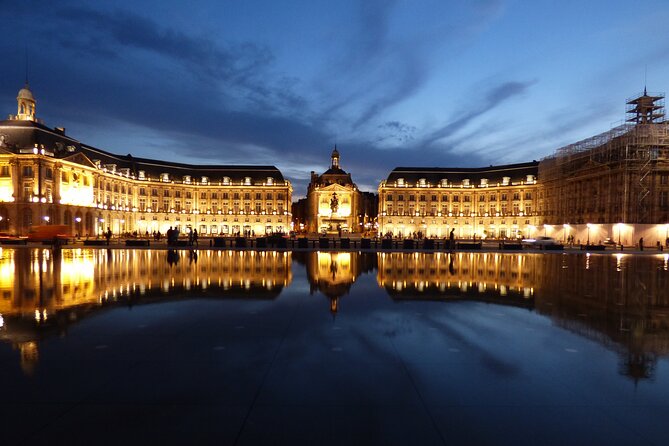
Bordeaux hits fast on a short walk. This private, English-led stroll strings together the city’s biggest sights in a smart order, ending at the famous water reflection at Place de la Bourse. I love how the route gives you an instant map of the center while still keeping the pace relaxed with plenty of chances to ask questions. I also like that the Water Mirror is part of the payoff, not just a random pass-by.
You’ll also get optional guided entries at major religious landmarks (Cathedral and/or Basilica of Saint-Michel, depending on the day/route). The only real downside to think about is value: it’s a walk with limited entrances beyond those sites, so if you’re hoping for lots of indoor attractions, you may feel the price more than you would on a museum-heavy tour.
In This Review
- Key highlights worth your time
- Getting Your Bearings: From the Grand-Théâtre to the Water Mirror
- Price and Value for a 2–3 Hour Private Walk
- Stop-by-Stop: What You’ll See (and Why It Matters)
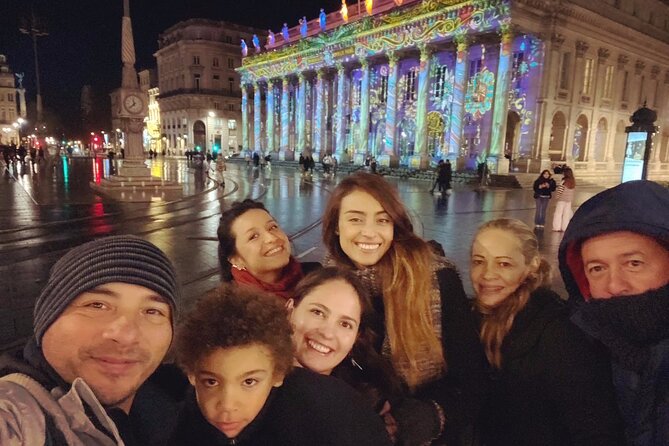
- Grand-Théâtre (Grand Opera Bordeaux): The Facade That Sets the Tone
- Place de la Comédie: Squares, Power, and a Perfect City Crossroads
- Place Gambetta and Dijeaux Gate: Where the Past Shows Up in Plain Sight
- Pey-Berland Tower and Bordeaux Cathedral: The Bell Tower Separate from the Cathedral
- Grosse Cloche: The Great Bell and the Streets It Watches
- Basilique Saint-Michel and the Saint-Michel Neighborhood: Church Visit with Local Flavor Nearby
- Marché des Capucins: Your Real Taste of Bordeaux
- Porte Cailhau: A Castle-Like Gate with a Dramatic Look
- Pont de Pierre: The Stone Bridge Moment
- Place de la Bourse: Waterfront Grandeur in One Square
- The Water Mirror (Miroir d’eau): The Postcard Ending
- Porte de Bourgogne: The Gate Tied to Napoleon’s Route
- La Galerie des Grands Hommes: Golden Triangle of Bordeaux
- How the Guides Make or Break It
- Timing, Route Flow, and What to Wear
- Best Day to Book and How Far Ahead
- Who This Bordeaux Walk Is For
- Should You Book This Bordeaux Walking Tour?
- FAQ
- How long is the Bordeaux tour?
- What does the tour cost?
- Where does the tour start and end?
- What language is the guide available in?
- Is it a group tour or private?
- What’s included in the price?
- What isn’t included?
- Do I need to print a ticket?
- Is there a market stop?
- Can I cancel for a refund?
Key highlights worth your time
- A very practical center-city orientation: you’ll see how Bordeaux’s squares, gates, and riverfront connect.
- A guide who shapes the pacing: people like Pascale, Elissa, and Nicolás are repeatedly praised for making the walk feel easy-going.
- Market stop at Marché des Capucins: a chance to see how locals shop for cheese, wine, prepared bites, and coffee.
- Big-picture architecture moments: Grand-Théâtre facade, Pey-Berland tower, and the grand bell at Grosse Cloche.
- A photo finish at Place de la Bourse and the Miroir d’eau: the classic Bordeaux postcard moment is built into the end.
Getting Your Bearings: From the Grand-Théâtre to the Water Mirror
This tour is built for one thing: helping you get oriented in Bordeaux without burning half your day on transit. It runs about 2 to 3 hours, and because it’s private, you and your group stay together rather than getting chopped up by a larger crowd.
You meet at Opéra National de Bordeaux – Grand-Théâtre in Place de la Comédie, then you work your way through the historic core, ending at Miroir d’eau at Place de la Bourse. That’s a strong setup. You begin in the main showpiece square and you finish at the city’s most Instagrammable reflection pool, right on the Garonne Riverfront.
The walk is straightforward, and the timing at each stop is short enough that you still feel like you’re moving, not waiting around. You’ll also be near public transportation the whole time, which is useful if you want to break away for a café or a quick pastry.
You can also read our reviews of more tours and experiences in Bordeaux.

Price and Value for a 2–3 Hour Private Walk
At $119.72 per person, it isn’t the cheapest thing on Bordeaux’s walking-tour menu. The key question is what you’re really buying: not just sightseeing, but a guided route that strings together the city’s landmarks in a logical path.
Here’s what your money covers that matters:
- A private guide in English (and English or Spanish is offered depending on booking)
- Direct entrance to a major church site (Cathedral of Bordeaux and/or Basilica of Saint-Michel)
- A focused route through squares, gates, and viewpoints where the guide’s context helps you understand what you’re seeing
Where value can feel thin:
- Most stops are outside. A big example is the Grand-Théâtre area, where you’re admiring the building and facade rather than paying for an interior visit.
- If you expect a long list of museum entrances, this isn’t that kind of tour. It’s a city-overview walk.
If you’re in Bordeaux for a day or two and you want to feel confident navigating the center afterward, this price starts to make sense.
Stop-by-Stop: What You’ll See (and Why It Matters)
Grand-Théâtre (Grand Opera Bordeaux): The Facade That Sets the Tone
You kick things off at Grand-Théâtre / Opéra National de Bordeaux. You’ll spend a short 15 minutes on the medieval-faced exterior and what it represents for the city. Even if you never step inside, the facade gives you the first clue to Bordeaux’s mix: grand public architecture built over older layers of the city.
This is also a good warm-up stop. You get your first landmark, you settle in, and the guide can start laying out the themes of Bordeaux—power, trade, and how the city developed its identity around major public spaces.
Place de la Comédie: Squares, Power, and a Perfect City Crossroads
Next comes Place de la Comédie (again around 15 minutes). It’s the kind of square that feels like a stage: the opera nearby, grand hotels in the orbit, and public art nearby.
The practical value here: once you understand where Place de la Comédie sits, you’ll stop feeling lost. You’ll know where to head for streets, cafés, and the direction of the historic core.


Place Gambetta and Dijeaux Gate: Where the Past Shows Up in Plain Sight
At Place Gambetta, you get a look at the Dijeaux Gate with a quick explanation of why the square’s layout matters (about 10 minutes). This is a classic Bordeaux moment: medieval-era defensive features and city life sharing the same space.
Even in a short stop, you start connecting the dots between gates and streets. It’s the sort of context that makes later self-guided walking so much easier.
Pey-Berland Tower and Bordeaux Cathedral: The Bell Tower Separate from the Cathedral
Then you’re at Tour Pey-Berland, linked with Cathedral and Hotel de Ville area (around 15 minutes). Pey-Berland is the separate bell tower of Bordeaux Cathedral, and the guide’s explanation is the difference between just seeing a tall building and actually understanding its role in the city’s skyline.
If you like architecture more than museums, this stop is a win. It’s visual, it’s iconic, and it teaches you what to look for next.
Grosse Cloche: The Great Bell and the Streets It Watches
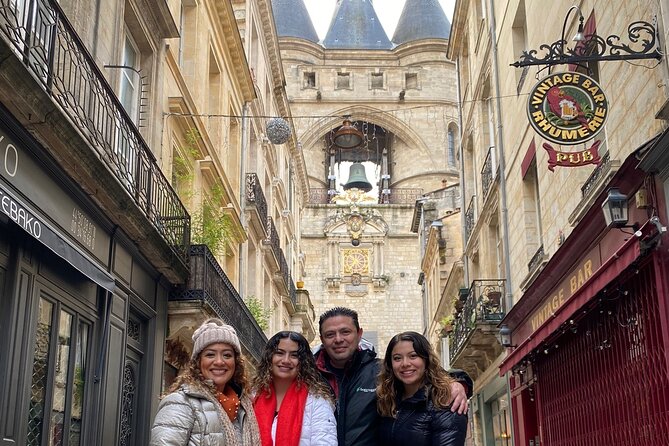
You move on to Grosse Cloche via Saint James Street and the Gate of the Great Bell (about 10 minutes). This one is quick but memorable, because the bell feature is so distinctive that your brain keeps it as a reference point.
It’s also a handy spot for photos because it gives you vertical lines and a strong sense of place in the street pattern.
Basilique Saint-Michel and the Saint-Michel Neighborhood: Church Visit with Local Flavor Nearby
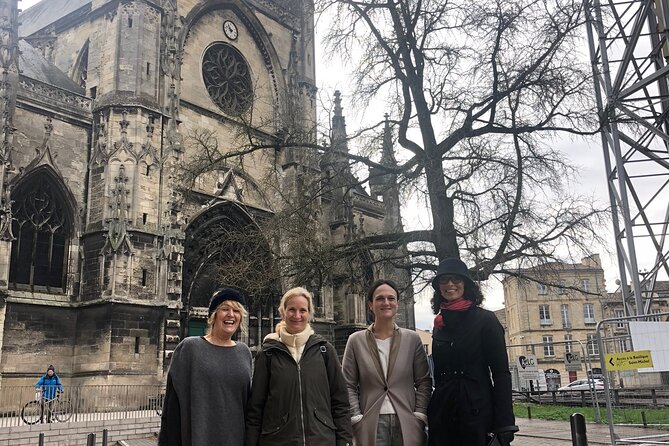
At Basilique Saint-Michel, you’ll spend about 10 minutes and step into the Saint-Michel neighborhood feel. The basilica is frequently included with entrance, and this is one of the stops that turns the walk from an exterior tour into something with a real interior payoff.
This is where people often slow down a bit, just because the basilica and its surrounding streets feel more lived-in than some of the grander squares.
Marché des Capucins: Your Real Taste of Bordeaux
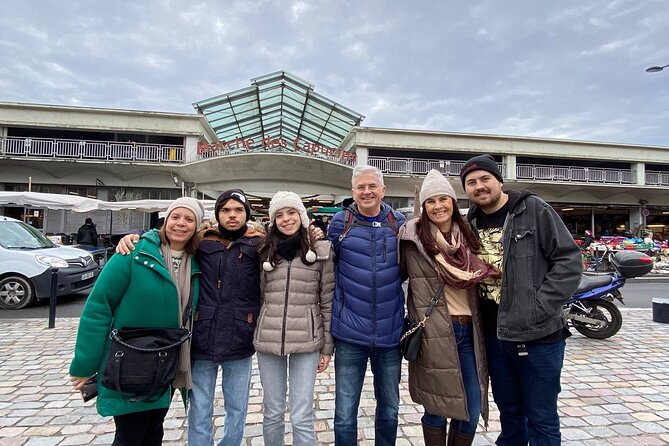
Then you hit Marché des Capucins for about 15 minutes. This is described as the city’s most traditional market, and it’s exactly the kind of stop that makes a walking tour feel like a day in the city rather than a checklist.
Here’s what you’ll typically spot in the market space:
- local products
- cheese and wine
- prepared meals and coffee
Even if you don’t buy anything, it’s worth using the time to look. If you do buy something, keep it simple: grab a quick bite and save a bigger meal for later.
Porte Cailhau: A Castle-Like Gate with a Dramatic Look
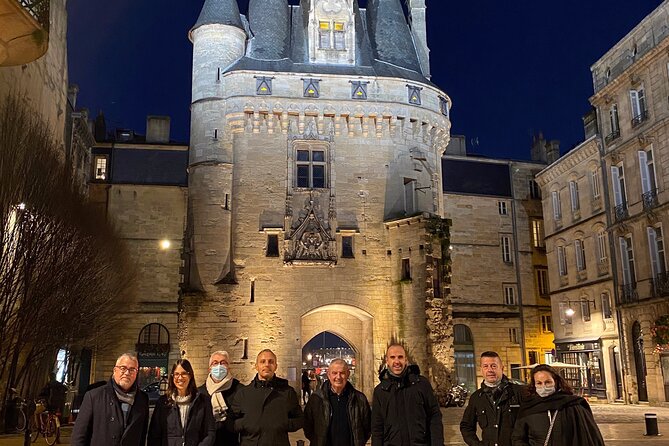
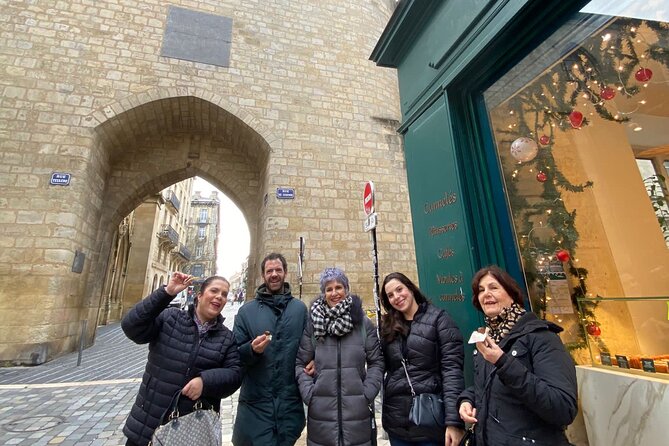
At Porte Cailhau, you’ll see the castle-like exterior of a former main city gate (about 15 minutes). This is one of those Bordeaux features that looks like it belongs in a movie set, but it’s still in the middle of normal city life.
It’s a great stop for understanding how Bordeaux guarded access points while still growing into a lively commercial city.
Pont de Pierre: The Stone Bridge Moment
Crossing into the Pont de Pierre area is about 15 minutes, with the Stone Bridge and Victor Hugo Avenue in the mix. A stone bridge isn’t just a crossing—it’s a change in perspective.
You’ll start to see how Bordeaux’s riverfront shaped the city’s identity and why trade and travel mattered here.
Place de la Bourse: Waterfront Grandeur in One Square
Next is Place de la Bourse (around 15 minutes), with the water-aimed grandeur of the quay area. This is a wide, open space that feels different from the older, tighter street sections earlier in the walk.
You’re in the right part of town for later self-guided exploring. After this stop, it’s easy to keep going toward the river or duck into nearby streets for a meal.
The Water Mirror (Miroir d’eau): The Postcard Ending
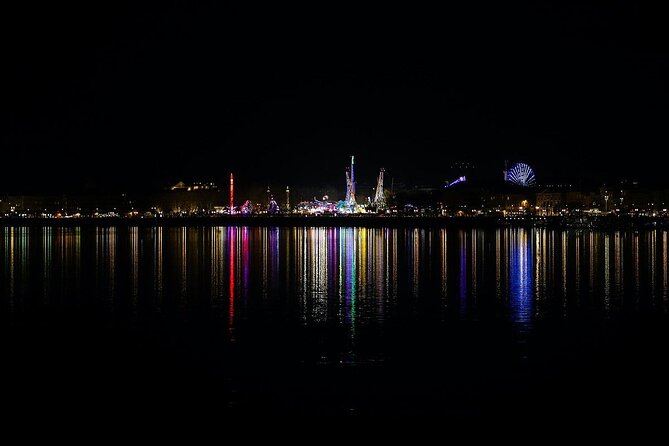
The tour’s signature finale is the Water Mirror, also called Miroir d’eau, included on the schedule (about 15 minutes). This is the classic Bordeaux scene: reflection, water, and symmetry in a place that feels designed for lingering.
The guide’s context can help you understand why it became such a symbol of the city’s riverfront style. Either way, this is the stop you’ll remember when you look back at your photos.
Porte de Bourgogne: The Gate Tied to Napoleon’s Route
After the water finish, you’ll spend a bit more time around Porte de Bourgogne (about 10 minutes). The key detail is that it’s described as the great gate from which Napoleon Bonaparte headed toward Spain.
It’s a quick historical link that gives the stonework a wider timeline than just medieval Bordeaux.
La Galerie des Grands Hommes: Golden Triangle of Bordeaux
Finally, you’ll pass La Galerie des Grands Hommes (about 10 minutes), tied to the center area referred to as the Golden Triangle of Bordeaux. This stop is more about layout and street identity than dramatic single features, but it helps you understand the city’s central design logic.
How the Guides Make or Break It
This walk lives and dies by the guide’s storytelling and pacing. The names that show up again and again in people’s experiences include Pascale, Elissa, Elisa, Nicolás, Raphael, and Pamela.
What you can reasonably expect from the better guides on this route:
- They keep the pace leisurely, so the walk feels like a conversation, not a forced march.
- They answer questions clearly and connect landmarks to bigger themes.
- Some guides tailor the flow based on what you’re most interested in. One guide style described involves checking your interests right at the start.
- A fun thread that pops up is a focus on big historical figures, including Eleanor of Aquitaine, plus stories that make old buildings feel less like props.
Practical tip for you: if you have specific interests—architecture, local food, royal history, street scenes—tell the guide early. Guides can often adjust what they emphasize in the time you have.
Also, don’t be shy about asking for food ideas. One example mentioned Pamela offering lunch and dinner suggestions and naming special places around town, including Maison du Vin.
Timing, Route Flow, and What to Wear
Because it’s a walking tour with short stops, the timing matters less than your comfort level. You’re out for roughly 2 to 3 hours, and you’ll move between many central landmarks.
Wear shoes you can walk in for an hour-plus without thinking. Bordeaux can be sunny, breezy, or rainy depending on the day, and you’ll want traction. Bring a light layer too—river areas can feel cooler, especially later in the day.
Best Day to Book and How Far Ahead
The average booking window is about 55 days in advance, which tells you demand is real for this kind of fast orientation tour. If you’re traveling during peak season or on a short itinerary, booking early gives you more schedule choice.
You’ll also get confirmation at booking time, and you’ll receive a mobile ticket. That’s handy if you don’t want paper to deal with.
Who This Bordeaux Walk Is For
This tour is a strong fit if:
- you’re visiting Bordeaux for the first time and want a clean overview fast
- you enjoy outdoor landmarks more than museum marathons
- you like markets and want at least a taste of local food culture
- you’re traveling with kids (the pacing is typically friendly for families looking for stories rather than long quiet exhibits)
It’s also a good choice for couples who want a shared activity that still leaves you plenty of time afterward for dinner and self-guided exploring.
If you’re the type who only values tours with lots of paid entrances, you might feel this is more about context than ticketed attractions. Adjust expectations and you’ll probably enjoy it more.
Should You Book This Bordeaux Walking Tour?
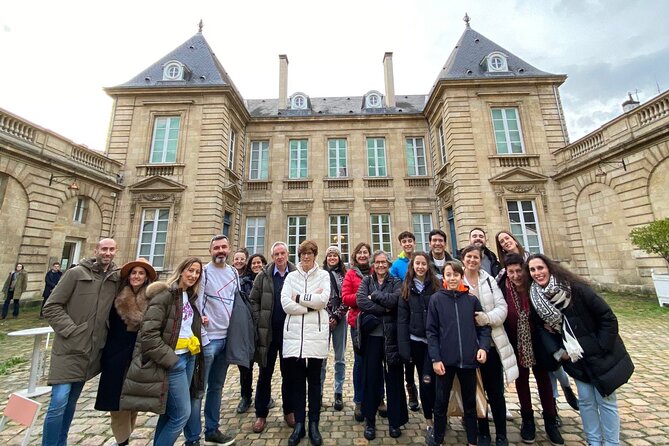
I’d book it if you want a smart center-city tour that helps you understand what you’re seeing and gives you a classic ending at the Water Mirror. The included church entrance (Cathedral and/or Basilica of Saint-Michel) is a real bonus, and the route is arranged so you learn the city’s layout as you go.
I’d skip it or look for something else if you’re hoping for lots of indoor sites and museum time. At its best, this is about making Bordeaux make sense, not about checking as many ticket lines as possible.
If you want a first-day plan that still feels fun and flexible, this one does the job.
FAQ
How long is the Bordeaux tour?
It lasts about 2 to 3 hours.
What does the tour cost?
The price is $119.72 per person.
Where does the tour start and end?
It starts at Opéra National de Bordeaux – Grand-Théâtre, Pl. de la Comédie, Bordeaux, and ends at Miroir d’eau, Pl. de la Bourse.
What language is the guide available in?
The guide is offered in English, and Spanish is also listed as an option for the exclusive guide.
Is it a group tour or private?
It’s a private tour/activity, so only your group participates.
What’s included in the price?
You get an exclusive guide in your booking language and entrance to the Cathedral of Bordeaux and/or Basilica of San Miguel.
What isn’t included?
Entrance to museums and other unspecified places is not included.
Do I need to print a ticket?
No. It uses a mobile ticket.
Is there a market stop?
Yes. Marché des Capucins is included as a stop where you can find local products, cheese and wine, and prepared food and coffee.
Can I cancel for a refund?
Yes, free cancellation is available if you cancel at least 24 hours before the start time.