REVIEW · BORDEAUX
Tasting of 6 Bordeaux wines and pairing charcuterie & cheese
Book on Viator →Operated by I love my 2cv · Bookable on Viator
One sentence can’t hold a Bordeaux education. In this 1 hour 15 minute tasting in Bordeaux, I like that you taste six carefully chosen wines (including a mystery bottle) while learning how appellations, terroir, grape varieties, and blends actually show up in your glass. Guided by Mathilde and Cécilia, the vibe stays friendly and practical, not stuffy.
I also love the way the session mixes wine with real food pairings—charcuterie and cheese—so you leave with cues you can use the next time you pick a bottle. One possible drawback: the pairing portion can feel a bit “taster-sized,” so if you’re hungry-hungry, you’ll want to eat beforehand or plan a full meal after.
In This Review
- Key things to look for before you book
- A hands-on Bordeaux lesson at 25 Av. Thiers
- Meet Mathilde and Cécilia: why the hosts matter
- The six-wine format: how the tasting is built
- Mystery wine: the best way to start tasting seriously
- Dry whites from both banks: what to notice first
- Reds and blend logic: learning left vs right without the headache
- Soft wine: closing out without overthinking it
- Charcuterie and cheese pairing: small bites, big lessons
- Timing and pacing: 1 hour 15 minute, not a half-day project
- What you get after the last sip: the tasting booklet
- Who this Bordeaux tasting is best for
- Should you book this Bordeaux wine tasting?
- FAQ
- How long is the Bordeaux wine tasting session?
- What’s included in the price?
- How many wines will I taste?
- Is this experience offered in English?
- What size is the group?
- Where does the tasting take place?
- Is there a meal included like lunch?
- Are the wines available to buy?
- Can I cancel for a full refund?
- Are service animals allowed?
Key things to look for before you book
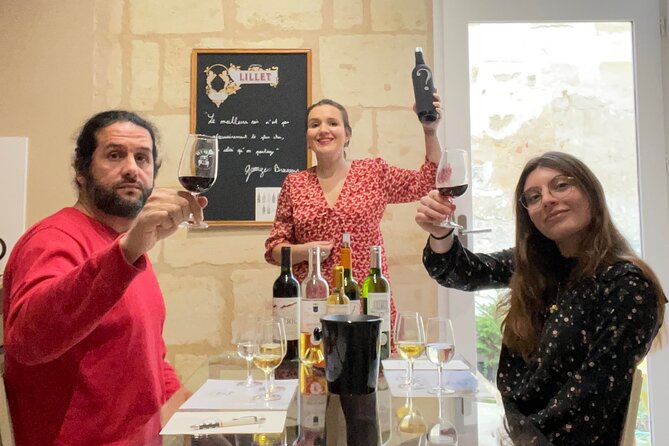
- Six wines, one mystery: you’ll practice tasting with a guessing game built in
- Left bank and right bank included: both dry whites and reds show up
- Four wine styles, one lesson: whites, reds (blends), a soft wine, and a mystery pour
- Charcuterie & cheese pairing focus: learn how food changes what you taste
- Small group max of 6: more back-and-forth with your host
- Take-home tasting booklet: helps you keep practicing after the last sip
A hands-on Bordeaux lesson at 25 Av. Thiers
This experience works because it teaches you a skill, not just a list of grapes. You’ll get the rhythms of wine tasting—smell first, then swirl, then taste—so your brain learns to separate “nice” from “I get why this works.”
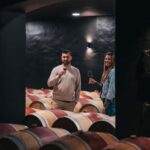
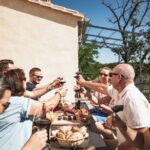
The session is run from 25 Av. Thiers, and your tasting location can shift with the season: private courtyard, cellar, or a furnished room. That flexibility matters because Bordeaux weather can be moody, and the goal is comfort while you focus on the wines.
Also, it’s not a big production. With a maximum of 6 travelers, you get a more personal pace, and the hosts can adjust if you’re brand-new to wine or want more detail fast.
You can also read our reviews of more food & drink experiences in Bordeaux
Meet Mathilde and Cécilia: why the hosts matter
Mathilde and Cécilia are the heart of the tour. They’re professionals trained at the University of Wine, and the teaching style stays grounded in what your senses pick up—not just what a label says.
In practice, that means you’ll learn how to read French wine labels and how Bordeaux’s classifications and styles connect to what you’re tasting. If you’ve ever stared at a Bordeaux shelf and felt like every bottle is trying to win a spelling contest, this helps you get your footing quickly.
The tone also stays easy. Several hosts and guests have noted how patient and clear the explanations are, and that you’ll get plenty of chances to smell aromas and react out loud. It’s the kind of setting where questions don’t feel like interruptions.
The six-wine format: how the tasting is built
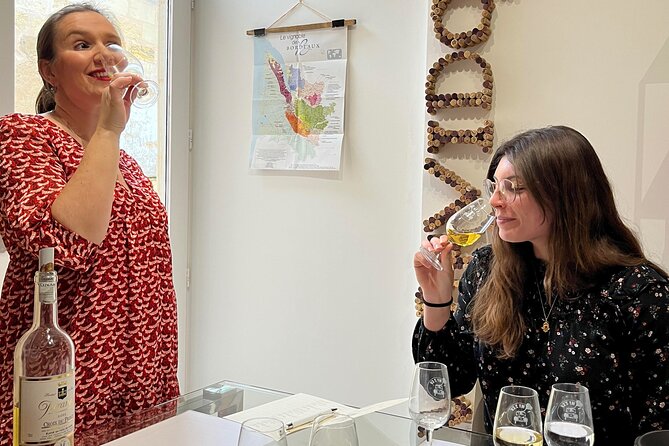
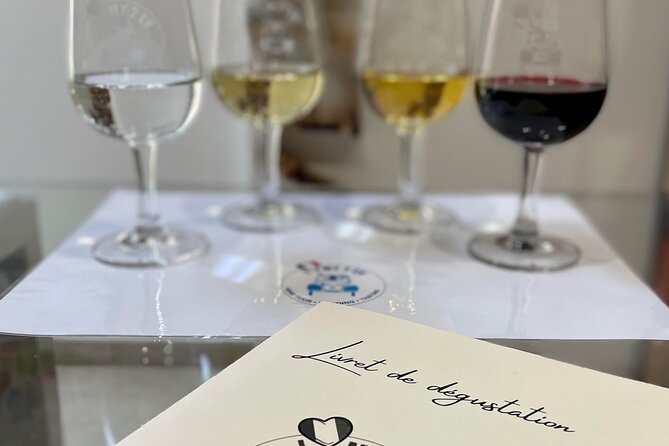
The lineup is structured like a lesson, not a free-for-all. You’ll taste 6 wines total, and they’re split by style so you can spot patterns:
- 1 mystery wine to train your senses and your “guessing brain”
- 2 dry whites: one from the left bank and one from the right bank
- 3 reds: a mix of left bank and right bank ideas, plus blend-focused examples
- 1 soft wine to round things out
That “left bank vs right bank” framing is especially useful. Bordeaux can feel confusing at first because the region’s wines come in different shapes—blends, classifications, and terroirs that don’t map neatly to one simple grape. This approach gives you a way to sort what you like.
You’re also tasting wines from Grands Crus Classés and family estates that use organic farming. That combination matters because Bordeaux’s big names often carry history and technique, while organic farming adds another layer of how the wine expresses itself.
Mystery wine: the best way to start tasting seriously
The mystery wine isn’t there just for fun. It’s a quick training tool to help you rely on your senses instead of pre-reading the label and letting expectations steer you.
You’ll practice tasting the way a pro does—looking for aroma families, noticing how the wine feels in your mouth, and tracking flavors as the wine changes. If you’ve never done that before, it can feel weird for about five minutes, then suddenly it clicks.
This is also where a small group helps. You can hear how your host talks through aromas and why certain notes come up, and you’ll likely start picking up those notes yourself by the second glass.
Dry whites from both banks: what to notice first
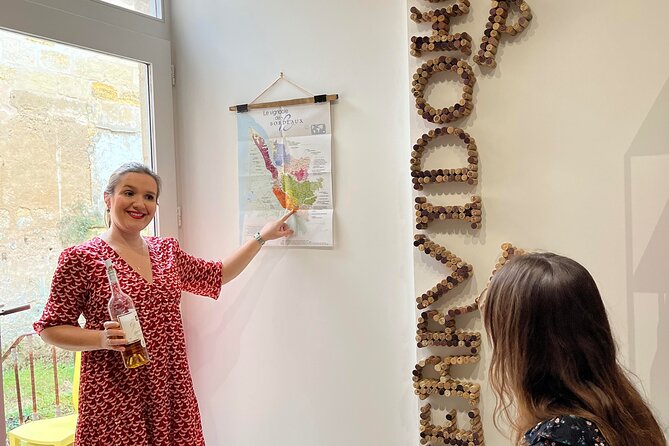
Dry whites in Bordeaux are a smart starting point because they show you contrast clearly. You’ll taste two dry whites, one tied to the left bank and one to the right bank, and you’ll get guidance on what to look for.
Here’s what you should focus on while you taste:
- Aroma direction: more floral/fruit vs more mineral/drier impressions (your host will help you interpret what you smell)
- Freshness level: how lively the acidity feels
- Balance: whether the wine feels lean and crisp or rounder
That bank comparison is the point. Even within “white Bordeaux,” the character can shift, and the lesson is learning how to describe those differences without sounding like you’re writing a poem you don’t mean to write.
And because the hosts teach the “why,” you’re not just tasting; you’re connecting the result to terroir and grape choices. That makes it easier to remember what you like and why.
You can also read our reviews of more wine tours in Bordeaux


Reds and blend logic: learning left vs right without the headache
The red portion is where Bordeaux really shows its personality. You’ll taste three reds with a mix of styles tied to left bank and right bank traditions, and you’ll also get talk-time around blending—how multiple grapes are used to shape flavor and structure.
This is where you can train your palate for real-life shopping. If you tend to like bolder reds, softer fruit, or more structure, you’ll start noticing what the wines have in common when you enjoy them.
A helpful trick from the way this tasting is taught: don’t just judge the first sip. Pay attention to how the wine develops on the second or third taste—how tannin feels, whether acidity lifts the flavor, and whether the finish stays clean or feels heavy. Bordeaux reds often reward that slow attention.
The “mixtures” part matters too. Many Bordeaux reds are blends, and understanding that concept makes the region feel less random. It’s the difference between guessing and recognizing.
Soft wine: closing out without overthinking it
The final wine is a soft style, and it’s there to end the tasting smoothly. Think of it as a palate reset, but also as a reminder that not every great Bordeaux moment has to be a full-throttle red.
In terms of what you should notice, keep it simple:
- How sweet or gentle it feels
- Whether acidity or fruit drives the impression
- How it pairs with the final bites
The best part of having this in the schedule is pacing. You don’t burn out on intensity; you leave with a balanced sense of what you liked across styles.
Charcuterie and cheese pairing: small bites, big lessons
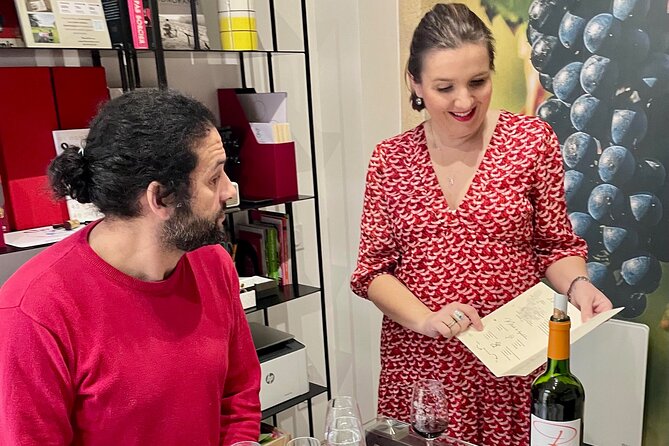
Food is included as snacks with a pairing focus: charcuterie and cheese. The goal isn’t to replace a meal; it’s to show you how food changes the wine.
In a good pairing, you’ll see things like:
- salt and fat reducing harsh edges in a wine
- acidity in the food making certain flavors feel brighter
- cheese adding a creamy texture that can round tannins
A point to consider: some people have felt the pairing portion was light or more of a taster than a full pairing course. If you want bigger quantities, plan to eat a proper lunch or dinner around your schedule.
Also, if you have dietary needs like vegetarian, it’s worth checking ahead. One participant reported that meat was served even though their registration indicated vegetarian. That’s not something you want to gamble on, especially in a wine-and-food format.
Timing and pacing: 1 hour 15 minute, not a half-day project
This is a tight session on purpose. At about 1 hour 15 minutes, you’ll cover the key Bordeaux ideas and taste all six wines without turning it into a lecture marathon.
That tight timing can be perfect if you’re on a day plan and need something focused. It can feel rushed if your schedule is already stressful—like tight connections from a cruise port or late trains. If your travel day is chaotic, choose your start time with buffer in mind.
A practical tip: bring your wine questions. If you ask early, you’ll get more value because the hosts can connect your questions to specific wines while you’re tasting.
What you get after the last sip: the tasting booklet
You’ll receive a tasting booklet to keep practicing at home. That matters because wine learning doesn’t stick only through your senses during the session—you need a record of what you noticed.
Use it to do two things:
- Re-taste your memories: recreate what you smelled and what changed as the wine warmed
- Decide what you’d buy again: focus on styles, not just names
The wines are also available for sale. And that’s where the skills you learn pay off. If you can match a bottle to your flavor preferences—dry vs soft, crisp whites vs structured reds—you’ll buy with confidence, not luck.
Who this Bordeaux tasting is best for
This tour fits best if you want:
- a quick, guided way to understand Bordeaux structure (banks, blending, and classifications)
- a small-group experience with time to ask questions
- a practical route into choosing bottles you’ll enjoy later
It’s also great if you have limited time and can’t (or don’t want to) spend a full day on a winery visit. The format gives you the learning you’d normally need to assemble from multiple stops—minus the long travel.
If you’re the type who loves food pairings but hates spending hours, this is a good match. Just don’t expect it to replace a meal.
Should you book this Bordeaux wine tasting?
Yes—if you want a focused Bordeaux education with actual tasting practice. The combination of six wines, a mystery pour, left-bank/right-bank comparisons, and charcuterie & cheese pairings is a strong value for the time you spend.
I’d hesitate only if you’re looking for:
- large food portions
- a long, unhurried dinner-style pairing
- a very flexible schedule on a day that’s already running late
If your dates are set, I’d book early and plan to arrive fed enough that the snacks feel like a bonus, not your main event. And if you have dietary needs, message ahead so your pairing matches your preferences.
FAQ
How long is the Bordeaux wine tasting session?
It runs about 1 hour 15 minutes.
What’s included in the price?
The price includes 6 glasses of wine, charcuterie and cheese snacks (food and wine pairing), and a tasting booklet.
How many wines will I taste?
You’ll taste 6 carefully selected Bordeaux wines: one mystery wine, two dry whites, three reds, and one soft wine.
Is this experience offered in English?
Yes, the experience is offered in English.
What size is the group?
The maximum group size is 6 travelers.
Where does the tasting take place?
Depending on the season, the tasting may take place in a private courtyard, cellar, or in a furnished room.
Is there a meal included like lunch?
No. A lunch picnic with local products is not included (it would be on reservation).
Are the wines available to buy?
Yes, the wines tasted are available for sale.
Can I cancel for a full refund?
Free cancellation is available up to 24 hours in advance of the experience’s start time for a full refund.
Are service animals allowed?
Yes, service animals are allowed.