REVIEW · SAINT EMILION
Saint-Émilion: Vineyard Walking Tour and Tasting
Book on GetYourGuide →Operated by Château Haute-Nauve · Bookable on GetYourGuide
A family winery tour in Saint-Émilion feels personal. At Château Haute-Nauve, you walk the vines with a member of the family—either Marie-Anne or her son Florent—then move into the cellars for the full production story, from vineyard work to ageing. I especially like how this small-group format keeps things conversational, and how the tasting isn’t tacked on—it’s the payoff after you see the process firsthand.
One thing to plan for: there’s no food included, and transport isn’t provided. You’ll want comfortable shoes for the vineyard walk and a weather-ready outfit, plus the estate is about 3 km from Saint-Émilion, so having your own car (as recommended) makes life easier.
In This Review
- Key moments that make this Saint-Émilion tour worth your time
- Château Haute-Nauve: a family-run stop with real hands-on context
- Where the tour starts at the estate (and how to actually get there)
- The vineyard walk: Saint-Émilion by the plants, not just by the labels
- From grapes to wine: the vinification cellar stops that matter
- Barrel ageing: seeing time turned into flavor
- Sustainability, frost, and diversification: what it means for the wine you drink
- The tasting of four Saint-Émilion wines (including two Grand Cru picks)
- Group size, timing, and what to expect in real life
- Price and value: why $29 works better than it sounds
- Who should book this (and who might want a different style of tour)
- Should you book Château Haute-Nauve for your Saint-Émilion day?
- FAQ
- How long is the Saint-Émilion Vineyard Walking Tour and Tasting?
- What is the price per person?
- Where does the tour start?
- What’s included in the tour?
- Is food included?
- What about transport to and from the estate?
- What languages are available for the tour?
- How many people are in the group?
- Is the experience wheelchair accessible?
- What should I bring for the tour?
- Should you book this tour or not?
Key moments that make this Saint-Émilion tour worth your time
- Family-led vineyard walk with 4th-generation context and vineyard “work by season” lessons
- Real winery stops: vinification areas covering fermentation, pumping, and pressing
- Barrel cellar ageing view so you understand what happens after fermentation
- Sustainability + resilience talk (crop frost challenges, sustainability efforts, and diversification)
- Special estate sights including a wind turbine and a 6-meter-tall bottle
- Guided tasting of four wines, including two with Grand Cru designations
Château Haute-Nauve: a family-run stop with real hands-on context
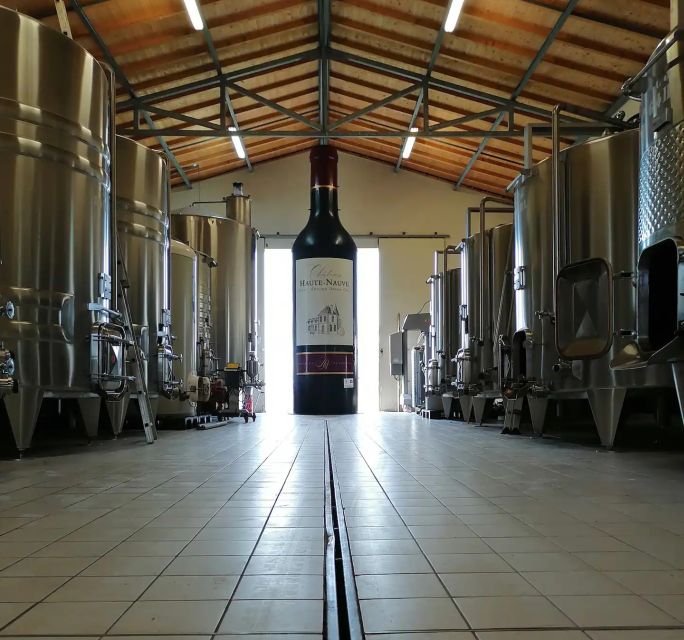
This is a Saint-Émilion experience built around a simple idea: wine makes more sense when you see the people, places, and steps behind it. At Château Haute-Nauve, you’re not just looking at vines from a distance—you’re learning how the work changes across the year and how the estate thinks about risk and sustainability.
What I like most is the tone. The tour is hosted by the family themselves, so the explanations don’t feel like a script. You’re hearing how the estate operates day to day, including how they handle tough moments like crop frost and why they’ve pursued diversification and new varieties.
It’s also a very practical length: 2 hours. That’s long enough to walk, visit the cellars, and taste four wines, but short enough that you still have room for the rest of your Saint-Émilion day.
You can also read our reviews of more walking tours in Saint Emilion
Where the tour starts at the estate (and how to actually get there)
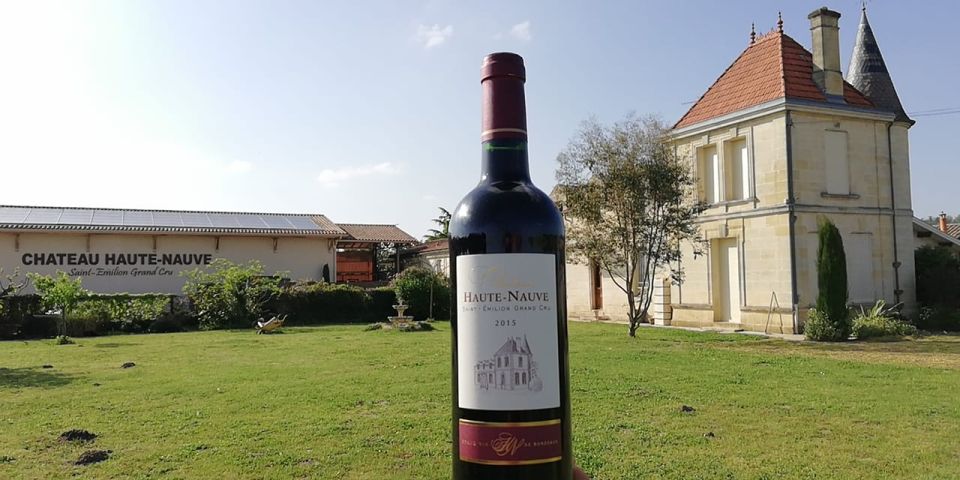
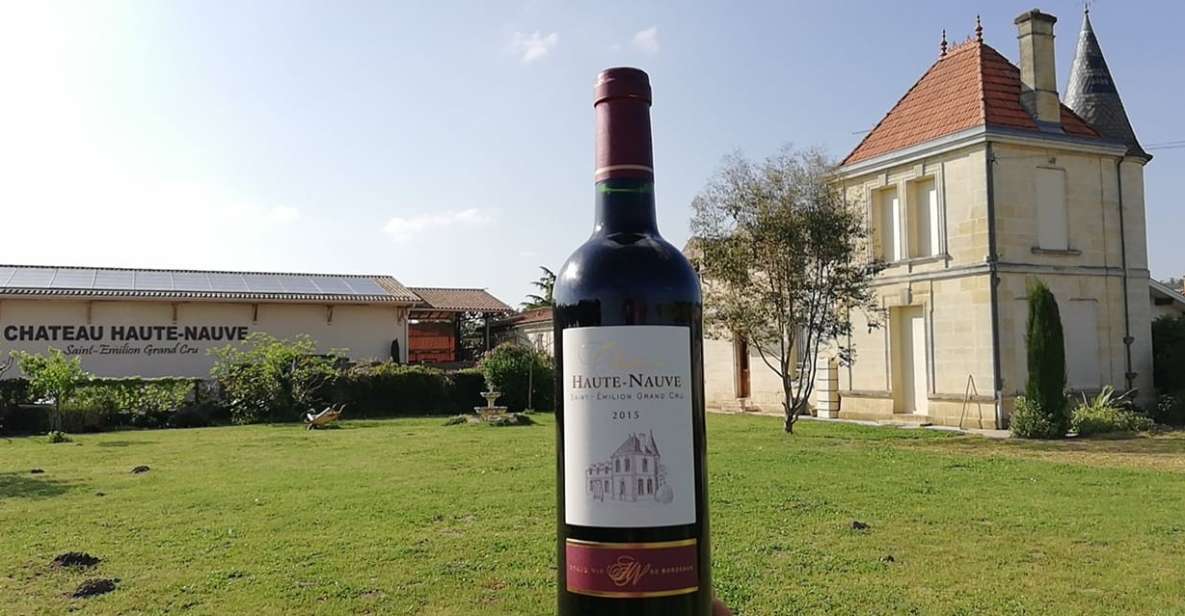
You’ll meet inside Château Haute-Nauve. The practical detail I’d plan around is getting to the right spot: there’s a car park near a large building with solar panels, under the Château Haute-Nauve purple sign.
The estate sits about 3 km from Saint-Émilion village, and transport is listed as not included. If you’re coming by public transit or relying on rideshare, you might find timing a bit more fiddly than you want—having a car is the path of least resistance here.
Bring comfortable shoes. Even though this isn’t described as a hardcore hike, the walk is part of the point, and your feet will thank you.
The vineyard walk: Saint-Émilion by the plants, not just by the labels
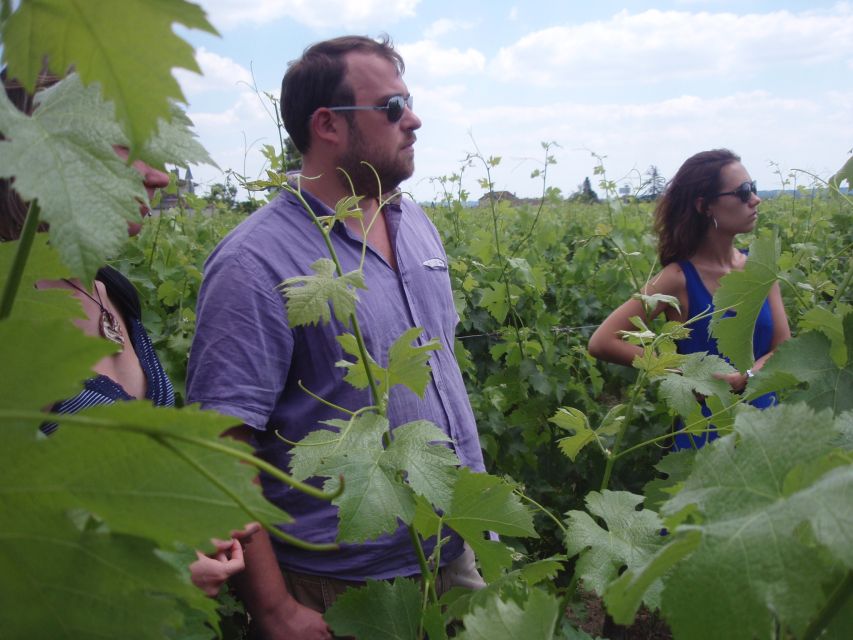
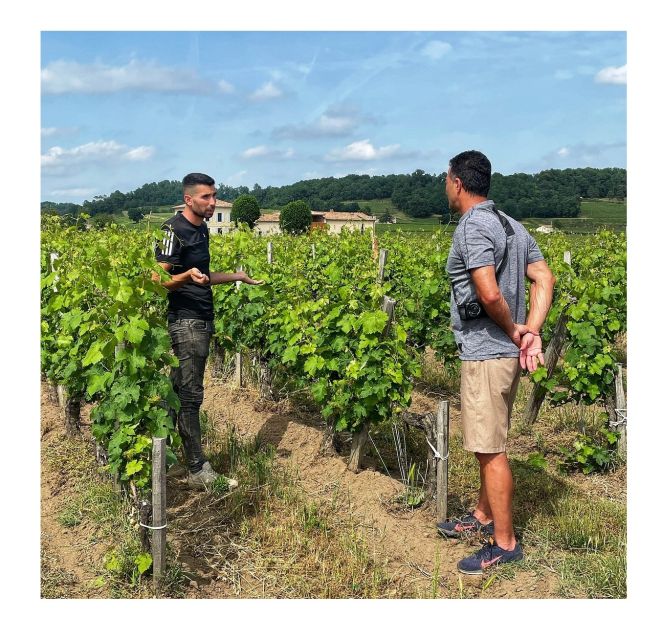
Your tour begins in the vineyard, with a family host guiding you through how they see Saint-Émilion’s appellation and varieties. You’ll hear about the estate’s 4th-generation history, and then the talk shifts into what matters on the ground: why different plots behave differently and how vineyard work changes from one part of the year to another.
This is where the tour becomes more than a tasting. You’ll learn what growers actually do around the vines, and you’ll get a sense of how the estate makes decisions under real conditions—weather included. Crop frost comes up for a reason: viticulture isn’t only about grape quality, it’s also about managing exposure and loss.
You’ll also spot two estate features that turn the walk into something memorable:
- a wind turbine, used as a signal that the operation thinks beyond vines alone
- a 6-meter-tall bottle, a striking landmark that many people remember because it’s so unusual
Those moments help you connect the dots between tradition and modern practice—this is still a family vineyard, but it’s not stuck in the past.
From grapes to wine: the vinification cellar stops that matter
After the vineyard walk, you head inside to the vinification cellar. This part is all about the steps that transform harvested grapes into wine you can smell and taste with confidence.
The key processes you’ll be shown include:
- fermentation (where sugars turn into alcohol and aromas start forming)
- pumping (how the must and liquid move through the process)
- pressing (how juice and components separate)
What makes this valuable for you is that it gives names to things you might otherwise only hear in passing during tastings. When you later taste, you can connect what you saw—fermentation choices and pressing approach—with what’s happening in the glass.
Also, you’ll be walking through with a guide from the estate. That means you can ask questions in plain language, not just listen to a lecture.
Barrel ageing: seeing time turned into flavor
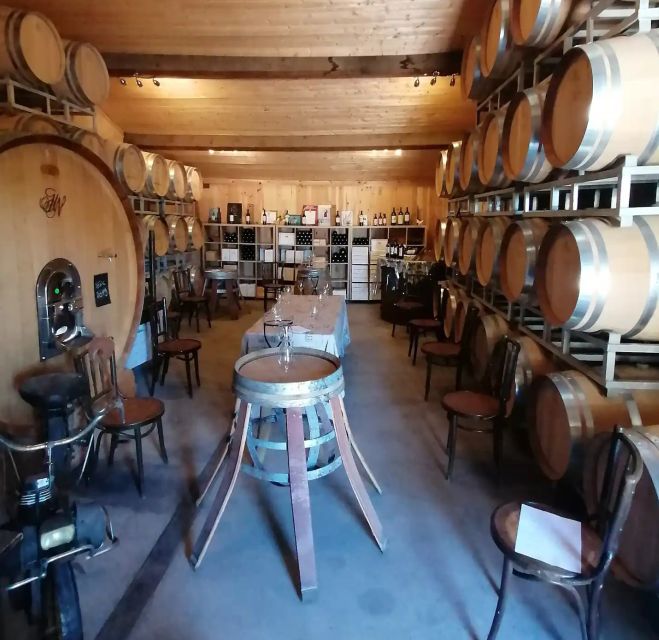
The tour continues into the barrel cellar, where the focus shifts from action to patience. You’ll witness the ageing stage and how the estate handles maturation.
Even without getting lost in technical jargon, this stop helps you understand why two wines with similar grape varieties can taste different. Ageing isn’t only about aging itself; it’s about the method and the setting where wine rests.
This is also the moment when the tour feels most complete. The vineyard explains where and why, vinification explains how, and the barrel cellar explains what changes next.
You can also read our reviews of more food & drink experiences in Saint Emilion


Sustainability, frost, and diversification: what it means for the wine you drink
During the vineyard portion, the guide explains how the Château tackles challenges and adapts. Crop frost is specifically mentioned, along with the estate’s focus on sustainability and diversification, plus development of new wine varieties.
For you, that matters because it changes how you interpret the wines. If an estate is actively managing risk and trying different approaches, the tasting often shows a range of styles or personalities—not just the same formula repeated.
It also makes the tour feel grounded. You’re not being told that everything is perfect; you’re being shown how the family responds when nature pushes back.
The tasting of four Saint-Émilion wines (including two Grand Cru picks)
The tour ends with a guided tasting of four wines from the Château. Two of those wines include Grand Cru appellation designations, so you get a step up in focus and seriousness, not just a basic intro lineup.
This is also where the tour pays off for people who like education but don’t want a stiff class. The tasting is guided, but it’s described as relaxed and engaging—easy to ask questions, and easy to compare notes out loud with your group.
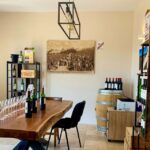
If you’re the kind of person who likes to buy a bottle that actually matches what you learned, this is built for you. After the tasting, there’s time to browse the estate collection and buy wine to take home.
One practical point: because you’re tasting wine, go easy on your driving plans afterward. The tour includes wine purchases as optional, but transport isn’t included, so think through how you’ll get back.
Group size, timing, and what to expect in real life
This is a small-group experience with a limit of 10 participants. That size is a big deal in wine country. You’ll get more interaction time with the host, and questions don’t get swallowed by a crowd.
The duration is 2 hours, and the flow is paced to cover:
1) vineyard walk and vineyard planning ideas
2) vinification cellar explanation (fermentation, pumping, pressing)
3) barrel cellar ageing view
4) guided tasting of four wines (including two Grand Cru)
If your goal is a quick but meaningful Saint-Émilion stop, this hits the sweet spot. If your goal is a long, slow deep education session, you might find two hours a bit tight. In that case, pair it with extra time in Saint-Émilion village afterward.
Price and value: why $29 works better than it sounds
At about $29 per person, this tour is priced like an efficient way to get a lot of real access. What you’re paying for isn’t just a walk—it’s guided vineyard time, cellar access for multiple production steps, and a tasting of four wines from the estate.
Many tours that cost more still only cover one part of the story: either vineyards or wine. Here, you get both, plus ageing. And because the host is part of the family operation, the explanations tend to stay practical rather than purely academic.
So for you, the value question becomes simple: if you want a guided experience that connects vineyard work to what lands in your glass, the price-to-content ratio looks strong.
Who should book this (and who might want a different style of tour)
Book this if you:
- want a family-run Saint-Émilion experience with a real sense of day-to-day work
- like small groups where you can ask questions
- want to understand the process from vineyard to bottle in a short time window
- want a tasting that includes Grand Cru wines, not just basic entry labels
You might look at other options if you want:
- a full meal included (food isn’t part of this)
- a longer, multi-stop itinerary across multiple estates
- transportation arranged for you (it’s not included)
Should you book Château Haute-Nauve for your Saint-Émilion day?
Yes, I’d book it if your priority is a guided, family-led wine education that ends with a tasting you can actually enjoy while it makes sense. The tour’s biggest strength is that it connects steps: vineyard work, production mechanics like fermentation and pressing, then ageing, then tasting. That structure helps you taste with context.
If you can spare two hours and you’re comfortable with a vineyard walk and a tasting schedule, this is the kind of Saint-Émilion stop that leaves you with more than just bottles—it leaves you with a clearer idea of what you’re drinking and why.
FAQ
How long is the Saint-Émilion Vineyard Walking Tour and Tasting?
It lasts 2 hours.
What is the price per person?
The price is $29 per person.
Where does the tour start?
You meet your guide inside Château Haute-Nauve.
What’s included in the tour?
You get a guided vineyard walk with the owner, a complete visit of the family vineyard and cellars, and a guided tasting of 4 wines from the winery.
Is food included?
No, food is not included.
What about transport to and from the estate?
Transport is not included.
What languages are available for the tour?
The tour is offered in French and English.
How many people are in the group?
It’s a small group limited to 10 participants.
Is the experience wheelchair accessible?
Yes, it is listed as wheelchair accessible.
What should I bring for the tour?
Wear comfortable shoes and bring weather-appropriate clothing.
Should you book this tour or not?
Book it if you want a family-run Saint-Émilion wine experience that mixes vineyard walking, cellar access, and a guided tasting of four wines (including two Grand Cru). It’s good value for $29 because you’re getting multiple stages of the wine journey in just 2 hours, and the small-group setup keeps it personable. If you need a meal included or you don’t want to handle your own getting-to-the-estate logistics, then you may want to choose a different kind of tour.