REVIEW · PARIS
Paris Tootbus Hop-On Hop-Off Bus Tour (Optional Cruise)
Book on Viator →Operated by Tootbus · Bookable on Viator
This bus helps you get oriented fast. I like the hop-on hop-off flexibility for fitting stops around your day, and I love the open-air upper deck views for quick photos without committing to long walking loops. The main drawback is that the experience relies on recorded audio, so you’ll want to watch the route map and timing closely so you don’t miss the exact stop you wanted.
The setup is built for short attention spans and changing plans. You can board along the route, ride either upstairs (open air) or downstairs (through windows), and hop off when a landmark catches your eye, then jump back on later from the next convenient stop. The audio guides are free and in English, with Wi‑Fi onboard and a tracking app that shows real-time bus info.
If you want a sit-down, human-led tour with lots of back-and-forth questions, this isn’t that. Also, there’s no restroom on board, and there’s no luggage storage at the terminal—so pack light and plan breaks on land.
In This Review
- Key points to know before you ride
- Why this Tootbus route works for first-time Paris days
- Choosing 24, 48, or 72 hours without overcommitting
- The route flow: Opera to the Louvre, then Notre-Dame to the Eiffel
- Stop-by-stop: what to do once you hop off
- Opera / Grands Magasins (Stop 1)
- Louvre / Comédie-Française (Stop 2)
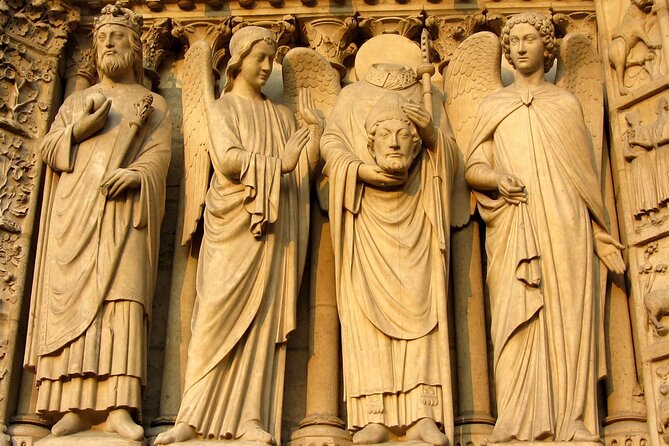
- Notre-Dame (Stop 3)
- Panthéon – Luxembourg (Stop 4)
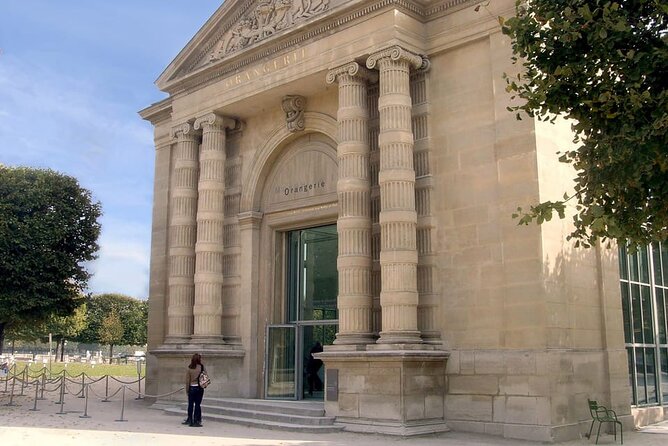
- Musée d’Orsay (Stop 5)
- Concorde (Stop 6)
- Arc – Champs-Élysées (Stop 7)
- Trocadéro (Stop 8)
- Tour Eiffel (Stop 9)
- Pont Alexandre III – Invalides (Stop 10)
- Audio guides and the Tootbus app: the layer that matters
- Open-air deck tips for photos and comfort
- The Seine River cruise upgrade: a stronger storytelling moment
- Value: when this costs sense and when it doesn’t
- Who this tour suits best (and who should skip)
- Should you book the Paris Tootbus hop-on hop-off bus (with optional cruise)?
- FAQ
- How long is the Tootbus Paris tour?
- What pass options are available?
- What’s included with the bus tour?
- Can I add a Seine River cruise?
- Is the audio guide available in English?
- Is there a restroom on board the bus?
- Can I store luggage at the terminal?
- What’s the cancellation policy?
Key points to know before you ride
- 24-, 48-, or 72-hour passes match your time in Paris, so you can return to the sights you care about.
- Real-time tracking in the Tootbus app helps you time your hop-on and hop-off, especially when Paris traffic slows buses.
- Free audio guides (adults and children) keep the ride informative without paying for separate guides at every stop.
- Open-air upstairs seating gives you the best views for the Eiffel Tower, Trocadéro, and Champs-Élysées.
- Seine cruise upgrade is a strong add-on if you want narration that feels more satisfying than the bus ride.
- No onboard restroom + no luggage storage means you’ll want a simple plan for bags and bathroom breaks.
Why this Tootbus route works for first-time Paris days
Paris has a way of turning “one quick sightseeing loop” into 10 miles of walking. This hop-on hop-off bus is designed to reduce that chaos. Instead of committing to one long guided itinerary, you get repeated chances to visit major sights across the city in whatever order fits you.
A big reason this works is the rhythm. You board anywhere along the route you want, ride past iconic spots, then get off right where the view and the walking ahead make sense. When you’re ready, you jump back on and continue along the line.
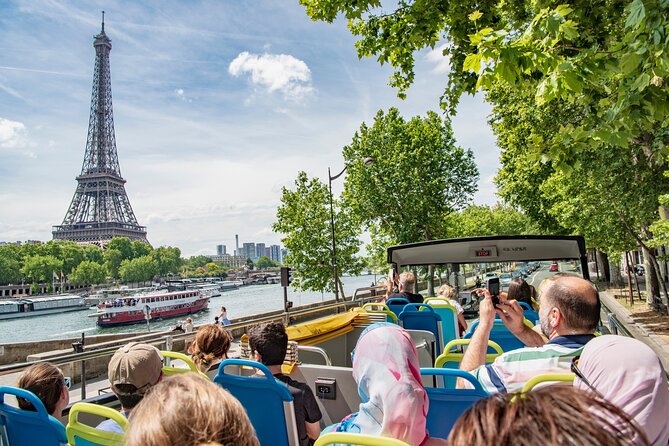
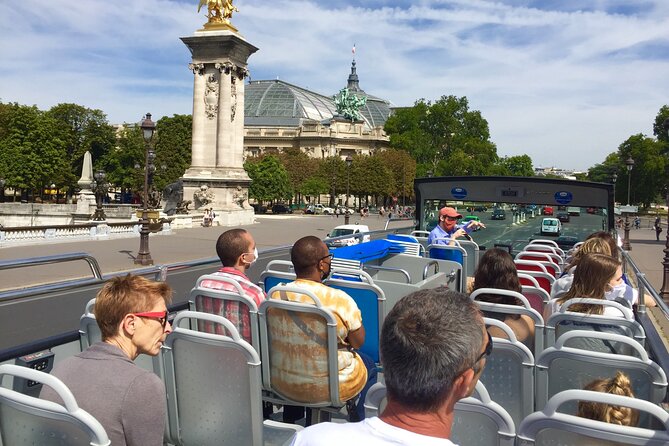
The ride itself is practical. You’re not stuck in one seat looking forward the whole time. You can use the upstairs open-air deck for skyline views, then duck downstairs when you want a calmer look through the windows.
You can also read our reviews of more boat tours in Paris



Choosing 24, 48, or 72 hours without overcommitting
The tour is listed as about 2 hours for the ride window you’re thinking of—but the real value comes from the pass options. Your ticket choice is 24, 48, or 72 hours, so you’re not forced into one single day that has to go perfectly.
If you’re only in Paris for a tight schedule, a 24-hour pass is usually enough to hit several headline sights and decide what needs a deeper revisit. If you want to slow down, 48 hours gives you time to return to one area after you’ve walked around and learned what you actually care about.
For 72 hours, you can turn the bus into your transport backbone. Do a few key “big rocks” on day one, then use the second and third day to linger, shop, snack, and tour without repeating the whole city from scratch.
Also, your ticket is a mobile ticket, and the experience is offered in English. That matters because you can rely on the audio layer while you’re moving, instead of trying to stop and read guidebooks constantly.
The route flow: Opera to the Louvre, then Notre-Dame to the Eiffel
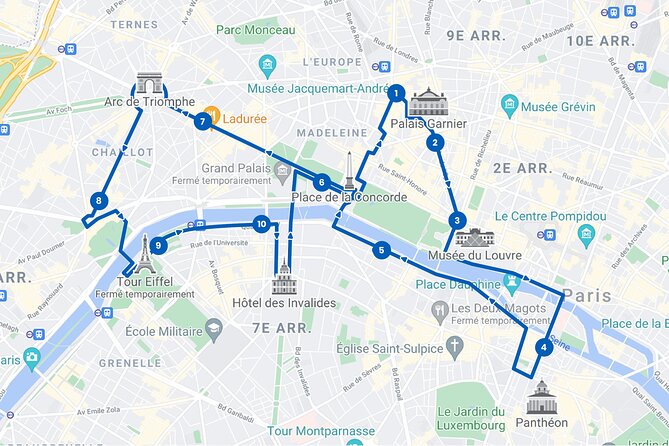
This route is built around a simple sightseeing ladder: grand boulevards, historic centers, then the Seine and Eiffel-area landmarks. On paper it’s a loop. In practice, it’s a chain of opportunities to choose your own pacing.
Here’s how the stops are structured, including a couple of important relocation notes that affect where you’ll want to get off:
Stop 1: 23 Bd des Capucines (Opera / Grands Magasins area)
This is a classic central starting point. It’s close to major Paris shopping streets, so it’s a good place to begin if you like walking into museums and streets right after you ride.
Stop 2: Place du Carrousel (Louvre Museum area)
Important note: the Louvre stop is listed as relocated to Comédie-Française at 3 Avenue de l’Opera (until further notice). That means you should be ready to walk a bit to match your museum plans to the current pickup/stop labeling.
Stop 3: 13 Rue Saint-Jacques (Notre-Dame area)
Another important note: Notre-Dame stop timing starts from 10 Nov 2025. If you’re traveling around that period, double-check the stop label shown in the app.
Stop 4: 2 Pl. Edmond Rostand (Panthéon – Luxembourg area)
Panthéon and Luxembourg labeling also starts from 10 Nov 2025. This stop is useful if you want a more “Left Bank” feel than the river-and-boulevard sightseeing loop.
Stop 5: 76 Quai Valéry Giscard d’Estaing (Musée d’Orsay)
If you want the Orsay area, this stop puts you in position to pair the museum with river walks and nearby viewpoints.
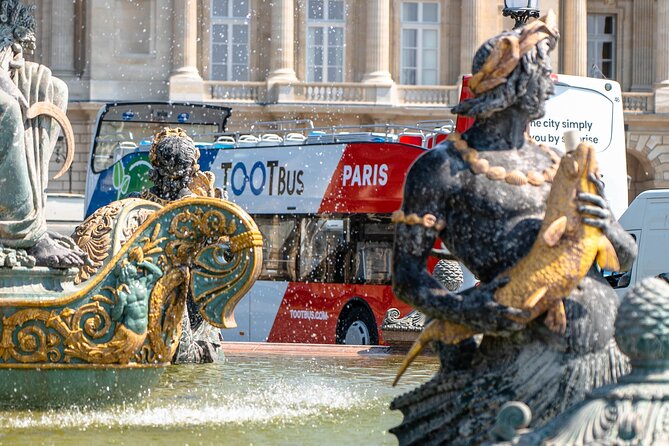
Stop 6: 12 Pl. de la Concorde (Concorde)
Concorde is a great photo stop that also feels like a clean way to connect between grand squares and west-end sights.
Stop 7: 135 Av. des Champs-Élysées (Arc – Champs-Élysées)
This stop sets you up for the Arc de Triomphe area without forcing you to time a long walk across busy roads.
Stop 8: 1 Pl. du Trocadéro et du 11 Novembre (Trocadéro)
This is one of the best points on the route for Eiffel Tower views. If you care about framing the Eiffel from a wider plaza, this is the kind of stop you’ll want to plan your timing around.
Stop 9: 69 Quai Jacques Chirac (Tour Eiffel)
This stop is the direct Eiffel-zone access. It’s the place you’ll likely use when your goal is to visit the tower rather than just photograph the view.
Stop 10: 41 Quai d’Orsay (Pont Alexandre III – Invalides area)
This is a nice endcap stop because it connects river scenery with the Invalides side of the city. It also helps you transition from Eiffel-area sightseeing back toward central Paris.
Stop-by-stop: what to do once you hop off
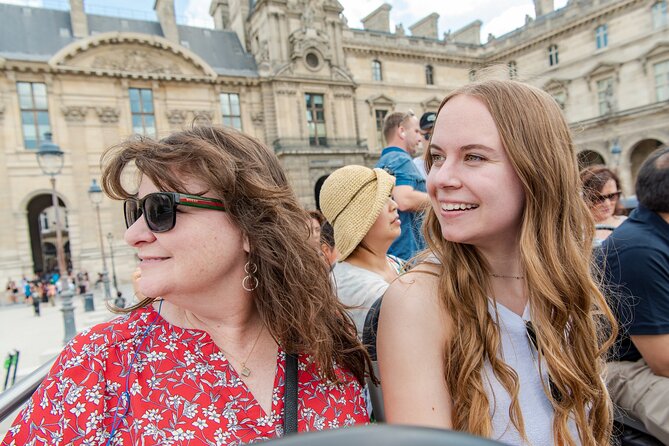
The best way to enjoy hop-on hop-off is to think like a chooser, not a completer. Don’t force yourself to see everything. Pick what you’d actually pause for, then use the bus to position you where the pause can happen.
Opera / Grands Magasins (Stop 1)
This area is more about city texture than one single monument. Use this stop as your “orientation anchor” early in your day. If you’re starting from here, you can hop off, walk nearby, then keep riding to museum-heavy zones.




Louvre / Comédie-Française (Stop 2)
Because the listed Louvre stop is redirected to Comédie-Française at 3 Avenue de l’Opera, treat this as a “get close to the Louvre zone” stop rather than a guaranteed front-door pickup. You’ll likely walk from the bus stop to your entry point, so give yourself a little buffer.
If your goal is Louvre time, I suggest timing your visit based on how you feel once you’re off the bus. The bus helps you reach the area, but it doesn’t replace the need to plan museum entry.
Notre-Dame (Stop 3)
Notre-Dame is one of those sights where arriving with the right time of day can matter for your photos and your overall mood. Use this stop to get into the historic center area without the effort of figuring out transit connections.
Because it’s marked with a future date label starting from 10 Nov 2025, double-check the stop name and location in your app close to your travel dates.
Panthéon – Luxembourg (Stop 4)
This is a solid pick if you want to step away from only river and monument photography. The bus places you near a more residential, Left Bank-feeling area where walking can feel less like a parade.
This stop also benefits from hop-on hop-off logic: if you don’t love the area after 20 minutes, you can re-board and relocate.
Musée d’Orsay (Stop 5)
Orsay works well with the bus because it’s not just “watch from afar.” It’s a destination where you’ll likely spend a couple of focused hours. The stop on Quai Valéry Giscard d’Estaing makes it easy to pair museum time with river strolling.
If you’re doing Orsay and also planning to enjoy the Seine cruise later, you can keep your schedule smoother by stacking museum time before your evening river time.
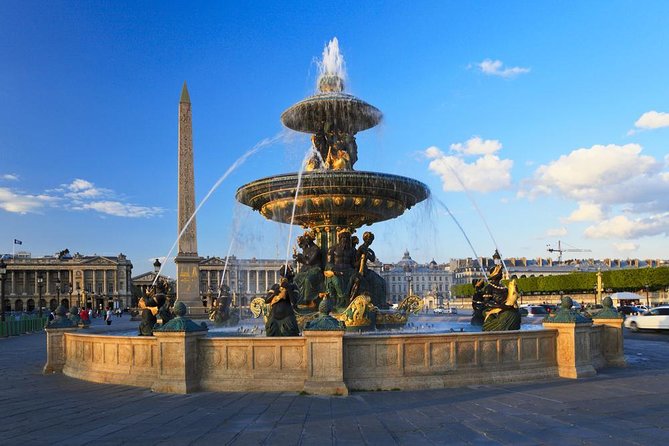
Concorde (Stop 6)
Concorde is an easy visual marker and a good mid-route reset. It’s also a practical stop for photos of the square and connecting streets. Think of this as a chance to breathe and regroup.
If you’re trying to reduce decision fatigue, get off here, take a few pictures, then continue toward Champs-Élysées or the Arc area.
Arc – Champs-Élysées (Stop 7)
Champs-Élysées can be busy and noisy, but it’s exactly the kind of corridor where a bus ride prevents extra zig-zag walking. Get off, orient yourself, and decide how much time you actually want to spend on the avenue itself.
If your main goal is the Arc de Triomphe, this stop sets you up to reach that viewpoint area without guessing how to cross traffic.
Trocadéro (Stop 8)
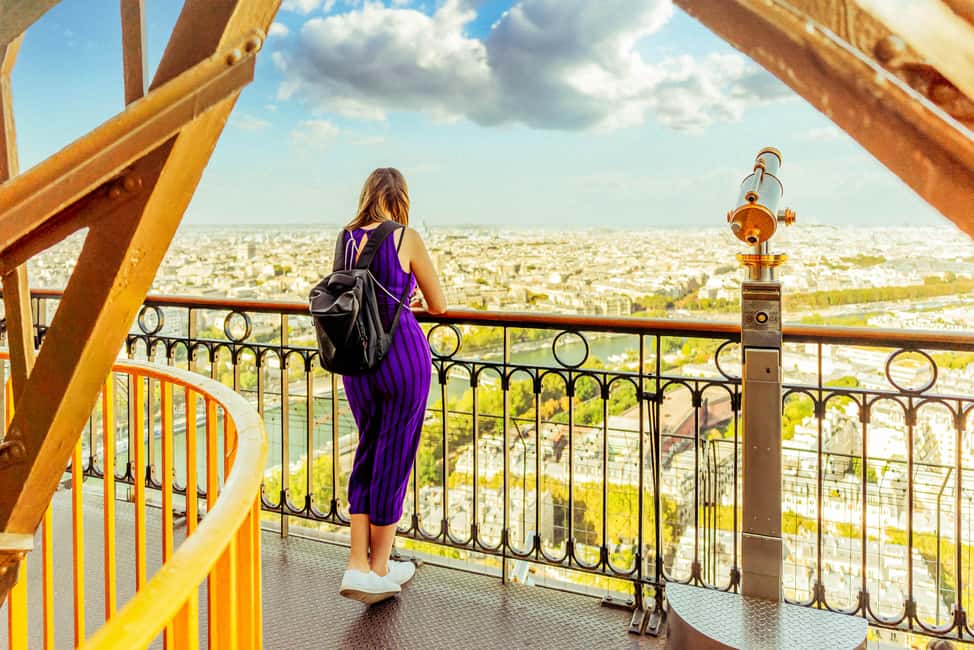
This is the Eiffel Tower-view stop. If you’re serious about getting a strong perspective shot, plan to linger here a bit. It’s also a good place to swap from “just ride by” sightseeing to “I want to explore this area” exploring.
You’ll be much happier if you treat this as a short visit with time for photos, not a quick in-and-out.
Tour Eiffel (Stop 9)
This is where you go when you want to commit to the Eiffel area. You can use this stop as your “tower visit base,” then hop again afterward when you’ve had enough.
One practical consideration: this zone can feel like a magnet for crowds. The bus keeps you from being stuck far away if you change your mind about how long to spend on the tower.
Pont Alexandre III – Invalides (Stop 10)
This stop is a good closing move. You get river views and a smoother transition toward the Invalides side of Paris. It’s also a convenient “last ride” when you’re trying to end the day without planning a complicated route back.
Audio guides and the Tootbus app: the layer that matters
On this bus, the experience is partly about the views and partly about what you do with the time while you’re moving. The good news: the audio guides are included and you get Wi‑Fi onboard, plus the Tootbus app for tracking.
The app is your best friend when the city slows down. Paris traffic can stretch travel times, so you want to know which bus is coming next and where you are on the route. Reviews in your data highlight that the app can be accurate about how long the next bus will take, which is exactly the kind of thing that prevents wasted waiting.
That said, I’d plan to be flexible. Some issues show up in the real world—like audio messages that repeat or don’t clearly signal that you’ve arrived at your stop. If that happens, your fix is simple: watch the stop list on the app and look up before you assume it’s “passing only.”
You can also choose your audio setup. If onboard headphones don’t work for you, you can use the app with your own earbuds. Downloading and testing your app access before you board is a smart move, especially early in the day.
The app can also add walking value. There are self-guided walking tours inside the app, and one example mentioned with this experience is an Emily in Paris-themed walking tour. Even if you’re not a fan of that show, the point is useful: you may turn a quick hop-off into a short themed walk.
Open-air deck tips for photos and comfort
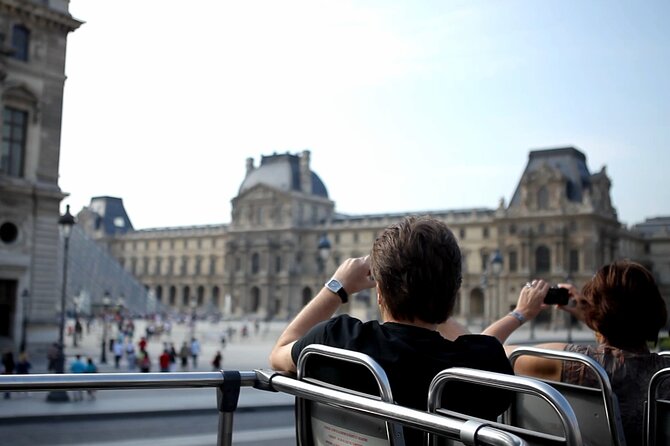
Upper deck views are the whole point for a lot of people. From up there, you get a natural “frame” for landmarks like the Eiffel Tower and the major boulevards. You also get more freedom to reposition for photos without constantly leaning across cramped seats.
If the weather flips from pleasant to annoying, the downstairs option helps. You can ride with a more stable view through windows while you catch your breath.
Two practical notes matter more than they sound:
- No restroom on board. Plan pit stops at stops where you’ll actually walk, not just wherever you stop for 3 minutes.
- No luggage storage at the terminal. If you’re traveling with bags, keep it light or plan storage options outside the bus system.
Also, buses can be frequent enough that waiting doesn’t destroy your plan, but traffic still wins. Even when services run often, Paris can slow everything. Build buffer time around your “must do” stops.
The Seine River cruise upgrade: a stronger storytelling moment
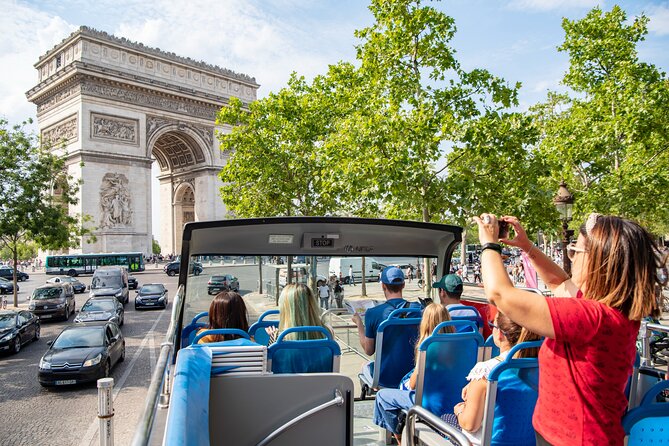
The optional add-on is a 1-hour Seine River cruise. This is the part of the experience where the narration tends to feel more satisfying, and it’s also easier to relax while someone else does the talking.
The cruise is in English and French narration, according to your data. It’s also described as excellent, with a guide who provides clearer context than you might get from the bus audio.
I also like the practical idea: the cruise gives you a different angle on Paris. You’re not looking up from street level, and you’re not stuck on a road. You can rest while you get a new sightseeing viewpoint, which is a real perk when your legs are starting to complain.
If you’re adding the cruise, it’s often the best “anchor event” in a multi-part day. Use the bus in the morning or early afternoon to set up your sightseeing zones, then enjoy the river cruise as a calmer second act.
Value: when this costs sense and when it doesn’t
At $44.82 per person, the real question is what you’re buying: not just a ride, but time saved and decision made easier.
This tends to be good value if:
- You’re in Paris for a short window and want to hit headline sights with less planning.
- You don’t want to connect multiple transit routes while carrying a map in your head.
- You like a “see it, then choose later” approach—especially for deciding what you’ll return to.
It may feel less cost-effective if:
- You already know exactly which sites you want and you’re confident navigating between them.
- You want a fully human, discussion-style tour. This is recorded audio and views first.
- You’re traveling in the evening and assume your day ticket covers it. One note in your data says the ticket is only valid for day use, and you need a separate ticket for evening route.
Also remember: it’s not designed for heavy bag logistics. With no luggage storage, you’re paying for convenience only if you can travel light.
Who this tour suits best (and who should skip)
This is a strong match for first-timers and families. The audio guides include adults and children, and the whole experience is built around simple hop-on decisions.
It also suits anyone who wants to manage energy. You can ride when walking feels like too much, and you can step off whenever you want a deeper look.
I’d be more cautious if you:
- Need clear, human-led explanations at each stop.
- Are relying on headphones that you assume will work flawlessly without testing.
- Are hoping the bus will replace all planning. It gets you close, but you still need to decide what to visit and how long to spend.
Should you book the Paris Tootbus hop-on hop-off bus (with optional cruise)?
I’d book it if you want a low-effort way to see major Paris sights and you like the freedom to change plans mid-day. The pass options (24/48/72 hours), included audio in English, and the tracking app make it easy to turn sightseeing into something you control.
I’d especially book with the cruise upgrade if you want the most rewarding narration portion of the day and a chance to rest on the water. If you’re already set on walking and transit, you might skip it or choose only the cruise—but if you want orientation plus flexibility, this bus is a sensible starting point.
One final practical tip: download the app before you go and use it as your arrival check. On a route this full, that habit can make the difference between a great day and feeling rushed at the wrong stop.
FAQ
How long is the Tootbus Paris tour?
The experience duration is listed as approximately 2 hours. If you buy a 24-, 48-, or 72-hour pass, you can use that time to hop on and off over multiple rides.
What pass options are available?
You can choose a 24-, 48-, or 72-hour bus pass based on your schedule.
What’s included with the bus tour?
Included features are open-air sightseeing, free audio guides for adults and children, onboard Wi‑Fi, and access to the Tootbus app with real-time bus tracking, audio commentary, and self-guided walking tours.
Can I add a Seine River cruise?
Yes. You can upgrade to include a 1-hour Seine River cruise.
Is the audio guide available in English?
Yes, the tour is offered in English.
Is there a restroom on board the bus?
No, there is no restroom on board.
Can I store luggage at the terminal?
No. Luggage is unable to be stored at the terminal.
What’s the cancellation policy?
There is free cancellation, and you can cancel up to 24 hours in advance of the experience for a full refund.