REVIEW · PARIS
Paris: Montmartre Group Tour in German
Book on GetYourGuide →Operated by HelpTourists · Bookable on GetYourGuide
Montmartre can feel like a village up a hill.
This German small-group walking tour uses that hilltop energy to turn big sights like Moulin Rouge into a story-filled route—then finishes with Sacré-Cœur and standout viewpoints. You’ll get a structured walk, but the guide’s anecdotes keep it from feeling like a checklist.
I love the way this tour pushes beyond the obvious by taking you through cobbled streets and quieter squares that most visitors miss. I also like that you’ll actually stop at places where art is part of daily life, especially around Place du Tertre, and then close with the basilica views.
One drawback to plan for: finding the meeting spot can be fiddly. There are several traffic islands near Moulin Rouge, so take a minute to match the guide’s details—HelpTourists bag and the pink base cap—before you start walking.
In This Review
- Key things I’d clock before you go
- Arriving at Moulin Rouge: the meeting point you actually need
- The 2-hour format: enough time for stories, not enough for excuses
- Moulin Rouge stop: beyond the red lights photo
- Moulin de la Galette: windmills, then and now
- La Maison Rose: the color stop that teaches you how to read the neighborhood
- Place du Tertre: where artists still paint in plain sight
- Sacré-Cœur Basilica: the viewpoint payoff and the calm after the climb
- Guided storytelling: the difference between seeing Montmartre and understanding it
- Price and value: what $35 buys you in Montmartre
- Who this German Montmartre tour suits best
- Should you book this Montmartre Group Tour in German?
- FAQ
- How long is the Montmartre tour?
- How much does the tour cost?
- Where do I meet the guide?
- What stops are included on the walk?
- When do German tours run?
- Is the tour wheelchair accessible?
- Are food and drinks included?
Key things I’d clock before you go
- German departures run multiple times weekly, with specific start times depending on the day
- Photo stops at the Moulin Rouge area, Moulin de la Galette, and La Maison Rose
- Place du Tertre is a real working artists’ square, not just a photo backdrop
- Sacré-Cœur is the big finish, with an easy path to the best “over Paris” angles
- Guides matter here: you may get hosts like Vera, Solene, Nadine, or Christin based on past bookings
- Small-group pace is part of the deal, but public holidays can mean a bigger group
Arriving at Moulin Rouge: the meeting point you actually need
This tour starts outdoors near Moulin Rouge, on the traffic island in front of the venue, just outside the Blanche metro station. Your first job is to locate the guide—look for a HelpTourists bag and a pink base cap.
Sounds simple. In practice, the streets around Moulin Rouge have more than one similar-looking traffic circle, and it’s easy to walk to the wrong one and wait in the wrong place. Give yourself a few extra minutes so you can confirm you’re at the correct corner before the walk begins. If you’re arriving by metro, exit calmly and orient yourself to Moulin Rouge first, not to random signage.
It’s also worth noting the tour ends at Sacré-Cœur, so you’re going uphill. Wear shoes you can trust on cobblestones and uneven pavement, and bring a light layer if you’re doing it later in the day.
You can also read our reviews of more tours and experiences in Paris.



The 2-hour format: enough time for stories, not enough for excuses
At 2 hours, this isn’t the kind of Montmartre tour where you spend half the morning figuring out where to stand. The route is built for a steady, walkable rhythm—photo stops plus short explanations along the way—so you leave with a sense of how the neighborhood evolved.
That pacing matters. Montmartre’s streets feel narrow, steep, and twisty, so a tour that tries to “see everything” usually turns into a stressed shuffle. Here, the emphasis is on a gradual climb and a friendly group pace. One guide described it as taking things step-by-step up the hill, and that’s exactly what you want for a first visit.
Group size is another practical point. The provider tries to keep groups small, but on public or national holidays, the group may be larger than on quieter days. If you hate crowds, consider picking a weekday slot.
Moulin Rouge stop: beyond the red lights photo
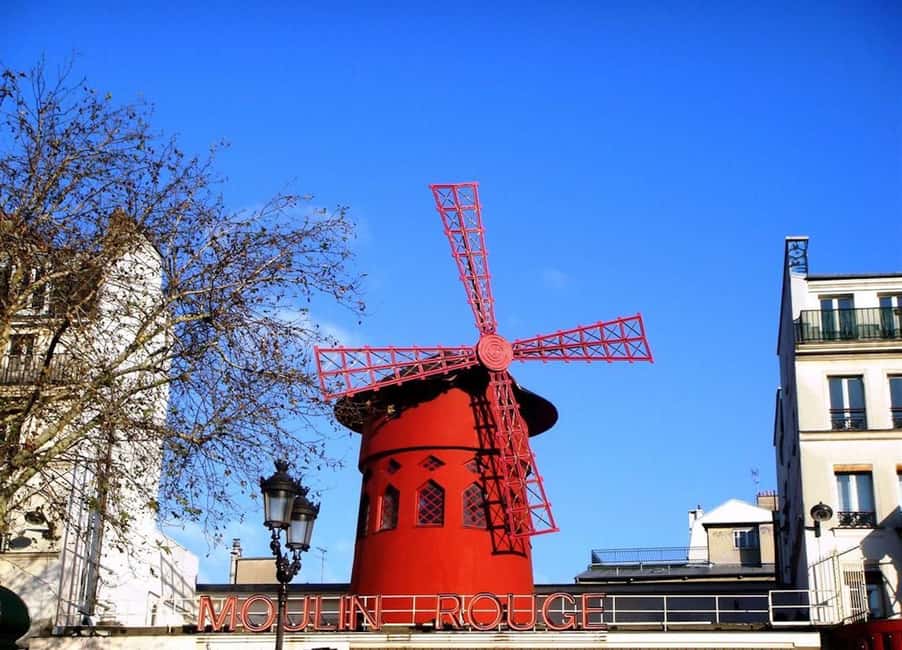
You’ll start with a Moulin Rouge photo stop and a bit of sightseeing. Even if you already know the landmark from movies and postcards, it helps to get oriented here—because everything else you’ll see on the hill connects back to the area’s early nightlife reputation.
Expect the guide to frame Moulin Rouge not just as a spectacle, but as a marker of how Montmartre became associated with performers, dreamers, and nighttime energy. The tour format gives you a quick “big picture” before you move into the smaller streets where the details live.
Practical tip: take your first photo here, but don’t spend so long shooting that you fall behind the group when the climb starts.
Moulin de la Galette: windmills, then and now
Next up is Moulin de la Galette for another photo stop and short sightseeing stretch. This is one of those Montmartre names that sounds like a fairy tale until you see the streets around it—then you realize how layered the district is.
The value of stopping here isn’t just spotting the landmark. It’s connecting how Montmartre changed over time: from countryside imagery associated with windmills to a hill district that attracted artists and nightlife. A good guide makes that transformation feel logical, not random.
Keep an eye out for the way the streets funnel you uphill. Even without being told, you’ll start to sense why this area drew painters and writers: the views, the lighting, the atmosphere, and the sense that you were somewhere slightly apart from the rest of Paris.
La Maison Rose: the color stop that teaches you how to read the neighborhood
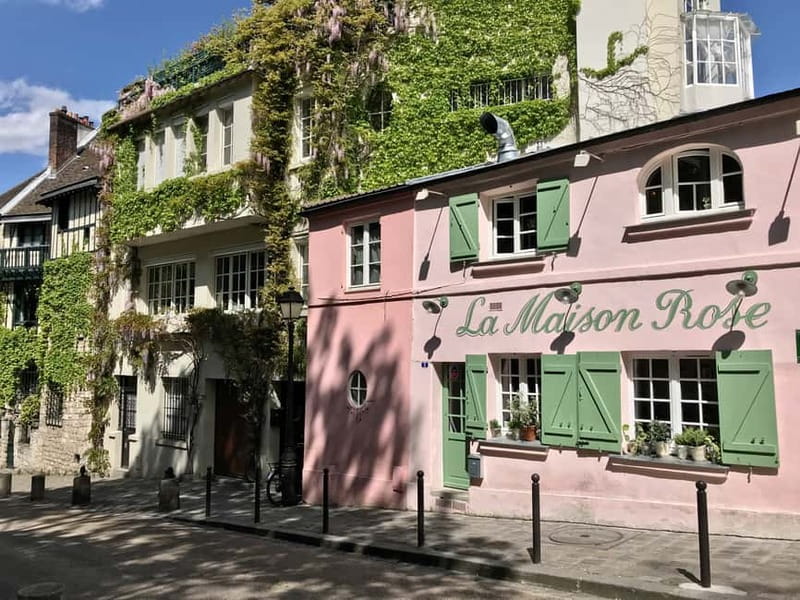
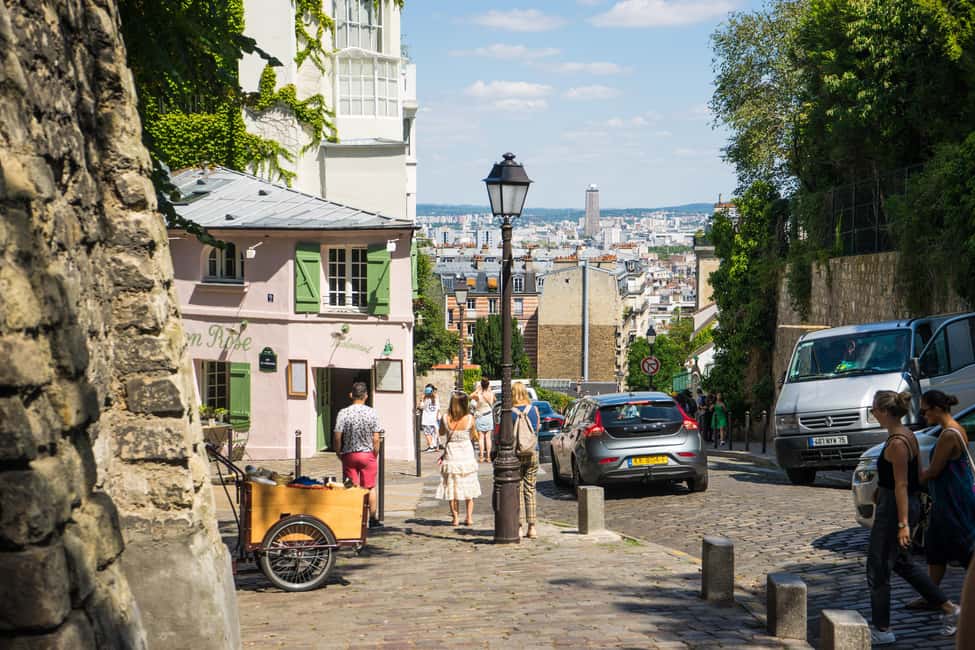
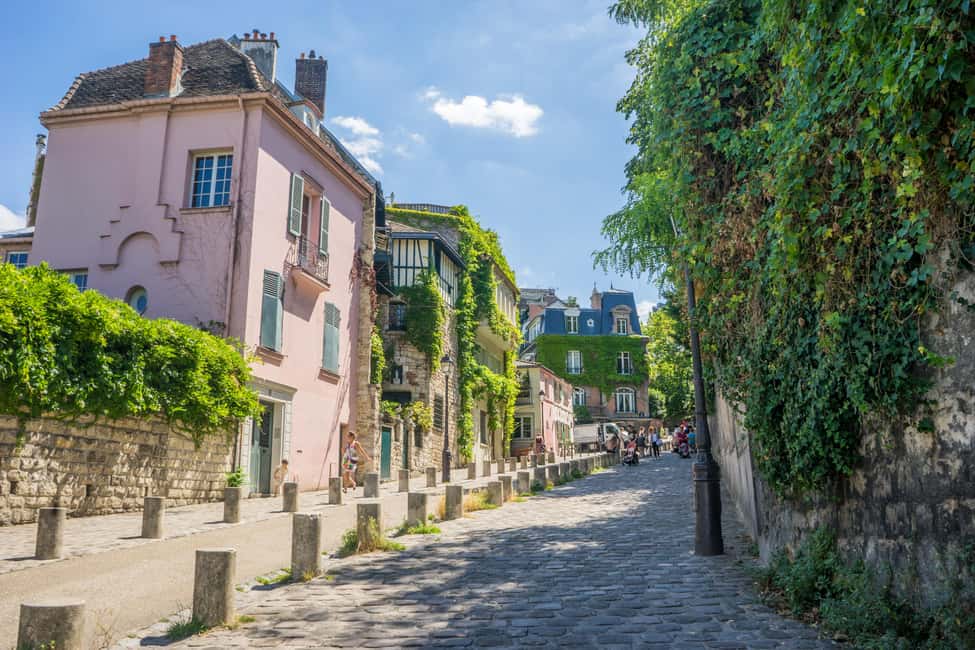
You’ll then head to La Maison Rose, another photo stop with sightseeing along the way. This kind of place is helpful for first-time visitors because it teaches you how to “read” Montmartre visually. The buildings, the angles, and the street layouts are all part of the aesthetic that made the area famous.
This is also where the guide’s storytelling really helps. When you hear about Montmartre shifting from a more rural feel into a creative magnet, the neighborhood starts to click. You stop thinking of it as an Instagram loop and start noticing the tiny squares, the cobbled lanes, and the quieter corners that don’t scream for attention.
Practical tip: if you’re sensitive to walking fatigue, this is a good point to mentally check your energy and keep a steady pace from here onward.




Place du Tertre: where artists still paint in plain sight
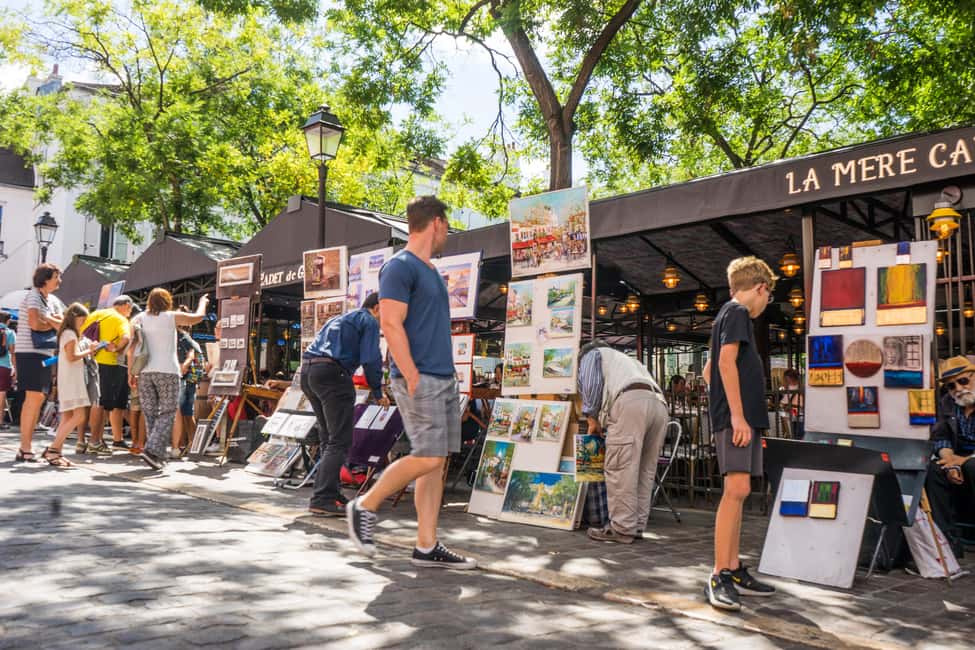
Place du Tertre is one of the tour’s highlights, and not just because it’s famous. You’ll visit the square and get time to soak it in. This is where outdoor painters are part of the scene, and it’s one of the best places to understand Montmartre as an ongoing creative neighborhood rather than a museum district.
I like this stop because it’s interactive in a way many “tourist squares” aren’t. The guide’s commentary gives you context for why artists ended up here, then you can watch the work in progress with your own eyes. If you want souvenirs that feel tied to the place, this is often where you’ll find them—one booking noted buying art during the afternoon.
You don’t need to buy anything to make the visit worthwhile. Even just observing how the artists set up, talk, and work in the open gives you a real sense of what Montmartre sells that isn’t just scenery.
Photo tip: shoot from angles that include people and surrounding buildings. It looks less like a postcard, more like you’re witnessing daily life.
Sacré-Cœur Basilica: the viewpoint payoff and the calm after the climb
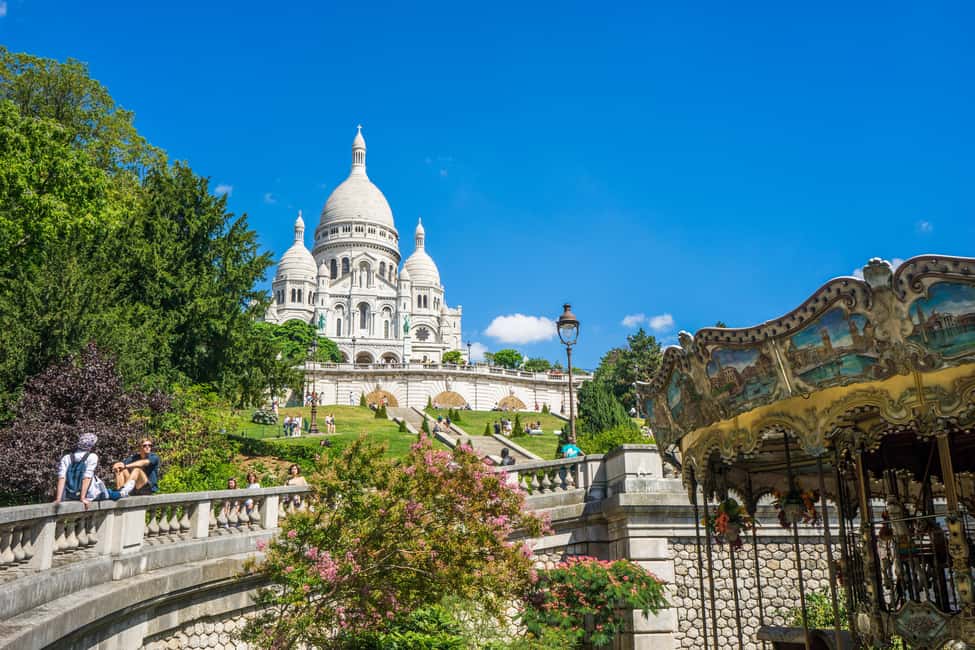
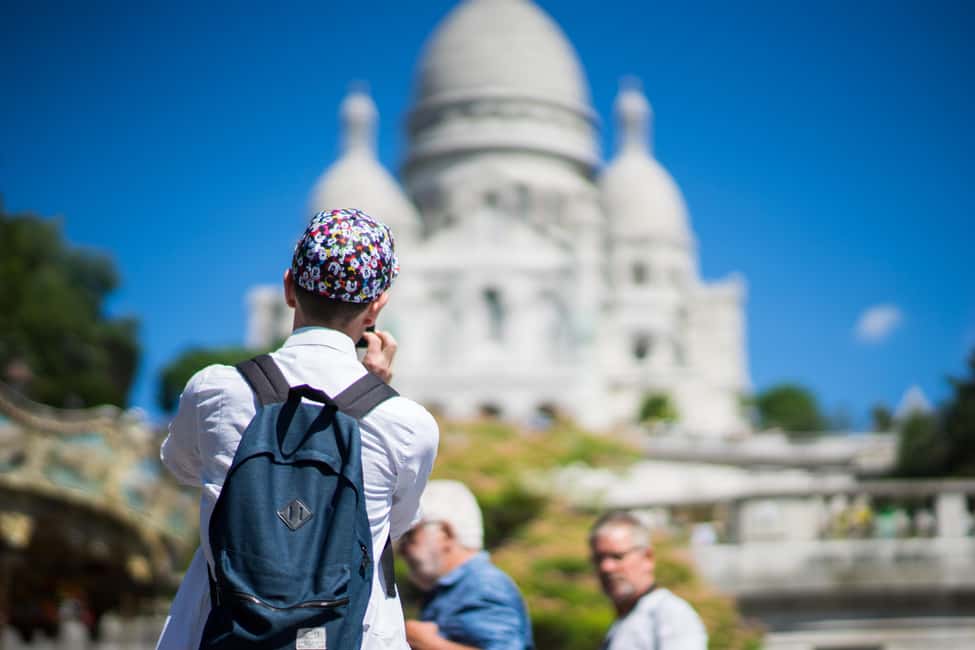
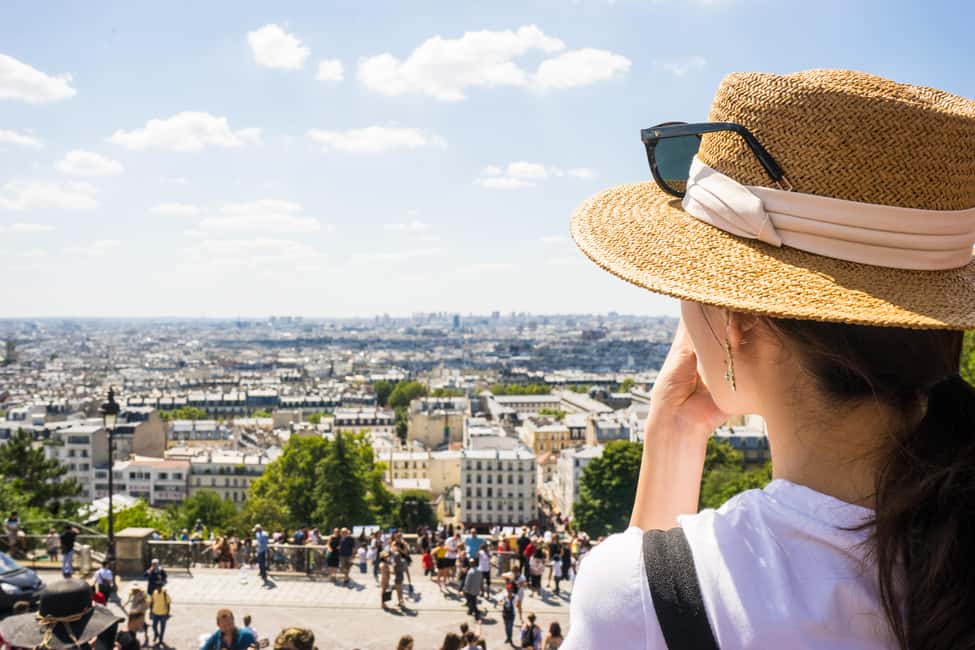
The final stretch leads to Sacré-Cœur Basilica. The tour includes a photo stop plus a visit, which matters because the basilica area is one of the best payoff zones for the walk. The big draw is the viewpoint—Paris opens up in all directions once you’re up here.
More than the view, though, Sacré-Cœur functions as a “reset” at the end of a lively route. After Moulin Rouge and the art square atmosphere, the basilica gives you a sense of space. It’s a strong finishing point for first-timers, especially if you want one clear ending location you can navigate from afterward.
If you want photos, this is where you should invest your final minutes. The guide will help you land on good spots, and because you’ve been walking for a while, your legs will appreciate the slower pace once you’re in the basilica area.
Guided storytelling: the difference between seeing Montmartre and understanding it
What makes this tour work is the human element: the guide’s anecdotes. Based on past bookings, guides like Vera, Solene, Nadine, and Christin have led this route and were singled out for being engaging and packed with stories.
That storytelling has a practical purpose. Montmartre is full of symbols—windmills, cabaret references, artists’ squares, rebels and nightlifed lore—and without context, you just move from photo to photo. With context, the district becomes a narrative: how it became associated with artists and why certain corners drew people who didn’t fit neatly elsewhere.
One booking highlighted a gradual climb with historical and anecdotal facts that built naturally toward arriving at Sacré-Cœur. That’s a smart way to guide this neighborhood because it keeps you from feeling like you’re being rushed uphill while listening.
Also watch for pacing that works for everyone in the group. One review described a pace that stayed comfortable for the group, which is exactly what you hope for on a hilly walk.
Language note for German tours: the tour is listed as German and English. Still, one booking mentioned a situation where the tour ran mostly in German with a brief English recap when staffing shifted. It’s not something you can predict, but it’s a good reminder to be flexible if you’re mixing language expectations.
Price and value: what $35 buys you in Montmartre
At $35 per person for 2 hours, you’re paying mainly for two things: a local guide and time saved from guessing what matters. You’re not getting food or drinks included, so don’t plan on this being your full meal plan.
But for Montmartre specifically, guided value is real. The streets are beautiful yet confusing. A guide turns that confusion into direction: where to stand for photos, how to read the neighborhood, and which spots to treat as moments instead of stops.
If you’ve already visited a few big Paris sights and want something more “neighborhood” than “monument,” this price makes sense. You get a concentrated intro to Montmartre’s creative identity without spending the whole day wandering uphill.
If you’re on a strict budget and love self-guided wandering, you could do Montmartre on your own. Still, you’d likely spend time researching and you’d miss the “everyday Paris” anecdotes that make the places feel alive.
Who this German Montmartre tour suits best
This tour is a strong fit if you:
- are on a first visit to Paris and want a clear orientation to Montmartre’s character
- want a guided walk rather than a self-guided slog uphill
- like art and stories tied to places, not just architecture photos
- appreciate a small-group pace and photo stops built into the route
It’s less ideal if you:
- have mobility issues that make uneven, steep surfaces hard (it’s not suitable for wheelchair users based on the info provided)
- want a long, slow hangout day with lots of stops at cafés. This is a walking tour with sightseeing and visits, not a food tour
Should you book this Montmartre Group Tour in German?
Yes, if you want a simple way to understand Montmartre in 2 hours, with a guide who layers context onto the sights. The route hits the big names—Moulin Rouge and Sacré-Cœur—while also steering you toward corners and stories that make the district feel like more than a backdrop.
I’d book especially if you enjoy narrative travel: artists, rebels, nightlife lore, and small daily-life details tied to real places. And if you decide to go, arrive early enough to find the pink cap and confirm the correct traffic island outside Blanche, because that part can cost you time if you’re not careful.
If you tell me your travel month and which day of the week you’re considering, I can point you toward the best German departure time from the schedule provided.
FAQ
How long is the Montmartre tour?
The tour lasts 2 hours.
How much does the tour cost?
It costs $35 per person.
Where do I meet the guide?
Meet outside the Blanche metro station, at the traffic island in front of Moulin Rouge. Look for your guide with a HelpTourists bag and a pink base cap.
What stops are included on the walk?
You’ll include stops for photos and sightseeing at Moulin Rouge, Moulin de la Galette, and La Maison Rose, then visit Place du Tertre, and finish with a visit at Sacré-Cœur Basilica.
When do German tours run?
German tours run Tuesday and Thursday at 4pm, Saturday at 3pm, and Sunday at 2pm.
Is the tour wheelchair accessible?
No. It is not suitable for wheelchair users.
Are food and drinks included?
No. Food and drinks are not included.