REVIEW · PARIS
Paris Seine River Hop-On Hop-Off Sightseeing Cruise by Batobus
Book on Viator →Operated by Batobus · Bookable on Viator
Paris looks different from the water. This Batobus hop-on hop-off Seine cruise is a low-stress way to pace yourself and still see major sights along the UNESCO-listed riverbanks, from the Eiffel Tower to Notre-Dame-area promenades. I especially like the unlimited 24 or 48 hours option, plus the easy “ride, get off, explore, and return” rhythm that works with how you travel.
Two other things I value: the open back terrace for fresh air and photos, and the multilingual audio commentary delivered through the web app. One drawback to plan for: the experience is very much self-guided, and getting on and off can mean stairs down to the river and back up again at stops.
In This Review
- Key highlights to know before you board
- Batobus Seine Cruise: How the hop-on hop-off pass really works
- Where to catch the boat: Ports and metro connections
- Stop-by-stop guide: From the Eiffel Tower to the Louvre area
- Port de la Bourdonnais (Eiffel Tower start)
- Port des Invalides
- Quai de Montebello (Musée d’Orsay side)
- Quai Malaquais (Saint-Germain-des-Prés vibe)
- Quai de Montebello (Saint-Michel / Notre-Dame area access)
- Quai Saint-Bernard (left-bank calmer stretch)
- Quai de l’Hôtel de ville (city-center river edge)
- Quai du Louvre (museum and palace district)
- Port des Champs-Élysées (Concorde / Tuileries side)
- A quick note on L’Académie Lime
- Sound, comfort, and what the audio commentary does (and doesn’t)
- Time your day: How to plan loops without feeling rushed
- Practicalities that can make or break your day
- Mobile ticket and web app audio
- Bag control and luggage limits
- Boarding and getting off: steps are real
- Bikes, drinks, and on-board comfort
- Service animals
- Price and value: Why $27.56 can be worth it
- Who should book this Seine cruise—and who might not love it
- Should you book this Paris Seine River Hop-On Hop-Off cruise?
- FAQ
- How long is the Paris Seine River hop-on hop-off cruise?
- Is there a 1-day or 2-day ticket option?
- Can I hop on and off as many times as I want?
- How many stops are on the route?
- Do I get audio commentary, and in what languages?
- Is hotel pickup included?
- Are there luggage limits or bag checks?
- Can I cancel, and what if the weather is bad?
Key highlights to know before you board
- Unlimited river time for 24 or 48 consecutive hours, not a one-shot ride
- Nine hop-on stops near big landmarks and classic Paris neighborhoods
- Audio commentary via the web app in multiple languages (including English)
- Open back terrace for views that feel more like a sightseeing cruise than a bus route
- Strict bag control and a 16-liter luggage limit for bulky items
Batobus Seine Cruise: How the hop-on hop-off pass really works

You’re buying time on the river, not a single tour. With a 1-day or 2-day pass, you can ride as many times as you want for 24 or 48 consecutive hours, hopping off at any of the stops along the route.
A full loop is roughly about 2 hours, so it’s easy to understand what you’re getting. The trick is not to “try to do everything.” Instead, I like using the cruise as your backbone and then letting your walking and museum plans fill the gaps.
The experience also keeps your day flexible. You get a deckhand on board, an open-air back terrace for views, and you can use the web app’s interactive map for nearby activity ideas. It’s a practical approach for first-timers, and it’s also handy if you’ve already walked some neighborhoods and want a scenic reset.
You can also read our reviews of more boat tours in Paris



Where to catch the boat: Ports and metro connections
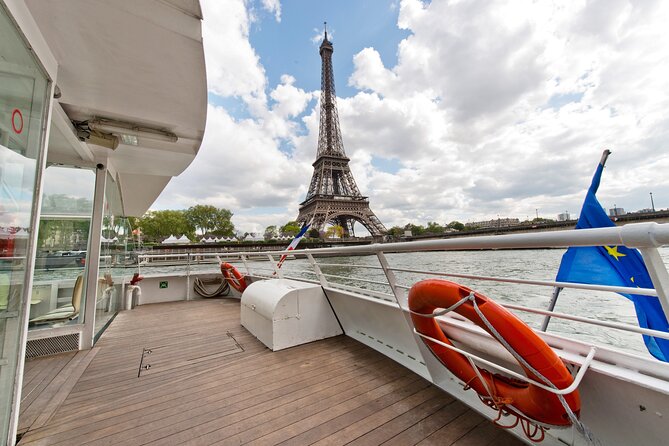
Batobus is designed to be easy to plug into Paris transit. Each stop sits near public transport, so you’re not stuck planning your entire day around one hotel location.
Here’s the useful part: treat each port as an “anchor.” For example, if you want to start near the Eiffel Tower area, you can use Port de la Bourdonnais and reach it via Metro Bir-Hakeim (line 6) or Trocadéro (lines 6 and 9), plus RER Champ de Mars – Tour Eiffel (line C). If you’d rather start closer to the Invalides monument area, Port des Invalides connects through Metro Invalides (lines 8 and 13) and RER Invalides (line C).
One practical warning: you should assume you’ll go down steps to the riverbank and back up when you board and get off. If mobility is an issue for you, it’s better to plan fewer hops and do longer stays at fewer stops.
Stop-by-stop guide: From the Eiffel Tower to the Louvre area
Below is how I’d use each stop so you’re not just looking at landmarks—you’re actually building a day around them.
Port de la Bourdonnais (Eiffel Tower start)
This is the go-to dock when you want the Eiffel Tower in your sightline early. You’ll connect via Bir-Hakeim or Trocadéro metro links, and it’s also near RER Champ de Mars – Tour Eiffel.
Best use: get on here to ease into the cruise with an iconic photo moment, then hop off later if you want to explore further on foot. The downside is that this is a popular starting zone, so it can feel busy compared to smaller neighborhood ports.
Port des Invalides
This stop puts you in the orbit of the Invalides area. It’s a good choice when you want a more “classic monument” feel without doing a long trek across town.
Best use: use it as a calm middle point if you’re mixing museum visits with river views. If you’re trying to make tightly timed reservations elsewhere, keep buffer time because hop-on hop-off travel is still dependent on boat schedules.




Quai de Montebello (Musée d’Orsay side)
This dock is ideal if your Paris day includes Musée d’Orsay. The advantage is simple: you can ride the Seine first, then get off right where the museum area starts.
Best use: after the first loop, hop off here when your legs are ready for museums and walks. Drawback: this stretch can be popular, so give yourself a little extra time to navigate crowds once you leave the boat.
Quai Malaquais (Saint-Germain-des-Prés vibe)
Quai Malaquais pairs well with the Saint-Germain-des-Prés atmosphere. You can reach it through Metro Saint-Germain-des-Prés (line 4).
Best use: hop off when you want cafés, bookstores, and a more lived-in Paris pace. It’s also a great stop for lunch because you can enjoy the neighborhood for a while, then return to the boat when you want a scenic breather.
Quai de Montebello (Saint-Michel / Notre-Dame area access)
You’ll see a second Montebello-area stop in the route, and this is where the cruise becomes a smart way to access the Notre-Dame neighborhood area. You can connect via Saint-Michel (line 4) or Maubert-Mutualité (line 10), plus RER Saint-Michel Notre-Dame (lines B and C).
Best use: this is the stop for Gothic-architecture-photo energy and wandering by the river. Consider staying longer here if your goal includes the classic Notre-Dame-area streets and viewpoints—this stop is often where you’ll want time rather than speed.
Quai Saint-Bernard (left-bank calmer stretch)
Quai Saint-Bernard helps you reach a less frantic slice of river life. You can get there via Metro Jussieu or Cardinal-Lemoine (line 10), and RER Gare d’Austerlitz (line C).
Best use: hop off if you want river views plus a different left-bank mood. It’s also a nice reset point if you spent the earlier part of the day around the most famous monuments and you want your photos to feel less postcard-crowded.
Quai de l’Hôtel de ville (city-center river edge)
This stop lands you near the heart of Paris city life. Metro access is straightforward at Hôtel de Ville (lines 1 and 11).
Best use: it’s a good bridge between major sightseeing days and casual exploring. If you’re building an itinerary around the central neighborhoods, this dock can reduce the “transit tax” you’d otherwise pay with extra cross-town rides.
Quai du Louvre (museum and palace district)
Quai du Louvre puts you close to one of the most museum-dense areas in the city. You can reach Palais Royal – Musée du Louvre via Metro lines 1 and 7.
Best use: I like this stop near the end of a day when you want options—museums, walks, and easy reboarding if you’re still not ready to call it quits. Drawback: this is a heavy-foot-traffic zone, so factor that into your exit-from-the-dock timing.
Port des Champs-Élysées (Concorde / Tuileries side)
This last area connects you back toward the more grand boulevard-adjacent sights. You can use Metro Champs-Élysées – Clemenceau (lines 1 and 13) or Concorde (lines 1, 8, and 12).
Best use: hop off when you want a finale that feels like Paris “big city.” It’s also a practical stop if you want to finish near well-known shopping-and-stroll corridors. If you’re ending late, still check the real-time departures because the final runs vary by date.
A quick note on L’Académie Lime
The route includes a stop called L’Académie Lime alongside the more landmark-heavy stops. If you’re trying to match a specific neighborhood plan to this dock, I’d rely on the web app map for the exact stop location shown on your ticket.
Sound, comfort, and what the audio commentary does (and doesn’t)
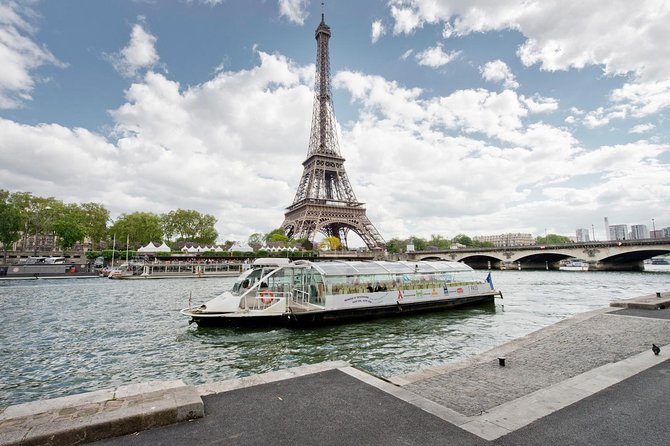
There’s no live guide walking the boat. Instead, you’ll use a web app for multilingual audio commentary in French, English, Spanish, German, and Italian. That’s a big deal because it means you control the pace: pause the audio, skip it, or listen only when you care about a landmark.
When you’re on board, the best “guide” is your own eyes. The Seine gives you a moving picture of bridges, facades, and monuments. The open-air terrace at the back is especially worth it because you’ll get a better feel for the river than you do from a closed cabin.
One small practical point: the boat experience is designed for scenic cruising and transport between stops, not for a full-on narration show. If you want a spoken explanation at all times, you’ll probably find yourself turning to the audio app more often than you expect.
Time your day: How to plan loops without feeling rushed
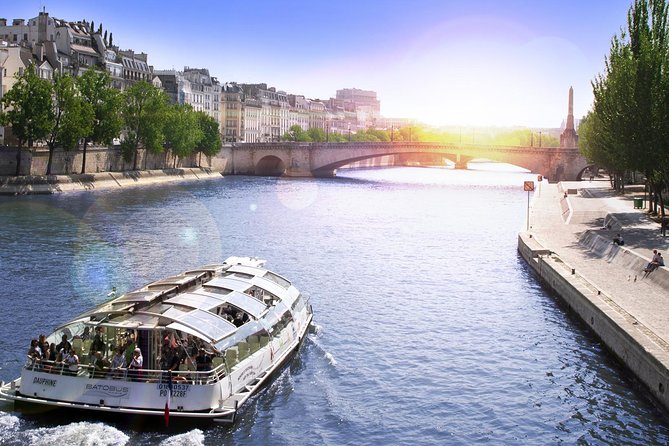
The cruise loop is about 2 hours, but your day isn’t forced into that schedule. Since your pass is good for 24 or 48 consecutive hours, you can treat the boat as:
- an arrival ritual (ride first to get bearings),
- a neighborhood connector (get off, walk, return),
- or a break tool (ride later after museums and long walks).
My favorite strategy is to do the big “first loop” early, even if you don’t hop off immediately. You’ll quickly learn the river’s layout and which side you prefer for walking.
Then, on the second pass (if you have 48 hours), choose 2–3 stops for real exploring. The hop-on hop-off idea works best when you’re intentional about which docks become your base camps.
Also, keep an eye on end-times. Batobus publishes real-time departure times, and on July 14 (French National Day) the last departure is 5:00 PM. If you’ll be sightseeing near key monuments in the evening, plan to check the day’s last sailing time before you commit to any “we’ll definitely be there” schedule.
Practicalities that can make or break your day
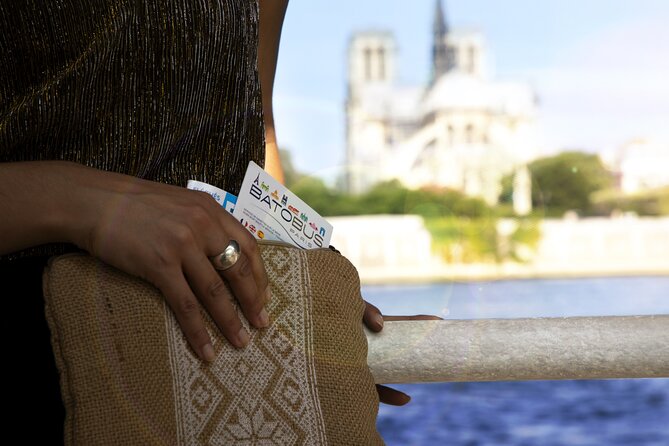
This is where Batobus trips can be smooth—or suddenly annoying. Here are the details that matter.
Mobile ticket and web app audio
Your ticket is delivered as a mobile ticket, and the audio runs through the web app. Do yourself a favor: make sure your phone battery is healthy and that you can access your ticket and app before you reach the dock. A last-minute app problem is the kind of stress that ruins a calm river moment.
Bag control and luggage limits
Expect systematic bag control at the entrance. You’ll likely need to open jackets and coats during inspection. There’s also a strict rule: bulky luggage over 16 liters won’t be allowed (small backpacks, handbags, and computer cases are not included in that limit).
If you’re traveling with a large backpack, check your capacity before you show up. If it’s above the limit, you may need a different plan rather than hoping “it’ll be fine.”
Boarding and getting off: steps are real
To catch the boat, you’ll go down to the riverbank, and when you arrive at a stop you’ll go back up. If you’re carrying shopping bags, wearing uncomfortable shoes, or dealing with limited mobility, this is not a trivial detail.
Bikes, drinks, and on-board comfort
There’s bicycle storage available on board. You’ll also find a vending machine with drinks and snacks, which is useful when you’re out hopping all day.
One thing to remember: there are no toilets on the boat. That means the “closest stop” strategy matters. If you’re planning a long stretch between hops, build in time for restroom breaks during your stop breaks.
Service animals
Service animals are allowed, so you can plan with that in mind.
Price and value: Why $27.56 can be worth it
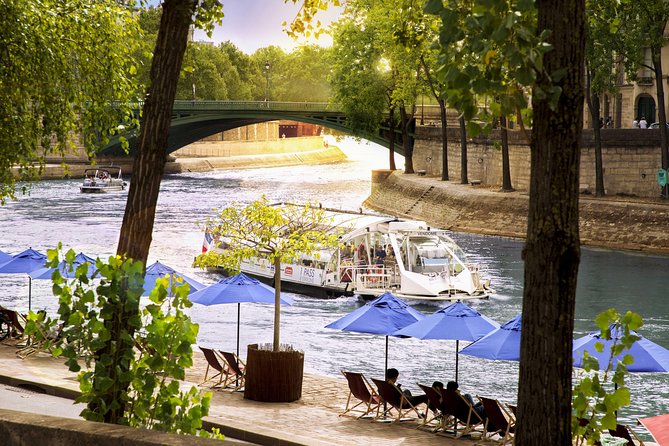
At about $27.56 per person, you’re not just paying for a scenic ride. You’re paying for transportation along one of the most iconic lines in Paris, with unlimited boarding for 24 or 48 hours.
Here’s the real value math:
- You reduce the need for multiple cross-town taxi rides or complicated transfers.
- You can spend your time on sightseeing instead of figuring out the fastest route every hour.
- You can slow down where it counts—by choosing how long to stay at each stop.
This isn’t a “skip all walking” option. You’ll still walk a lot once you get off. But you’ll walk with a plan and views, not just from point to point like it’s a city marathon.
For me, the cruise is especially good when you want to hit big landmarks without building a rigid schedule. If you’re the type who likes flexibility—café breaks, museum detours, and changing your mind on the fly—this pass fits that travel style well.
Who should book this Seine cruise—and who might not love it
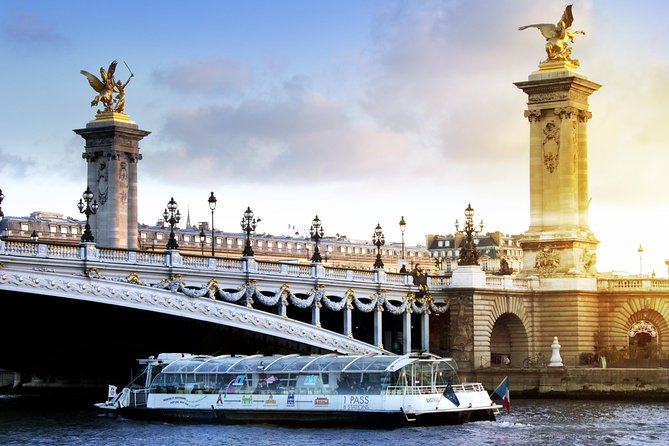
This cruise is a great fit if you:
- want a simple way to connect top sights along the river,
- like planning with a loose structure and lots of freedom,
- want a scenic break during a museum-heavy day,
- prefer river views over repeated transit hassles.
You might want a different plan if you:
- need constant guided narration (the audio app is your main guide),
- dislike stairs when boarding and exiting stops,
- have ultra-tight reservations where a wait for the next boat could throw off timing,
- or you strongly prefer a “sit, listen, and be taken care of” tour format.
If your expectations match what this is—a self-guided hop-on hop-off ride with excellent views—you’ll likely feel like you got your money’s worth.
Should you book this Paris Seine River Hop-On Hop-Off cruise?
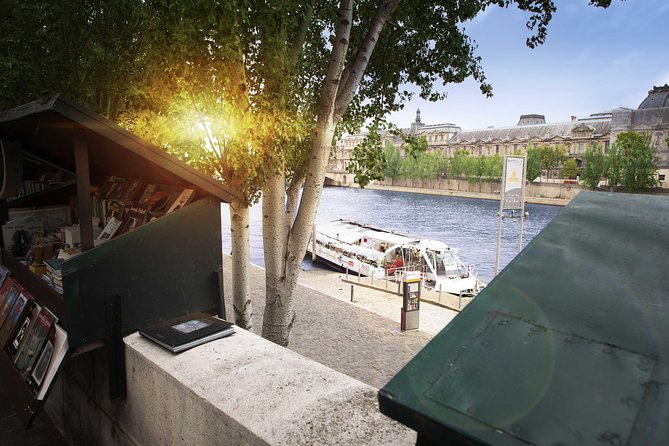
I’d book it if you want a practical, scenic way to see Paris without overplanning each leg. The 24/48-hour unlimited ride is what makes it powerful, because it lets you build a day that matches your energy rather than forcing you into a fixed order.
Just do two things before you go: check the route/stop names in the web app, and confirm the day’s last departures so you don’t end up racing the clock. If weather is poor, the experience depends on good conditions, and you’ll be offered a different date or a refund.
If you’re craving one of the easiest “Paris from the water” experiences with maximum flexibility, this is an excellent choice.
FAQ
How long is the Paris Seine River hop-on hop-off cruise?
The cruise duration is about 2 hours.
Is there a 1-day or 2-day ticket option?
Yes. You can choose between a 1-day or 2-day sightseeing pass.
Can I hop on and off as many times as I want?
Yes. Your pass allows unlimited hop-on and hop-off Seine river cruising for 24 or 48 consecutive hours.
How many stops are on the route?
There are 9 hop-on stops along the Seine.
Do I get audio commentary, and in what languages?
Multilingual audio commentary is available through the web app in French, English, Spanish, German, and Italian.
Is hotel pickup included?
No. Hotel pickup and drop-off are not included.
Are there luggage limits or bag checks?
Yes. There is systematic bag control at the entrance, and bulky luggage over 16 liters is not allowed. Small backpacks, handbags, and computer cases are not included in that 16-liter limit.
Can I cancel, and what if the weather is bad?
Free cancellation is available up to 24 hours before the experience’s start time for a full refund. If it’s canceled due to poor weather, you’ll be offered a different date or a full refund.