REVIEW · BORDEAUX
Urban Escape Game: In search of Goya’s skull
Book on Viator →Operated by Code Case Bordeaux · Bookable on Viator
A suitcase, a mystery, a walk through Bordeaux. Code Case Bordeaux is an urban treasure hunt built like an escape game, but with a friendlier promise: instead of rushing to escape, you’re focused on solving clues tied to the past, legends, and mysteries of Bordeaux. You’ll carry a locked case concept through a district as you find keys, decipher information, and interact with mechanisms, all while learning along the way.
I really like two things here: the locked suitcase puzzle format (it’s tactile and you stay busy), and the story approach where the game logic and Bordeaux history move together. If you prefer purely sightseeing, the payoff may feel slower; you’ll be solving rather than just looking, and the experience needs good weather.
In This Review
- Quick snapshot
- Key things to know before you go
- Entering the game: how Code Case Bordeaux plays
- Meeting at Statue de Goya: getting started in the right mood
- The locked suitcase and case table: your “base” during the hunt
- Solving around the Bordeaux district: clues, keys, and that “one more step” feeling
- Why the Bordeaux theme matters (and how it avoids feeling like trivia)
- Who this urban escape treasure hunt suits best
- Physical comfort check
- Price and value: $60.21 for 2 hours of interactive play
- Practical details: what to bring, and what’s not included
- Should you book Code Case Bordeaux?
- FAQ
- Where does Code Case Bordeaux start?
- How long is the experience?
- How much does it cost?
- Is it a private tour?
- Do I get a mobile ticket?
- What is included in the game?
- Is there a place to store bags or use the toilet?
- What fitness level do I need?
- What happens if the weather is bad?
- Can I cancel for a full refund?
Quick snapshot
Private group play and a mobile ticket keep this simple to organize. Expect about 2 hours of hands-on mystery-solving with a moderate amount of walking around the neighborhood.
Key things to know before you go

- Locked suitcase, table, and mechanisms: you interact with the actual case rather than just reading clues.
- A story-first treasure hunt: puzzles are tied to Bordeaux’s past, legends, and mysteries.
- No escape pressure: it’s game logic plus discovery, not a frantic room countdown.
- You return to the start: the experience ends back at the meeting point near the Statue de Goya.
- Moderate physical effort: bring comfortable shoes and be ready to move around the district.
- Weather matters: it runs best in good conditions.
You can also read our reviews of more tours and experiences in Bordeaux.


Entering the game: how Code Case Bordeaux plays

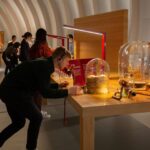
This is an urban escape-style activity where the core prop is a locked suitcase and a table setup that becomes your puzzle hub. You don’t just get a worksheet. You’re actively working the case: searching, testing, and connecting clues until the locks and mechanisms make sense.
The tone is part “treasure hunt,” part “escape game rules,” with a Bordeaux theme that’s woven into the scenario. The story is what gives your actions meaning. Instead of solving random codes, you’re piecing together a narrative that points toward the mystery at the heart of the game: Goya’s skull.
If you enjoy tasks that reward patience—reading what you find, trying combinations, then realizing the clue was right there—you’ll get more out of the experience. And if you like puzzles with a physical element (turning, opening, activating), this format feels natural.
Meeting at Statue de Goya: getting started in the right mood

Your start point is right at the Statue de Goya, 1 Rue Mably, 33000 Bordeaux. The experience also ends back at the same meeting point, which matters more than it sounds. You don’t have to worry about where you’ll end up after the final clue. You finish close to where you began, which makes the rest of your day easier.
Once you’re gathered, expect to be guided through how the suitcase and case-table setup works—basically, what you can do and what to look for as you move through the district. The experience is designed so you can organize your progress as you go: find keys, open locks, and then use what you learn to move forward.
One practical note: there’s no mention of lockers or toilet access as part of the experience. So I’d treat the first minutes as your chance to get settled and think about basics—especially if you’re carrying a larger bag or you’re sensitive to waiting.
The locked suitcase and case table: your “base” during the hunt

The included items are simple, but they’re the heart of the activity: a suitcase plus a table. That means you’re not just walking and collecting trivia. You’ll be working the case in a structured way, with the game pushing you to solve steps rather than wander aimlessly.
From the way the scenario is described, the puzzle flow uses multiple senses and actions. You’re meant to use all your senses—so expect a mix of reading clues, checking details, and interacting with parts of the setup. When you find keys and open locks, the game isn’t just giving you rewards; it’s revealing how each clue connects to the next step.
I also like that the activity emphasizes mechanisms you activate. That helps keep the pace active. You’re not waiting for someone to tell you what to do; you’re testing ideas and seeing results inside the case system.
Solving around the Bordeaux district: clues, keys, and that “one more step” feeling

You’ll explore a Bordeaux district as your playground. The scenario is built on past, legends, and mysteries, so the clues are meant to make you notice details in your surroundings rather than treating the neighborhood as a backdrop.
Practically, think of this as a series of clue points that feed into the suitcase puzzles. You’ll find keys, open locks, and activate mechanisms based on what you uncover along the way. The design encourages teamwork and discussion, even if you’re traveling with just a couple of people.
The best part of this style of urban puzzle is that you get a guided reason to slow down. Instead of sprinting between major attractions, you move with a goal: locate what’s needed, interpret what it means, and then apply it back at the case. That’s when the “story” clicks—Bordeaux’s past isn’t just mentioned; it’s used.



Why the Bordeaux theme matters (and how it avoids feeling like trivia)

Code Case Bordeaux doesn’t treat history as a museum lecture. Your learning is tied directly to the puzzle engine. The scenario is built on Bordeaux’s legends and mysteries, which means you’re more likely to remember what you learn because you needed it to make progress.
One review highlights that the game has a great story and a great host, and that you learn as you play while unlocking more clues along the way. That matches the feel of this format: the host is there to keep things moving if you get stuck, but the momentum comes from your own problem-solving.
The theme also helps you notice Bordeaux’s character beyond the obvious landmarks. Since you’re using multiple senses, the game nudges you to pay attention to the texture of the neighborhood—details you might otherwise miss when you’re just sightseeing.
Who this urban escape treasure hunt suits best

This is a strong fit for you if you like hands-on activities and enjoy puzzles more than passive browsing. It’s also a good choice if you want something different from the usual Bordeaux routine: instead of another guided walk where you listen the whole time, you’re doing.
It’s especially worth it if:
- You enjoy story-driven games with a clear progression
- You like teamwork and solving together
- You want a short activity that still feels memorable
It may be less ideal if you want only big sights and scenic stops. This is about solving the case and working through the scenario steps, not ticking off a list of major monuments.
Physical comfort check
The experience calls for a moderate physical fitness level, and you should be ready to move around the district. I’d plan around that with comfortable shoes and a watch on how much walking you’re comfortable doing in one go.
Price and value: $60.21 for 2 hours of interactive play
At $60.21 per person for about 2 hours, you’re paying for structure and materials—not just “someone talking at you.” The included items (a suitcase and a table) are a real cost driver, and the game design takes time to run properly for each private group.
Here’s why I think it can be good value:
- You get a complete, self-contained activity format (you’re not paying for access to a museum).
- You’re actively doing something the whole time, which can feel more worth it than a short guided segment.
- It’s private, meaning your group controls the flow without merging with strangers.
The main value risk is personal preference. If puzzles aren’t your thing, the price won’t feel as justified because the experience is built around interactive problem-solving.
Practical details: what to bring, and what’s not included

This is where small details can make or break the day.
- No lockers are listed. If you’re traveling light, you’ll probably be fine. If you have a bulky bag, plan ahead.
- No toilet access is listed. If you think you might need a break during the 2 hours, factor that in.
- You’ll want good weather. The experience notes that it requires good weather and, if canceled due to poor conditions, you’ll be offered a different date or a full refund.
- It’s near public transportation, which helps if you’re building a day around Bordeaux neighborhoods rather than anchoring at one big site.
- Service animals are allowed.
Also keep in mind you’ll get confirmation within 48 hours of booking, subject to availability. That matters if you’re working around tight plans.
Should you book Code Case Bordeaux?
If you want a Bordeaux activity that’s more than a walk-and-listen, this is a great match. The combination of a locked suitcase, a host who keeps the story moving, and a clue-driven experience that ties directly to Bordeaux’s legends and mysteries gives you a memorable way to spend about two hours.
I’d book it if you enjoy puzzles and you’re happy to trade some classic sightseeing for interaction and problem-solving. Skip it if you’re not into games or if you strongly need long rest stops with facilities.
One last deciding tip: go in with a team mindset. Even if you’re a solo traveler, treat it like you’ll collaborate with your group. The clues connect step by step, and that’s where the fun lives.
FAQ
Where does Code Case Bordeaux start?
The meeting point is at Statue de Goya, 1 Rue Mably, 33000 Bordeaux, France. The activity also ends back at the meeting point.
How long is the experience?
It lasts about 2 hours.
How much does it cost?
The price is $60.21 per person.
Is it a private tour?
Yes. It’s private, and only your group participates.
Do I get a mobile ticket?
Yes. A mobile ticket is included.
What is included in the game?
You get the suitcase and the table.
Is there a place to store bags or use the toilet?
Lockers and toilet access are not included.
What fitness level do I need?
You should have a moderate physical fitness level.
What happens if the weather is bad?
The experience requires good weather. If it’s canceled due to poor weather, you’ll be offered a different date or a full refund.
Can I cancel for a full refund?
Yes, free cancellation is available. You can cancel up to 24 hours in advance for a full refund.