REVIEW · FRANCE
The Basilica of Vézelay unveiled + journey through the Basilica
Book on Viator →Operated by La Maison du Visiteur · Bookable on Viator
Vézelay’s Basilica is far more than an old church to photograph and leave. This two-hour experience shows you how its sunlight, measurements, sculptures, and human proportions work together, then carries those ideas into the building itself. The result is a visit that gives meaning to details you might otherwise miss.
I like two things right away. First, the opening workshop at La Maison du Visiteur gives you a clear way to read the Basilica before you enter it. Second, the guide-led walk takes time with the great tympanum and carved capitals instead of rushing past them. The main consideration is that the visit is highly focused on architecture, symbolism, and interpretation, so it may feel less rewarding if you only want a quick look inside.
In This Review
- Key points to know before booking
- Why this Vézelay visit is different
- La Maison du Visiteur: learn the building before entering it
- The symbol room and its 3-D model
- Learning how to read a capital
- The film and Vézelay’s changing light
- Walking through the Basilica’s Romanesque and Gothic spaces
- The great tympanum
- The carved capitals inside
- What the two-hour format means for you
- Who will get the most from this experience
- Price, timing, and practical value
- Should you book The Basilica of Vézelay unveiled?
- FAQ
- Where does the experience begin?
- How long does the full experience last?
- Is the Basilica included in the guided visit?
- What happens at La Maison du Visiteur?
- Can I visit the Basilica independently?
- Does the visit explain both Romanesque and Gothic architecture?
- Is the experience accessible to most people?
- Can I cancel for a full refund?
Key points to know before booking
- Begin with a 3-D model: See how sunlight, the Basilica’s plan, the human body, and medieval measuring methods connect.
- Watch the light indoors: The film In the Shade of the Light presents special effects of sunlight that appear in the Basilica on certain days.
- Read more than 150 capitals: The guide helps you understand the carved figures and scenes rather than treating them as decoration.
- Compare two building styles: Romanesque and Gothic architecture meet inside Vézelay’s Basilica.
- Plan on two hours: One hour takes place at La Maison du Visiteur, followed by about an hour inside the Basilica.
- Expect a patient guide: The strongest praise goes to guides who explain difficult ideas clearly and adjust their pace for people who move less easily.
Why this Vézelay visit is different
Many church visits give you dates, names, and a few grand facts. This one asks you to think like a medieval builder. You look at the building’s proportions, follow the path of the sun, and consider why a sculpture sits where it does.
That approach matters in Vézelay because the Basilica can seem restrained at first glance. Its pale stone, long nave, rounded Romanesque arches, pointed Gothic sections, and rows of carved capitals reward a slower look. Without some guidance, you may see a beautiful old church. With guidance, you begin to see a designed system.
The visit is led through La Maison du Visiteur, the local visitor house connected with the experience. The guides are presented as interpreters who carry you from the medieval world into your own way of seeing. That sounds lofty, but the practical benefit is simple: you receive a method for looking.
At $23.72 per person, this is not the cheapest way to spend an hour in Vézelay. The Basilica itself has no separate admission charge as part of the guided walk. You are paying for the preparation, the film, the teaching, and the person who connects the pieces. If you would otherwise enter the church for a brief independent visit, the price may feel high. If you enjoy architecture, sculpture, or the meaning behind sacred spaces, the added explanation gives the fee good value.
You can also read our reviews of more tours and experiences in France.


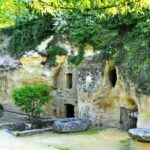
La Maison du Visiteur: learn the building before entering it
The first hour takes place at La Maison du Visiteur. This is more than a ticket desk or waiting room. It is the teaching part of the experience, and it prepares you to notice specific things once you reach the Basilica.
The symbol room and its 3-D model
The visit begins with a discovery workshop in the symbol room. A 3-D model helps you follow the movement of the sun and understand how light enters and changes the building.
You also examine the relationship between the Basilica’s plan and the human body. Medieval architecture often tied physical proportion to ideas of order and harmony, and this workshop makes that link visible instead of leaving it as an abstract art-history point.
Another lesson concerns the rod, a measuring tool used to establish harmony among the building’s volumes. You do not need a technical background to follow this. The point is to see that the Basilica was not assembled as a random collection of walls, arches, and windows. Its parts relate to one another.
This section should suit you if you like to know how something works. It is also useful for families and mixed-age groups because the model gives you something concrete to watch while the guide explains the ideas.
The only possible drawback is pace. The workshop asks you to listen and think before you reach the main monument. If you are eager to get inside immediately, the first hour may feel like a delay. I think it earns its place, because the Basilica becomes easier to read afterward.
Learning how to read a capital
The Basilica contains more than 150 carved capitals. These sit at the tops of columns, where your eye may not always look first, and they carry much of the building’s visual storytelling.
The guide shows you how to read one. That means looking at the figures, their gestures, their placement, and the way the scene fits its architectural setting. A capital is not simply an old carving. It can be a lesson, warning, story, or symbol placed into the structure.
This is one of the most useful parts of the experience. Once you know what to look for, the capitals stop blending into a decorative band. You may find yourself looking up throughout the Basilica, comparing one scene with another.
The guide’s teaching style matters here. Praise for the experience repeatedly centers on clear explanations, patience, and an ability to hold the attention of the whole group. One French-language comment also notes care for people with limited mobility. No specific guide names are provided, but the person leading the visit is described as attentive and willing to adjust to the audience.
The film and Vézelay’s changing light
The projection room presents In the Shade of the Light, a film about the Basilica’s famous light effects. Some of these effects can only be seen on particular days, so the film gives you access to a part of Vézelay that your visit date may not allow.
This is especially useful if you have planned a short stay in the village. You do not need to time your trip around a solstice or another special date to understand what the light can do. The film also lets you see sculpture up close, in a way that can be hard from the floor of a large church.
The film is not a substitute for being inside the Basilica. It is a preview and an explanation. Think of it as a way to make the later visit more alert. You will know to watch the stone, the openings, and the shifting brightness rather than treating daylight as background.
After this first hour, you have two choices. You can leave with a road map and visit the Basilica independently, or, in the morning, join the optional accompanied journey with the guide. If you want the full experience described here, choose the guided continuation. The self-guided option suits you better if you prefer your own speed or need to control your time.





Walking through the Basilica’s Romanesque and Gothic spaces
The second hour takes place in the Basilica of Vézelay, high on a hill in Burgundy. The former abbey was made a Basilica in 1920, and the building has occupied this hill for roughly 800 years. UNESCO recognizes it as a World Heritage site.
Those facts explain why Vézelay draws people for different reasons. You may come for art and history, as a pilgrim, as an architecture fan, or simply because you want a place that feels apart from ordinary daily life. The tour does not force one reason on you. It uses the building to give you several ways in.
The walk focuses on the meeting of Romanesque and Gothic architecture. These styles are not treated as labels to memorize. You are encouraged to see how their forms differ and how they share the same sacred building.
Romanesque elements tend to give a sense of weight and rounded strength. Gothic details point toward height and a more open vertical feeling. At Vézelay, the two are gathered together, which gives the Basilica its particular character.
This comparison is valuable because it turns a style lesson into something you can see in front of you. You do not have to remember a long list of dates. You can look at the arches, volumes, and light, then notice the change in mood.
The great tympanum
The large tympanum is one of the central points of the walk. A tympanum is the sculpted area above a doorway, and at Vézelay it carries a major scene that deserves time rather than a passing glance.
The guide explains the news of the great tympanum, along with its carved details and intended meaning. The supplied description does not specify every figure or scene, so I would not expect a full iconographic catalogue. What you should expect is a guided reading that helps you see how the sculpture communicates with people entering the church.
This is where the first hour’s lesson becomes useful. You already have a basic approach for reading carved work. Instead of seeing a mass of stone, you can ask how the figures are arranged, where attention is directed, and how the sculpture relates to the entrance.
The carved capitals inside
The Basilica’s capitals receive more attention during the walk. With more than 150 to consider, the guide cannot give equal time to every one. That is a good thing. A focused selection is easier to remember than a hurried attempt to cover them all.
Look for the guide to point out the most revealing examples and explain how they fit into the larger building. The aim is not simply to identify medieval subjects. It is to understand how sculpture, architecture, and the movement of the people inside the church were linked.
The strongest version of this tour depends on the guide’s ability to make complex material easy to follow. The available comments praise an excellent level of culture, patience, attention, and interaction with the group. One comment describes joyful exchanges around the Basilica’s mystical and symbolic qualities. That suggests a visit that welcomes questions rather than treating the church as a silent display case.
What the two-hour format means for you
Two hours is a useful length for this subject. The first hour gives you the framework, and the second lets you test it in the building. A shorter version could leave you with pretty images but little understanding. A much longer session might be tiring for people who are only beginning to explore medieval architecture.
The format also creates a clear choice. You can take the first hour at La Maison du Visiteur and then use the road map for an independent visit. Or you can continue with the guide, which is the better choice if you want the ideas explained as you see the actual stone.
The tour includes a mobile ticket, which is convenient when you are managing a full day in Vézelay. Confirmation is provided at booking. The experience is near public transportation, and most people can participate. Service animals are allowed.
No group size is specified, so I would not assume a private or very small tour. If personal attention is important to you, arrive ready to engage with the guide and ask questions. The comments describe the guides as attentive and patient, but the exact amount of individual time can depend on the group.
Who will get the most from this experience
I would choose this visit if you are interested in any of the following:
- Medieval church architecture
- Romanesque and Gothic design
- Sculpture and symbolic images
- The role of sunlight in sacred buildings
- Pilgrimage sites and spiritual spaces
- Learning how to look at monuments without needing specialist training
It also suits you if you have visited churches before and often wondered what you were missing. The workshop gives you a usable tool: examine proportion, light, form, and placement.
Families can benefit from the model and film, especially if children respond better to objects and images than to a long spoken explanation. Still, the subject is serious and the visit depends on listening. Very young children who need constant movement may find the pace difficult.
The experience may not suit you if you want only a quick photo stop. It also may not be your best choice if you prefer to wander silently with no interpretation. The guide-led portion asks you to give the building your attention.
Price, timing, and practical value
At $23.72 per person, the price covers about two hours of structured interpretation. Admission to the Basilica is free within the described experience, so most of the cost pays for the work at La Maison du Visiteur and the guided explanation.
I see the value in the way the two parts support each other. The workshop explains the measuring system, the body plan, light, and capitals. The Basilica then gives you the real examples. You are not paying only for access to a building. You are paying for a better way to see it.
The visit is offered in a morning format for the accompanied journey, according to the information provided. Check the exact start time when booking, especially if you are planning other activities in Vézelay. Free cancellation is available if you cancel at least 24 hours before the local start time. Inside that window, the payment is not refunded and changes are not accepted.
Should you book The Basilica of Vézelay unveiled?
Book it if you want the Basilica to make sense, not just look impressive. The combination of a 3-D model, a film on special light, and a guided walk through Romanesque and Gothic spaces gives you a clear progression from idea to building.
I would especially recommend it for architecture fans, art lovers, curious families, and anyone who wants a thoughtful experience at a major French monument. The best reason to skip it is simple: if you have only a few minutes and want to look around independently, the two-hour format may ask too much of your schedule.
For most people with the time, the price is fair. Vézelay is the kind of place where a little explanation changes the whole visit, and this experience gives you that explanation without requiring prior study.
FAQ
Where does the experience begin?
It begins at La Maison du Visiteur in Vézelay.
How long does the full experience last?
The full experience lasts approximately two hours, with about one hour at La Maison du Visiteur and about one hour in the Basilica.
Is the Basilica included in the guided visit?
Yes. The Basilica visit is included, with no separate admission charge listed for that part of the experience.
What happens at La Maison du Visiteur?
You take part in a workshop with a 3-D model, learn about sunlight and building proportions, explore the link between the Basilica’s plan and the human body, and learn how to read a carved capital. You also watch the film In the Shade of the Light.
Can I visit the Basilica independently?
Yes. After the session at La Maison du Visiteur, you can leave with a road map and visit the Basilica on your own. An accompanied Basilica journey is also available in the morning.
Does the visit explain both Romanesque and Gothic architecture?
Yes. The guided walk explains how Romanesque and Gothic architecture appear together in the Basilica.
Is the experience accessible to most people?
The information states that most people can participate. Service animals are allowed, and the guide is described as attentive to people who are less mobile.
Can I cancel for a full refund?
Yes, if you cancel at least 24 hours before the experience start time. Cancellations or changes made less than 24 hours before the local start time are not refunded.