REVIEW · PARIS
Paris: Paradox Museum Entrance Tickets
Book on GetYourGuide →Operated by Paradox Museum Paris · Bookable on GetYourGuide
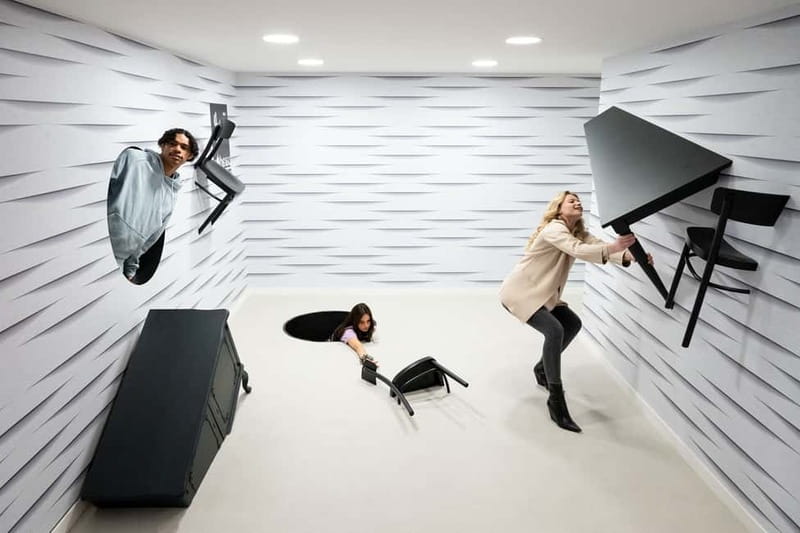
Reality takes a detour in Paris. This is the Paradox Museum Paris, built as a one-way photo maze around 90 optical illusions and the science of paradoxes. I especially like the marked photo points, which help you line up the trick-shot fast.
Plan ahead: it’s not suitable for people with epilepsy, and last entry is 6 p.m. (two hours before closing).
In This Review
- Key Highlights at Paradox Museum Paris
- Tickets, Timing, and What $34 Actually Covers
- Entering the One-Way Illusion Maze
- 90 Optical Illusions: How to Get the Best Effects (and Photos)
- Reading the Science Behind Paradoxes (Without Making It a Lecture)
- What the “Family Time” Feeling Is Like
- Price vs. Value: Is $34 Worth It?
- Staff, Support, and Going Solo Without Stress
- Paradox Boutique and Café: Turning the Visit into a Whole Stop
- Best Time to Go (Based on How the Museum Feels in Real Life)
- Who Should Book Paradox Museum Paris?
- Should You Book Paradox Museum Paris?
- FAQ
- What’s the duration of the Paradox Museum Paris ticket?
- How much are entrance tickets?
- What does the ticket include?
- How big are the groups?
- What languages are offered at the museum?
- Is Paradox Museum Paris wheelchair accessible, and is it suitable for epilepsy?
- What’s the last entry time?
Key Highlights at Paradox Museum Paris

- 90 optical illusions built to mess with what your brain expects to see
- Photo points that guide you to the best angle for “how is that possible?” pictures
- One-way maze flow so you keep moving instead of hunting for what’s next
- Exhibit instructions + QR codes that explain the paradox behind the effect
- Helpful staff when you need questions answered or support for group photos
- Paradox Boutique + café access so you can turn the visit into a full stop
Tickets, Timing, and What $34 Actually Covers
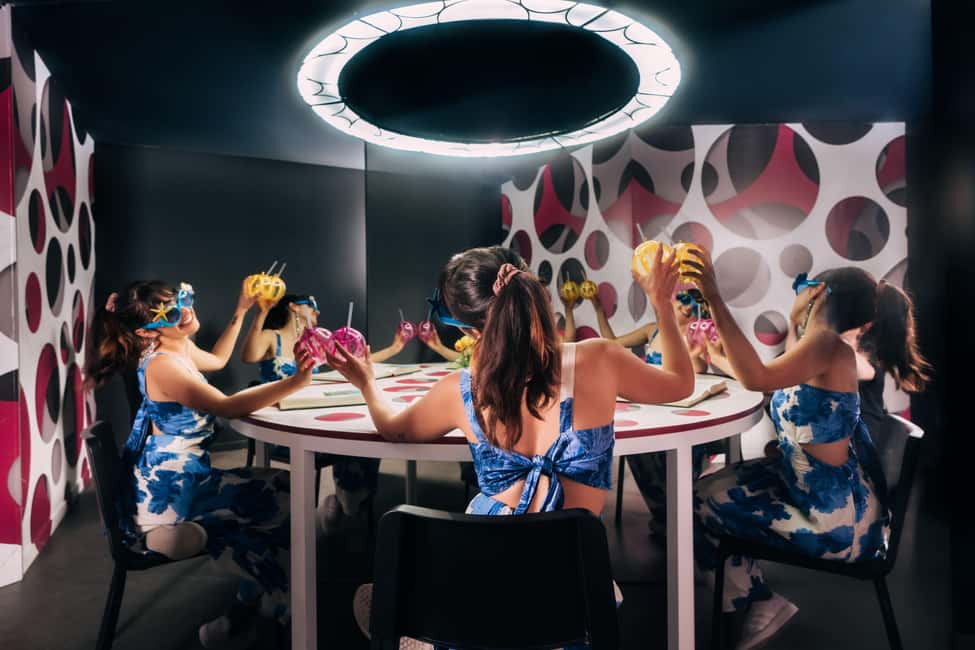
For $34 per person, you’re buying entry to one of Paris’s most photo-friendly science-and-art hybrids. The key value is not just seeing illusions, but spending about 84 minutes moving through 90 different paradox-based optical displays with enough structure to make it easy to enjoy even if you’re short on time.
The museum runs with a one-way flow. That matters because it reduces the usual “where do we go now?” stress in hands-on attractions. You’ll check in, follow the signs, and work through the exhibits in sequence without backtracking.
Two timing notes are worth taking seriously. First, the visit is designed for a roughly 1–1.5 hour window on average, so don’t plan an ambitious dinner immediately afterward. Second, the last entry is 6 p.m., which means late-afternoon plans can be tight in summer when everything in Paris feels busy.
A few more Paris tours and experiences worth a look



Entering the One-Way Illusion Maze

Check-in is straightforward, and then you’re guided into the exhibit space. The museum layout is designed like a moving line: you follow the path and the “maze” is more about discovery than getting lost. If you like attractions that keep things moving, this style works well.
You’ll notice there are instructions at each exhibit—think of them as little prompts for what to do and what you’re about to experience. That’s useful because many illusion museums rely on you figuring things out yourself. Here, you’re led toward the moment where the display clicks, then you get the explanation.
English and French support is available from the host or greeter, and the experience is set up for a small group limited to 10 participants. That smaller size tends to help with flow, especially around the photo moments that need good angles and patient spacing.
One more practical thought: the museum is wheelchair accessible, so you’re not walking a rough track just to reach the fun stuff. Still, optical displays involve stepping into specific positions, so you’ll likely want to go at an unhurried pace.
90 Optical Illusions: How to Get the Best Effects (and Photos)
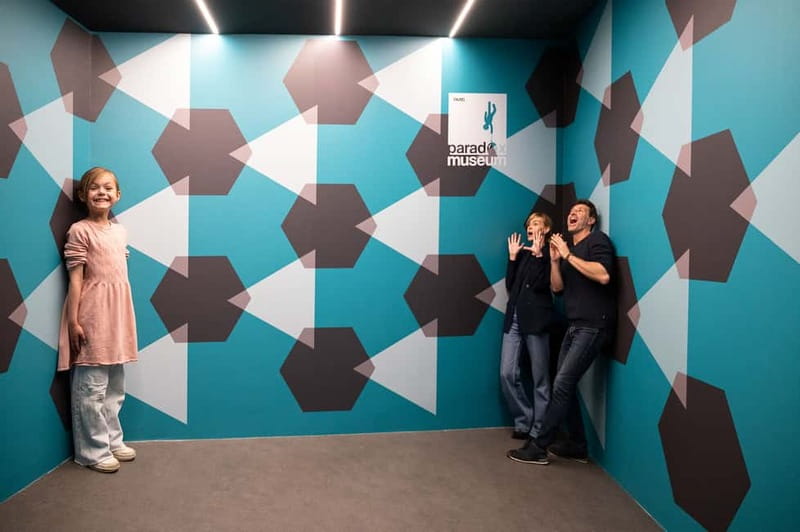
The headline is simple: 90 optical illusions that challenge how you interpret reality. The museum’s biggest strength is that it doesn’t treat illusions like a gimmick. You’re meant to pay attention to your own perception: what your eyes see, what your brain assumes, then the moment when those two don’t agree.
To make it fun without turning it into a full-time photoshoot, I’d use the exhibit prompts as your guide. If the display suggests a position, take that literally. Most of the best effects depend on where you stand and how your viewpoint aligns with the trick.
The museum includes marked photo points, and that’s a big deal for value. You’re not guessing angles while holding your phone in awkward positions. Instead, you stand where the display expects you to stand, then take the photo. This reduces frustration, especially if you’re traveling with kids or you’re not a “technical photography” person.
You can also expect plenty of photo and video-worthy moments. Even if you think you’re immune to optical tricks, the fun part is that your brain keeps trying to solve the illusion. The displays are built for that exact reaction.
A reality check: if it’s a busy day, photo points can create little bottlenecks. One family-focused tip that fits both solo and group visits is to slow down at the most popular displays. Let other people grab their shot, then step in when the angle is clear.
Reading the Science Behind Paradoxes (Without Making It a Lecture)
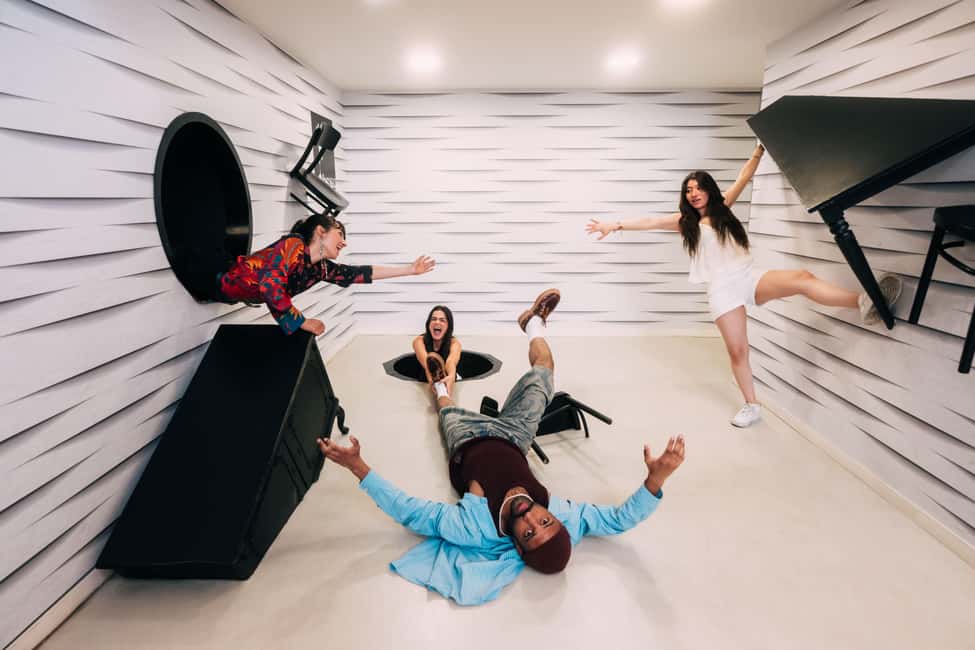
This museum is at its best when you treat it like science class that learned how to be playful. Each exhibit pairs an action with an explanation, so you’re not just looking—you’re learning how paradoxes and perception work.
You’ll see descriptions at each exhibit that include a practical “what to do” and a “what’s going on.” That format is great because it mirrors how most illusions actually function. Your brain needs a setup, then the display breaks the expectation.
There are also QR codes that add more inspiration and context. If you like to understand what you’re seeing, the QR codes give you extra details without forcing you to read a wall of text in every room. If you don’t want to read much, you can keep it casual and just follow the main exhibit instructions.
And yes, staff are there if you want help. That matters because some illusions work only if you’re positioned right, and it can be easier to ask than to repeatedly guess. If you’re taking group photos, you can also ask for help, which saves time and improves results.
What the “Family Time” Feeling Is Like

If you’re deciding whether this works for kids, the answer is yes, and not just as a quick stop. The experience is built for all ages because it’s interactive by design. Kids get immediate satisfaction from “wait, that’s not possible,” and adults often enjoy the explanation part.
One older visitor said it felt suitable at age 64, which hints at why the museum tends to work across generations. You’re not doing heavy physical activities. You’re standing, observing, and reacting, plus taking photos.
The duration helps too. With an average visit around 84 minutes, you’re not committing to an entire afternoon. That makes it easier to pair with other Paris plans and not feel like you traded your day off for a museum marathon.
Just keep in mind that it’s a maze-style flow. If you have very young children who need breaks often, you’ll want to move at a comfortable pace and possibly pause longer at the exhibits they like most.
You can also read our reviews of more museum experiences in Paris





Price vs. Value: Is $34 Worth It?
Let’s talk value like adults. $34 is not “free museum” pricing, but it also isn’t sky-high for a structured, photo-forward, science-meets-art experience with 90 exhibits.
Here’s why it can feel like a good deal:
- You get enough variety to revisit your favorites while still finishing in about 84 minutes
- You’re not stuck figuring things out thanks to exhibit instructions and photo points
- You gain the educational angle—paradoxes aren’t just decorations
- Access includes the museum exhibits plus the store and café
Also, the gift shop is included as part of your visit, and people often care about that detail. Several visitors highlighted that the gift shop wasn’t overpriced for what you get. Even if you don’t buy anything, it’s nice to have a place to grab a small memory without hunting around afterward.
If you’re the type who likes interactive museums, $34 can feel fair because you’re paying for an experience that’s built to be done, not just looked at.
If you’re the type who hates crowds, be strategic. On busier days, the photo moments can mean more waiting. That doesn’t ruin the visit, but it does change the pacing.
Staff, Support, and Going Solo Without Stress
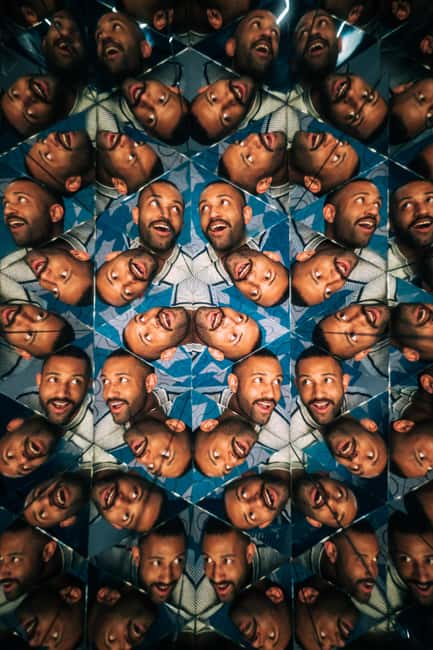
Because the museum is a one-way flow, going solo can actually be a plus. You can move at your pace, stop longer where you want, and skip less interesting effects without feeling like you’re holding up a group.
That said, staff aren’t positioned at every single photo spot. Some visitors found that if you go entirely on your own, you might occasionally feel like you want guidance right at a display. If photos matter to you, it helps to be ready to ask for support for the tricky group shots rather than trying to solve it alone for too long.
The good news: staff are described as friendly and supportive, and when you do ask, you’ll usually get help. That turns potential hassle into smoother “OK, I get it now” moments.
If you’re visiting with family, a small group setup helps keep things manageable. Limited group size can mean less crowd pressure at photo points and a more comfortable rhythm through the maze.
Paradox Boutique and Café: Turning the Visit into a Whole Stop
Before you go back to regular life, you’ll have a chance to stop at the Paradox Boutique. This is one of those add-ons that can actually feel useful. Rather than a random souvenir shelf, it’s themed around the paradox idea—games, clothing, and small items that help you remember what you saw.
It’s also handy that you can access the café as part of your ticket. Even a simple snack break can make the whole visit feel easier, especially if you scheduled it between other sightseeing.
If you like to bring home something small that fits the vibe of the place, this shop can be a good final step. And if you’re just browsing, it’s still part of the experience flow, not something tacked on later.
Best Time to Go (Based on How the Museum Feels in Real Life)

This kind of museum experience is strongly affected by crowds. One family mentioned going on a Sunday afternoon when it wasn’t too busy. That’s the dream scenario: you can pause for photos without feeling rushed.
On busier days, the limitation isn’t the exhibits. The limitation is time at photo points and the pace of getting people through the line. If you want the smoothest experience, aim for a less crowded time of day.
Also, plan backward from the schedule. Because last entry is 6 p.m., you don’t want to arrive late and then feel like you’re sprinting through 90 exhibits.
Who Should Book Paradox Museum Paris?
Book it if you want:
- A hands-on optical illusion experience that’s structured and easy to follow
- A museum that includes photo opportunities built into the layout
- A short, family-friendly outing that still has an educational component
- Something different from typical Paris museum days, with modern interactive art energy
You might reconsider if:
- You or someone in your group has epilepsy (this isn’t suitable)
- You’re likely to get frustrated by crowds and waiting at photo spots
- You prefer museums with long guided narratives rather than self-paced exhibits with prompts and QR codes
Should You Book Paradox Museum Paris?
If you’re looking for a fun, structured, photo-friendly break from typical Paris sights, I think Paradox Museum Paris is an easy yes. The combination of 90 illusions, marked photo points, and short explanations on how paradoxes work makes it worth the $34 ticket price for many people—especially families and anyone who likes learning while being amused.
Just book with the timing in mind. Aim to arrive early enough to enjoy the full flow before last entry at 6 p.m., and you’ll get the best mix of chill fun and brain-bending moments.
FAQ
What’s the duration of the Paradox Museum Paris ticket?
The ticket experience runs about 84 minutes on average.
How much are entrance tickets?
Tickets cost $34 per person.
What does the ticket include?
Your ticket includes access to the exhibits, plus access to the Paradox Boutique store and the café.
How big are the groups?
It’s a small group experience, limited to 10 participants.
What languages are offered at the museum?
The host or greeter is available in English and French.
Is Paradox Museum Paris wheelchair accessible, and is it suitable for epilepsy?
The museum is wheelchair accessible. It is not suitable for people with epilepsy.
What’s the last entry time?
The last entry is 6 p.m., which is two hours before closing.