Montmartre rewards slow wandering. This 2-hour walking tour pairs a local guide with secret streets and standout Paris viewpoints, then ends at Sacré‑Cœur so your final photos feel earned. Along the way you’ll follow an artist trail through famous names and surprising details, from Van Gogh and Picasso to Dalida and even a painting donkey named Lolo.
I especially like the buttery croissant start and the small-group size capped at 14, which keeps the vibe friendly instead of rushed. The one practical drawback: expect uphill walking and stairs as you work your way toward Sacré‑Cœur, so comfortable shoes really matter.
In This Review
- Key Things to Know Before You Go
- Montmartre on Foot: Why This Route Works
- Meeting at Blanche: Easy Start, Real Paris Pace
- The Croissant Start: Fuel Before the Hills
- Moulin Rouge to the Quiet Lanes: What the Guide Changes
- Wall of Love: A Photo Stop With Meaning
- Moulin de la Galette: Linking Art, Lifestyle, and the View
- Lapin Agile and the Lolo Donkey Story
- Artist Homes and Names: Van Gogh, Picasso, Dalida
- Sacré-Cœur Finish: The Best Way to End a Walking Tour
- Price and Value: What You’re Paying For at $39
- Who This Tour Suits (and Who Might Want to Adjust)
- Sustainability and Guide Style: Carbon-Neutral, B Corp, and More Human
- Practical Tips for a Smooth Montmartre Walk
- Should You Book This Montmartre Walking Tour?
Key Things to Know Before You Go

- Meet outside Blanche metro (line 2) at ground level and start walking right away.
- An award-winning butter croissant is included early, before the climb.
- Secret viewpoints over Paris plus quieter staircases for better photos.
- Artist storytelling on the route: Van Gogh, Picasso, Dalida, and the donkey Lolo.
- Classic Montmartre sights timed to keep you moving, not stuck in crowds.
- Finish at Sacré‑Cœur with sweeping skyline views to close the loop.
Montmartre on Foot: Why This Route Works
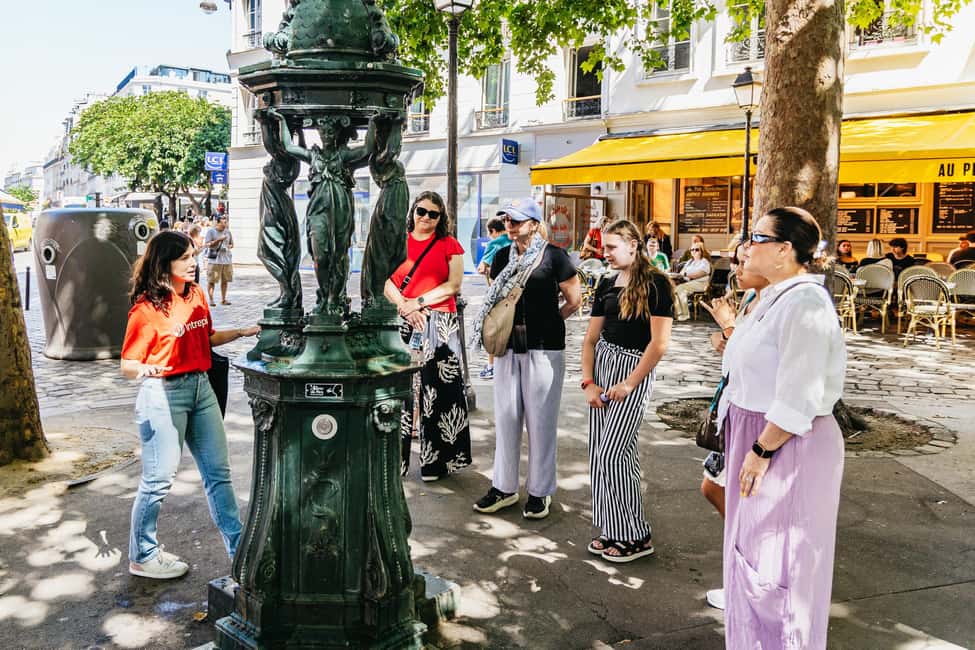
Montmartre is one of those neighborhoods where the best parts aren’t the loudest ones. You’ll spend your time on winding lanes, small stairways, and overlook points that make you stop without needing a ticket line. A local English-speaking guide ties it together so the place feels like more than just postcards.
The tour’s small-group format is a big deal for comfort and attention. With a maximum of 14 people, you can hear your guide clearly, ask questions, and actually catch details as you walk. One review even noted the lack of microphones, which can make the experience feel more like a conversation than a performance.
The other big reason this works: the tour ends where you want to be at sunset or late morning. Sacré‑Cœur is the natural finishing point, and you’ll get a gradual climb rather than a sudden sprint.
You can also read our reviews of more tours and experiences in Paris.



Meeting at Blanche: Easy Start, Real Paris Pace
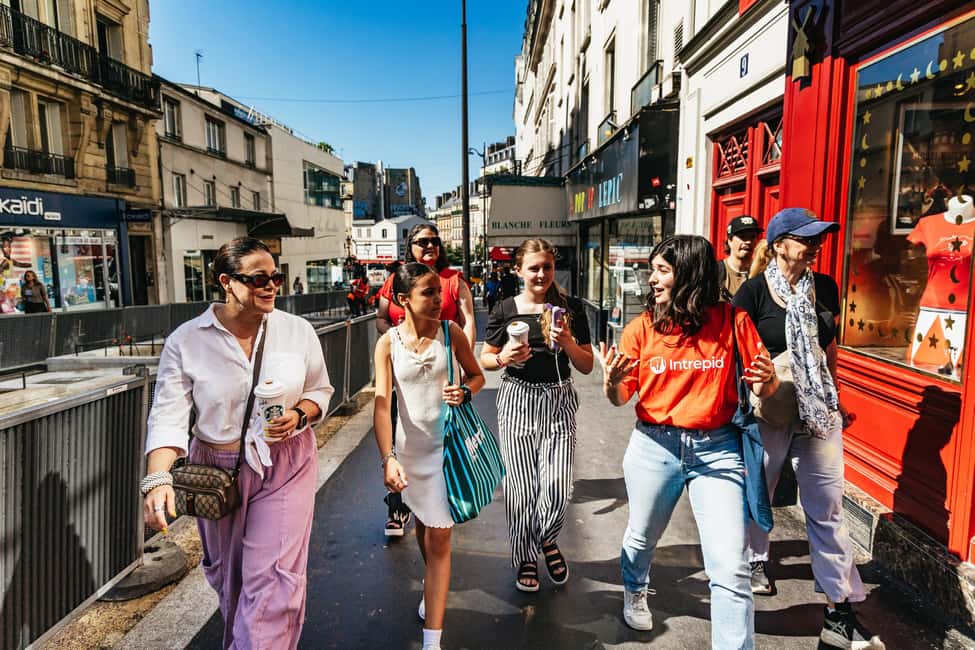
You begin outside the Blanche metro stop (line 2), at ground level. That matters because Montmartre can be a little maze-like once you’re already inside the neighborhood, so starting at a clear landmark keeps you from wasting the first part of your time figuring things out.
From there, you’ll move through Montmartre at a walking pace meant for a mix of people. The tour is listed as about 2 km (1.2 miles) over roughly 2 hours, so you’re not doing an all-day hike, but you are doing real neighborhood walking.
Practical tip: show up a few minutes early. When you’re meeting at a metro entrance, crowds and street traffic can scramble your timing faster than you’d expect.
The Croissant Start: Fuel Before the Hills
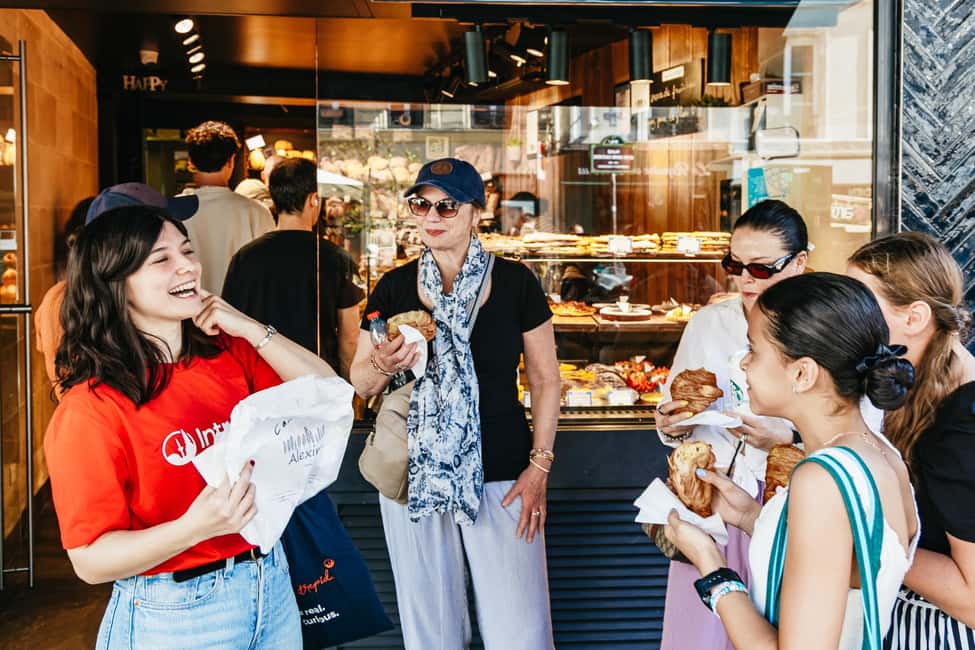
The tour begins with a fresh butter croissant from an award-winning Paris bakery. This is more than a snack stop. It’s smart timing: you’ll have energy before the uphill segments, and you’ll start your Montmartre experience with a distinctly Paris ritual.
If you like bakery culture, you’ll probably enjoy how the guide frames the experience. The croissant isn’t treated like a random extra. It’s an easy, tasty anchor for the start of your walk, and it also gives you a moment to reset before the streets tighten.
Diet note: the tour says vegetarians are welcome, but it does not cater to lactose-free, gluten-free, or vegan diets. So if dietary restrictions are strict for you, plan accordingly before you book.
Moulin Rouge to the Quiet Lanes: What the Guide Changes
A lot of Montmartre tours skim the area the same way: main streets, big landmarks, quick photos, then out. This tour takes a different angle by focusing on quieter lanes and the kind of viewpoints you’d normally miss if you’re only following the busiest routes.
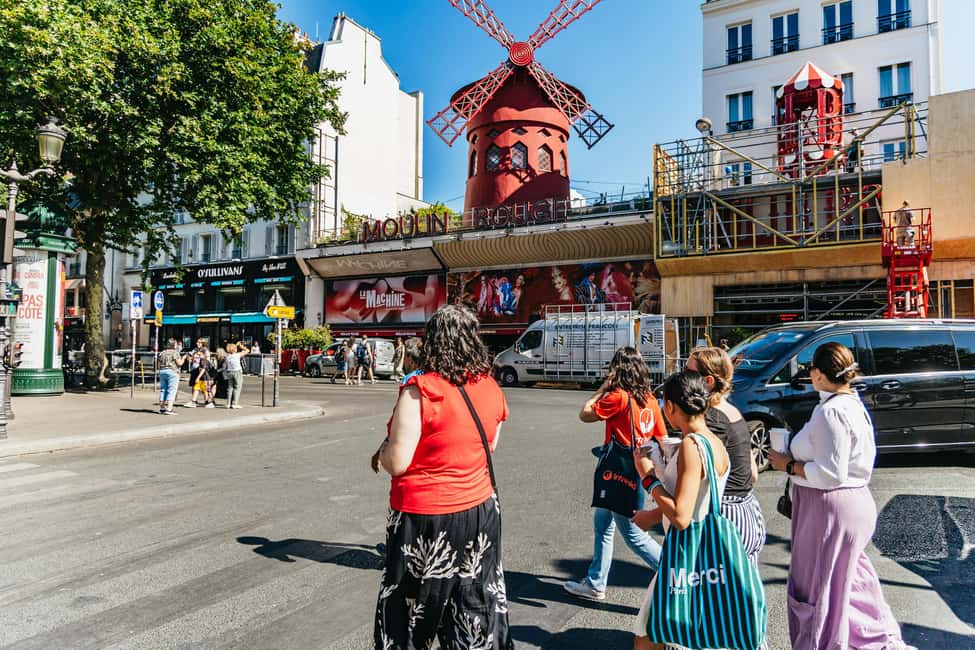
You’ll pass by Moulin Rouge early in the walking loop. Even if you’ve seen it in photos, it feels different in person at street level, and it works well as a reference point as you head into the calmer side streets afterward.
Here’s what you’ll likely notice as you walk: Montmartre is layered. Some streets feel like they’re designed for slow steps—small turns, short staircases, sudden openings where you catch a new angle over the city. That’s where the guide earns their keep: you stop at spots that make sense, and you hear the stories that explain why artists and dreamers were drawn here.
Wall of Love: A Photo Stop With Meaning
The Wall of Love is one of those places that looks simple until you realize why people keep returning to it. You’ll have a short stop—about 20 minutes—which is enough time to grab photos and read the vibe without lingering too long.
Why it fits this tour: it’s in the middle of the Montmartre experience, acting like a visual break between artist landmarks. It also helps you switch modes. One minute you’re hearing about creators and their homes; the next you’re photographing a wall that people treat like a living message board.
If you care about photos, bring your best camera settings and then don’t overthink it. The Wall of Love is set up for quick, fun shots, and you’ll be able to move on while the group is still together.





Moulin de la Galette: Linking Art, Lifestyle, and the View
Next comes Moulin de la Galette, a name that feels famous even if you don’t know every detail. In Montmartre, these landmarks often sit at the intersection of art and daily life—places where artists watched the world, and where the neighborhood rhythm became part of the story.
This section is where the tour’s storytelling tends to do its most useful work. Instead of listing dates and names, the guide connects the artists to the streets. You’ll hear about figures associated with Montmartre, and you’ll start to understand why certain corners of this neighborhood kept showing up in creative work.
As you walk, pay attention to the uphill moments. They don’t just move you to Sacré‑Cœur. They change your perspective, and the city starts opening up around you in slices. That’s how the viewpoint stops over Paris make sense—your eyes are already climbing toward them.
Lapin Agile and the Lolo Donkey Story
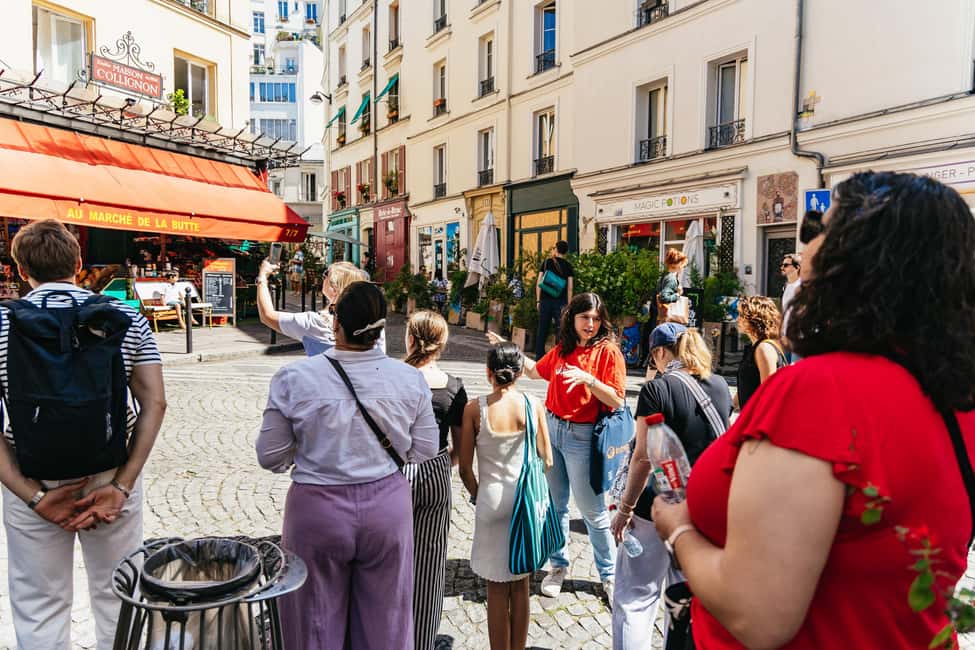
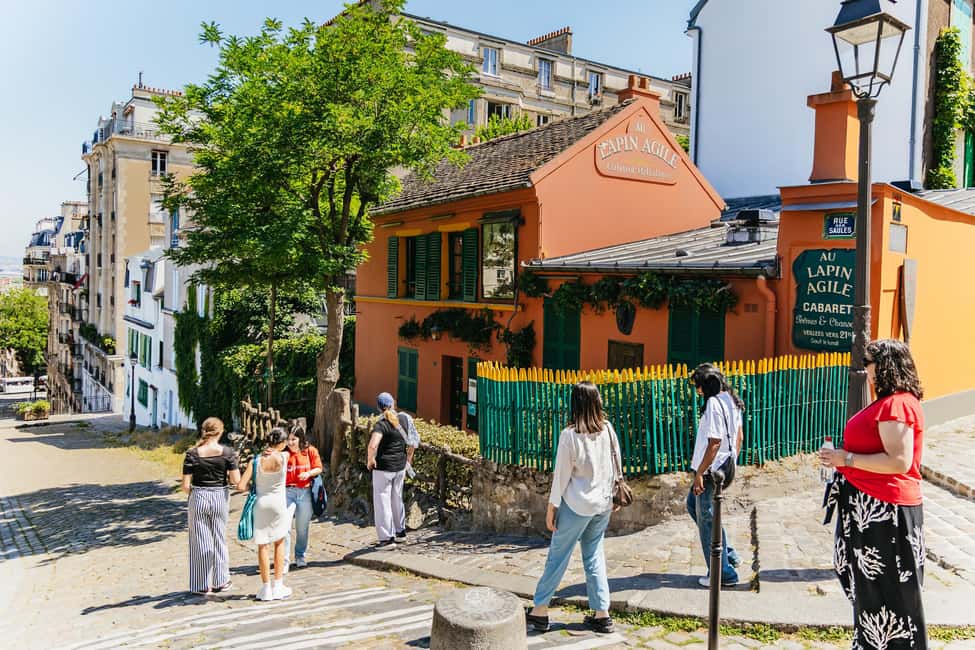
You’ll also stop at Lapin Agile, described as a historic spot, with time set aside for sightseeing around it (about 15 minutes). If you’ve ever wondered why Montmartre feels theatrical, this is the kind of place that helps it click.
What makes this stop memorable in this tour format is the mix of known and quirky. You’re not just seeing the place. You’re hearing the stories that gave the area its bohemian reputation. One standout detail mentioned is a painting donkey named Lolo, a weirdly charming piece of Montmartre lore that turns a quick stop into a story you’ll remember later.
This is also a good moment to take a breath. By now you’ve walked through a few of Montmartre’s layers, and Lapin Agile offers a slower beat before the final stretch toward Sacré‑Cœur.
Artist Homes and Names: Van Gogh, Picasso, Dalida
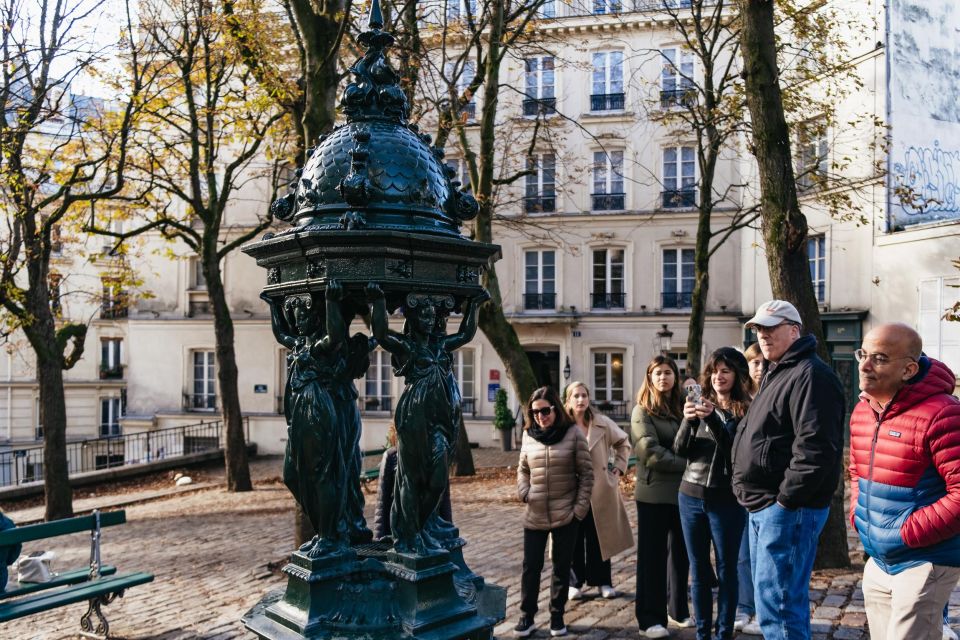
A major part of why people book this tour is the artist trail. You’ll see Van Gogh’s and Picasso’s former homes and hear their stories as you move through the neighborhood.
You’ll also encounter references to Dalida, another major name tied to the area’s creative energy. The tour doesn’t treat these artists like museum facts. Instead, it places them near the streets you’re standing on, which helps you picture how they might have walked, worked, and looked out over the city.
From the guide side, the experience seems to rely a lot on personality. Different guides come through on different days—some names you might hear include Cecelia, Max, Camille, Benjamin, Paloma, Sara, and Linda. The common thread in the feedback is how well the guide connects history to the street scene, so adults get the artistic context and families don’t feel like they’ve been dropped into a lecture.
Sacré-Cœur Finish: The Best Way to End a Walking Tour
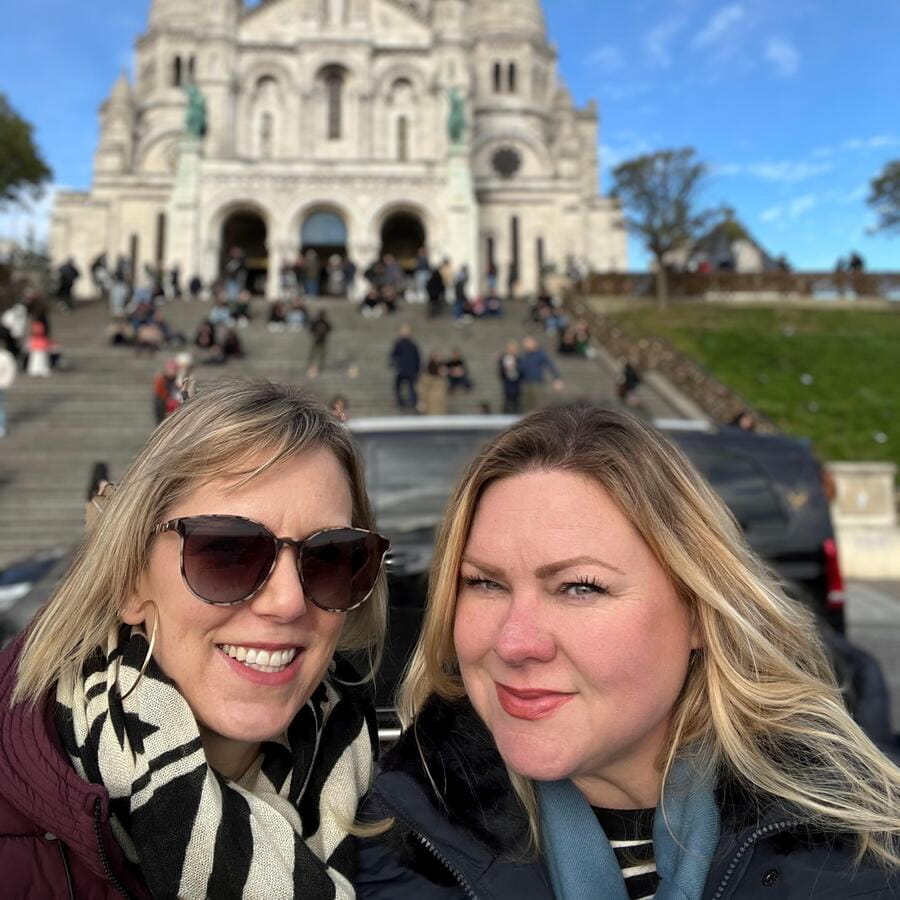
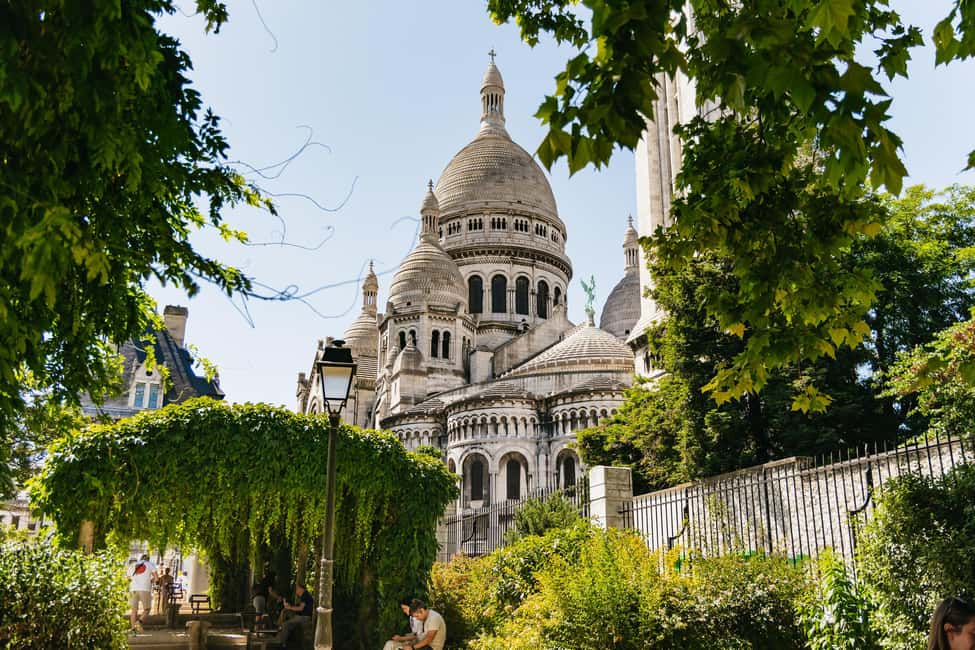
You finish at the Basilica of Sacré‑Cœur. By the time you get there, you’ve climbed long enough to feel the view is a payoff, not just a destination. This is why the timing of the route matters: you’re not rushing through the climb to reach a photo. You’re building toward it.
What you can expect at the end is exactly what makes Sacré‑Cœur worth last: sweeping views over Paris. Even if you’ve seen photos before, the scale looks different when you can stand near the basilica and actually take it in from multiple angles.
If you want to keep your momentum after the tour, this ending point also gives you a head start on planning. Sacré‑Cœur is a natural launching point for more wandering, snacks, and follow-on viewpoints.
Price and Value: What You’re Paying For at $39
At $39 per person for a 2-hour guided walk that includes a croissant, the value depends on what you want out of Montmartre.
You’re paying for three things that are hard to replicate solo:
- A guide to interpret the streets, not just point them out.
- Strategic stops for photos and viewpoints rather than random walking.
- Food at the start that makes the whole experience feel more like a local morning than a basic sightseeing shuffle.
If you were to do this on your own, you could absolutely walk Montmartre and eat a croissant. But you’d likely miss the connections between artists and the specific corners tied to their stories. You’d also waste time trying to guess which streets offer real photo angles without backtracking.
One more angle: the small group size capped at 14 helps you feel the guide’s attention. That’s part of the value, not just a comfort perk.
Who This Tour Suits (and Who Might Want to Adjust)
This tour is a strong fit if you want:
- Artist stories in real locations rather than a slide show.
- Photo opportunities that come from knowing where to stand.
- A short, focused walking plan instead of an all-day schedule.
It also works for families in a practical way. The tour notes that children under 6 are welcome, so the operator isn’t treating this as an adults-only outing. In at least one family booking, the guide tailored the pace and kept both kids and adults interested, which is exactly what you want on a hill-walking day.
You might rethink your plan if you know you have trouble with uneven cobblestones or uphill stairs. The tour says about 2 km of walking, with comfortable shoes recommended, and Montmartre’s elevation is part of the charm.
Sustainability and Guide Style: Carbon-Neutral, B Corp, and More Human
This experience is described as carbon-neutral and run by a B Corp-certified company committed to responsible tourism. That’s not just a badge. It signals that the operator is thinking about the footprint and the ethics of how tours are run.
You’ll also feel the difference in the guide approach. Feedback repeatedly points to guides who use stories effectively and keep the pace reasonable. Some guides are funny; some are more gently animated. Either way, the core is that the tour doesn’t sound like a monologue. It feels like a guided walk where you can ask questions and keep moving.
No microphones are mentioned in feedback too, which can be a plus if you dislike hearing tours blasted over a loud speaker. It also makes the experience feel more personal in the street-level noise of Montmartre.
Practical Tips for a Smooth Montmartre Walk
A good Montmartre day is planned like you’re going to be on your feet outdoors, not like you’re hopping from stop to stop by tram.
- Wear comfortable shoes with grip for stairs and cobbles.
- Bring weather-appropriate clothing. Montmartre is open to wind and changing conditions as you climb.
- Plan for photo stops. This tour is built for viewpoints, so leave a little room to pause without feeling rushed.
- If you have dietary needs, double-check whether they can be accommodated. The tour includes a croissant and it does not cater to lactose-free, gluten-free, or vegan diets.
Also, if you’re the type who likes details, use the croissant pause to ask a question. A good guide will often steer you toward the best angles for photos as you go.
Should You Book This Montmartre Walking Tour?
Book it if you want Montmartre with a local storyteller, a reliable walking route, and an easy start that includes an award-winning croissant. It’s especially worth it when you care about why the artists mattered and you want to connect names like Van Gogh, Picasso, and Dalida to places you can actually stand in front of.
Skip it or choose something else if you can’t comfortably handle uphill walking and cobblestones. And if your diet needs lactose-free, gluten-free, or fully vegan options, this one isn’t set up for that.
If your goal is two hours that feel like Paris lived-in time—street stories, photo viewpoints, and a proper finish at Sacré‑Cœur—this is a solid bet.