Paris clicks into place on two wheels.
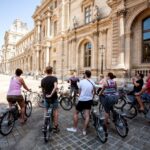
This 4-hour ride is a smart way to get oriented fast and still see the Paris most people miss, from Shakespeare and Company to the old Roman arena underfoot. I like how the route links two neighborhoods with very different vibes, and how you pause often enough to actually look, not just pedal past.
I love two things most: the bike-and-helmet rental included (no hauling gear) and the small group cap (you’re not lost in a crowd). You also get a guide who layers street-level details over the big names, so places like Saint-Sulpice and the Pantheon feel like part of a real neighborhood story.
One consideration: this is a city bike tour with traffic around at times, so you need to be comfortable riding in close quarters and following the guide at intersections. Also, there are no bike baskets, so plan on using a backpack or small day bag.
In This Review
- Key takeaways before you pedal
- Where the tour starts: Fontaine Saint-Michel to get your bearings
- Latin Quarter by bike: Shakespeare and Co. and the old café circuit
- Stop 1: Shakespeare and Company (free, about 15 minutes)
- Stop 2: Le Procope (free, about 10 minutes)
- Stop 3: Église Saint-Sulpice (inside visit, about 15 minutes; admission not included)
- Pantheon to rue Mouffetard: power sights plus a Roman secret
- Stop 4: Pantheon (free, about 15 minutes)
- Stop 5: Rounding rue Mouffetard at Marche Monge (about 30 minutes; lunch on your own)
- Stop 6: Arenes de Lutece (free, about 20 minutes)
- Le Marais, but not like the postcards: Memorial de la Shoah to Place des Vosges
- Stop 7: Memorial de la Shoah (free, about 15 minutes)
- Stop 8: Rue des Rosiers (free, about 15 minutes)
- Stop 9: Place des Vosges (free, about 15 minutes)
- Philip II Augustus and Hotel de Sens: fortress streets and a stuck cannonball
- Stop 10: Wall of Philip II Augustus (free, about 15 minutes)
- Stop 11: Hotel de Sens (free, about 15 minutes)
- How the ride feels in real life: pace, traffic, and one-speed bikes
- Price and value: why $54.42 can make sense
- Who should book this bike tour (and who should skip it)
- Should you book? My straight answer
- FAQ
- What is the duration of the Paris Bike Tour Hidden Secrets in the Latin Quarter & Le Marais?
- How much does it cost?
- What languages is the tour offered in?
- Does the tour include bike and helmet rental?
- Where does the tour start and what time does it begin?
- Is food or drinks included?
- Is admission included for all stops?
- How large is the group?
- Do I need to know how to ride a bike?
- What is the cancellation policy?
Key takeaways before you pedal
- Bikes and helmets are included so you can travel lighter.
- Maximum 12 riders keeps the experience personal and easier to manage.
- You mix famous stops with quieter ones, including Arenes de Lutece and the Philip II Augustus wall.
- Most admission is free, with Saint-Sulpice being the main exception.
- Lunch is on you, with a 30-minute break around rue Mouffetard.
- WWII remembrance is part of the Le Marais route, including the Memorial de la Shoah.
Where the tour starts: Fontaine Saint-Michel to get your bearings
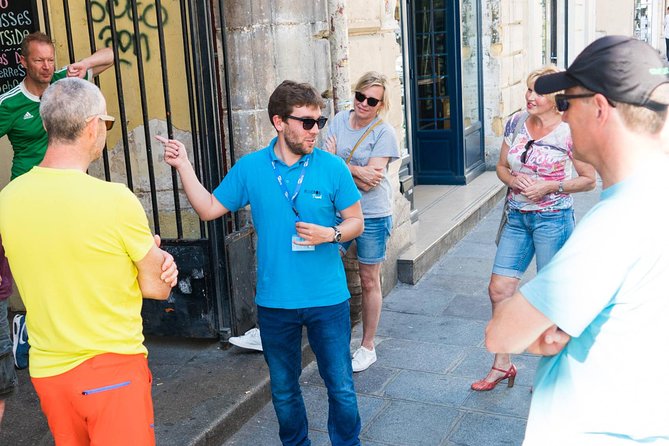
Meet at Fontaine Saint-Michel in Place Saint-Michel, 75005 Paris, and the tour begins at 10:00 am. It’s in a central spot with public transit nearby, which matters because a bike tour is only fun if you show up calm and on time.
This is a loop that ends back at the meeting point. That sounds basic, but it’s useful: you’re not guessing how to get back after 4 hours of cycling (or trying to read a map with tired legs).
You’ll get a mobile ticket, and then it’s all about getting set up with your rental bike and helmet. The tour runs in all weather, so you’ll be dressing for the forecast—and skipping flip-flops. If rain shows up, some guides have been known to have ponchos ready, which can save the day.
You can also read our reviews of more cycling tours in Paris

Latin Quarter by bike: Shakespeare and Co. and the old café circuit
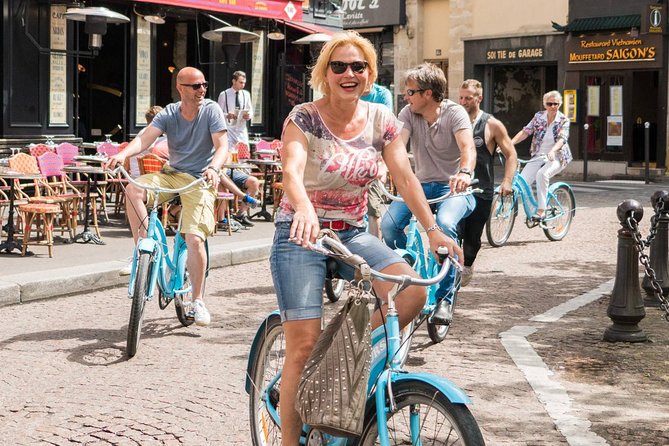
The first half stays in the heart of the Latin Quarter, one of Paris’s oldest areas tied to the early student culture around La Sorbonne. On bike, the “tiny back streets” part is real: you’ll feel the scale shift from major avenues into narrow lanes where the city looks like it did for centuries.
Stop 1: Shakespeare and Company (free, about 15 minutes)
Shakespeare and Company is more than a bookstore stop—it’s a place people treat like a literary landmark. The building feels medieval with wooden beams and plaster walls, and the shelves crowd with books across ages and genres.
What I like about stopping here is that it’s a break from sightseeing-as-checklist. You get time to wander inside on your own, and that’s where you’ll spot the details that don’t translate well in photos.
Stop 2: Le Procope (free, about 10 minutes)
Then you hop to Le Procope, described as the oldest café in Paris, founded in 1686. The guide ties it to big names—Benjamin Franklin, Voltaire, Napoléon Bonaparte, and Victor Hugo—so you’re not just looking at a façade.
You’ll mostly be there for a quick story-and-photo moment, not a long café hang. Still, it’s a fun rhythm change: bookstore quiet, café history, then back on the bike.
Stop 3: Église Saint-Sulpice (inside visit, about 15 minutes; admission not included)
Saint-Sulpice is almost the biggest church in Paris, and the route uses it like a history lesson you can walk into. You’ll hear about the mismatched towers and why it caught the attention of The Da Vinci Code.
One thing to note: admission at Saint-Sulpice is not included, so you should plan for a ticket there. If you hate surprise payments, this is the one stop to mentally budget.






Pantheon to rue Mouffetard: power sights plus a Roman secret
From church grandeur, the tour moves into a mix of monuments and lived-in streets.
Stop 4: Pantheon (free, about 15 minutes)
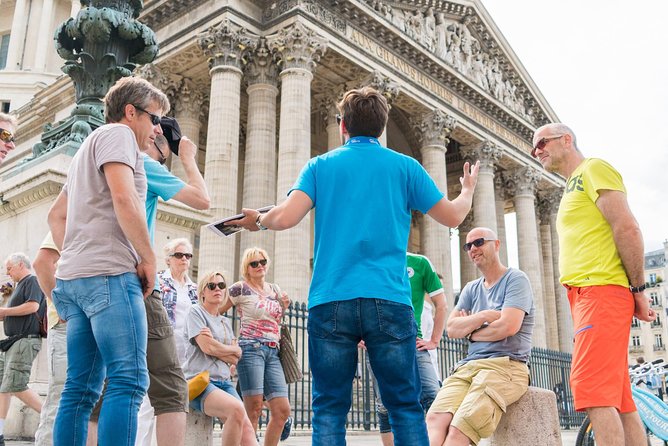
The Pantheon is huge, but it’s often overlooked by foreign visitors who focus only on Notre-Dame and the Eiffel Tower. You’ll learn who’s buried there—Pierre and Marie Curie, Alexandre Dumas, Victor Hugo, and Josephine Baker—so it stops being just a “big dome” photo.
This stop works especially well on bike because it gives your legs a breather while your brain gets a bigger picture of French culture and ideas.
Stop 5: Rounding rue Mouffetard at Marche Monge (about 30 minutes; lunch on your own)
Next is a local-feeling break at Marche Monge, where you’re guided into a calmer street café ambiance. You get 30 minutes for lunch on your own cost.
The tour frames it as a spot where locals go for savory crêpes—though you can also choose an adorable nearby bakery or café if you want something different. Practical advice: set a meetup time in your head and don’t wander too far. In busy markets, it’s easy to “just grab a bite” and lose track of the clock.
Stop 6: Arenes de Lutece (free, about 20 minutes)
Here’s one of the tour’s strongest “wait, that’s in Paris?” moments: Arenes de Lutece, an ancient Roman arena. The framing is simple—think a Roman Colosseum idea, but tucked into Paris.
You’ll cycle into the arena itself, and the guide explains how Roman presence shaped Paris and what kinds of brutal shows were held here. It’s a short stop, but it lands because it’s physical. You’re not just hearing about history; you’re riding into the space.
Le Marais, but not like the postcards: Memorial de la Shoah to Place des Vosges
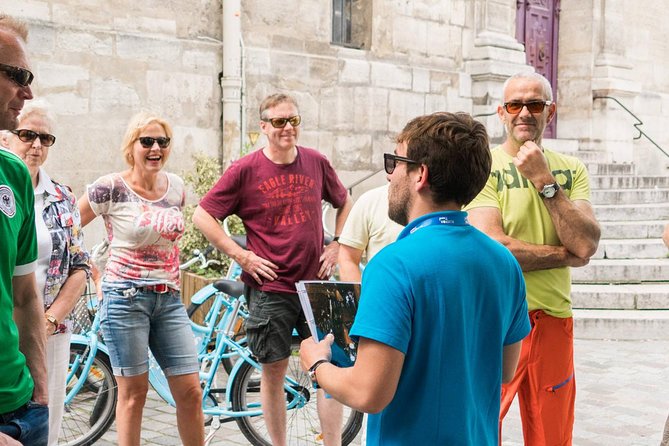
After the Latin Quarter, the tour shifts into Le Marais, a neighborhood with a layered past that includes a strong Jewish community. The route’s focus is that the neighborhood isn’t just boutiques—it carries memory and identity.
It’s also a practical sightseeing advantage: Le Marais has a layout that’s walkable, and when you add bike, you can cover more without losing your day to detours.
Stop 7: Memorial de la Shoah (free, about 15 minutes)
This is the emotional anchor: the wall engraved with names of over 3,900 non-Jewish French people who risked—and sometimes lost—their lives trying to save French Jewish people during WWII.
It’s heart-heavy, but it’s also handled as part of understanding the neighborhood’s cultural roots. If you’re someone who likes your tours light and funny the whole time, this stop may feel serious. I’d still call it essential, because it gives context to why Le Marais means what it means today.
Stop 8: Rue des Rosiers (free, about 15 minutes)
Then it turns more sensory: Rue des Rosiers is a pedestrian street where you walk along your bike, peeking at shops and catching restaurant aromas. The focus here is the heart of the Jewish neighborhood, with kosher restaurants and small boutique storefronts.
If you’re shopping-minded, this is a good stretch. If you’re not, it’s still a great place to slow down and look—shop signs, textures, and everyday street life that doesn’t feel staged.
Stop 9: Place des Vosges (free, about 15 minutes)
Place des Vosges is one of Paris’s most beautiful public squares, with red brick buildings from the 1500s. The tour balances the “elite art shops and a fancy hotel” edge with the reality that locals picnic in the grassy center and let kids splash in the fountains.
This stop is short but valuable because it resets your sense of Paris geometry. Squares like this help you understand why the city feels so different block to block.
Philip II Augustus and Hotel de Sens: fortress streets and a stuck cannonball
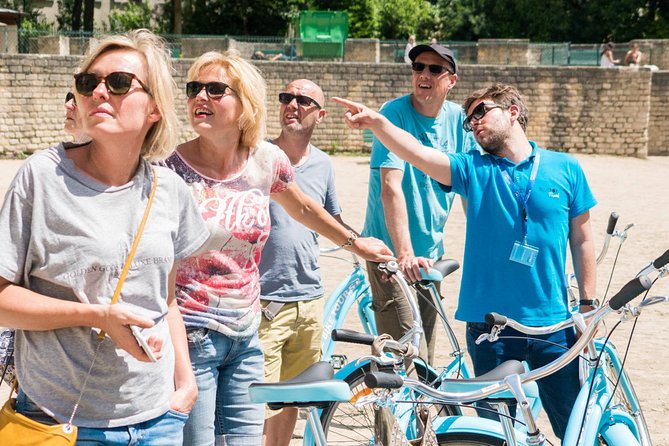
The final stretch focuses on defense and hidden architecture—two themes that fit Le Marais because so much of its story is literally in the walls and buildings.
Stop 10: Wall of Philip II Augustus (free, about 15 minutes)
You’ll stop at the largest and best-preserved section of the massive stone wall built under King Philippe August in the 1100s to defend Paris. The guide also draws a contrast with England’s Richard the Lionheart, including a relationship that sounds surprising.
The reason I like this stop: it turns the idea of “old Paris” from vague to specific. You can point at where protection literally sat, and you get a mental map of how the city expanded.
Stop 11: Hotel de Sens (free, about 15 minutes)
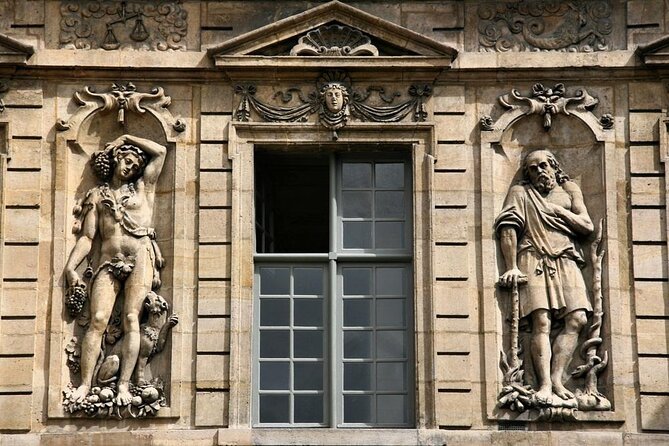
Hotel de Sens looks fortress-like, with turrets and gargoyles. It’s tucked away from the biggest tourist currents, and that’s why it’s a perfect bike-tour ending: you’re seeing Paris’s side streets, not just the highlights everyone posts.
You’ll also hear a funny story about how a cannonball got stuck in the facade. That kind of detail is why these last stops stick in your head—history with a sense of human weirdness.
How the ride feels in real life: pace, traffic, and one-speed bikes
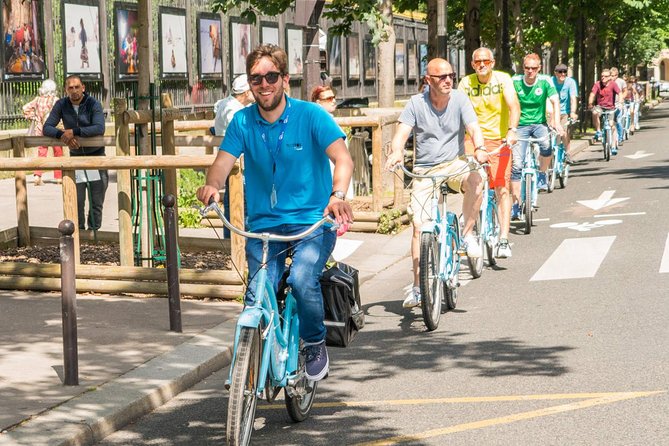
This tour is paced as a 4-hour experience with frequent stops, so it’s not constant “ride until you collapse” cycling. Still, you should take it as an active day.
All participants age 10 and over must know how to cycle on their own. It’s not recommended for adults who scare easily or who aren’t confident on bikes in traffic. And this isn’t a car-free route all the time. Some routes include crossings where bikes are close to cars, buses, and trucks, and you’ll need to stay alert and follow the guide precisely.
A few practical points from past experiences:
- The ride can include main road crossings where the group may split briefly. If you like tight formations, you’ll want to keep close to your guide.
- Bikes are one-speed, which can mean more pushing on hills and during intersections.
- There aren’t bike baskets. If you don’t want to carry everything in your hands, bring a small backpack.
- Meeting can be tricky if the fountain area is obstructed by construction or tents. It helps to arrive a bit early and check that you’re at the right spot.
On the plus side, many guides are praised for keeping people feeling safe and well-timed. Names that have come up include Arnaud, Cece, Aaron, Michaelangelo, Lulu, Antoine, Joris (Joe), Lena, Lucien, and Irving—with feedback often tied to patient pacing and strong local storytelling.
Price and value: why $54.42 can make sense
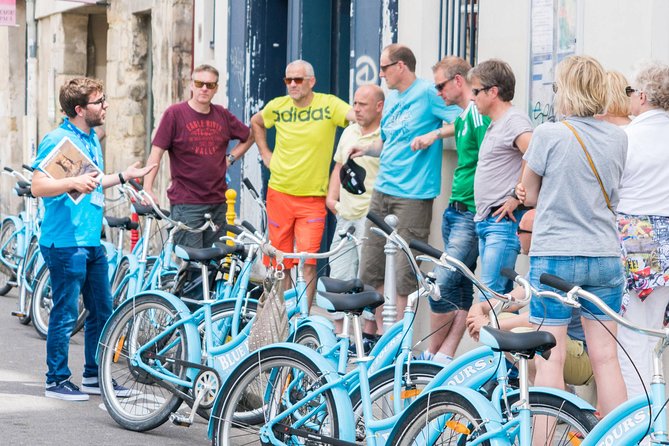
At $54.42 per person, you’re paying for more than “rent a bike and point forward.” You’re buying:
- Guided structure across two neighborhoods (Latin Quarter + Le Marais)
- Bike + helmet rental included
- Access to stops you might skip because they’re not always on the standard top-10 list
- Multiple cultural anchors, including Roman ruins and WWII remembrance
If you were to rent a bike on your own, you’d still need to solve route planning, safety, and timing. Here, the guide takes care of that—and you get the benefit of being told what to notice while you’re moving.
Is it perfect value for everyone? No. If you’re expecting a traffic-free cruise, you may feel disappointed. If you want an easy stroll day, cycling plus street crossings might not be your thing. But for the right person—someone who can ride confidently—this price often reads as fair for a well-managed half-day.
Who should book this bike tour (and who should skip it)
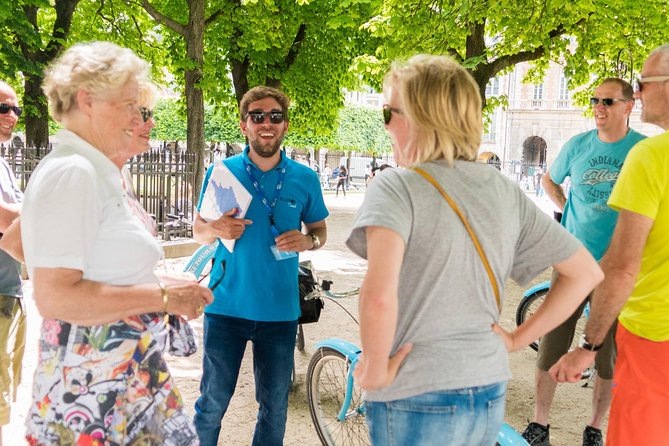
Book it if you:
- Want a fast orientation to central Paris plus meaningful side streets
- Like history that shows up in architecture and street layout, not just museum walls
- Can ride a bike confidently for a few hours and follow instructions at intersections
- Prefer a small group, not a mass convoy
Consider skipping if you:
- Don’t feel comfortable cycling around traffic
- Want a fully low-effort day with minimal physical work
- Get stressed by one-speed bikes and hill pushes
- Hate tours with a serious WWII stop (Memorial de la Shoah is part of the route)
Should you book? My straight answer
I think this is a strong pick if you’re a confident cyclist and you want two iconic-but-different parts of Paris handled in one half-day. The mix of stops—from Shakespeare and Company to Arenes de Lutece and then Memorial de la Shoah—gives you both wonder and grounding.
If you’re unsure about city riding, don’t “tough it out.” You’ll enjoy the tour more when you’re relaxed on the bike. But if you can handle that, this is one of the most practical ways to cover serious Paris culture without wasting your time stuck in lines or wandering aimlessly.
FAQ
What is the duration of the Paris Bike Tour Hidden Secrets in the Latin Quarter & Le Marais?
It runs for about 4 hours.
How much does it cost?
The price is $54.42 per person.
What languages is the tour offered in?
The tour is offered in English.
Does the tour include bike and helmet rental?
Yes. Bike and helmet rentals are included.
Where does the tour start and what time does it begin?
It starts at Fontaine Saint-Michel, Pl. Saint-Michel, 75005 Paris, France, and it begins at 10:00 am.
Is food or drinks included?
No. You’ll pay for your own lunch during the break at the Marche Monge stop.
Is admission included for all stops?
Most stops list free admission, but Église Saint-Sulpice notes that admission is not included.
How large is the group?
The tour has a maximum of 12 travelers.
Do I need to know how to ride a bike?
Yes. All participants age 10 and over must know how to cycle on their own.
What is the cancellation policy?
You can cancel for a full refund up to 24 hours in advance of the start time. If you cancel less than 24 hours before, the amount paid is not refunded.