REVIEW · MONT ST MICHEL
Normandy Victory Museum admission ticket
Book on Viator →Operated by Normandy Victory Museum · Bookable on Viator
June 1944 comes at you fast.
At the Normandy Victory Museum in Carentan, you get a focused look at a less-talked-about slice of the D-Day aftermath: the Battle of the Hedges. I like that the museum is built around 20 large, life-sized scenes plus more than 10,000 original objects, so the story feels grounded, not abstract. I also like the chance to interact—jeeps, lorries, and other old vehicles show up indoors and outdoors, and you can even sit in some of them. One drawback to plan for: the exhibits are busy with sounds and scenes, so a small TV area has audio that can feel hard to hear unless you find the right spot.
If you’re pairing this with other Normandy stops, this is a smart “one-and-done” ticket: plan about 1.5 to 2 hours, then move on while the day’s D-Day context is fresh. The museum is in English, uses a mobile ticket, and keeps the visit accessible for most people. If you’re sensitive to dense war imagery or you want only battlefield maps and big-name speeches, you might find the tighter focus on one phase of fighting a little narrow.
In This Review
- Quick take: what makes this museum worth your time
- The Battle of the Hedges: why this museum feels different
- Inside the museum: scenes, artifacts, and details that hold your attention
- The vehicles and outdoor displays: where the story becomes physical
- The shop and on-site food: practical breaks when the day runs long
- Timing and opening hours: plan for the season, not the clock
- Tickets, language, and what you get for $11.95
- How this fits your trip: who should book and who should skip
- Should you book the Normandy Victory Museum admission ticket?
- FAQ
- How long does the Normandy Victory Museum visit take?
- Is the ticket mobile, and is it available in English?
- What are the opening hours?
- Does the admission include food and drinks?
- Are there discounts for children or students?
- What if I need to cancel?
Quick take: what makes this museum worth your time
- Battle of the Hedges focus: you learn what happened right after D-Day, when fighting moved into hedgerow country.
- 20 larger-than-life scenes: each room helps connect daily life, combat, and the civilian reality of 1944.
- 10,000+ original items: lots of real artifacts, not just replicas and captions.
- Vehicles you can get close to: indoors and outdoors, including famous models like Sherman-type tanks in the display set.
- A strong shop and simple break options: a standout gift shop, and an on-site cafe is available for a quick pause.
- Small group feel: capped at 100 travelers, so it doesn’t turn into a crowd stampede.
The Battle of the Hedges: why this museum feels different
Most D-Day stops emphasize the landings and the big headline story. This museum takes you to the messy, slower, harder part that followed: fighting through hedgerows in Normandy, where visibility is limited and every approach can be brutal.
That focus matters for two reasons. First, the hedges shaped the tactics—so the displays don’t just show uniforms and weapons; they explain why movement was hard and why combat looked the way it did. Second, you get a sense of how the war pressed into ordinary life, not only military events.
The museum’s layout also helps you stay oriented. Instead of flipping through disconnected facts, you move scene to scene and build a timeline that makes June 1944 feel real—scarce and urgent, not cinematic.
If you’re bringing kids or teens, I like that the information isn’t watered down, but it’s presented in a way that supports curiosity. One reviewer even called it ideal for older children who want to learn about D-Day without feeling lost.
A few more Mont St Michel tours and experiences worth a look


Inside the museum: scenes, artifacts, and details that hold your attention
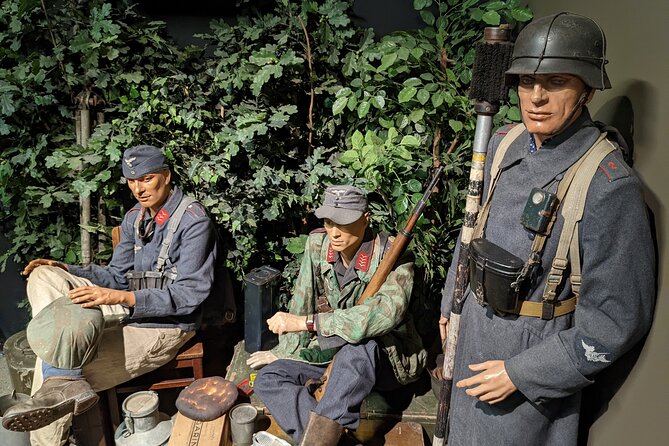
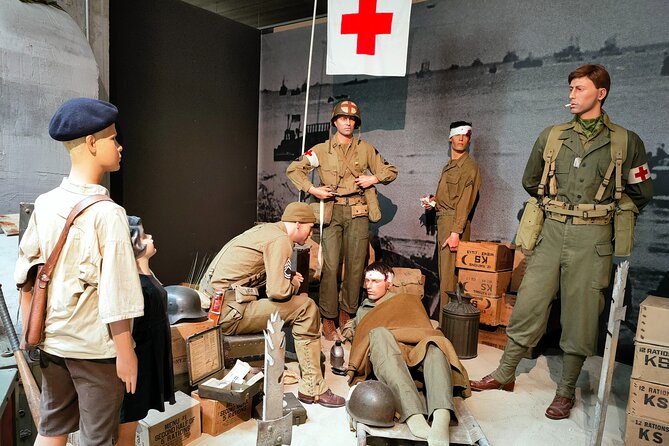
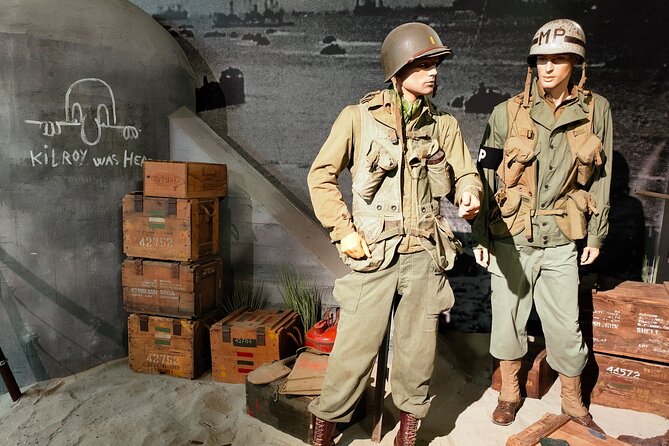
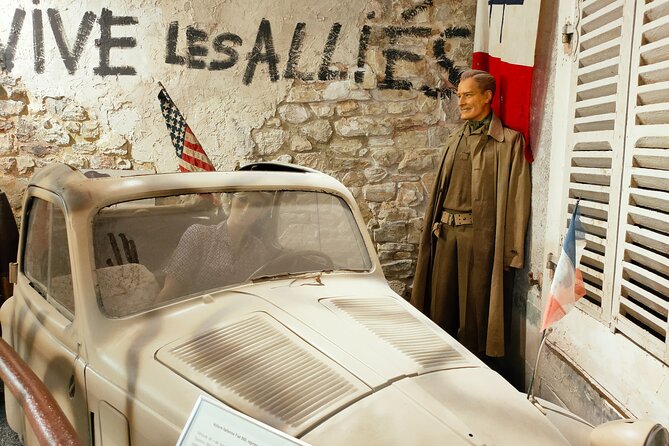
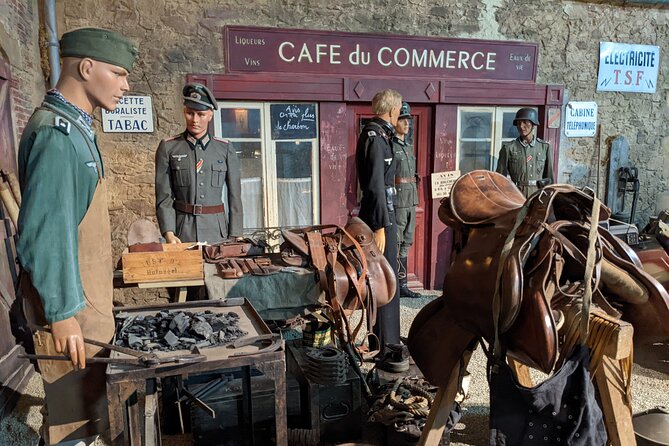
Plan on spending your time walking the indoor galleries at a comfortable pace. The museum’s core is 20 larger-than-life scenes, designed to help you picture what the area looked like and what people were doing.
The artifact count is a big clue to how the museum works. With 10,000+ original objects, the displays don’t rely on a single “main” exhibit to carry the visit. You can keep finding new details as you go—paper items, equipment, and WWII-era objects that make the setting believable.
A few practical notes that matter once you’re there:
- You’ll be reading, but it’s not only dense panels. The scenes do the heavy lifting, while labels add context.
- Expect historically accurate setups and dioramas that connect the dots between civilian life and military operations.
- If you stop and stare at everything, you can easily stretch to the full 2 hours.
One small frustration to consider: there’s a TV screen area with interviews or D-Day stories, but the audio can be too low to catch clearly over nearby scene sound effects. If that kind of multimedia matters to you, don’t assume you’ll hear it from any random angle—move closer or watch when the museum is quieter.
The vehicles and outdoor displays: where the story becomes physical
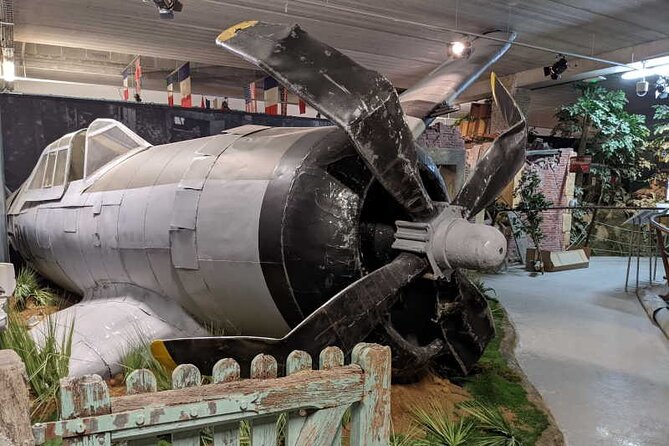
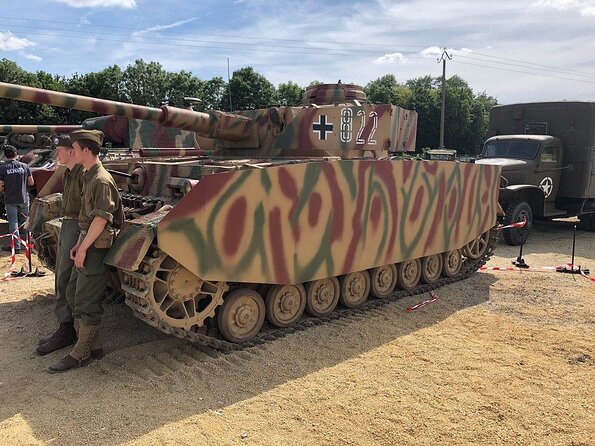
The museum doesn’t stop at walls. Outside, you’ll see old military vehicles, and the displays often include several well-known types. Based on past visits, people commonly spot tanks and aircraft-related pieces, including a Sherman-type tank and even a Thunderbolt in the outdoor set.
This is more than a “photo moment.” When you can step near a vehicle or look at one up close, you understand scale and grime that photos can’t show. It also helps you connect what you just read inside to the real metal and equipment that carried the story.
Even better, some areas let you sit in vehicles and become part of the scene—like you’re stepping into a tableau. That’s a fun way to get kids engaged, and it breaks up the reading-heavy parts of the museum.
Outdoor reenactments can also happen during certain commemorative periods. One review mentioned the Cobra 44 commemorative festival at the end of July, with reenactment activities tied to the day. So if your dates land near late July, it’s worth asking on arrival whether there’s an outdoor program running.
The shop and on-site food: practical breaks when the day runs long
A strong museum stop needs an equally useful pause option. Here, the gift shop comes up again and again in positive comments, with people calling it one of the best they’ve seen, especially for WWII-related memorabilia and vintage militaria.
If you want souvenirs that feel connected to what you just saw, this is the place to shop while everything is still fresh in your head. That said, don’t feel pressured to buy immediately—browsing takes time, and the museum is designed so you can decide on your pace.
Food-wise, admission doesn’t include anything to eat. Still, there is an on-site cafe described as airfield themed in at least one review. So you can grab a snack or drink and keep your momentum without committing to a full meal somewhere else.
If you’re on a road trip in this part of Normandy, parking is also a practical win. One review highlighted plenty of parking, which helps if you’re visiting between other stops or arriving by car.
Timing and opening hours: plan for the season, not the clock
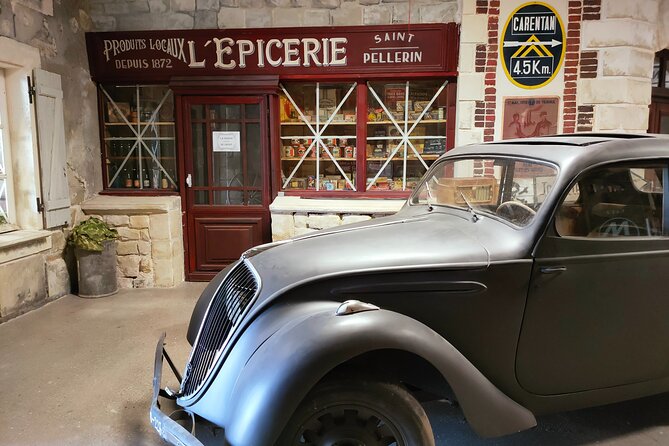
This is the kind of museum that rewards a calm visit. Because the experience typically takes 1 hour 30 minutes to 2 hours, your real goal is to arrive with enough day light and enough energy to keep walking.
Opening times change by season, so build your plan around the dates:
- 02/14/2026 – 04/03/2026: 10:00 AM to 5:30 PM
- 04/04/2026 – 05/29/2026: 10:00 AM to 6:30 PM
- 05/30/2026 – 08/23/2026: 9:30 AM to 7:00 PM
All days run daily during those periods. If you’re visiting in summer, the longer hours are great for combining with other Normandy sights and still not rushing through the museum.
One extra logistics note: getting there can be tricky if you miss the exit, based on a past comment. If you’re driving, keep an eye on your navigation and give yourself a little buffer, especially if it’s your first time in the area.
You can also read our reviews of more museum experiences in Mont St Michel

Tickets, language, and what you get for $11.95
Your ticket is the main thing here: admission is included, and you’ll get a mobile ticket. The language option listed is English, and that’s a big advantage if you don’t want to rely on translation apps while you’re walking scene to scene.
At $11.95 per person, I think the key is what you’re actually buying. Many WWII exhibits charge a similar rate but give you less time and fewer physical displays. Here, you’re paying for a full museum session—scenes, thousands of original artifacts, and vehicle displays—plus the support of an on-site gift shop for the post-visit unwind.
Also check the pricing tiers if you’re traveling as a group or with kids:
- Child (0–6): free
- Youth (7–17): 7€
- Reduced ticket at reception (7€): for PMR, student, teacher, and military
If any of those apply to your party, it can make the overall value even better without sacrificing the experience.
Two small practical items that help on-site: free Wi‑Fi is available, and the museum allows service animals as well as dogs. If you’re traveling with a dog, it’s worth assuming you’ll want to plan your timing around rest stops, but at least you’re not blocked from bringing them.
Finally, there’s a cap of 100 people. That doesn’t guarantee empty galleries, but it usually makes the visit feel more manageable than bigger attractions.
How this fits your trip: who should book and who should skip
This ticket works best when you want more than a quick D-Day stop. I’d point you toward it if you’re curious about the less-famous parts of the Normandy story—the hedgerow fighting, how the front moved, and how the war affected civilians as well as soldiers.
It also suits families because the museum mixes information with physical displays. Reviews mention plenty to read and vehicles that help older children learn without boredom. If your kids like planes, tanks, or uniforms, they’ll have a reason to keep looking after the first scene.
You might skip it if:
- You only have 30–45 minutes and want the shortest possible visit.
- You prefer museums that focus mainly on the landings themselves rather than the fighting right after.
If you’re the kind of person who enjoys accurate detail and wants to connect the story piece by piece, this museum is a strong fit.
Should you book the Normandy Victory Museum admission ticket?
Book it if you want a focused, scene-based museum visit that’s easy to plan into a day. The combination of Battle of the Hedges storytelling, 10,000+ original objects, and vehicles you can see up close makes it feel like more than a one-room attraction. Add in the English mobile ticket, the reasonable 1.5–2 hour time window, and the fact that it’s capped at 100 people, and you’ve got a stop that’s both practical and memorable.
Skip it only if your schedule is tight or you’re specifically looking for a landings-only experience. Otherwise, this is a smart way to understand how D-Day didn’t end when the first landings succeeded—it turned into a brutal fight shaped by the hedgerows.
FAQ
How long does the Normandy Victory Museum visit take?
Expect about 1 hour 30 minutes to 2 hours, approximately, for a full museum visit.
Is the ticket mobile, and is it available in English?
Yes. You’ll receive a mobile ticket, and the experience is offered in English.
What are the opening hours?
Opening hours vary by season:
- 02/14/2026 to 04/03/2026: 10:00 AM to 5:30 PM
- 04/04/2026 to 05/29/2026: 10:00 AM to 6:30 PM
- 05/30/2026 to 08/23/2026: 9:30 AM to 7:00 PM
Does the admission include food and drinks?
No. The admission ticket includes the ticket only. Food and drinks are not included.
Are there discounts for children or students?
Yes. Children age 0–6 are included for free. Youth ages 7–17 are included for 7€. Reduced tickets for PMR, students, teachers, and military are available for 7€ at the reception.
What if I need to cancel?
You can cancel for free up to 24 hours in advance for a full refund. If you cancel less than 24 hours before the start time, the amount you paid will not be refunded.