REVIEW · MONT ST MICHEL
Full-Day US Battlefields of Normandy Tour from Bayeux (A3LST)
Book on Viator →Operated by Normandy Sightseeing Tour · Bookable on Viator
Normandy hits different when you trace the US landings in one focused day. This tour strings together the big American D-Day moments with just enough stops to keep the story clear, not rushed. I like the small-group setup (eight or fewer) and the air-conditioned minivan that lets you rest your legs between cliff-top and museum time.
You’ll get a guided day that’s heavy on context, from occupation-era France and Resistance stories to how the landings actually played out in real time. One drawback to plan for: it can be cold, wet, and very windy at the coastal sites, so pack for the weather even in shoulder season.
In This Review
- Key highlights worth your time
- Why this US D-Day day trip from Bayeux works so well
- Getting to the sites: small-group comfort and a tight 9:30 start
- Sainte-Mère-Église and the Airborne Museum: setting the stage before the beaches
- Utah Beach: the landings at the 4th Infantry Division focus
- Cimetiere Militaire Allemand de La Cambe: a necessary pause of perspective
- Pointe du Hoc: the cliff where Rangers changed the odds
- Omaha Beach, often called Bloody Omaha: why the hardest moments feel real
- The American Cemetery at Colleville-sur-Mer: the view and the names
- Lunch and timing: plan for your own meal break
- Weather and what to pack for windy Normandy days
- Value check: is $161.32 a fair deal?
- Who this tour suits best (and who might want alternatives)
- Final verdict: should you book this Normandy US battlefields tour?
- FAQ
- Where does the tour start in Bayeux?
- How long is the tour?
- Is hotel pickup included?
- What sites are included during the day?
- Are entrance fees included?
- Is lunch included?
- How many people are in the group?
- What cancellation window gets a full refund?
Key highlights worth your time
- Eight-or-fewer small group means more attention, fewer barriers, and an easier day
- Bayeux pickup at the station or Place de Quebec keeps logistics simple
- US Cemetery at Colleville-sur-Mer gives you the best “from the cliffs” views of Omaha
- Pointe du Hoc and its ranger story brings the cliff fighting into sharp focus
- Entrance fees included for key stops, so you aren’t juggling tickets all day
- Guides who keep the day lively and interactive (I’ve seen names like Emmanuel, Guillaume, Jeremy, Manon, and Bryce mentioned in past runs)
Why this US D-Day day trip from Bayeux works so well
If Normandy is on your list, you’ll probably face a choice: do it on your own (and spend lots of time figuring out routes and parking), or do it with a guide (and get the key context fast). This format is the practical middle. You start from Bayeux, get comfortable in a small minivan, and then spend your time where it counts: the US-sector sites.
The tour’s biggest strength is its focus. It doesn’t try to cram in everything. Instead, you move through a clean chain of locations tied to June 6, 1944: the airborne drop area, Utah Beach landings, the cliff fight at Pointe du Hoc, and the hard slog at Omaha. That single-thread approach helps you understand the day as a sequence—not as a pile of monuments.
And yes, the emotional weight is real. The sites are sobering, but the guide’s job is to make the story make sense while you’re standing in the places where it happened.
You can also read our reviews of more tours and experiences in Mont St Michel.



Getting to the sites: small-group comfort and a tight 9:30 start
This tour runs about 8 to 8.5 hours, starting at 9:30am. You meet in central Bayeux either at the train station or Place de Quebec. There’s no hotel pickup, so plan to get yourself to one of those meeting points.
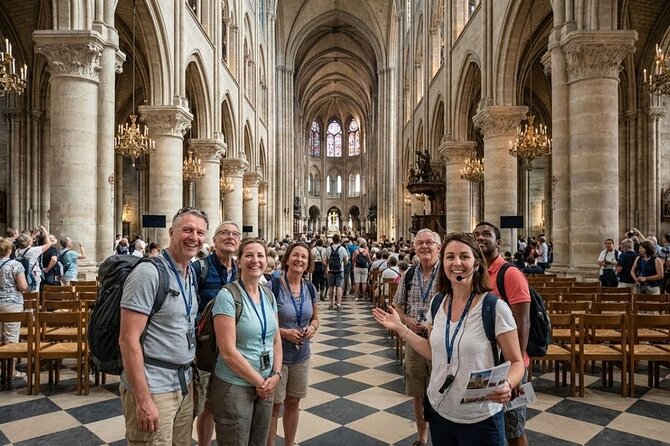
Once you’re on board, you’ll travel by air-conditioned minivan with a local professional driver/guide. The small group limit (max eight people) matters more than you might think. At the big memorial spots, large tour buses can turn visits into a crowd shuffle. Here, you’re more likely to hear the story clearly, ask questions without waiting in line, and move as a group without bottlenecks.
The day ends with a drop-off back in Bayeux around 6pm. If you’re trying to fit this between other Normandy plans, that return time is useful.
Sainte-Mère-Église and the Airborne Museum: setting the stage before the beaches
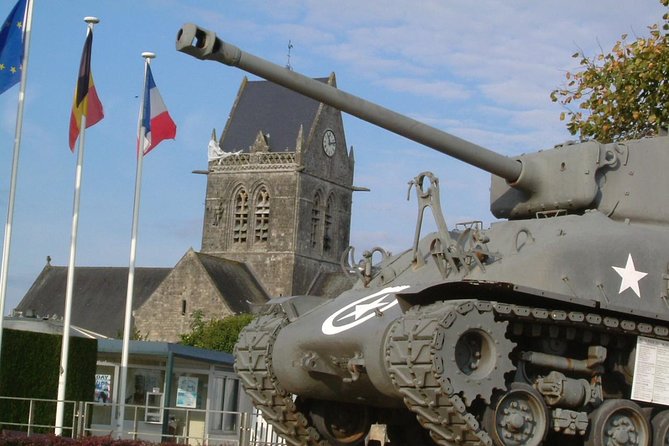
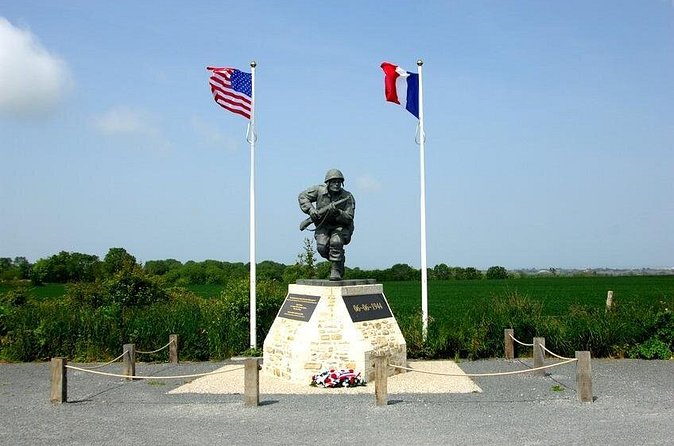
Your first major stop is Sainte-Mère-Église (about an hour, with admission included). This is one of those places where the D-Day story feels immediate. You’re in a town linked to the early airborne hours of June 6, and it helps frame everything that follows on the coast.
Then you visit the Airborne Museum for around another hour. The value here isn’t just seeing artifacts. It’s getting the “why” behind what you’re about to witness at Utah and Omaha. The airborne phase is often treated like a side note when people plan beach days. A museum stop gives the bigger picture: what the paratroopers faced, what they were trying to do, and how those actions connected to the beach landings.
Practical tip: if the weather is miserable, museum time is a win. You’ll still move through history, but you’ll do it in a place that’s easier on your hands, feet, and patience.
Utah Beach: the landings at the 4th Infantry Division focus
Next you head to Utah Beach (around 30 minutes, admission included). This stop is shorter, so think of it as a fast briefing and orientation point rather than a long hangout.
What makes Utah Beach worth including on a guided day is the way your guide ties it back to the wider plan of the operation. Instead of just staring at sand, you’re hearing how the US 4th Infantry Division made their assault and what the terrain and tide timing meant for the fighting.
Drawback to note: 30 minutes can feel tight if you like slow, personal time at memorials. But that’s the tradeoff of a one-day route. The benefit is that you won’t miss the rest of the big moments.
Cimetiere Militaire Allemand de La Cambe: a necessary pause of perspective
Between the major coastal stops, you’ll visit the German Military Cemetery at La Cambe (about 30 minutes, and it’s free). This stop doesn’t dominate the day, but it matters.
You’re reminded that these places are not only about one side’s experience. A cemetery like La Cambe is a quiet counterpoint that can make the American sites feel more human, not just historical. It’s also a chance to lower the emotional volume for a moment—then bring it back up when you reach the American Cemetery later.
If you tend to rush through grave sites, slow down here. Short visit or not, it’s the kind of stop that sticks with you.


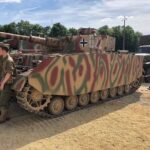


Pointe du Hoc: the cliff where Rangers changed the odds
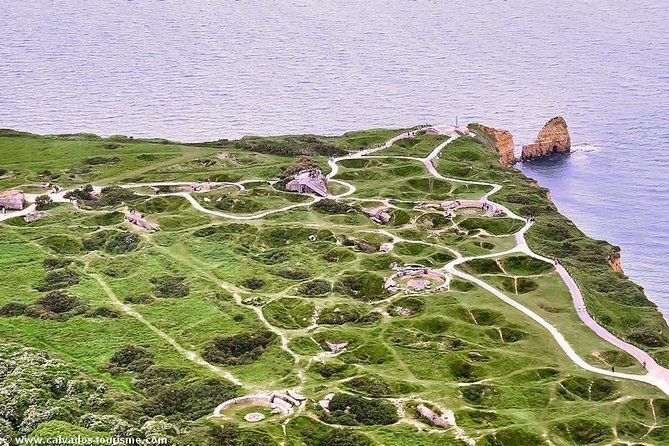
Pointe du Hoc is one of the most talked-about spots for a reason. You’ll spend about an hour here, with admission included. The place itself is dramatic: cliffs, craters, and the kind of terrain that forces soldiers into hard choices.
Your guide shows what mattered militarily and what it looked like in the moments after the landings. You’ll see how German defenses were positioned and understand why the cliff battery was such a key target. Then you get the Ranger story: US Army Rangers scaling the cliffs to seize the battery.
This stop works because it’s not just visual. It’s tactical. When you can connect the terrain to the mission, the story stops being abstract.
Cold-weather note: Pointe du Hoc can be windy. Even when the day is mild, you’ll feel the coastal wind here. Dress like you’ll be outside longer than you think.
Omaha Beach, often called Bloody Omaha: why the hardest moments feel real
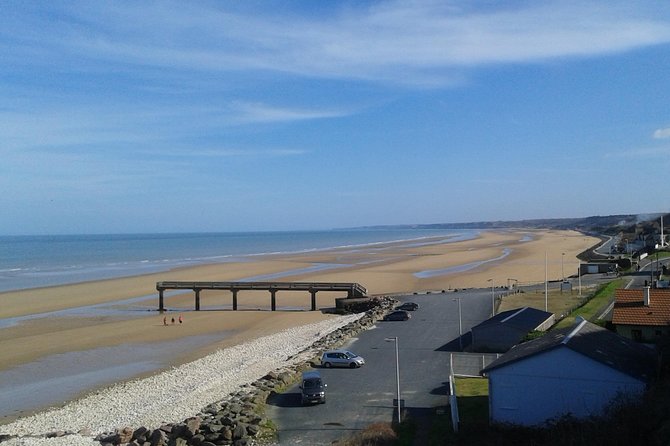
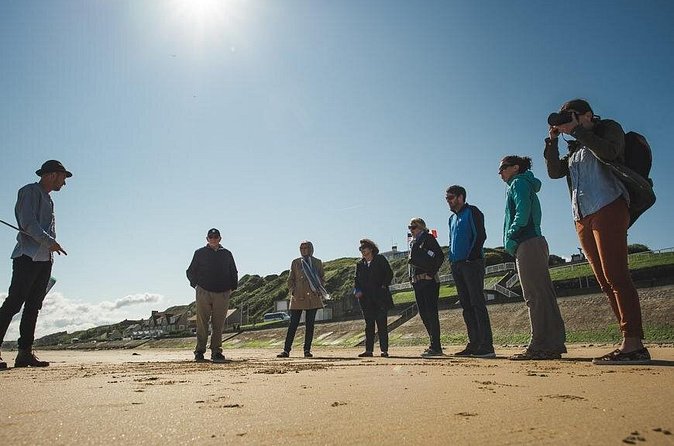
Then comes Omaha Beach, often described as Bloody Omaha. Expect about 30 minutes at the beach. This is the moment where your emotional focus sharpens, because you can’t look at Omaha without thinking about the scale of the fighting that happened there.
Your guide explains why the landings were so difficult. With the cliffs and the wide shoreline in front of you, the place makes sense physically. It’s about distance, visibility, and how quickly a plan can collapse when conditions don’t cooperate.
A short stop can still work here because you’re not trying to “see everything.” You’re getting a guided read on what you’re looking at—so when you later stand at the cemetery overlooking the beach, you understand the geography immediately.
The American Cemetery at Colleville-sur-Mer: the view and the names
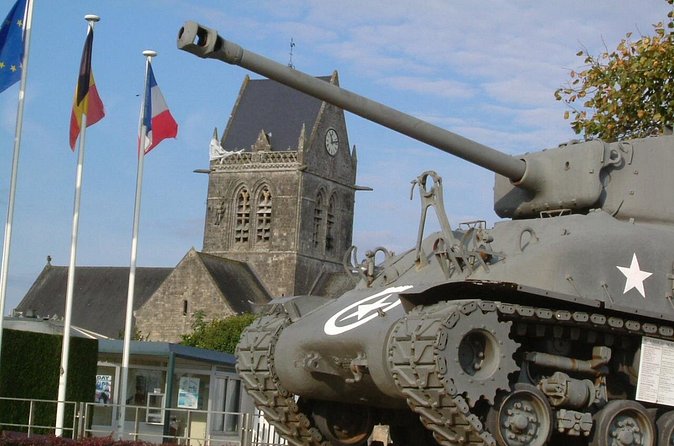
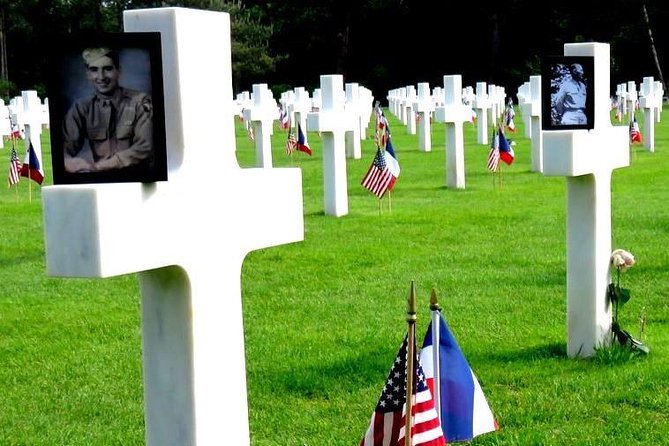
The emotional center of the day is the US Cemetery at Colleville-sur-Mer (about an hour, admission included). You’ll visit the cliffs overlooking Omaha, walk the grounds, and take in the view from different angles.
This is where your guide helps the day land. In the visitor-focused time you’ll learn about the scale of the loss—9,387 Americans are buried here—and you can explore the memorial layout at your own pace.
One of the most powerful touches I’ve seen mentioned with this stop: timing for the cemetery ceremony. People have noted moments like the flag lowering and hearing Taps while they’re there, and guides have helped them position themselves at the right time. Since ceremonies can depend on the schedule of the day, don’t assume you’ll catch it—just know it can be part of the experience when timing lines up.
Practical tip: bring a small layer you can take off later. You may start in cooler morning air and then feel warmer (or the reverse) once the wind shifts. And if you want a slower visit, this is the place to take it.
Lunch and timing: plan for your own meal break
Lunch is on your own expense, after Omaha. The tour does include a pause for you to eat nearby, but the day is still structured. If you’re picky about where you want to eat, don’t treat lunch as a free-for-all. Check your options and keep expectations realistic.
One practical upside: you’ll be too busy soaking up history to need a long, leisurely lunch anyway. Still, if you’re the type who gets cranky when meals run short, plan a snack for the morning just in case.
Weather and what to pack for windy Normandy days
Normandy coastal weather can change fast. Even when the sky looks fine at Bayeux, by the beaches it can feel colder and windier.
From past experiences with this route, I’d take the weather seriously:
- Bring a long rain coat or a waterproof shell. A light jacket doesn’t cut it when you’re standing on cliffs.
- Add a warm layer. Winter trips can feel damp and cold.
- If you’re sensitive to wind, wear something that actually covers your ears and neck.
Good news: walking is moderate. You’re not trekking for hours across fields. Still, you’ll be outside at stops, and you’ll do some moving between viewpoints and facilities.
Value check: is $161.32 a fair deal?
At $161.32 per person, this is not a bargain-basement tour. But it’s also not an inflated “just transportation” product.
Here’s why the value can work:
- You’re getting transport in an air-conditioned minivan.
- The group size is capped at eight, which usually costs more to run but makes the day more pleasant.
- Several key admissions are included, including the Airborne Museum, Pointe du Hoc, and the American Cemetery (plus other listed sites).
- You’re not wrestling with driving, parking, and time lost between scattered locations.
The biggest value question for you comes down to this: do you want the historical context while you’re standing there, or do you prefer self-guided reading? If you want the story told in plain language with room for questions, this kind of tour often feels worth it. If you’re okay driving yourself and you already know the material, the cost may feel higher than you’d like.
Who this tour suits best (and who might want alternatives)
This trip fits you if:
- You want a one-day US D-Day plan from Bayeux that hits the main sites in a sensible order
- You prefer a small group where the guide can keep the pace human
- You like guided explanations at memorial sites, not just photos and plaques
It might not be ideal if:
- You want lots of unstructured free time. The day is packed by design.
- You dislike windy, coastal viewpoints without long indoor breaks.
- You’re hoping for a “beach-only, slow and quiet” experience. Omaha and Pointe du Hoc are powerful but also active viewing stops.
One more planning thought: since the tour is offered in English, you’ll be in an English-speaking setting. If you’ve ever been in a mixed-language group that turns the day into two conversations, you’ll likely appreciate choosing an English-first departure.
Final verdict: should you book this Normandy US battlefields tour?
I’d book this if you’re looking for a smooth, emotionally meaningful D-Day day with clear sequencing and enough time to actually absorb each stop. The small group size, the included entries, and the way the day ties Utah, Pointe du Hoc, Omaha, and the American Cemetery together make it feel like more than a checklist.
Just come prepared for the coast. Bring weather gear, expect some outdoor standing at windy points, and treat the cemetery as the moment to slow down.
If that sounds like your style of travel, this is a strong way to spend your one Normandy day.
FAQ
Where does the tour start in Bayeux?
You meet in central Bayeux at either the Bayeux train station or Place de Quebec. Start time is 9:30am.
How long is the tour?
It runs about 8 hours, roughly 8 to 8.5 hours depending on the day.
Is hotel pickup included?
No. Hotel pickup and drop-off are not included. The tour only offers pickup and drop-off in Bayeux at the train station or Place de Quebec.
What sites are included during the day?
You visit Sainte-Mère-Église and the Airborne Museum, Utah Beach, the German Military Cemetery at La Cambe, Pointe du Hoc, Omaha Beach, and the American Cemetery at Colleville-sur-Mer.
Are entrance fees included?
Yes. Admission tickets are included for stops such as Sainte-Mère-Église, the Airborne Museum, Utah Beach, Pointe du Hoc, Omaha Beach, and the American Cemetery. The German cemetery at La Cambe is listed as free.
Is lunch included?
No. Food and drinks are not included, and lunch is at your own expense.
How many people are in the group?
The maximum is eight people per booking.
What cancellation window gets a full refund?
You can cancel up to 6 days in advance for a full refund. A 50% refund applies for cancellations made 2–6 days before the experience’s start time, and cancellations less than 2 days before are not refunded.