REVIEW · PARIS
Normandy D-Day Beaches with Juno Beach, bunkers & Canadian Cemetery from Paris
Book on Viator →Operated by Blue Fox Travel - Blue Bike Tours - Paris · Bookable on Viator
A beach walk can feel like a time machine. This small-group Normandy trip focuses on the Canadian role in D-Day, built around Juno Beach and the sites tied to it. I especially like the 8-person max setup (you’re not swallowed by the crowd) and the fact that your day includes both the official Juno Beach Centre and access to German bunkers that are closed to regular visitors. One possible drawback: it’s a long day with fixed timing, so if you want hours inside the museum, you may feel a bit rushed.
You start early in Paris and head west by air-conditioned minivan, with stops that move in a clear story arc—from stepping onto the sands to seeing where Canadian troops advanced, and ending at a memorial tied to a tragic atrocity. In past groups, guides such as Julian, Brune, Clement, Enzo, Mathieu, Olivier, and HP have brought the day to life with stories and extra visuals, which is a big part of why this tour works.
In This Review
- Key points to know before you go
- Normandy from Paris: worth the early start
- The drive from Paris: comfortable, long, and scheduled
- Juno Beach walk: stepping onto the landing zone
- Bernières-sur-Mer and Canada House: a small place with big meaning
- The Juno Beach Centre and bunkers: the part many people remember
- Bunkers (about 45 minutes)
- Museum time (about 1 hour)
- Courseulles-sur-Mer lunch break: use it well
- Bény-sur-Mer Canadian War Cemetery: quiet, necessary, and not rushed
- Hell’s Corner at Villons-les-Buissons: the furthest inland advance
- Abbaye d’Ardenne: a hard stop you won’t forget
- Guides make the day: from HP to Brune to Clement
- Price and value: what $290 buys you
- What to bring (and what to plan for)
- Who this tour is best for
- Should you book Normandy D-Day Beaches with Juno Beach?
- FAQ
- How long is the tour?
- What time does the tour start in Paris?
- Where is the meeting point in Paris?
- How big is the group?
- Is the tour in English?
- What’s included in the price?
- Is lunch included?
- Which stops are specifically included with admission fees?
- Does the tour run in bad weather?
- What is the minimum age?
Key points to know before you go
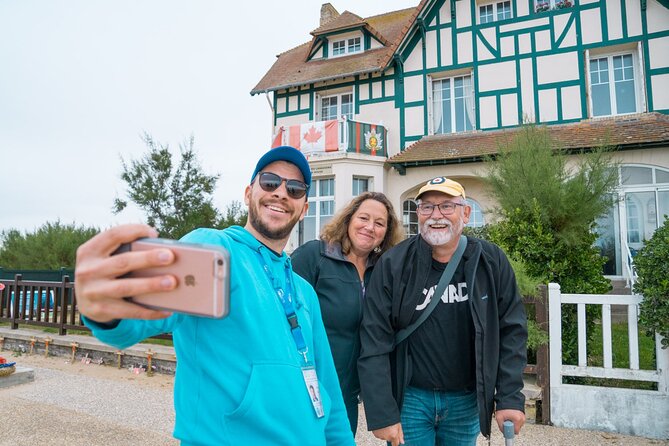
- 8 people max means more questions, more pace, and less waiting around
- Round-trip transfer from Paris saves time and stress—especially on an all-weather day
- Juno Beach Centre + German bunker access gives you context and a physical sense of the fighting
- Bény-sur-Mer Canadian War Cemetery is a quiet, powerful stop you can’t really rush
- Hell’s Corner (Villons-les-Buissons) shows how far inland Canadian troops pushed on D-Day
- Abbaye d’Ardenne marks a dark chapter—20 Canadian soldiers were executed there
Normandy from Paris: worth the early start
This is one of those trips where the schedule looks intense on paper, but it makes sense when you see the logic: Canada-focused sites spread across a compact region of Normandy. You’re up early, but you’re also getting the best use of daylight and time—starting with Juno Beach in the morning and ending with memorial stops while the day is still full of energy.
The payoff is that you’re not bouncing randomly. Your route connects place to place: beach landing sites lead into the museum and bunkers, then into the cemetery and inland advance points, and finally to Abbaye d’Ardenne. If you’ve only ever seen D-Day coverage that centers on other beaches, this Canadian lens changes the picture fast.
You can also read our reviews of more tours and experiences in Paris.



The drive from Paris: comfortable, long, and scheduled
You meet at Dada12 Av. des Ternes, 75017 Paris at 7:00 am. From there, the tour runs about 12 hours total, using an air-conditioned minivan for the round trip. That means you’re not dealing with train connections or local car logistics while you’re tired and half-awake.
The trade-off is obvious: it’s a long day. A few reviews note that the drive can be long, and one person wished there had been more explanation during the earlier parts of the day. If you want a nonstop history lecture, pick up some audio or reading before you go—but if you’re happy with a mix of facts and rest, the minivan format is a good fit.
Practical tip: plan to dress for temperature swings. The tour says it runs in all weather, and Normandy can feel cooler along the coast than in Paris.
Juno Beach walk: stepping onto the landing zone
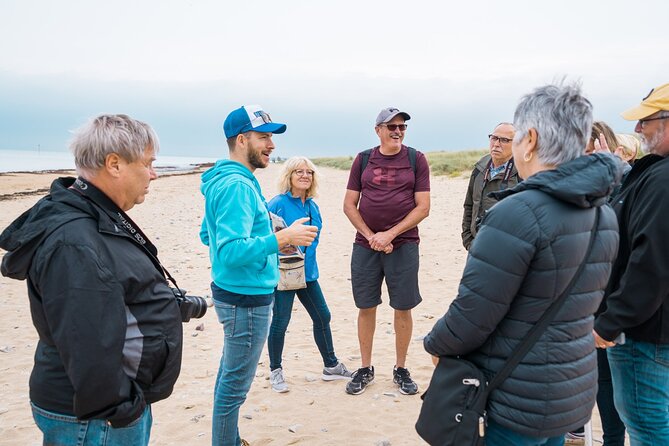
Your first major stop is Juno Beach. You’ll get about 30 minutes on the sand, walking where the Canadian troops landed in June 1944. Admission here is free, which means you’re paying for the organization and the story—not for a “paid attraction” feel.
What I like about this kind of start: it forces the day to begin physically. Before you look at photos or museum panels, you’re standing where ships came in and troops moved under fire. Thirty minutes isn’t a “settle in and wander” slot, but it’s enough to get your bearings and feel the scale of the shore.
Bernières-sur-Mer and Canada House: a small place with big meaning
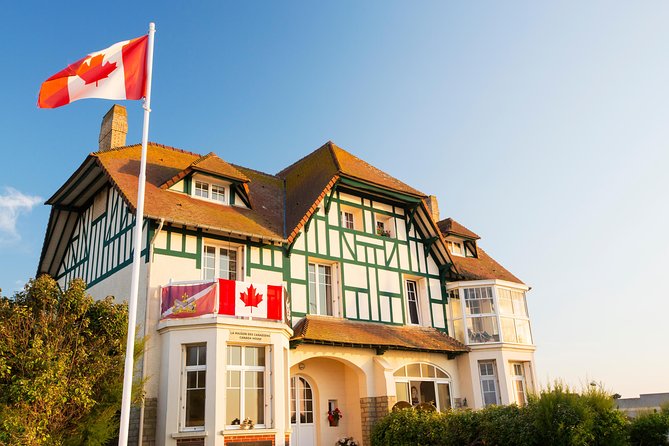
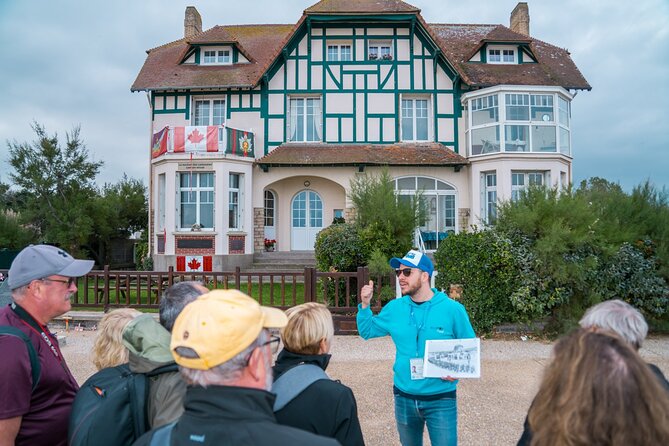
Next comes Bernières-sur-Mer, where you’ll see the famous Canada House on/near Juno Beach. The tour description says it’s the first house liberated in Normandy, and the stop is scheduled for 30 minutes with free admission.
This is a “blink and you’ll miss it” type of spot if you’re not paying attention. That’s why a guide matters here—because a building like this is easy to treat as scenery unless someone tells you why it became symbolic. If you’re traveling with family, this is also a strong photo stop: simple background, powerful story.
The Juno Beach Centre and bunkers: the part many people remember
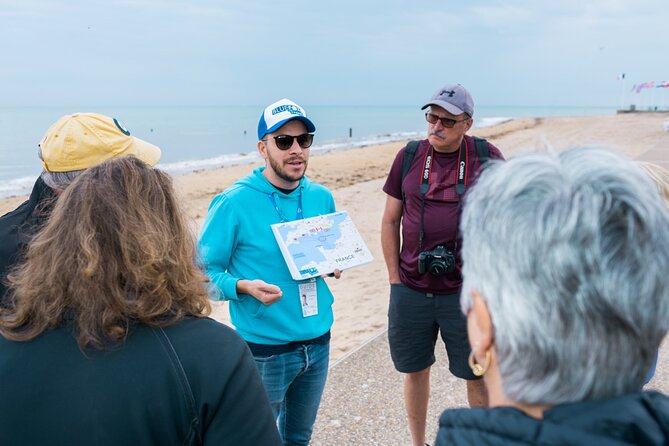
Then you get the heart of the day: the Juno Beach Centre and its bunker connections.





Bunkers (about 45 minutes)
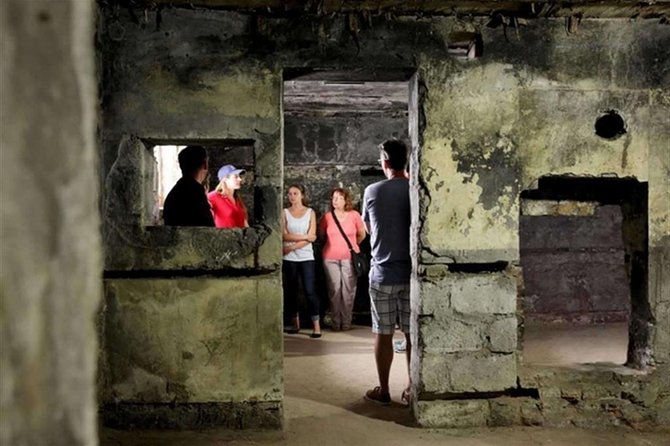
You’ll meet an official Juno Beach Centre guide and enter two German bunkers on the beach area that are closed off to the public. This is included in the tour and it’s scheduled for about 45 minutes.
This is where the tour stops being “a drive-and-look” experience. Bunkers change how you understand the beach. You see how defenders built protection, and you start to connect the coastline to the way fighting played out. It’s also one of those experiences where timing matters: if you go slow and read everything you can, you’ll cover less ground elsewhere—so the guide’s structure helps.
Museum time (about 1 hour)
You’ll also visit the Juno Beach Centre itself for around 1 hour, with admission included. The museum is described as the most comprehensive place for the Canadian landings in Normandy, and you’ll leave knowing more than you arrived with—even if you’re not the type who reads every sign.
One fair caution: a couple reviews mention wanting more time at the museum. That’s not a failure of the site; it’s the reality of a day-trip schedule. If you’re the kind of person who loves museums, you might want to treat your visit as the “orientation hour” and plan future return time someday.
Courseulles-sur-Mer lunch break: use it well
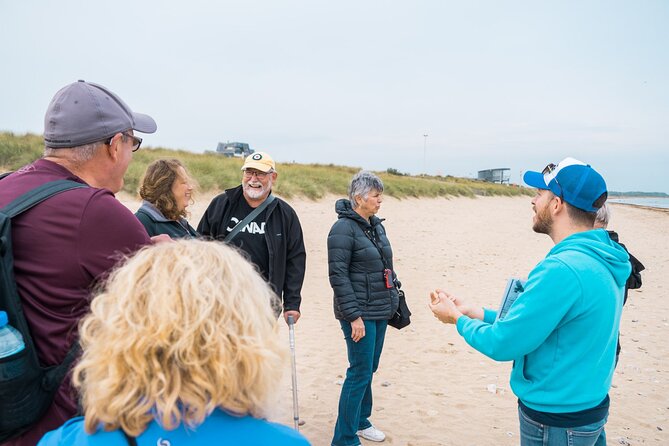
You get about 1 hour of free time in Courseulles-sur-Mer for lunch (food not included). Admission is free for the stop, and this segment is mainly for your reset.
I like this design because it gives you flexibility while still keeping the day moving. If you want a low-stress lunch, you can keep it simple: grab something quick nearby and get back outside to enjoy the town’s calm coastal rhythm.
One tip from past guests: consider grabbing lunch from local shops and using the break for a short wander rather than sitting down for a long meal. With only an hour, it helps you squeeze in a bit of Normandy atmosphere without losing your place in the schedule.
Bény-sur-Mer Canadian War Cemetery: quiet, necessary, and not rushed
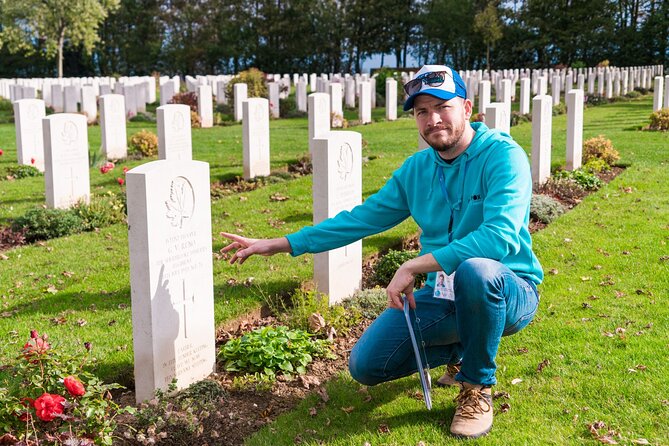
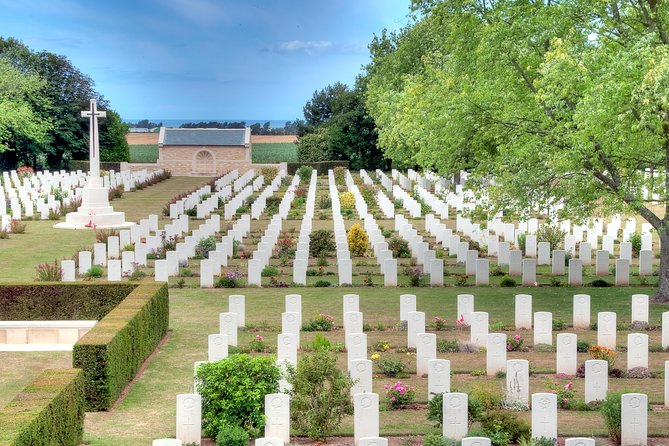
After lunch, the tour heads to Bény-sur-Mer Canadian War Cemetery, a 30-minute stop with free admission. This is one of the most emotional parts of the whole day, and the schedule reflects that—there’s enough time to walk among the graves without feeling like you’re being herded through.
If you have Canadian family ties, this is the moment that can hit hardest. One reviewer specifically called out finding a grandfather’s grave here, which gave the day a personal dimension that’s hard to replicate anywhere else. Even without that personal link, the cemetery is powerful because it makes scale feel real.
A good way to use your time: slow down for a few minutes. Don’t try to read everything. Pick a section, then take a breath. Memorials are meant for that kind of pace.
Hell’s Corner at Villons-les-Buissons: the furthest inland advance
Next is Villons-les-Buissons, described as Hell’s Corner—the furthest inland advance taken by Canadian troops on D-Day, about 5 miles from Caen. You’ll have about 15 minutes, and admission is free.
This is a quick stop, so you’ll want to listen closely to the guide’s explanation. The value here isn’t a long visit; it’s the “location meaning” that connects the cemetery and beach to what happened as troops pushed inland. Fifteen minutes can be enough if the guide is setting the scene clearly; it may feel short if you’re the type who likes to linger without direction.
Abbaye d’Ardenne: a hard stop you won’t forget
The last site is Abbaye d’Ardenne, scheduled for about 20 minutes with free admission. This stop marks a tragic event from June 1944: 20 Canadian soldiers were illegally executed at the abbey by members of the “Hitler Youth,” according to the tour description.
This is not a place for casual sightseeing. It’s a memorial tied to wrongdoing and loss, and the short time slot makes sense because you’ll likely feel the emotional weight more than you’d expect. If you tend to avoid heavy history, this is still worth it—but it may feel like the emotional peak of the entire trip.
Bring a bit of mental space for this stop. The day builds toward it, and it lands.
Guides make the day: from HP to Brune to Clement
The tour is designed to be more than a checklist, and that shows in how reviews describe guide style. Past groups mention guides like HP providing background during the drive and keeping the group comfortable. Others, including Brune and Olivier, are credited with mixing site facts with personal stories that connect you emotionally to what happened.
You also see the value of visuals: one reviewer mentioned the guide bringing a binder with historical pictures to help explain the Juno Beach Centre area and the day’s story. That’s the kind of small effort that turns “I saw the places” into “I understood the places.”
A balanced note: one review said English was harder to understand for their group. Another mentioned feeling like the driver was more focused on lunch and heading back to Paris, and that museum time felt short. So if your priority is a lot of spoken detail and a deep pace inside one specific site, ask yourself what you can trade off on a day trip.
Price and value: what $290 buys you
At $290.36 per person, this isn’t a bargain-basement tour, but it’s also not priced like a premium private charter. For the money, you’re paying for three big things:
- Round-trip transport from Paris in an air-conditioned minivan
- Small-group experience (8 max)
- Multiple included admissions, including Juno Beach Centre and the bunkers (plus all entrance fees are listed as included)
Food isn’t included, and lunch is on you during the free hour in Courseulles-sur-Mer. But the core cost is wrapped up in the guided day and admissions.
If you tried to do this independently, you’d likely spend time coordinating transport and tickets on your own while also trying to stitch together a similar route across several towns. Here, the structure is the value: it’s a planned storyline with less decision-making.
What to bring (and what to plan for)
The tour runs in all weather conditions, so pack for changing skies and coastal wind. Comfortable walking shoes matter more than fashion—your stops involve sandy ground near the beach area and time at memorial sites where you’ll want stable footing.
Also, think about your museum expectations. You get about an hour at the Juno Beach Centre plus guided bunker access. If you’re the kind of person who reads everything carefully, you might want to leave space in your trip for a longer museum visit later.
Finally, plan your lunch strategy. Food isn’t included, but you have a real hour in Courseulles-sur-Mer to eat and reset.
Who this tour is best for
This is a strong choice if:
- You want a Canadian-focused D-Day day rather than a general “all beaches” overview
- You appreciate a small group and guided interpretation
- You’re moved by memorial stops like Bény-sur-Mer Canadian War Cemetery
- You want Juno Beach Centre access plus bunker time, not just a beach photo
It may not be ideal if:
- You’re traveling with someone who needs long, slow museum time and hates fixed schedules
- You’re hoping for a multi-day deep dive into the entire Normandy campaign (this is a full day, not a week)
Should you book Normandy D-Day Beaches with Juno Beach?
Book it if your goal is a well-timed, Canada-centered Normandy day that starts on the sands, explains what you’re seeing, and ends with the kind of memorial stops that stick with you. The 8-person max format and the combination of Juno Beach Centre + bunkers + cemetery + inland advance is exactly the mix that makes this trip feel more meaningful than a simple sightseeing loop.
Skip it—or adjust your expectations—if you’re the sort of visitor who needs extra hours in museums. The schedule includes plenty of major points, but it’s designed to keep the day moving. If you can accept that, you’ll likely find the structure helps more than it limits.
If you do book, go in with one intention: not just to see where history happened, but to connect the places. That’s where the best part of the day lives.
FAQ
How long is the tour?
The duration is listed as approximately 12 hours.
What time does the tour start in Paris?
The start time is 7:00 am.
Where is the meeting point in Paris?
The meeting point is Dada12 Av. des Ternes, 75017 Paris, France.
How big is the group?
The tour is limited to a maximum of 8 travelers.
Is the tour in English?
Yes, the tour is offered in English.
What’s included in the price?
Included items are the driver/guide, return transport from Paris by A/C minivan, the small-group tour (8 people max), and all entrance fees.
Is lunch included?
No. Lunch is not included in the tour price, and you get about 1 hour of free time in Courseulles-sur-Mer for lunch.
Which stops are specifically included with admission fees?
Admission is included for the Juno Beach Centre visit and the bunker access at the Juno Beach Centre. Other stops list free admission.
Does the tour run in bad weather?
Yes, it operates in all weather conditions, and you’re advised to dress appropriately.
What is the minimum age?
The minimum age is 7 years.