REVIEW · COLLEVILLE SUR MER
Normandy American Landing beaches (Utah; Omaha) private tour
Book on GetYourGuide →Operated by DDayYourWay · Bookable on GetYourGuide
Pointe du Hoc gives this Normandy day its sharpest edge: you walk among the bomb craters and broken German gun positions where American Rangers climbed the cliffs under fire. From there, the tour follows the American story across Utah and Omaha beaches, with airborne targets, hedgerow fighting, and the cost of the campaign brought into view.
I like the private group of up to five, since you can ask questions without waiting for a coach party. I also like the route’s range, from Sainte-Mère-Église and Carentan to the American Cemetery, and the guide support with maps, images, and clear explanations. The main drawback is pace: eight hours is a lot of ground, and lunch is not included, so you will need to agree on a food stop during the morning.
In This Review
- Key points to know before booking
- Following the American airborne route from Sainte-Mère-Église
- Utah Beach and the church at Sainte-Marie-du-Mont
- Dead Man’s Corner and the road into Carentan
- Pointe du Hoc and the American Rangers
- Omaha Beach and the final view of the invasion
- The Normandy American Cemetery as the day’s quiet close
- What the private format adds to an eight-hour day
- Who will get the most from this Normandy tour?
- Should you book the Utah and Omaha private tour?
- FAQ
- How long does the private Normandy tour last?
- Where can I be picked up?
- Where does the guide meet me in Bayeux?
- Where do I meet the guide at Cherbourg Ferry Terminal?
- Which beaches are included?
- Does the tour visit Pointe du Hoc?
- Which airborne locations are included?
- Is lunch included?
- How many people can join the private group?
- Which languages are available?
Key points to know before booking
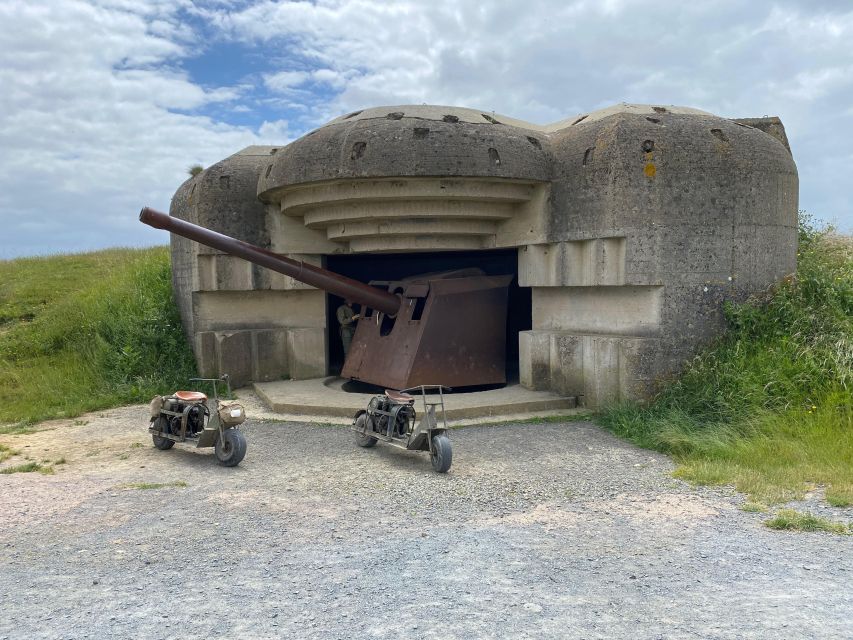
- Pointe du Hoc puts you on the ground of the Ranger assault, among the craters and gun positions that shaped the first hours of the invasion.
- The route connects airborne and seaborne operations, including Sainte-Mère-Église, La Fière Bridge, Carentan, Utah Beach, Omaha Beach, and the locks at La Barquette.
- A private vehicle and guide keep the day focused, with pickup and drop-off in Bayeux or at the Cherbourg passenger terminal.
- The American Cemetery completes the story, giving the beach fighting a quiet and solemn final stop.
- Willem is a passionate guide with a deep store of anecdotes, and the tour can be conducted in English, French, German, or Dutch.
- The $896 price covers the whole group, making the cost much more sensible when five people share it.
Following the American airborne route from Sainte-Mère-Église
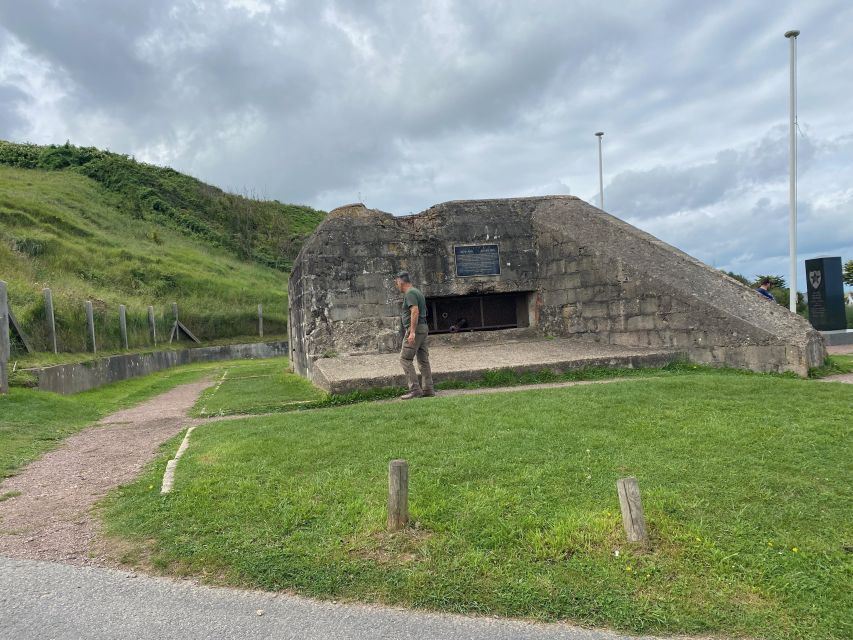
The day begins at about 9 a.m. and normally ends around 5 p.m. Pickup is available in Bayeux or at the Cherbourg Ferry Terminal, with other nearby towns and villages possible by arrangement. At Bayeux, the guide meets you in your hotel lobby. At Cherbourg, you leave the passenger terminal, pass security, and meet the guide outside in the parking area.
Sainte-Mère-Église is an important first stop because it brings the American airborne operation into the itinerary before you reach the beaches. The town is tied to the parachute drops and the difficult work of securing roads, bridges, and crossings behind the German coastal defenses.
Your guide uses the ground, maps, and images to explain those targets. That matters because the D-Day story can otherwise become a simple beach-to-beach tour. Here, you begin to see the invasion as a large operation that depended on paratroopers, glider troops, infantry, engineers, and naval forces working across a wide area.
You should ask how the airborne targets fit together if this part interests you. The route also includes La Fière Bridge and La Barquette locks, two places connected to the effort to control movement through the flooded fields and waterways. The tour information also points to the battle of the hedgerows, where the thick banks and narrow lanes of Normandy made progress slow and dangerous.
This is a strong section for anyone who wants more than a quick visit to a famous church or beach. The only tradeoff is time. With many stops ahead, you may not receive a long, museum-style treatment at each location.
You can also read our reviews of more private tours in Colleville Sur Mer
Utah Beach and the church at Sainte-Marie-du-Mont
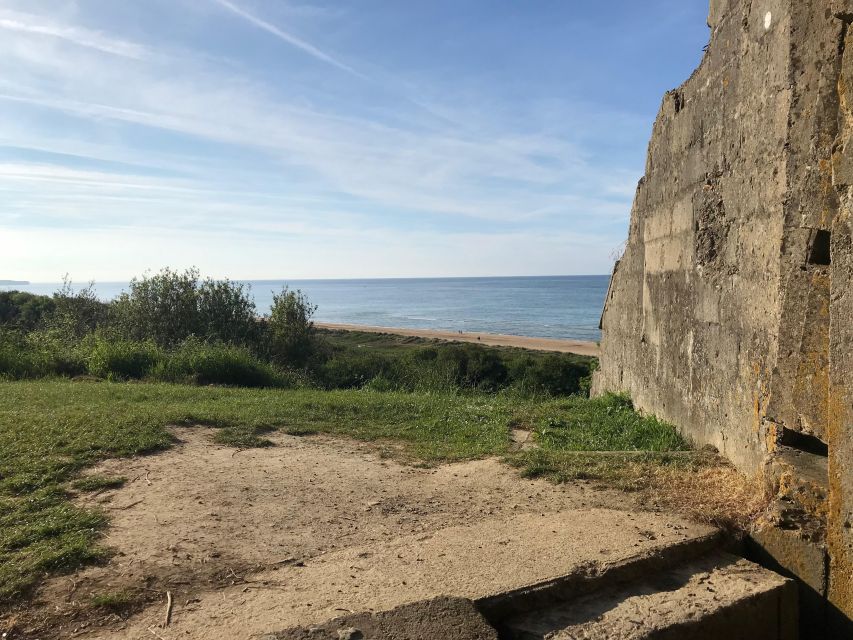
Utah Beach gives you the first major shoreline view of the day. The guide explains the American landing here and helps you connect the broad beach to the inland objectives introduced at Sainte-Mère-Église.
The tour also visits Église Notre-Dame de Sainte-Marie-du-Mont. This stop adds a village setting to the military story. Instead of seeing only open sand and sea, you get a sense of the roads and settlements that the American forces had to move through after leaving the coast.
The Monument de la Résistance Française adds another layer. Its title points to the French Resistance, so the stop helps widen the story beyond the American units alone. You can ask your guide how local resistance work and the Allied advance related to one another.
I like this pairing of Utah Beach with inland sites. It shows you that a landing was only the first step. The difficult work continued through villages, fields, roads, and hedgerows, often under confusing conditions.
Do not expect Utah and Omaha to feel interchangeable. The two beaches have different places in the American assault, and the guide’s role is especially useful here because a broad view of the coast does not explain itself. The visit is most valuable when you pay attention to the terrain and ask where the forces moved next.
Dead Man’s Corner and the road into Carentan
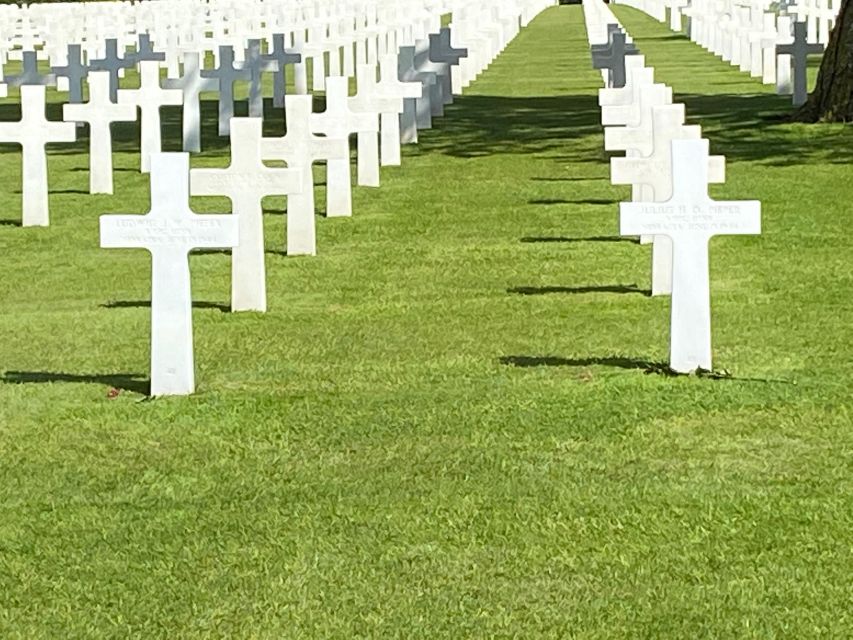
Dead Man’s Corner Museum shifts the focus back to the airborne campaign and the fight for key roads. The name alone signals the hard nature of the action, but the guide adds the needed context. With a guided visit, you can connect the museum material to the locations you have already seen.
Carentan was a major objective because controlling it helped link the American beachheads. This stop gives the tour a clearer sense of the wider battle. The Americans were not simply moving inland at random. They needed roads and junctions to bring men and supplies forward and to join the separate landing areas.
The route includes Purple Heart Lane Memorial, another stop that puts a personal cost on the advance. A memorial can be easy to rush past on a packed group outing. In a private vehicle, you have a better chance to pause, ask about the name, and understand how the fighting around Carentan affected American units.
This is where the tour’s scope becomes its main strength. You are not seeing only the most famous places. You are also visiting smaller memorial sites that help explain how the campaign moved from the shore into the countryside.
At the same time, keep your expectations practical. The day contains a long list of stops, and the exact amount of time at each one is not specified. If one location matters greatly to you, tell the guide early so the day can be shaped around your priorities.
Pointe du Hoc and the American Rangers
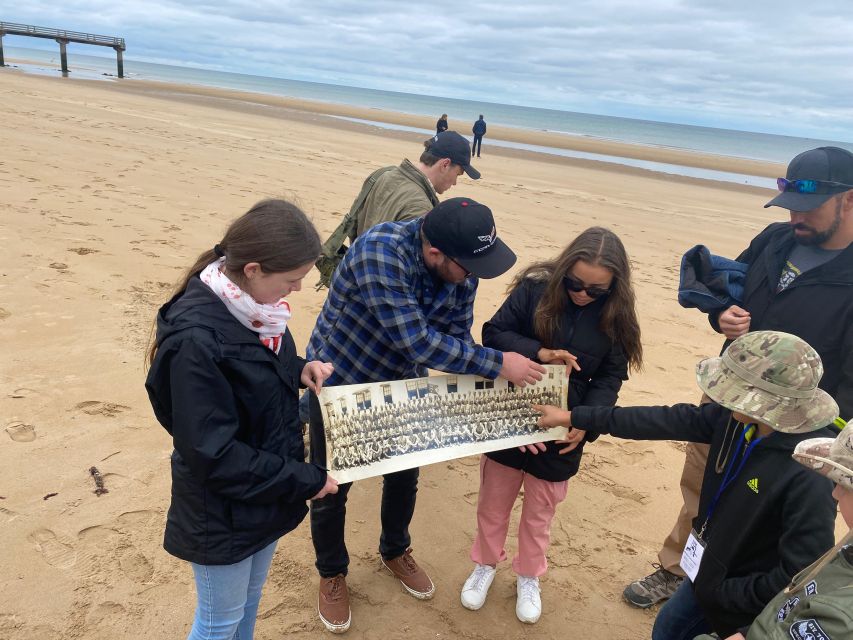
Pointe du Hoc is likely the tour’s most dramatic walking stop. The American Rangers had to climb the cliffs and silence German guns that threatened the landing beaches. The ground still carries the marks of bombardment, with large craters and damaged defensive positions making the site easier to understand than a bare map ever could.
I value this stop because it puts effort and risk into physical terms. You are not just hearing that the Rangers faced steep cliffs and enemy fire. You are standing where that assault took place and looking across the same coastal setting.
The guide’s job here is not merely to repeat dates. Good explanations should help you follow the problem the Rangers faced: reach the position, deal with the guns, and prevent them from firing on the Allied beaches. The tour description specifically emphasizes the Ranger effort to silence those big guns, so this is a central part of the day.
Wear practical shoes for the walking portions. The provided information does not give a full accessibility assessment, so anyone with mobility concerns should ask the operator about the exact surfaces and walking demands before booking.
Pointe du Hoc is also a place where the eight-hour schedule may feel tight. It deserves time, but the route still has Omaha Beach and the American Cemetery ahead. A private tour gives you some flexibility, but it cannot turn an eight-hour day into a slow, unhurried study visit.
Omaha Beach and the final view of the invasion
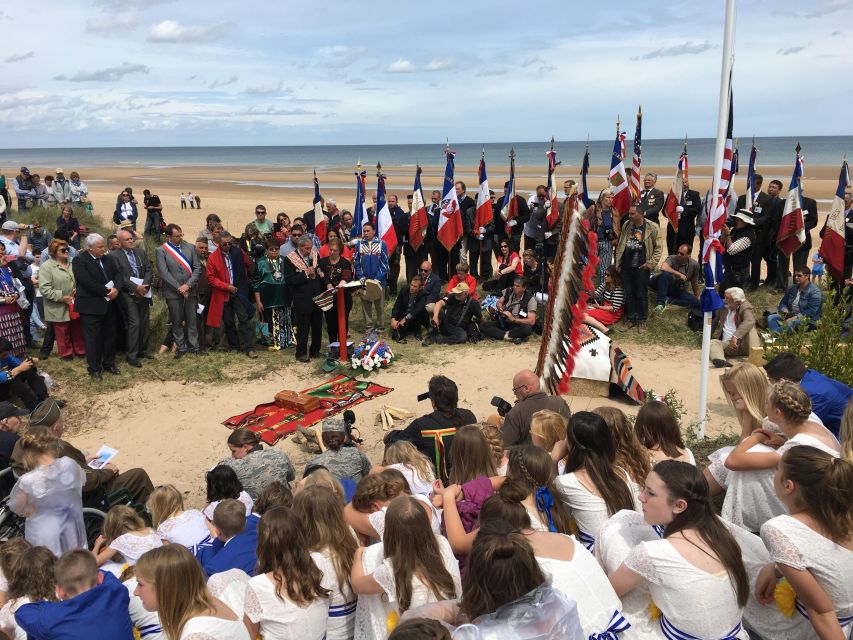
Omaha Beach is the best-known American landing site in Normandy, and the tour gives it proper weight after the earlier stops. By this point, you have seen airborne objectives, Utah Beach, the route toward Carentan, and Pointe du Hoc. That sequence helps you place Omaha within a larger operation instead of treating it as an isolated strip of sand.
Your guide explains the landing and the fighting on the ground. The beach itself is broad and open, but the experience becomes more meaningful when you consider the obstacles facing the American troops and the need to move inland beyond the shoreline.
I would not book this tour expecting every stop to be a long guided walk. The schedule covers a large part of the American sector, so some visits will be brief. Its value comes from the connections between places, and from having someone in the vehicle who can explain what you are seeing as the route unfolds.
The guide languages are English, French, German, and Dutch. That is useful for mixed-language families or groups. Willem is singled out for his passion, welcoming manner, and seemingly endless supply of anecdotes. Another strong point is the use of clear explanations with images, which can help when the terrain alone leaves you unsure what happened where.

The Normandy American Cemetery as the day’s quiet close
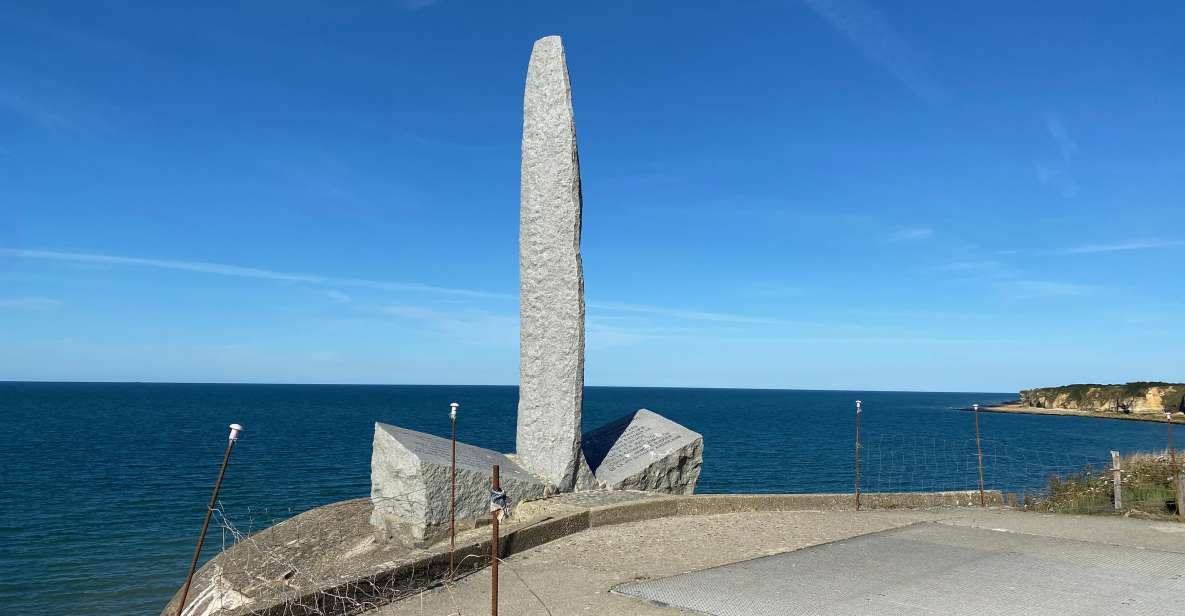
The Normandy American Cemetery is a fitting last stop. After a full day of beaches, crossroads, museums, monuments, and battlefield positions, the cemetery changes the mood from military movement to remembrance.
It also helps you measure the human cost of what you have been studying. The location is not simply another photo stop at the end of a busy route. It gives the day a pause and lets you think about the people behind the unit names, landing plans, and tactical decisions.
Because the tour is private, you can tell your guide how much time you want for reflection, within the limits of the day. The supplied details do not specify a precise visit length, so ask about this if the cemetery is especially important to you.
The final stop works best for visitors who want a serious, grounded day rather than a quick checklist of coastal viewpoints. It also makes the earlier locations easier to remember. Utah, Omaha, Pointe du Hoc, Carentan, and the airborne sites become connected to a single human story.
What the private format adds to an eight-hour day
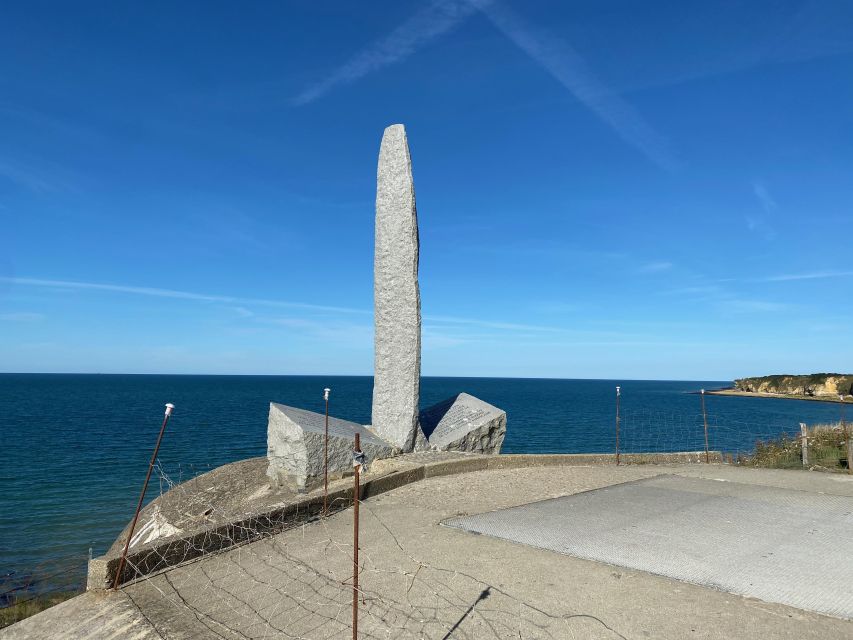
At $896 per group of up to five, this is not a budget tour for a solo visitor. Shared five ways, it works out to $179.20 per person before lunch. For two people, the per-person cost is much higher, but you are paying for a private vehicle, hotel or terminal pickup, a live guide, and a route built around your small party rather than a large bus.
That price makes the most sense for a family or group of friends who would otherwise need to arrange transport and hire separate guiding. It also offers a practical solution for ferry passengers arriving at Cherbourg, since pickup and drop-off at the passenger terminal are included.
The vehicle matters here. The sites are spread across the American landing area, and public transport would not give you the same efficient connection between Sainte-Mère-Église, Utah Beach, Carentan, Pointe du Hoc, Omaha Beach, and the cemetery.
Lunch and drinks are extra. Your guide discusses the arrangements on the morning of the tour, but you should not assume that a meal is included in the $896. If you want a relaxed lunch, mention it at the start, since food time competes with the many listed stops.
Free cancellation is available up to 24 hours before the tour, and you can reserve now and pay later. Children under eight are not accepted, so the format is better for older children, teenagers, and adults who can handle a full day focused on wartime sites.
Who will get the most from this Normandy tour?
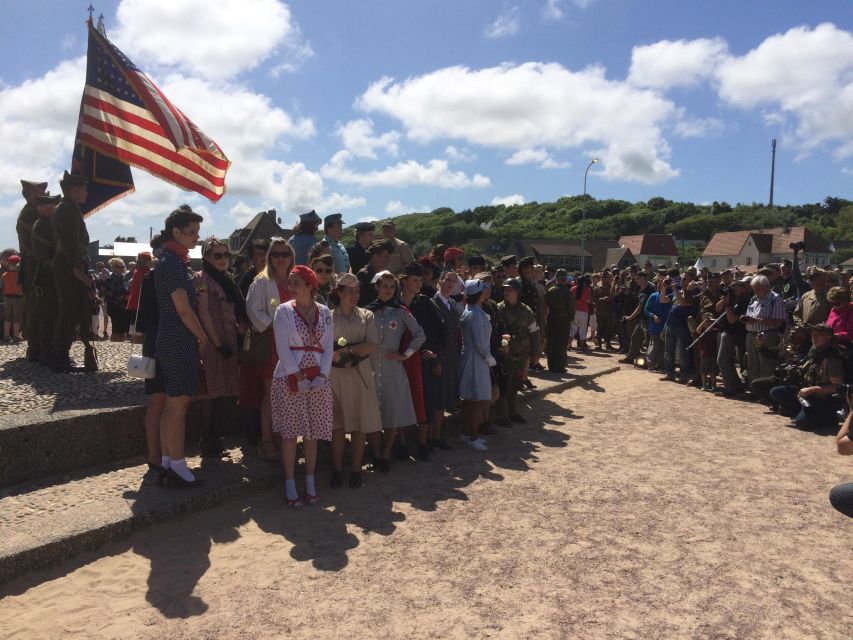
I would choose this tour if you want the American side of D-Day covered in one well-organized day and you are staying in Bayeux, arriving through Cherbourg, or based in a nearby town. It suits first-time visitors who want the main beaches but also care about the airborne operation and the fighting around Carentan.
It is especially useful if you prefer asking questions as you go. The guide can adjust explanations to your interests, and the small group keeps the day more personal than a large coach excursion.
Military-history enthusiasts should appreciate the number of locations. Families with older children may also find the combination of beaches, open battlefield ground, museums, memorials, and images easier to follow than a day spent inside one large museum.
I would think twice if you want a slow visit at each site, a long lunch, or a tour devoted only to Omaha Beach. The itinerary is ambitious. You will see a lot, but the pace may feel brisk, especially at Pointe du Hoc and the cemetery.
The experience has earned a perfect five-star average from four verified bookings. The praise focuses on a warm welcome, clear explanations supported by images, and Willem’s enthusiasm and supply of anecdotes. Those details match what matters most on a Normandy battlefield tour: not just reaching the sites, but understanding why each one mattered.
Should you book the Utah and Omaha private tour?
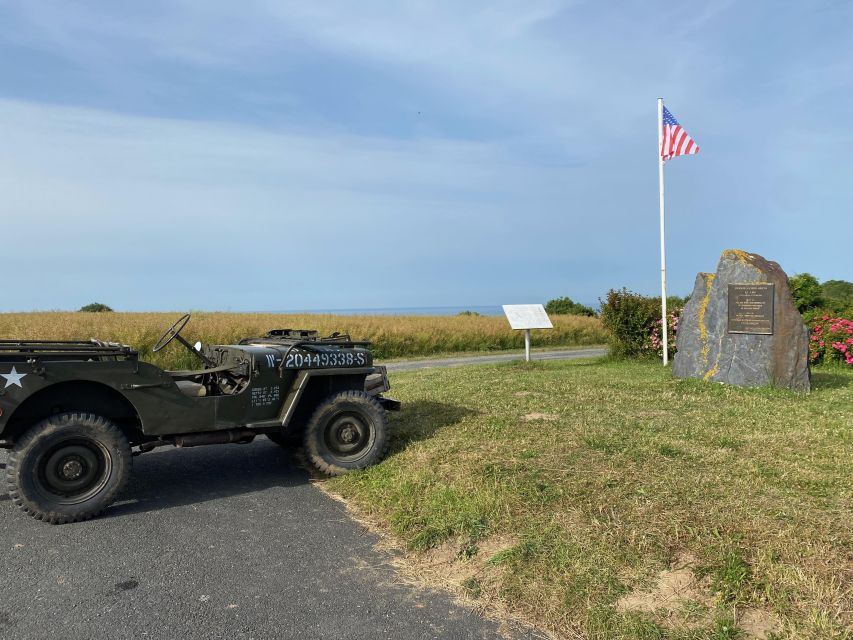
Book it if your priority is coverage, context, and private guiding. For up to five people, the group price can offer good value, and the route covers the major American beaches along with airborne targets that many shorter tours leave out.
Before paying, confirm your pickup town, preferred language, lunch plan, and any mobility needs. Also decide which stops matter most to you, since the eight-hour schedule includes a great deal of ground.
If you want to see Utah Beach, Omaha Beach, Pointe du Hoc, Carentan, Sainte-Mère-Église, and the American Cemetery in one day, this is a strong practical choice. If you prefer a slower, single-area visit, choose a shorter tour focused on one sector instead.
FAQ
How long does the private Normandy tour last?
The tour lasts about eight hours, with pickup around 9 a.m. and drop-off around 5 p.m.
Where can I be picked up?
Pickup is available in Bayeux and at the Cherbourg Ferry Terminal. Pickup in other nearby towns or villages can be arranged.
Where does the guide meet me in Bayeux?
In Bayeux, the guide meets you in your hotel lobby.
Where do I meet the guide at Cherbourg Ferry Terminal?
After leaving the terminal and passing security, meet the guide outside in the parking area.
Which beaches are included?
The tour visits Utah Beach and Omaha Beach.
Does the tour visit Pointe du Hoc?
Yes. You receive a guided visit to Pointe du Hoc, where the American Rangers attacked the German gun positions.
Which airborne locations are included?
The route includes Sainte-Mère-Église, Dead Man’s Corner Museum, Purple Heart Lane Memorial, Carentan, La Fière Bridge, and La Barquette locks.
Is lunch included?
No. Food and drinks are not included. Your guide discusses lunch arrangements on the morning of the tour.
How many people can join the private group?
The maximum group size is five people.
Which languages are available?
The live guide can conduct the tour in English, French, German, or Dutch.