REVIEW · COLLEVILLE SUR MER
Dive into D-Day: A guided tour of Omaha Beach and the American Cemetery
Book on GetYourGuide →Operated by Normandy Chronicles · Bookable on GetYourGuide
Omaha Beach hits harder with the right guide. What makes this tour work is the way the guide ties the beach terrain to real choices in real minutes, starting in the Easy Red and Fox Green sectors and around Widerstandsnest 62 (Wn 62), a major Atlantic Wall stronghold. I also like how the narration uses testimonies from both American and German soldiers, so you don’t just memorize events—you understand the fear, confusion, and stubbornness on both sides.
The main consideration is physical: this experience isn’t set up for slow, accessible pacing. It’s not suitable for children under 10, people with mobility impairments, wheelchair users, or anyone who has a low level of fitness, so plan on comfortable walking and closed-toe shoes.
In This Review
- Key things you’ll notice on the tour
- Why Omaha Beach makes more sense with a private guide
- Starting at the Big Red One Monument: the tone is set early
- Easy Red and Fox Green: the beach sectors you actually need to know
- Wn 62 and the Atlantic Wall reality check
- German trenches and bunkers: seeing why Omaha was called Bloody Omaha
- American Cemetery in Colleville-sur-Mer: remembrance with meaning
- Price and value: what $30 buys you in two hours
- Who this tour suits (and who should consider alternatives)
- What to bring for Normandy weather and walking
- Should you book this Omaha Beach and American Cemetery tour?
- FAQ
- Where does the tour meet?
- How long is the tour?
- What parts of the area are covered?
- Is entry to the American Cemetery included?
- What languages are the guides?
- Is this tour private?
- What should I bring?
- Is the tour suitable for young children?
- Are pets or bikes allowed?
- What’s the price?
Key things you’ll notice on the tour
- Widerstandsnest 62 (Wn 62): you start at the base of one of the toughest strongholds on the Atlantic Wall
- Easy Red and Fox Green sectors: the guide uses the actual beach sectors to explain what happened early on June 6
- German positions remains: trenches and bunkers turn map facts into something you can see
- Soldiers’ testimonies: stories from both American and German sides add emotional weight
- American Cemetery in Colleville-sur-Mer: a guided remembrance stop for over 9,300 fallen
- Private, question-friendly pacing: it’s designed for exchange with your guide in a smaller setting
Why Omaha Beach makes more sense with a private guide
Omaha Beach can feel like one big, flat story if you only read signs. A guide changes that fast. Here, you get a sector-focused explanation—where landings happened, where German defenses sat, and why the early minutes were so chaotic.
I love that the tour stays human-scale. Instead of turning everything into a list of battles, your guide brings in accounts from American and German soldiers. That balance matters, especially when you’re standing in the same exposed ground where survival depended on second-by-second decisions.
You’ll also get the benefit of timing. In just about two hours, you’re not just “at” the beach and cemetery—you’re given a guided thread that connects the landing, the fighting, and the remembrance.
You can also read our reviews of more tours and experiences in Colleville Sur Mer.


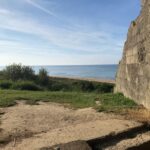
Starting at the Big Red One Monument: the tone is set early
Your meeting point is the Monument Big Red One, a gray obelisk overlooking Omaha Beach. It’s reachable via Captain Joe Dawson Road, and it gives you a clean orientation point before you start moving.
This is a smart setup for first-timers. You’re not wandering in the dark, trying to figure out which parts of the shoreline matter. The guide begins with a viewpoint segment, about 35 minutes, designed to help you get your bearings and understand the layout before you step into the key areas.
One thing I’d emphasize: wear real shoes and expect variable weather. Normandy can shift quickly, and the tour expects you to be ready for rain. Closed-toe footwear isn’t just a suggestion; it keeps you comfortable when you’re standing and walking on uneven ground.
Easy Red and Fox Green: the beach sectors you actually need to know
After the initial viewpoint, you move to Omaha Beach with guided stops. The tour focuses on the Easy Red and Fox Green sectors, right at the base of Widerstandsnest 62 (Wn 62).
Why this matters: D-Day landings weren’t one uniform event across the shore. Different sectors met different defenses and faced different outcomes. When your guide points to where these sectors sit and explains how defenses were arranged, the shoreline stops being abstract.
This is also where the tour earns its emotional punch. The guide frames the early hours of June 6 not as a distant timeline, but as a lived experience. You’ll hear how soldiers—both sides—described what they saw and what they had to endure.
If you like “place-based history,” this is where it clicks: you’re matching story to terrain instead of memorizing dates.
Wn 62 and the Atlantic Wall reality check
Widerstandsnest 62 (Wn 62) is one of the formidable Atlantic Wall strongholds in this area, and starting there is a great choice. The Atlantic Wall often gets talked about like one giant system, but here you see how strongpoints were built for stubborn resistance.
Your guide helps you understand what German defenses were set up to do—holding ground, slowing attackers, and making landings costlier than planned. As you listen, you start noticing how the terrain could support defense and how difficult it must have been for the landing forces to find safe routes.
I also like that you’re not only hearing about German positions in theory. You get a chance to check out what remains on the ground, which makes the story feel less like a lecture and more like a guided walk through decisions made under pressure.
German trenches and bunkers: seeing why Omaha was called Bloody Omaha
Next comes the part that turns “history” into something concrete. You’ll look at the remains of German positions, including trenches and bunkers. The guide explains what those features meant for the German defense and why the fighting became so intense.
This section is where your earlier orientation pays off. If you grasp the sector basics and the role of Wn 62, the bunkers and trenches don’t look random. They become part of a defense plan designed to punish exposed movement.
The tour also focuses on the intensity of the beach fighting, sadly known as Bloody Omaha. Hearing that label while you’re standing near the remnants helps you understand why people remember this stretch with such gravity.
One caution: this portion works best if you’re willing to slow down and actually look. Don’t treat it like a quick photo stop. Your best memories will come from paying attention to what the guide points out and how the explanations connect to what you’re seeing.
American Cemetery in Colleville-sur-Mer: remembrance with meaning
After the beach, the tour heads to the Normandy American Cemetery in Colleville-sur-Mer. This is a must-see place of remembrance, and the guide gives you structure so you know what to look for and why it matters.
You’ll learn about the symbolism of the site and spend time with stories of some of the men buried here. Over 9,300 soldiers are laid to rest at the cemetery, and your guide explains the importance of international remembrance—how these graves connect visitors across countries and generations.
The tour gives you time for reflection. That’s not a rushed “walk-through.” You get space to read, pause, and let the atmosphere do what it does.
This stop can be surprisingly practical too. When a guide explains what you’re seeing—rather than just where to go—you leave with more than an emotional reaction. You leave with understanding.
Price and value: what $30 buys you in two hours
At about $30 per person for a roughly 2-hour guided experience, the value is in the guidance itself. You’re not paying for transportation or museum entry; you’re paying for a specialist to interpret the ground and connect the beach to the cemetery.
And the tour structure is efficient. You get one guided viewpoint segment, one guided beach segment centered on key sectors and strongpoints, and one guided cemetery segment with time for reflection. That pacing matters because Omaha Beach is huge and easy to misunderstand if you’re on your own.
The private group format also helps. In a smaller setting, you’re more likely to get your questions answered. In fact, one guide named Louis Vigors stood out for being bilingual and for taking time to respond to questions in a way that felt both professional and personal. That’s the kind of service you’re paying for: clarity, pacing, and the willingness to engage.
If you’re traveling with teens, this also makes sense. The narration stays detailed enough to keep their attention, but it’s delivered with care, and the guide makes time for questions.
Who this tour suits (and who should consider alternatives)
This experience fits best if you want a guided, story-led walk of a specific D-Day zone. If you like walking history with clear context—what happened, where, and why—the sector-by-sector approach is exactly what you want.
It’s also a good choice if you care about emotional balance. The focus on testimonies from American and German soldiers helps you see how the war looked from multiple sides, not just one dramatic viewpoint.
On the flip side, it’s not suitable for:
- children under 10
- people with mobility impairments
- wheelchair users
- anyone with low level of fitness
If any of those apply, you might want to look for an option with a more accessible route and less walking. Omaha is not an easy site to modify.
Also note what’s not allowed: pets, food and drinks, and bikes. Plan to follow those rules so the guide can keep the group moving.
What to bring for Normandy weather and walking
This tour keeps things simple, but you still want to show up ready. Bring:
- comfortable shoes
- rain gear
- weather-appropriate clothing
- closed-toe shoes
Even in decent weather, the coastline can be breezy. With rain gear, you’ll keep focusing on the guide instead of worrying about getting uncomfortable.
One more practical point: the tour includes a cemetery segment with time for reflection, so dress in a way that feels respectful and comfortable for standing and walking at a memorial.
Should you book this Omaha Beach and American Cemetery tour?
Yes—if you want the shortest path to real understanding of Bloody Omaha without getting lost in the details. The guide-led focus on Easy Red and Fox Green, the strongpoint at Wn 62, and the remains of German positions makes the history easier to grasp. Then the American Cemetery stop lands with context and time to reflect, rather than feeling like a checklist.
Skip it (or choose something else) if walking is a challenge for you, or if your group needs an accessible option. This one is built for people who can handle a guided walk and pay attention to what’s around them.
If you’re visiting Normandy for D-Day and you want a two-hour plan that actually connects the landing to the remembrance, this is the kind of tour you’ll feel good about long after you leave the beach.
FAQ
Where does the tour meet?
The guide meets next to the Monument Big Red One, a gray obelisk overlooking Omaha Beach, accessible via Captain Joe Dawson Road.
How long is the tour?
The duration is about 2 hours, with guided segments totaling around 35 minutes at a viewpoint, 35 minutes at Omaha Beach, and 50 minutes at the American Cemetery.
What parts of the area are covered?
You’ll visit Omaha Beach and the Normandy American Cemetery in Colleville-sur-Mer, starting with the area around the Easy Red and Fox Green sectors and the vicinity of Widerstandsnest 62 (Wn 62).
Is entry to the American Cemetery included?
Yes. Free entry to the American Cemetery is included.
What languages are the guides?
The tour is offered with a live guide in English and French.
Is this tour private?
Yes. It is described as a private group.
What should I bring?
Bring comfortable shoes, rain gear, weather-appropriate clothing, and closed-toe shoes.
Is the tour suitable for young children?
No. It is not suitable for children under 10.
Are pets or bikes allowed?
No. Pets and bikes are not allowed, and food and drinks are also not allowed.
What’s the price?
The price is listed as $30 per person.