REVIEW · METZ
Metz Private Walking Tour
Book on GetYourGuide →Operated by Travmonde OÜ · Bookable on GetYourGuide
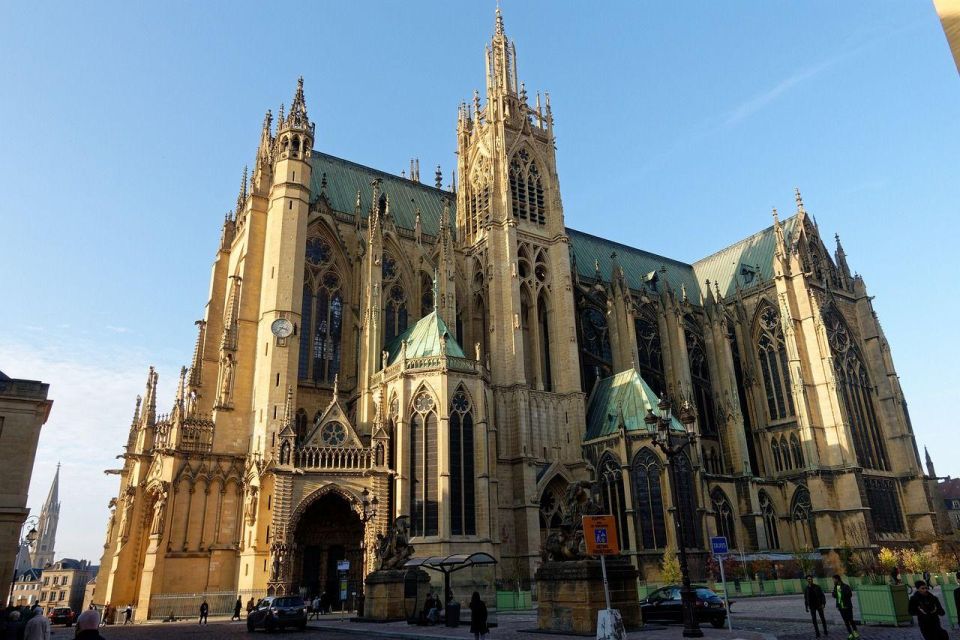
Metz’s story is unusually dense. In 90 minutes, you move from its ancient roots around 3000 BC through Gallo-Roman Metz, the Frankish kingdom of Austrasia, Carolingian power, French rule, German annexation, and the wars that shaped the borderlands. The grandest stop is Saint-Etienne Cathedral, where the stained glass deserves time rather than a quick glance.
I like the private format, which gives your group a local guide and room to adjust the walk. I also like the focus on architecture across several eras, from medieval lanes and French squares to the German-built Protestant Temple. The main drawback is the short running time: with entrance fees not included, you may need to choose between a broad city overview and lingering inside the cathedral.
In This Review
- Key points to know
- Metz in 90 minutes, from ancient roots to modern France
- Saint-Etienne Cathedral and the stained glass
- Place d’Armes and the French face of Metz
- Comedy Square and France’s oldest active opera house
- The Protestant Temple and German-era architecture
- Medieval streets, Roman remains, and the city between the rivers
- Riverfront, university district, and changing Metz
- Warfare, annexation, and the borderland story
- What the private format adds
- Is $353 a fair price for up to 15 people?
- Who should book this Metz walking tour?
- Should you book the Metz Private Walking Tour?
- FAQ
- Where does the Metz Private Walking Tour begin?
- How long does the tour last?
- Is the tour private?
- What languages does the guide speak?
- Are entrance fees included?
- What places can the tour cover?
- How much does the tour cost?
- Can I cancel the booking?
Key points to know
- Saint-Etienne Cathedral anchors the walk: Its height and large collection of stained glass make it the tour’s strongest visual stop.
- The history crosses national borders: You see how Metz changed as power shifted between France and Germany.
- A local guide leads your private group: Guides include Pierre and a native of Metz who can explain the city from personal experience.
- The route covers several architectural periods: Expect Roman remains, medieval streets, 18th-century squares, German neo-Romanesque design, and newer buildings.
- The 90-minute length keeps the tour manageable: It works well as a first orientation, though it leaves little time for extended visits.
- The group price favors families and larger parties: At $353 for up to 15 people, the per-person cost drops sharply when shared.
Metz in 90 minutes, from ancient roots to modern France
I like Metz because its past is not confined to one old quarter or one grand monument. The city grew where the Moselle and Seille rivers meet, and that position helps explain its long military and political importance.
The walk begins near the tourist information office at 2 Place d’Armes. From there, your guide can set the city’s story in order instead of giving you disconnected dates. You hear about the settlement’s roots around 3000 BC, its role as a Gallo-Roman city, and its later place at the center of the Merovingian Kingdom of Austrasia.
That early context matters. Metz was not simply a provincial French town waiting for modern tourism. It was tied to Roman administration, Frankish rulers, and the Carolingian kings who helped shape medieval Europe. A good guide can make those changes easier to follow by pointing out how streets, monuments, and public spaces reflect each period.
The tour also tracks Metz’s movement into France and the impact of border conflict. That means the city cannot be understood through French history alone. German rule left its mark on buildings and planning, while the Franco-Prussian War and World War II added further layers to the city’s story.
You can also read our reviews of more walking tours in Metz

Saint-Etienne Cathedral and the stained glass
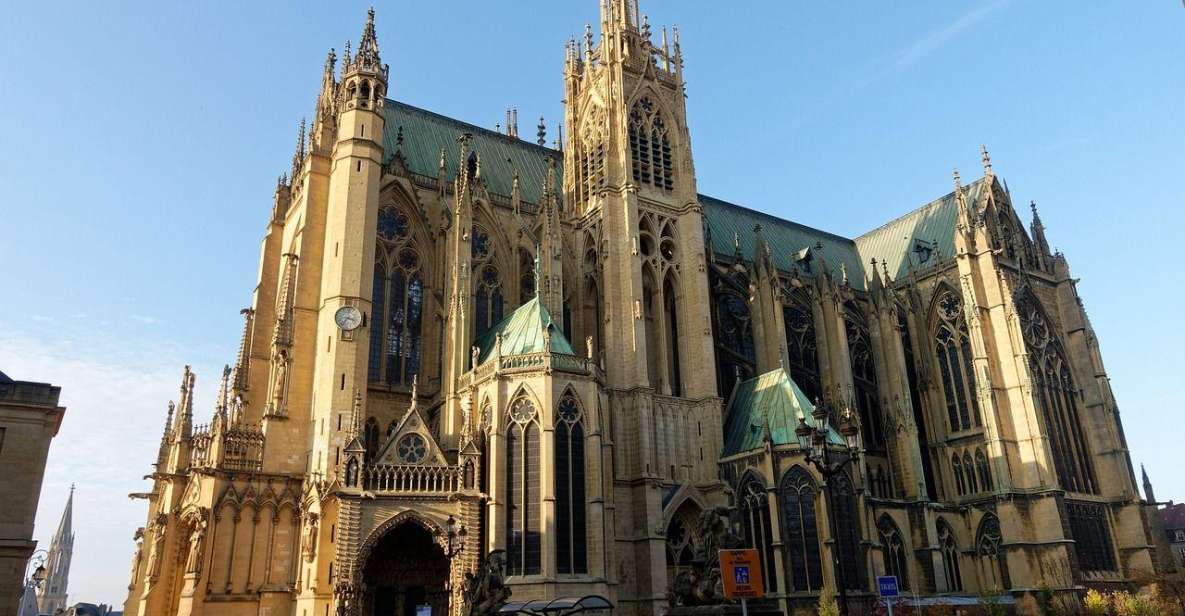
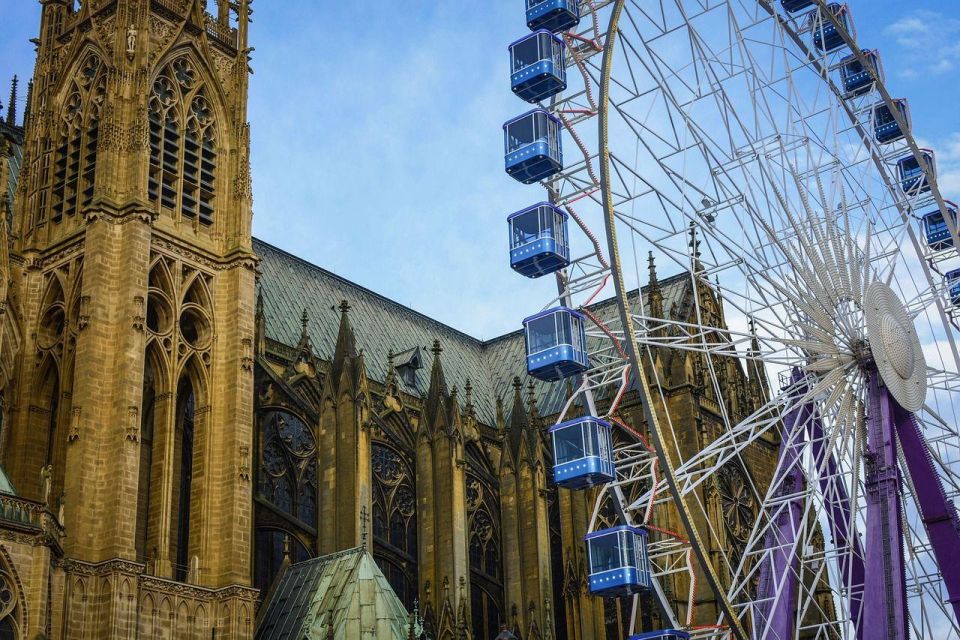
Saint-Etienne Cathedral is the natural centerpiece. It is one of France’s tallest cathedrals, and its scale can be hard to grasp from photographs. Even if you are not usually drawn to church architecture, the height of the interior and the extensive stained glass collection give this stop real weight.
Plan to pay attention inside, not just outside. One guest found that the cathedral became much more enjoyable with a guide, and that is easy to understand. A guide can direct your eyes to details you might otherwise miss and explain why the cathedral matters within Metz’s religious and civic story.
The cathedral also shows how a building can carry different eras at once. Its place in the old city connects to medieval Metz, while the glass and architectural details reveal changing tastes and periods of construction. The tour does not include entrance fees, so check current conditions before you go if access to any interior requires payment.
The time limit is the issue here. If your guide spends a generous portion of the 90 minutes inside, the walk may cover fewer streets and squares. I see that as a reasonable trade if the cathedral is your priority, but you should say so at the start.
Place d’Armes and the French face of Metz
Place d’Armes gives you a useful sense of Metz as a formal French city. The meeting point is directly in front of the tourist information office, so it is easy to locate and a practical place to begin.
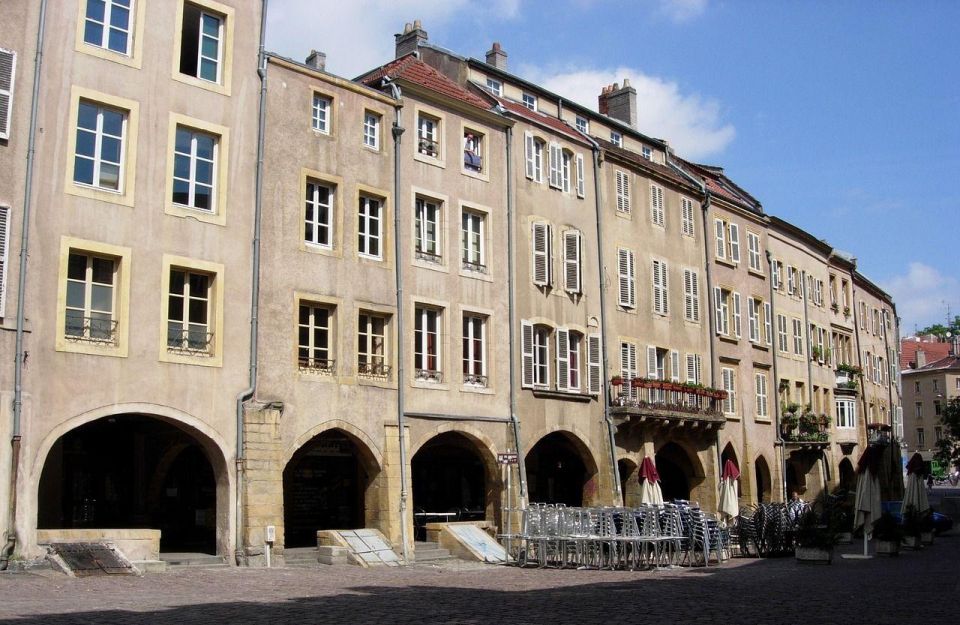
From here, the guide can connect the cathedral to the surrounding civic buildings and public spaces. The 18th-century French squares are important because they show a deliberate change in urban design. Instead of the tighter, less regular feel of medieval streets, these spaces present a more ordered and ceremonial side of the city.
I like this part of the walk for orientation. It lets you see how Metz’s main monuments relate to one another before you set off on your own. It also gives the guide a chance to explain the transition from an imperial and ecclesiastical center to a city increasingly shaped by French political culture.
Do not expect a long architectural lecture at every building. The tour lasts only 90 minutes, and the exact balance can change with your group’s interests. If you want more time for facades, photography, or questions, a private walk gives you a better chance of asking for it.
Comedy Square and France’s oldest active opera house
Comedy Square offers a different mood. The square is centered on the oldest active opera house in France, giving the stop a cultural angle beyond churches, fortifications, and rulers.
This is one of the places where Metz feels like a living city rather than a collection of historic displays. Your guide can explain how the square fits into the city’s public life and how its setting differs from the medieval streets nearby.
The stop is also useful for comparing eras. You may move from older stone buildings and narrow routes into a more open French civic setting, then continue toward the river. The contrast helps you see why a short guided walk can be worthwhile even if you plan to explore independently afterward.
The information provided does not promise entry to the opera house, so treat it as an exterior and urban-history stop unless your guide tells you otherwise. Since entrance fees are not included, the tour is best understood as a walking overview rather than a ticketed performing-arts visit.
The Protestant Temple and German-era architecture
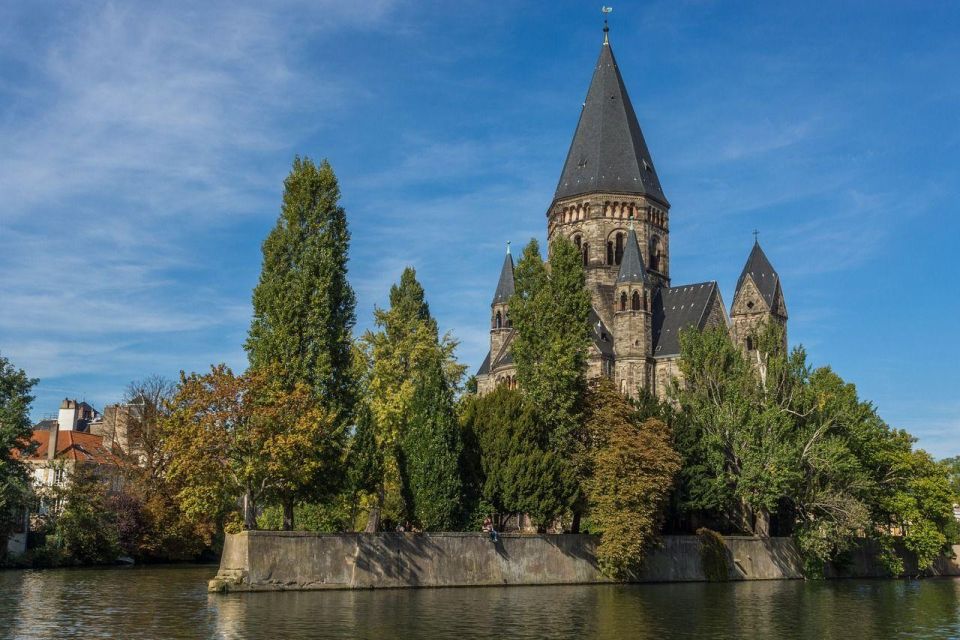
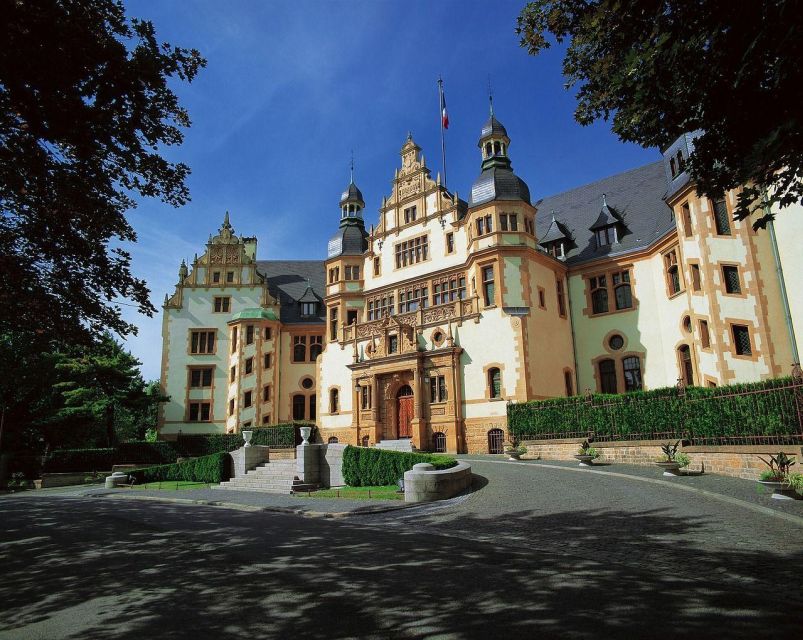
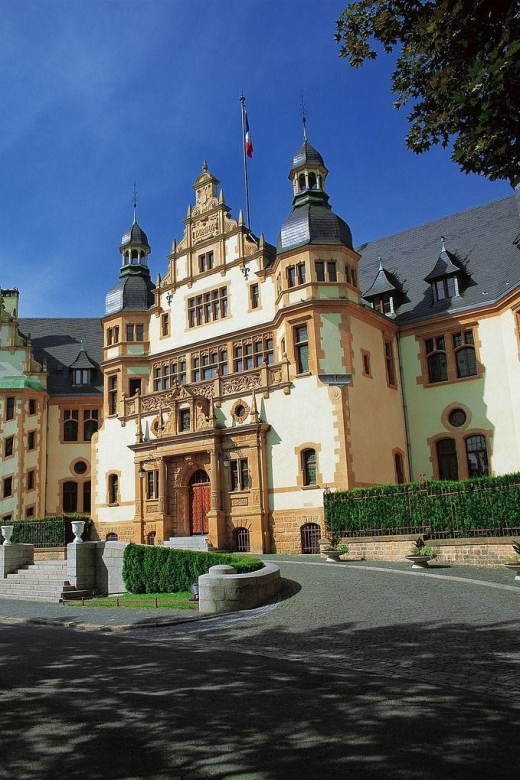
The Protestant Temple is one of the clearest reminders that Metz spent important periods under German control. Built in the Rhenish neo-Romanesque style during German annexation, it looks different from the French squares and medieval core.
I find this kind of contrast more revealing than a simple list of dates. The building shows how political power can shape a city’s appearance. German influence was not just a line on a map. It affected religious buildings, public architecture, and the visual character of Metz.
Your guide can place the temple within the larger story of Franco-German rivalry. The city’s identity was repeatedly tested by border disputes, and its architecture records those shifts in a way that written history alone cannot.
This stop may be especially useful if you have already visited more familiar French destinations and want to understand eastern France on its own terms. Metz does not fit a single national style, and the Protestant Temple makes that plain.
Medieval streets, Roman remains, and the city between the rivers
The walk includes medieval streets and Gallo-Roman remains, though the supplied details do not specify every ruin or street on the route. You might see traces of the Roman city alongside later buildings, with your guide explaining how Metz changed rather than presenting the past as a frozen scene.
That layered quality is the best reason to choose a guided walk here. Roman, Frankish, Carolingian, French, German, and modern Metz are close together, but the connections are not always obvious. A local guide can provide the missing links.
The setting at the confluence of the Moselle and Seille rivers also matters. The rivers helped shape the city’s position and offer a change of pace from the built-up historic center. One route account included the riverfront and the university district, along with several large squares, so you may cover more than the oldest core.
That route can feel broad rather than intensely focused. If you want a fast introduction to the whole city, this is useful. If you want every medieval alley and Roman remnant examined closely, 90 minutes will feel tight.
Riverfront, university district, and changing Metz
The riverfront adds a modern and open section to the walk. After so much discussion of rulers, churches, and wars, the water gives you a chance to see Metz as a contemporary city.
The university district provides another contrast. It shows that the tour is not limited to monuments built for kings, bishops, or armies. You may pass through areas connected to present-day education and civic life before reaching larger public squares.
I appreciate this wider route because it helps you judge Metz as a destination, not just a historic stopover. At the same time, it may not be the best choice if your only goal is the cathedral and the oldest streets. Tell your guide what matters most to you, since the experience allows some customizing on the spot.
The exact sequence is not fixed in the information provided. That is useful for a private group, but it also means you should not expect a rigid checklist of every named sight.
Warfare, annexation, and the borderland story
Metz’s wartime past gives the walk a serious edge. The tour covers the period from the Franco-Prussian conflict through World War II, showing how the city was affected by battles and changing control.
This history is not an optional side note. Metz’s buildings and public identity were shaped by the tension between France and Germany. A guide can help you understand why German-era architecture appears beside French monuments and why the city’s story often feels more complicated than a standard French itinerary.
The references to battles, lords, and peasants also broaden the story beyond famous leaders. You get a sense of how political changes affected ordinary life, even within a compact city walk.
Do not expect a dedicated military museum visit from this experience. Entrance fees are not included, and the tour is designed as a city walk. Its strength is the way it connects wartime events to streets, buildings, and the city’s changing role.
What the private format adds
The group is private, with a maximum of 15 people. That matters most if you are traveling with family or friends and want to keep the walk together. You are not paying a separate public-tour rate for each person.
The guide speaks English or French. Two guide experiences specifically associated with this tour are Pierre and a native of Metz. A local guide can give you a stronger sense of place, especially when explaining the city’s unusual blend of French and German influences.
The private setup also lets you request a change on the spot. You might prefer more cathedral time, more attention to wartime history, or a broader route toward the riverfront and university district. The available information does not promise that every request can be accommodated, but flexibility is part of the experience.
A private tour is less useful if you prefer to wander without a schedule or read at every stop. It is most valuable when you want help sorting out Metz’s complex past quickly.
Is $353 a fair price for up to 15 people?
The price is $353 per group, not per person, for a 90-minute private walk. For one or two people, that is a considerable outlay. For a full group of 15, it works out to about $24 per person before any entrance fees.
At six people, the cost is roughly $59 per person. At four, it is about $88 each. That makes the value depend heavily on your party size.
I think the price makes the most sense for families, multigenerational groups, or friends who want a private guide. It is harder to justify if you are alone and mainly want a quick orientation that you could get from a map and a self-guided route.
The value also depends on how you use the guide. If you ask questions, request a focus, and spend meaningful time at the cathedral, the private format offers more than a basic stroll. If you simply follow a fixed route without engaging, you may not get the full benefit.
Entrance fees are separate, so budget for them if any stop requires admission. The tour itself focuses on guiding and interpretation rather than bundling tickets.
Who should book this Metz walking tour?
I would recommend it to first-time visitors who want the city’s major eras explained in a clear order. It suits people interested in architecture, religion, French and German relations, or the history of the Carolingian world.
It also works well for groups with mixed interests. A guide can connect ancient remains, squares, the cathedral, riverfront, and modern districts without forcing everyone into a specialist route.
Families may appreciate the private setting because you can keep the pace together and ask for explanations that suit your group. History fans should find the sequence from Gallo-Roman Metz to World War II especially rewarding.
I would be more cautious if you want a long cathedral visit, extensive Roman archaeology, or a detailed examination of every named building. The 90-minute duration is enough for an overview, but not enough for a slow study of the entire city.
You can cancel up to 24 hours before the start for a full refund, and the reserve-now, pay-later option keeps the booking flexible. Starting times vary, so check availability when choosing your date.
Should you book the Metz Private Walking Tour?
Book it if you want a private, history-led introduction to a city shaped by both France and Germany. Saint-Etienne Cathedral, the stained glass, the Protestant Temple, Comedy Square, and the riverfront create a good range of stops, while the local guide helps tie them together.
I would choose this tour for a group of four or more, especially if you value a personal route and plan to ask questions. For a solo visitor, the price is harder to defend. For anyone who wants a slower, ticket-focused cathedral visit or a full-day exploration, use this as a first look and continue independently afterward.
FAQ
Where does the Metz Private Walking Tour begin?
The meeting point is in front of the tourist information office at J. F. Blondel, 2 Place d’Armes, 57000 Metz, France.
How long does the tour last?
The walking tour lasts 90 minutes.
Is the tour private?
Yes. It is a private group experience for up to 15 people.
What languages does the guide speak?
The tour is available in English and French.
Are entrance fees included?
No. Entrance fees are not included in the tour price.
What places can the tour cover?
The experience can include Gallo-Roman remains, medieval streets, 18th-century French squares, Saint-Etienne Cathedral, Comedy Square, the opera house, the Protestant Temple, the riverfront, the university district, and contemporary architecture. The exact route can be customized with your guide.
How much does the tour cost?
The price is $353 per group of up to 15 people.
Can I cancel the booking?
Yes. You can cancel up to 24 hours in advance for a full refund. You can also reserve now and pay later.