REVIEW · LA ROCHELLE
La Rochelle Port Quest: Self-Guided Walking Adventure
Book on Viator →Bookable on Viator
A phone-led walk can feel like real play. This self-guided 13-challenge quest strings together La Rochelle’s Old Town and Old Port with maritime storytelling that keeps you moving at your pace. I like that it has a clear route with famous landmarks like Tour de l’Horloge and Saint Saviour’s Church, plus smaller stops that feel like you’re in-the-know.
You’ll also get flexibility that most tours don’t: you can pause and resume anytime, and there’s no physical guide to match your speed. One possible drawback to consider: the experience depends on your phone and the quest’s in-app access, so if activation codes feel finicky or construction blocks a step, the 90-minute plan can stretch in a frustrating way.
In This Review
- Key points before you go
- Port Quest in 90 Minutes: What You Really Get
- Starting at 52 Rue Chaudrier: Your First Clue and Your Best Setup
- New World Museum Stop: La Rochelle’s Americas Connection
- Fontaine du Pilori and Café de la Paix: Small Stops, Strong Details
- Fontaine du Pilori (Fontaine du Puits Lori)
- Café de la Paix
- Hôtel des Étrangers and the Submarine Bunker: War History in Plain Sight
- Chapel of Our Lady of Hope: Neo-Classical Calm and a Painted Cupola
- Town Hall, Tour de la Grosse Horloge, and Saint Saviour’s Church
- Town Hall of La Rochelle
- Tour de la Grosse Horloge (Gothic clock tower)
- Saint Saviour’s Church (Christ’s Church)
- Feux de la Rochelle: The Harbor Beacon Portion
- Aquarium Finish Line: Why Ending Here Makes Sense
- Solving the Puzzles: How to Keep the Walk Fun
- Is It Worth $7.85? Value for Couples, Families, and Solo Walkers
- Should You Book the La Rochelle Port Quest?
- FAQ
- How much does the La Rochelle Port Quest cost?
- How long is the self-guided walking adventure?
- How many puzzle challenges are included?
- What do you need to start the quest?
- Where does the quest start and end?
- Is a physical tour guide included?
- Can I pause and resume the quest?
- What are the Aquarium’s opening hours during the quest window?
- Is free cancellation available?
Key points before you go
- 13 puzzle-based challenges connected to La Rochelle’s maritime past
- Works at your pace: pause and resume anytime
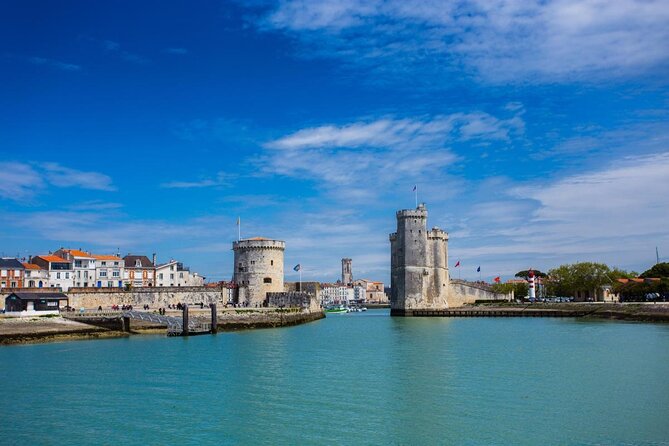
- Tied to major sights and some lesser-known details (like the Fontaine du Pilori)
- Ends at the Aquarium, so you can roll into a longer visit if you want
- Low-cost entry (about $7.85) with a private feel for just your group
Port Quest in 90 Minutes: What You Really Get
La Rochelle Port Quest is built as a phone-first walking adventure. The total time is listed at about 1 hour 30 minutes, but in practice you’re balancing two things: reading the clue prompts and taking in what you’re seeing. If you’re the kind of traveler who likes to wander with purpose—stopping often to look for the answer—this format can feel fun instead of rushed.
At $7.85 per person, the value is less about “expert guiding” and more about packaging. You’re paying for a pre-set route, a storyline, and 13 puzzle checkpoints that take you from the Old Town into the Old Port and finish at the Aquarium. For the price, it’s a smart option if you want structure without losing freedom.
You should also know what it isn’t. There’s no physical tour guide included. So if you want someone to explain everything in flowing detail, you’ll be relying on the quest’s prompts and the sites themselves.
You can also read our reviews of more walking tours in La Rochelle

Starting at 52 Rue Chaudrier: Your First Clue and Your Best Setup
The walk starts at 52 Rue Chaudrier, 17000 La Rochelle, and the game ends in front of the Aquarium at Quai Louis Prunier, 17000 La Rochelle. The instructions are delivered through the Questo app, and you’ll receive a mobile access code after booking.
Here’s my practical advice to make the opening smoother:
- Get your phone charged before you start. This is a walking game, not a quick glance.
- Make sure you can actually open the quest content right away. The most annoying delays usually happen at the very beginning, when you’re trying to activate the experience.
- Expect that you’ll do more “look and read” than “look and pose.” Several stops are built around spotting specific details on-site.
If there’s construction or an unexpected blockage on the route, the hunt can feel like it’s missing a piece. Build in a little patience and accept that the path you see from the street might change while you’re playing.
New World Museum Stop: La Rochelle’s Americas Connection

One of the most interesting parts of this quest happens early: the route includes the New World Museum (Musée du Nouveau Monde). It’s housed in the Hôtel de Fleuriau, and it focuses on La Rochelle’s relationship with the Americas—referred to historically as the New World—and directly addresses the slave trade past of a French port.
This is not just a generic “local museum” detour. It’s a reframing stop. The museum is described as the first to tackle the slave trade past of a French port, and it links economic and cultural impact to the history of the colonies and the Caribbean. For the quest, you’re expected to look around to find answers that help you advance to the next location.
Why I think this works well inside a walking game: the puzzle format pushes you to engage with a specific idea rather than treating the museum as a quick photo stop.
If you like history explained through objects and clues, this section will likely hold your attention. If you want purely lighthearted sightseeing, this one is heavier—but still connected to La Rochelle’s port identity.
Fontaine du Pilori and Café de la Paix: Small Stops, Strong Details
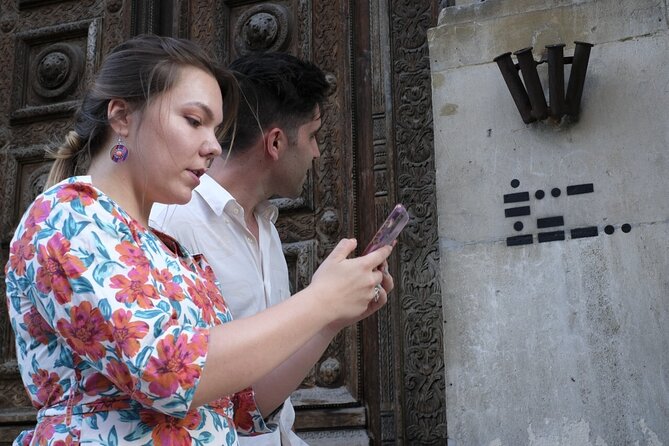
Next you’ll hit two quick, high-value stops that are ideal when you want a game that doesn’t eat your whole day.
Fontaine du Pilori (Fontaine du Puits Lori)
At a small square at the corner of rue du Minage and rue du Cordouan, you’ll find the Fontaine du Pilori, a listed historical monument since March 17, 1925.
The story is delightfully odd:
- Originally, the fountain was called Fontaine du Puits Lori and sat at the bottom of a huge circular pit about six meters (20 feet) across.
- People had to descend using two horseshoe-shaped stairs, which was difficult and dangerous, especially in winter.
- In 1711 the pit was filled. In 1722, the fountain was brought back to ground level.
- A mascaron delivers the water to it.
The quest experience here is about careful looking. The prompt essentially asks you to search for an answer on-site, which makes you slow down and notice things you might otherwise walk past.
You can also read our reviews of more guided tours in La Rochelle


Café de la Paix
Then you’ll move to Café de la Paix, a café in La Rochelle created in 1793 under the name military café, and operating under the current name since 1900. It’s classified as a historical monument since April 17, 1984.
Same vibe: rather than just staring at a façade, you’re scanning the place for the clue that moves you forward. Even if you stop for a drink later, this quest version works best when you treat the café as part of the story of how La Rochelle’s city life and port life intersected.
Hôtel des Étrangers and the Submarine Bunker: War History in Plain Sight
One of the most striking stops described on the route is tied to WWII. As soon as the German army arrived in June 1940, it requisitioned the Hôtel des Étrangers, a 75-room establishment whose entrance overlooked Place des Trois Fuseaux, opposite the covered market halls.
Then the story tightens:
- In June 1941, it was reserved for the German navy.
- The navy built a bunker adjoining the hotel to provide shelter for the admiral and officers of the submarines of the 3rd flotilla.
- Those officers were staying at the hotel from November.
This is the kind of stop that can change how you see a street. You might not have access to the bunker interior based on what’s listed, but the clue approach still makes the moment feel intentional: you’re not just walking by a building; you’re hunting for a specific detail that ties the site to the wartime purpose.
I like questing through this because it turns a potentially abstract historical subject into something you stand next to and try to understand.
Chapel of Our Lady of Hope: Neo-Classical Calm and a Painted Cupola
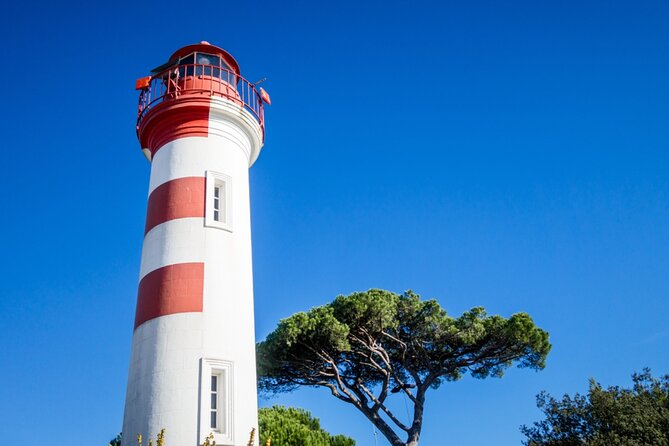
After the WWII narrative, you shift back toward architecture and the long view of the city.
The route includes the Chapel of Our Lady of Hope. The information connected to this stop centers on the cathedral plans and the broader religious setting in La Rochelle:
- The diocese was created in 1648.
- The first stone of the new cathedral wasn’t laid until 1742.
- The architect who drew up the plans, Jacques Gabriel, had already died; the work was supervised from a distance by his son Ange-Jacques Gabriel.
- Even though it wasn’t fully complete, it was consecrated in 1784.
- The structure is described as rather bare Neo-Classical, and the cupola has paintings by William Bouguereau, a native of the city.
For the quest, you’ll still be searching around for the answer tied to the stop. This is where the walking-game format can feel especially good: instead of glancing at details and moving on, you have a reason to look up.
If you’re traveling with kids, this is also a nice pacing change—church façades and cupola stories give you a break from port engineering and maritime infrastructure.
Town Hall, Tour de la Grosse Horloge, and Saint Saviour’s Church
From here the route leans into civic landmarks and city identity—the kind of places locals used for daily rhythm, not just dramatic sightseeing.
Town Hall of La Rochelle
The town hall, mostly seventeenth-century with rebuilding in the nineteenth, is described as one of the oldest in France to preserve its original vocation. It was built on the site of the first town hall from the thirteenth and fourteenth centuries.
In a quest, this kind of long timeline can be easy to lose. So keep your phone handy and follow the clue step-by-step. When you’re hunting for an answer, you’re more likely to notice the historic layers that otherwise blur together.
Tour de la Grosse Horloge (Gothic clock tower)
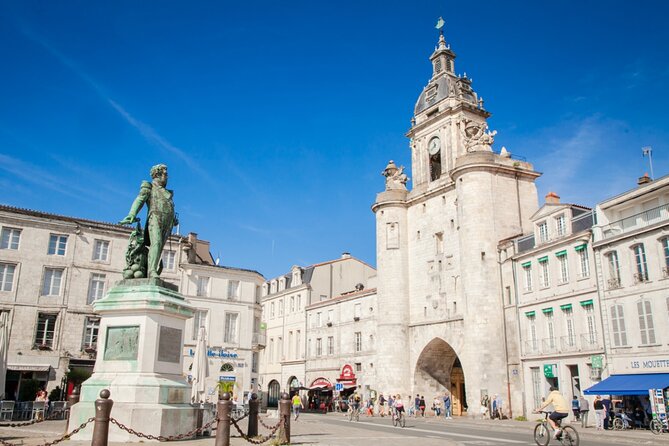
Next is the Tour de la Grosse Horloge, a gateway into the old city. It’s a Gothic-style clock tower with:
- a 12th-century base
- an 18th-century top
This is one of those spots where the quest can help you stop at the right place and not just take the obvious angle. The clue approach nudges you to focus on the tower as a landmark, not just a background.
Saint Saviour’s Church (Christ’s Church)
Then you reach Saint Saviour’s Church, built in the 18th century on the site of an older holy place. Its architectural mix comes from multiple reconstruction periods, especially after it caught fire a few times.
Again, the quest expects you to look around for what you need to solve your step. If you enjoy architecture that shows wear and repair over time, this is a strong match.
Feux de la Rochelle: The Harbor Beacon Portion
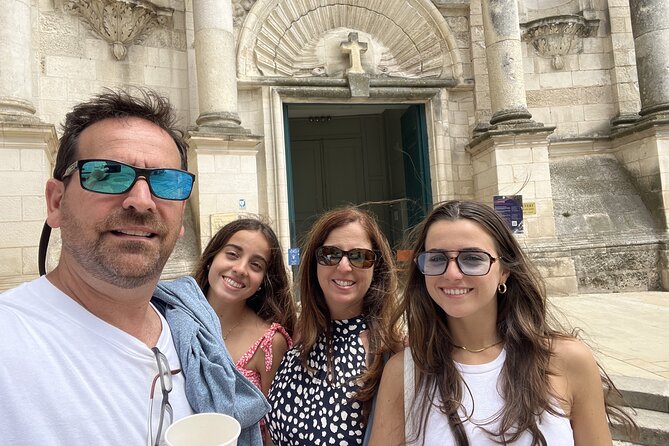
On the west side of the inner harbor sits Feux de la Rochelle, guiding ships into the historic harbor since 1852. The described technical detail is part of the charm: its quick-flashing white light is visible only on or close to the range line.
This is a great stop for travelers who enjoy how ports work. It’s easy to romanticize harbors, but this beacon detail puts a practical engineering spotlight on the experience of sailing in safely.
Even if you don’t know lighthouse terminology yet, the quest’s clue step helps you slow down long enough to register what you’re looking at—and why it matters.
Aquarium Finish Line: Why Ending Here Makes Sense
The quest ends at the Aquarium de La Rochelle, located at Quai Louis Prunier. It’s a family-owned aquarium with:
- over 8,445 m² (90,901 sq ft)
- 3 million liters of seawater
- 73 display aquaria and 150 quarantine aquaria
- more than 12,000 animals across 600 different species
If you’re done with the game at that point, you still get a natural payoff. And if you’re not, you can extend your day without needing to figure out a new plan.
Opening hours are listed as 5:00 AM to 9:00 PM (Monday–Sunday), which is convenient if you’re playing later in the day.
The Aquarium makes the ending feel satisfying because the whole route is about maritime identity. It’s the port’s ecosystem, translated into visitor-friendly form.
Solving the Puzzles: How to Keep the Walk Fun
This kind of activity lives or dies on flow. Here’s how to keep the experience from feeling like a chore.
First, treat the time estimate—about 90 minutes—as a baseline, not a rule. If you stop often, read carefully, and solve at a relaxed rhythm, you can run long, and that’s fine.
Second, be ready for clues that depend on noticing details. Some steps ask you to look around for the answer to advance. That means you’re going to lean forward at doorways, scan signs or sculpted details, and occasionally spend an extra minute figuring out what the prompt is asking.
Third, plan for app friction. The experience uses the Questo app and a mobile access code. If your phone struggles with connectivity, battery, or activation, it can make the game feel slower than it should. I recommend downloading updates ahead of time and keeping cellular data stable.
Finally, keep your expectations flexible. The route covers a mix of architecture, civic landmarks, and maritime infrastructure. If you want nonstop outdoor harbor views, you’ll still get them—but not every stop will be seaside-facing.
Is It Worth $7.85? Value for Couples, Families, and Solo Walkers
At $7.85 per person, I see this as good value if you want a structured walk that still feels self-directed. You’re getting:
- a route through Old Town and Old Port
- 13 puzzle steps
- maritime-themed storyline
- pause/resume flexibility
- a clear finish at a major attraction
For couples: it’s an easy way to talk while you walk. You both have the clue in your hands, and you can take turns noticing details.
For families: puzzles tend to work best when kids can stay engaged with visual clues. Still, keep in mind that if your group is less interested in “find-the-answer” tasks, the game might start to feel like homework.
For solo travelers: the biggest benefit is control. You can go slow when you find something interesting, and speed up when a stop feels like a quick checkbox.
Where it may not be the best fit: if you mainly want a classic guided-style explanation with zero phone interaction, the lack of a physical guide could be a mismatch. You’ll be doing the interpreting yourself via what the quest provides and what you see on-site.
Should You Book the La Rochelle Port Quest?
Book it if you want an affordable, route-based way to connect major La Rochelle sights with a playful puzzle structure. I especially like it for travelers who enjoy looking closely at details, not just taking photos, and for anyone who wants the day to end at a real destination like the Aquarium.
Skip or rethink it if you hate app-based experiences or you expect the puzzles to be effortless and instantly satisfying at every step. If you’re the type who wants a guide to translate every stop into a smooth narrative, you may find the “hunt” part takes more effort than you want.
If you do book, come prepared with a charged phone and a little patience. This quest is at its best when you treat it like a city walk with missions, not a race to finish.
FAQ
How much does the La Rochelle Port Quest cost?
It costs $7.85 per person.
How long is the self-guided walking adventure?
The duration is listed at about 1 hour 30 minutes.
How many puzzle challenges are included?
You get 13 puzzle-based challenges.
What do you need to start the quest?
You’ll need a mobile access code, and you follow the instructions inside the Questo app.
Where does the quest start and end?
It starts at 52 Rue Chaudrier, 17000 La Rochelle and ends in front of the Aquarium de La Rochelle at Quai Louis Prunier, 17000 La Rochelle.
Is a physical tour guide included?
No. A physical tour guide is not included.
Can I pause and resume the quest?
Yes. The experience is designed to let you pause and resume anytime.
What are the Aquarium’s opening hours during the quest window?
The Aquarium opening hours are listed as 5:00 AM to 9:00 PM, Monday through Sunday.
Is free cancellation available?
Yes. Free cancellation is available, with a full refund if you cancel at least 24 hours in advance.