REVIEW · FRANCE
HYDROSPEED LA PLAGNE – Descent of the Isère (1h30 in the water)
Book on Viator →Operated by AN Rafting · Bookable on Viator
The best part of this Haute-Isère hydrospeed descent is its direct, close-to-the-water format. You are not sitting inside a raft while someone else handles the river. You use a small float, your legs, and the guide’s instructions to work your way through one of Europe’s best-known whitewater areas.
I like two things right away: the small guide groups, limited to seven people per guide, and the fact that AN Rafting provides transfers and technical equipment. That keeps the morning simple. You bring a swimsuit and towel, then use the changing rooms, showers, and toilets at the base.
The main consideration is the physical requirement. You must be at least 14 and able to swim, and hydrospeed asks more of you than a relaxed sightseeing ride. The early meeting time, 8:45 a.m., also means this is an activity to plan rather than a lazy start to the day.
In This Review
- Key points at a glance
- What hydrospeed on the Isère actually feels like
- Meeting at Macôt La Plagne at 8:45 a.m.
- Getting equipped before the river
- The discovery descent, from instruction to whitewater
- Why the Isère setting makes the price worthwhile
- Facilities that make the morning easier
- Who will enjoy this most
- Making sense of the timing
- Safety, confidence, and the guide’s role
- What the strong points are, and what they are not
- Booking, cancellation, and practical planning
- Should you book the Isère hydrospeed descent?
- FAQ
- Where does the hydrospeed activity start?
- Where does the activity finish?
- How long does the full experience take?
- What age and swimming requirements apply?
- What should I bring?
- What is the cancellation policy?
Key points at a glance
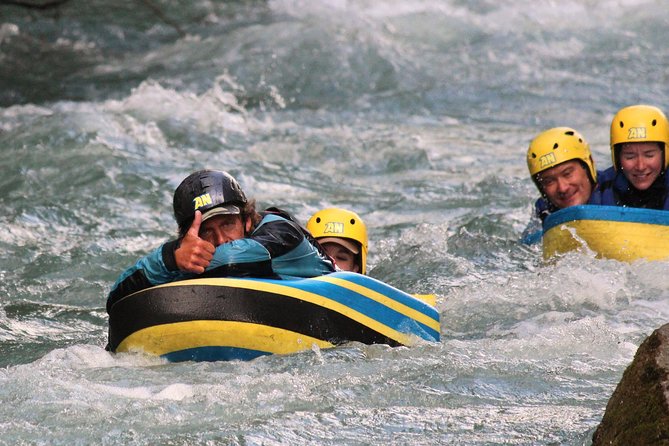
- A close-up whitewater ride: You hold onto a hydrospeed float and move through the Haute-Isère under guide instruction.
- About 1 hour 15 minutes on the river: Allow roughly 2 hours 30 minutes from arrival at the base to your return.
- For swimmers aged 14 and older: Everyone taking part must be able to swim.
- Small groups matter: The maximum is seven people per guide, with no more than 14 people on the activity.
- Transfers and equipment are included: You only need to bring a swimsuit and towel.
- A useful base beside the river: Changing rooms, showers, toilets, and a restaurant terrace make it easy to linger afterward.
What hydrospeed on the Isère actually feels like
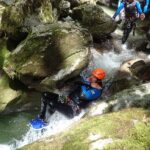
Hydrospeed is a very different way to experience moving water. You lie behind a compact float and use your arms to hold position while your legs help steer and push you along. The river is the main feature, not a passing view from a larger boat.
That closeness gives the activity its appeal. You see the water from a low angle, feel each change in current, and have to pay attention to the guide’s coaching. It is active, but it is also social. You are moving as a group, responding to instructions, and sharing the small victories that come with getting through a lively section of river.
The Haute-Isère is regarded as one of Europe’s major whitewater areas. That does not mean you need previous hydrospeed experience. The session is described as a discovery descent, and the guide is there to coach, encourage, reassure, and motivate you as you learn the basics.
Still, do not mistake discovery for passive. You need to swim, listen, and take part physically. If you want to stay dry and let a professional do all the work, rafting may suit you better. If you want a more hands-on ride, hydrospeed is the more personal choice.
You can also read our reviews of more tours and experiences in France.
Meeting at Macôt La Plagne at 8:45 a.m.
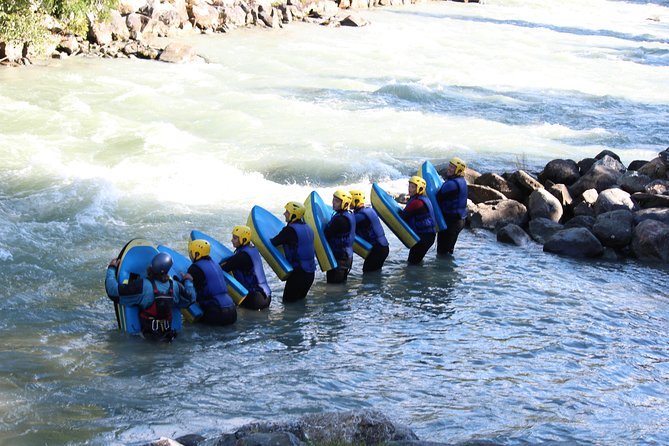
Your morning begins at AN Rafting Savoieles Iles de Macot, at 73210 La Plagne Tarentaise. The base is in a large car park beside the Isère, so you meet at the activity center rather than trying to find a remote river access point.
The scheduled morning meeting time is 8:45 a.m. That early start is useful in a practical way. You have the rest of the day available for another activity, a meal, or time around La Plagne. The tradeoff is obvious: you need to arrive ready and on time.
Allow 2 hours 30 minutes for the complete visit. The water portion is described as about 1 hour 15 minutes, while the tour title gives 1 hour 30 minutes in the water. I would plan on the longer total rather than trying to squeeze another appointment immediately afterward.
At the base, you can use changing rooms, showers, and toilets. That matters more than it may sound. Water activities are much easier to book when you know you can change properly afterward instead of sitting in wet clothes for the rest of the morning.
Getting equipped before the river
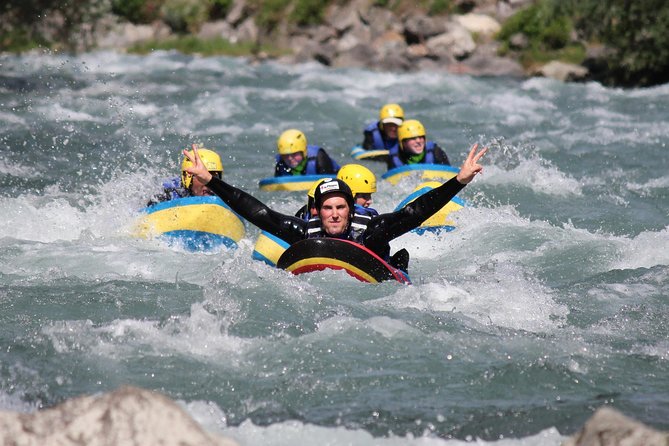
AN Rafting handles the technical equipment and transfers. You do not need to arrive with specialist river gear. Bring a swimsuit and towel, and follow the team’s directions about getting ready.
The simple packing list is a real advantage for families and groups of friends. There is no need to work out what a hydrospeed board is, how the equipment fits, or how you will reach the river section. The operator takes care of those parts.
The exact equipment list is not specified, so I would not assume that every personal item is supplied. Your safest plan is to bring the stated essentials and ask the operator before arrival if you have questions about footwear or anything else you normally use for water sports.
The transfer arrangement also keeps the activity tidy. The base is beside the Isère, and the river portion returns you to the meeting point after the session. One account of the outing describes a start from the base followed by a van return, so you should expect the team to manage the movement between access points rather than leave you to arrange transport.
The discovery descent, from instruction to whitewater
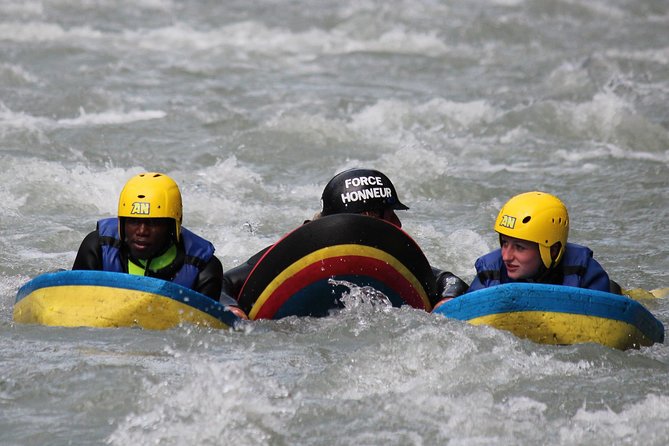
Once everyone is ready, the guide introduces the group to the activity and gets you moving through the Haute-Isère. The central value of the guide is not only safety. It is helping you understand how to use the float, respond to the current, and keep moving with the group.
A small group improves this part of the outing. With a maximum of seven people per guide, there is a better chance to hear instructions and receive direct coaching. The overall activity maximum is 14 people, so the outing can still have a friendly group feel without becoming a large procession.
Guide Thomas is specifically associated with a family group of six plus one other participant. His role included coaching, encouragement, reassurance, and motivation. Those are useful qualities here because the first few minutes may involve finding your balance and trusting the equipment.
The route is described as a discovery descent of the Haute-Isère. You should expect a guided introduction to the river rather than an unstructured free-for-all. The team’s job is to keep the group together and help you make sense of the water as the descent continues.
The exact rapids and stopping points are not specified, so I would avoid expecting a named series of sections. The reliable promise is a whitewater descent with roughly 1 hour 15 minutes to 1 hour 30 minutes on the river, guided by a professional team.
Why the Isère setting makes the price worthwhile
At $100.61 per person, this is not a cheap add-on. It is also not just a charge for time on the water. The price includes the organized base, technical equipment, transfers, guiding, and access to facilities before and after the descent.
I see the strongest value in the complete setup. You do not need to buy or rent individual items, arrange a shuttle, or find a river entry and exit on your own. For a first hydrospeed outing, that reduction in planning is worth something.
The price makes more sense if you use the whole morning. Arrive early, take part in the full session, clean up afterward, and stay for food or a drink on the large terrace beside the Isère. The restaurant is a useful extra because it lets your group continue the outing without immediately getting back in the car.
For a family, the age limit can affect the value. Children under 14 cannot take part according to the stated rules, so this is not an all-ages family activity. For a group of teenagers aged 14 and older, friends, or an event, the shared format may make the cost easier to justify.




Facilities that make the morning easier
The base is set up for people who are going to get wet and need somewhere to recover afterward. You have changing rooms, showers, and toilets, which means you can move on to the rest of your day in reasonable comfort.
The restaurant terrace on the edge of the Isère is the most appealing part of the base for anyone who does not want to rush away. You can have a quiet meal or pause beside the river after the active portion. That setting adds a relaxed finish to an otherwise energetic morning.
I would still bring your towel even though facilities are provided. The operator specifically asks you to bring one, and it is the one item you will certainly want after changing.
The base is near public transportation, according to the supplied details. The exact route, timetable, and walking distance are not provided, so you should check the local connection before relying on it. If you are driving, the large car park at the base is a useful feature.
Who will enjoy this most
This activity is best for confident swimmers aged 14 and older who want to be physically involved in the river. It works especially well for friends, families with older teenagers, and groups looking for an activity they can share rather than watch one person at a time.
It also suits people who like guidance without being wrapped in a large commercial group. Seven people per guide is a sensible limit. You get the energy of a group outing, but the guide can still give clear instructions and encouragement.
A first-time participant can book, since the descent is presented as an introduction to the Haute-Isère. You should arrive ready to listen and accept that the river, not your own preferred pace, sets the rhythm.
I would think twice if you cannot swim, dislike physical activity, or want a calm scenic ride. The operator clearly requires swimming ability, and the low position on the float means you are taking an active role throughout the water section.
Making sense of the timing
The whole visit takes about 2 hours 30 minutes, but only part of that is spent on the river. The water time is listed as 1 hour 15 minutes in the practical description and 1 hour 30 minutes in the title, so allow for approximately that range.
The remaining time covers preparation, equipment, transfers, and returning to the base. This is normal for a river activity. Getting people ready, moving them to the correct point, and bringing them back safely takes time, even when the actual descent is moving at a steady pace.
The 8:45 a.m. meeting time means the activity occupies a large part of the morning. I would not schedule something important immediately afterward, especially if your group wants to shower and eat at the base.
The end point is the original meeting point. That makes planning easier than an activity that finishes somewhere else. You can leave with your belongings, use the facilities, and decide if you want to stay on the terrace.
Safety, confidence, and the guide’s role
The most useful guide is the one who can make the river feel manageable without pretending it is effortless. The information supplied about Thomas highlights coaching, reassurance, and motivation, which are exactly the traits a beginner may need.
You should expect instructions throughout the descent. Pay attention even if the first section feels easy. Whitewater activities depend on group coordination, and the guide needs everyone to respond in the same general way.
The maximum group size also supports a more controlled outing. No more than 14 people take part, and no guide handles more than seven. That does not remove the need for personal judgment, but it does limit the size of the group receiving instructions.
The key personal check is simple: can you swim, and are you comfortable taking part in an active water sport? If the answer is yes, the discovery format and guide support make this a reasonable first step into hydrospeed. If you have concerns about fitness or water confidence, contact AN Rafting before booking rather than assuming the session will be gentle.
What the strong points are, and what they are not
The strongest feature is the team structure. The front desk and guide support are described as efficient and encouraging, with particular praise for the way the guide builds confidence. That is more important here than polished sales talk.
The river setting is another clear strength. The Haute-Isère is known for whitewater, while the route also passes through a wild and preserved setting. You get a natural setting without giving up the practical comfort of a proper base.
The activity also works well for a social occasion. The shared format is suited to friends and events, and the water time is long enough to feel like a real outing rather than a brief introduction.
The limitations are just as clear. There are only five supplied ratings, so the perfect 5 rating is encouraging but not a huge statistical sample. The information also does not give exact rapids, water conditions, equipment brands, or a detailed route, so you should book for the general hydrospeed format rather than a specific named feature.
Booking, cancellation, and practical planning
Confirmation is normally received at booking. If you book within one day of the activity, confirmation comes as soon as possible and depends on availability.
Free cancellation is available if you cancel at least 24 hours before the local start time. Less than 24 hours before the activity, the amount paid is not refunded, and changes made within that window are not accepted.
The activity is mobile-ticket friendly, which is convenient if you are organizing several outings from your phone. Keep the meeting point handy: AN Rafting Savoieles Iles de Macot, 73210 La Plagne Tarentaise, France.
Bring a swimsuit and towel. Plan to arrive for 8:45 a.m., leave about 2 hours 30 minutes for the full visit, and remember that the activity ends back at the meeting point.
Should you book the Isère hydrospeed descent?
I would book this if you can swim, are at least 14, and want an active way to experience the Haute-Isère. The combination of small guide groups, included equipment and transfers, on-site showers, and a restaurant terrace gives the morning good practical value.
I would choose rafting instead if you want less physical involvement, or skip this activity if your group includes children under 14. For everyone else, AN Rafting offers a well-organized first hydrospeed outing with enough river time to feel substantial and a guide-led format that helps beginners gain confidence.
FAQ
Where does the hydrospeed activity start?
It starts at An Rafting Savoieles Iles de Macot, 73210 La Plagne Tarentaise, France, in the large car park at the whitewater base.
Where does the activity finish?
The activity finishes back at the meeting point.
How long does the full experience take?
Allow about 2 hours 30 minutes in total. The water portion is described as approximately 1 hour 15 minutes, while the activity title states 1 hour 30 minutes in the water.
What age and swimming requirements apply?
Participants must be at least 14 years old and able to swim.
What should I bring?
Bring a swimsuit and towel. AN Rafting provides the technical equipment and transfers.
What is the cancellation policy?
You can cancel for a full refund up to 24 hours before the local start time. Cancellations and changes made less than 24 hours before the start are not accepted for a refund.