REVIEW · LOURDES
Gastronomic tour in Lourdes
Book on Viator →Operated by Co&zion · Bookable on Viator
One great meal can change how you see Lourdes. This 4-hour gastronomic tour turns the usual religious sights into a Pyrenees-by-food story, with generous sweet and savory tastings plus wine at several stops. I love that it’s small (max 12) and guided with real context on what you’re eating and where it comes from. The one thing to consider: you’ll likely leave full, so plan your next stop later rather than right after.
If your Lourdes trip needs a break from chapel-and-history mode, this is a smart switch. You’ll still get some background around St. Bernadette, but the main focus stays on the local region, foods, and wine traditions. Guides named Maëva, Eva, Marine, and Lale have led this tour, and the vibe tends to be friendly, question-friendly, and story-led.
In This Review
- Key highlights
- Lourdes, But Make It Gastronomy
- What You’ll Eat: Black Pork, Pyrenees Trout, Duck, and Spit Cake
- How the Guide Connects Food to the Pyrenees
- The Walking Route: Easy Pace, Big Variety
- Guides, Singing Accents, and the Feel-Good Part
- Price and Logistics: What $81.62 Buys You
- Stop-by-Stop: What the Flow Feels Like
- Who This Tour Suits Best (and Who Might Skip)
- Should You Book This Lourdes Gastronomic Tour?
- FAQ
- How long is the Lourdes gastronomic tour?
- What does the tour cost?
- Where does the tour start and what time does it begin?
- Is the tour offered in English?
- What group size should I expect?
- What’s included in the price?
- What food will I taste?
- Do I get a mobile ticket?
- Are service animals allowed?
- Can I cancel and get a full refund?
Key highlights

- Four hours of food-and-wine tasting on a walking route through central Lourdes
- Local specialties like black pork charcuterie, Pyrenean trout, duck, and country cheese
- Spit cake shows up for dessert, giving you a taste of the area beyond the obvious
- Small group size (max 12) for a more personal, relaxed pace
- English available and guides who answer questions with detail
- Accompanist with a singing accent and shared moments that feel convivial, not stiff
Lourdes, But Make It Gastronomy

Lourdes is famous for faith, but it’s also a real town with real producers nearby. What I like about this tour is that it treats food like a way to understand place. You’re not just collecting bites. You’re learning how High Pyrenees ingredients shape daily eating—plus how wine fits into the same story.
You’ll walk through the heart of Lourdes as you go stop to stop, with an “unusual” route that keeps you moving and breaks up the tasting so nothing feels repetitive. And because it’s designed as a social experience—sharing sweet and savory—you get to compare impressions with your group instead of just eating silently.
One practical note: since it’s lunch-style and includes alcohol, it’s not the type of tour where you lightly snack. Come hungry, and then accept that you may be done eating for the rest of the day.
You can also read our reviews of more tours and experiences in Lourdes.


What You’ll Eat: Black Pork, Pyrenees Trout, Duck, and Spit Cake

The menu is built around local pride. Here’s what’s listed in the sample menu categories, which the tour uses to build your tasting progression:
Starters
- Black pork charcuterie
- Local tapas
Mains
- Trout from the Pyrenees
- Duck, served under different forms
Desserts
- Country cheese
- Spit cake
- Delicacies
A key detail for value: the tour includes lunch, and the tastings are generous. So even if you’re not eating a full restaurant plate at every stop, you’ll still get enough variety to feel like you had a proper meal—especially because the route is spread across multiple addresses.
The standout for many food travelers is how the menu covers both river-and-farm flavors. Trout signals the region’s water and craft, while duck brings that slow-and-structured comfort you usually don’t find in basic tourist food. And then there’s spit cake, which is a fun dessert detail that makes the tour feel specific to the area rather than generic “French snacks.”
How the Guide Connects Food to the Pyrenees
Food tours can be either about the tasting or about the storytelling. This one tries to do both, and it leans hard into geography and regional identity.
You’ll get explanations tied to what you’re tasting—how the ingredients link back to the High Pyrenees, and why certain flavors show up together. This matters because it helps you “read” the region after the tour. You don’t just remember that something tasted good. You remember what it represents.
Also, while the food is the star, the tour doesn’t completely abandon the Lourdes context. There’s room for facts and context around St. Bernadette, but it’s framed as a contrast to the more religious-sight tours. In other words: you still leave feeling like you learned something about Lourdes, just not in the usual order.
If you like asking questions, this format is usually a good fit. The guides associated with this experience are described as strong at answering “why” questions—why a specific food connects to a region, or how producers and traditions shape what’s on your plate.
The Walking Route: Easy Pace, Big Variety

This is a 4-hour experience that ends where it starts, with the meeting point at 11 Pl. du Champ Commun, 65100 Lourdes and a start time of 10:00 am. The route is designed as an “unusual walk” through central Lourdes, which means you’ll be moving through town rather than being bounced between far-away locations.
That walking rhythm is important. It turns tastings into a flow:
- You taste, you listen, you stroll.
- You taste again, and the guide layers on more context.
- By the time you reach dessert, the experience feels like a meal with chapters, not a random snack crawl.
Pace-wise, the tour is built for most people who can manage a normal walking tour. It’s also set up with a small maximum group size (12 travelers), which keeps the stops from feeling chaotic. You’ll get more interaction, and you’re less likely to feel like a number moving through a checklist.
One thing to plan for: because there’s alcohol included, you’ll want to pace yourself. Eat the bread, alternate sips, and save your “serious tasting” moments for when you’re not already full. This isn’t a race—so treat it like a guided lunch that happens to walk.
Guides, Singing Accents, and the Feel-Good Part

Part of the charm here is human. You’re not stuck with a faceless audio guide. You’ll be with an accompanist and a guide who brings energy and details, including a singing accent.
Guides connected to this experience include Maëva, Eva, Marine, and Lale. Across the different days, the common thread is a friendly approach and a willingness to explain things in both French and English. If English is your comfort language, that’s a big deal. You get details without feeling like you need to translate half the meal in your head.
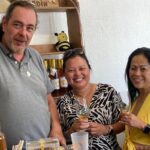
The experience also leans social. You’re there to share tastings, hear stories, and pick up little local notes that make the whole tour feel lighter. Several comments highlight how the tour changes the view of Lourdes—from something only religious into a place with food culture worth paying attention to.



Price and Logistics: What $81.62 Buys You

At $81.62 per person for about 4 hours, the price makes sense when you look at what’s included. You’re not just paying for a guide. You’re paying for a guided route through multiple local stops where lunch and alcoholic beverages are included.
That’s the value equation:
- If you tried to replicate it on your own, you’d pay for food at several places, plus wine, plus (often) the hassle of figuring out what’s local and worth ordering.
- Here, the tour organizes the “what to taste” part and attaches regional context so you don’t waste money on random dishes that tourists like.
Group size helps too. With a max of 12, the experience can keep a relaxed pace at each stop, which generally means less standing around and more actual tasting time.
One more timing clue: it’s often booked about 37 days in advance on average. That suggests this tour is popular with people planning well for day trips and schedules. If Lourdes is a fixed stop in your itinerary, don’t wait until the last minute.
Stop-by-Stop: What the Flow Feels Like

Exact pacing from stop to stop can vary by day, but the structure is consistent: a walk through central Lourdes with generous tastings at multiple addresses.
Here’s the typical “feel” of how the tasting progresses based on the menu and how the tour is described:
- You start with starters—black pork charcuterie and local tapas—plus wine. This is where you learn the basics of the regional flavor profile.
- Then you move into the mains, where Pyrenees trout and duck show up. This is usually the biggest “wow” section, because it’s where local producers feel most distinct.
- Finally, you end with desserts like country cheese and spit cake, plus more local delicacies depending on the day.
Why this matters: by the time you hit dessert, you’ve already learned the region’s savory identity. So the sweet notes (including spit cake) land with more meaning. It stops being “just dessert” and becomes part of a complete Lourdes-to-Pyrenees tasting story.
Also, because this is a guided tour (not simply a shared meal), you should expect frequent pauses for explanation—stories tied to the food, the geography, and the town. That’s part of what you’re paying for.
Who This Tour Suits Best (and Who Might Skip)

This is a strong match if you:
- Want a non-standard Lourdes experience that still includes light context around the town
- Prefer food-and-wine learning over museum-style lectures
- Enjoy small groups, conversation, and stories
- Are comfortable walking for about 4 hours at a relaxed pace
- Like to ask questions and get straight answers
You might skip it if you:
- Are not interested in alcohol (it’s included) and don’t want to taste it
- Want a purely religious itinerary with no food focus
- Are looking for a lightweight snack crawl rather than a true lunch-style experience
Should You Book This Lourdes Gastronomic Tour?
Book it if you want Lourdes to taste like the High Pyrenees, not just look like a postcard. The mix of local specialties, a structured meal flow, and guides who can explain what you’re eating makes it feel like you’re getting more than calories—you’re getting context.
It’s also a great value play for people who don’t want to spend their precious time hunting down the right places to eat. For a fixed 10:00 am start, a small group, and lunch plus wine included, it’s an efficient way to get a standout meal experience without stressing over menus.
If you’re curious but uncertain, aim to go hungry, wear comfortable shoes, and come ready to talk. This tour works best when you treat it like lunch with a knowledgeable friend—one who happens to bring local wine into the conversation.
FAQ
How long is the Lourdes gastronomic tour?
It runs for about 4 hours.
What does the tour cost?
The price is $81.62 per person.
Where does the tour start and what time does it begin?
It starts at 11 Pl. du Champ Commun, 65100 Lourdes, France, at 10:00 am. It ends back at the meeting point.
Is the tour offered in English?
Yes, it is offered in English.
What group size should I expect?
The tour has a maximum of 12 travelers.
What’s included in the price?
Lunch is included, along with alcoholic beverages. You also get an accompanist and a guided tour.
What food will I taste?
The sample menu includes black pork charcuterie and local tapas (starters), Pyrenees trout and duck (mains), plus country cheese and spit cake (desserts), along with other delicacies.
Do I get a mobile ticket?
Yes, this experience uses a mobile ticket. Confirmation is received at the time of booking.
Are service animals allowed?
Yes, service animals are allowed.
Can I cancel and get a full refund?
Yes. Free cancellation is available up to 24 hours in advance for a full refund.