REVIEW · BANDOL
From Bandol: Visit the 13 calanques of Cassis & Marseille (3 hours 15 minutes at sea)
Book on GetYourGuide →Operated by Atlantide Promenades en mer · Bookable on GetYourGuide
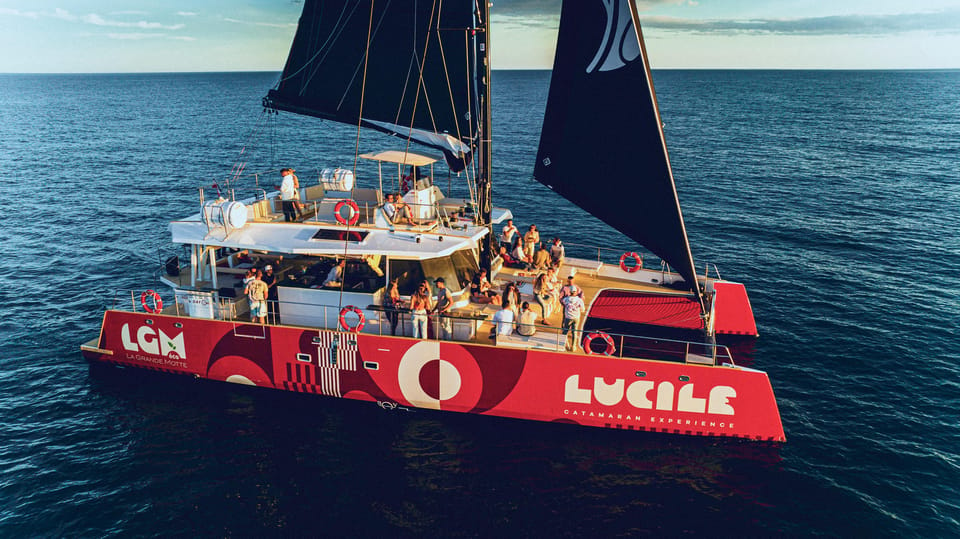
Thirteen calanques, one day worth of views. This Bandol cruise is interesting because you get a guided tour while the boat strings together classic coves, viewpoints, and cliff scenes of the Parc National des Calanques.
I especially like the English/German/Spanish commentary booklet paired with live guidance, so you can follow along even if your French isn’t perfect.
What I really appreciate is the human touch: the guide offers clear, often humorous commentary that helps the names on the water feel real. And yes, dogs are accepted, which makes this a smart option when you can’t leave your pet behind.
One consideration: the pacing can be tight, so you may feel limited at each stop—plus starting from Bandol means extra time on the water before you reach the Cassis area.
In This Review
- Key things to know before you go
- Sailing from Bandol: how the day is set up
- From Bandol to La Ciotat: the coast warm-up
- Cassis cliffs and Routes des Crêtes: the dramatic approach
- Port Miou, Port Pin, and En Vau: the park core in sequence
- Oule and Devenson: cliffs with a different feel
- St-Jean de Dieu by glass: seeing what’s hard to reach
- Sugiton and Morgiou: small calanques and the cabanon vibe
- La Triperie and the Cosquer cave: the 37-meter detail
- Sormiou: ending on the largest calanque
- Guided commentary and the multilingual booklet: why that pairing matters
- Comfort, timing, and crowding: what can affect your enjoyment
- Who this tour is best for (and who should think twice)
- Should you book this Bandol calanques cruise?
- FAQ
- How long is the tour and how much time is spent at sea?
- What is the price per person?
- What languages are available during the tour?
- Is the tour guided?
- Are beverages included?
- Where do I meet the boat in Bandol?
Key things to know before you go
- A full 13-calanques loop: One day, many inlets, with the national park covered broadly.
- Guided storytelling in motion: Live French commentary plus a multilingual booklet keeps the cruise from feeling like just sightseeing.
- Iconic Cassis highlights included: You reach the core calanques like En Vau and Port Miou.
- You get special viewing moments by glass: That includes a look at St-Jean de Dieu and the Cosquer cave area.
- The route builds up to the big finale: You finish with Sormiou, the largest calanque in the park.
- Comfort depends on crowding: A fuller boat means less room to watch and photograph.
Sailing from Bandol: how the day is set up
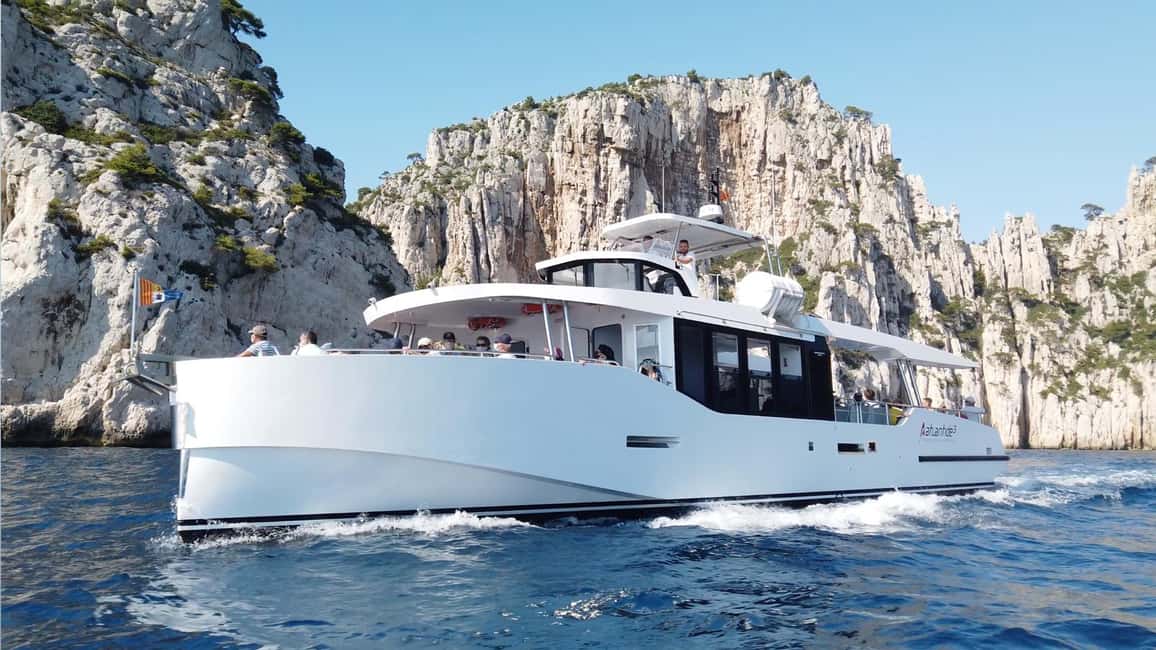
The tour starts in Bandol harbour, right in front of the Atlantide boats. That matters because you’re not just boarding and then hoping for a good view—you’re immediately part of a moving route that’s designed to cover the park efficiently in one day.
Plan for a long, scenic sea stretch in a single block: the time at sea is listed as 3 hours 15 minutes, and the day runs as a full outing. That sea time is part of the fun, but it also means you’ll want to think practically about comfort. If you’re sensitive to waves, consider what you’d normally do for a boat ride (layering up for wind is also a good call on this coast).
Price-wise, $50 per person can feel like a simple cruise cost—until you factor in what’s actually included. You’re paying for a guided tour plus the sea cruise itself. You do need to bring your own drinks since beverages aren’t included, so I treat this as a buy-on-your-own-terms day: bring a bottle, maybe a small snack, then focus on the views.
You can also read our reviews of more tours and experiences in Bandol.
From Bandol to La Ciotat: the coast warm-up
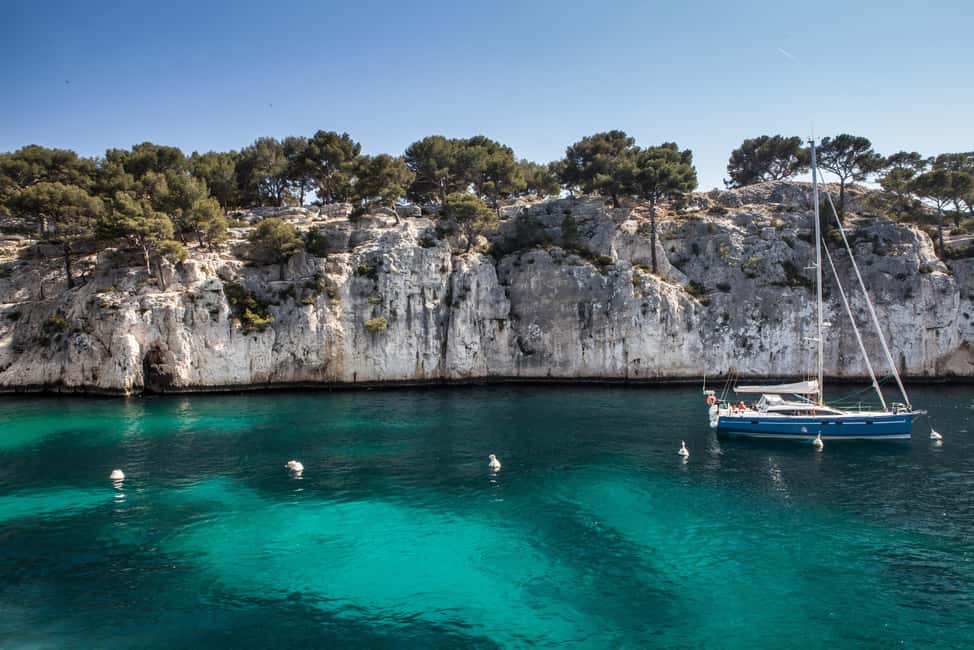
After leaving Bandol, you sail along the Var coast toward the bay of La Ciotat. This early segment sets the tone. It’s your chance to get oriented with the coastline—then the route leads you to La Ciotat as the eastern gateway to the national park.
Along the way, the boat passes between Ile Verte and Bec de l’Aigle, and you visit the Mugel and Figuerolles creeks. Even if you’re mostly watching from your seat, this part helps you understand what makes the calanques feel so dramatic: the coastline changes fast, and you’re moving between small waterside spaces and higher cliff lines.
If you like the “story of a place” approach, this is where the guide’s commentary becomes especially useful. Hearing the names as you pass them means you’re not just staring at scenery—you’re learning the map while it slides by.
Cassis cliffs and Routes des Crêtes: the dramatic approach
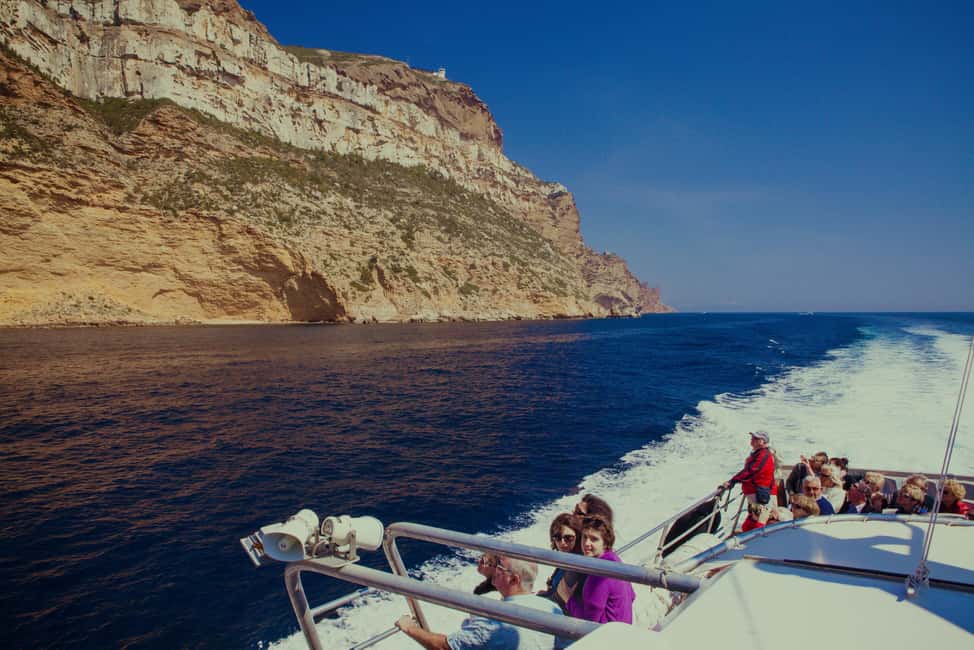
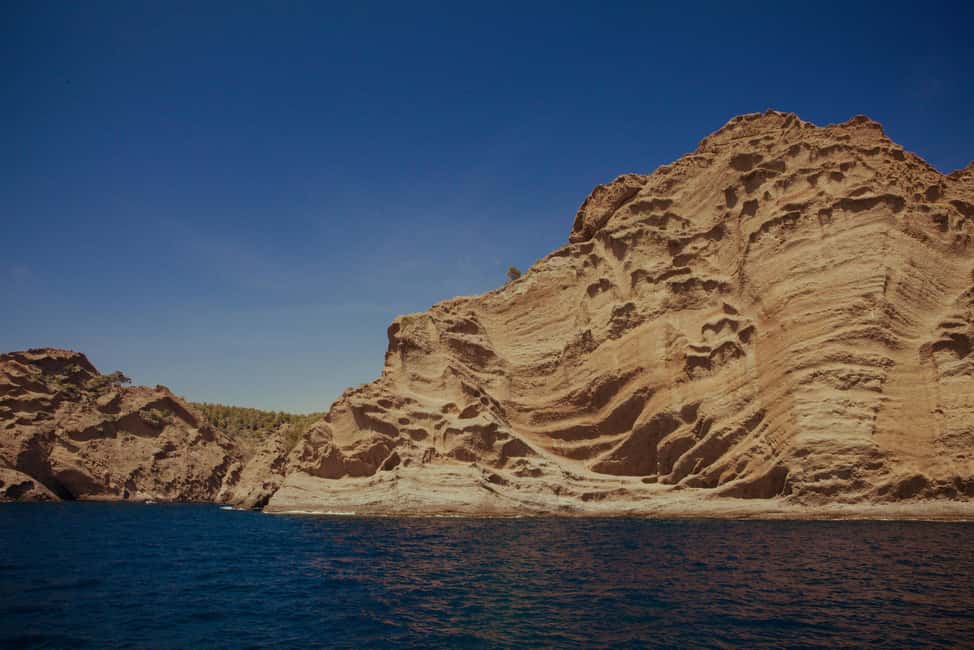
Once you head for the bay of Cassis, the tour starts steering you toward some of the coast’s biggest visual moments. You’ll pass the cliffs of Cap Canaille, plus the famous Routes des Crêtes.
You don’t need to be a geology nerd to enjoy what this segment does. It’s the shift from smaller creeks and nearby bays into the park’s more recognizable “big view” territory. And because you’re approaching by sea, you see these lines and angles from a perspective you usually miss from land.
For you, this section is a good time to do the practical stuff too: get your camera ready, find a spot with a clear line of sight, and decide whether you’ll stay put or move around as the boat turns. If the boat gets busy, choose early rather than waiting for later.
Port Miou, Port Pin, and En Vau: the park core in sequence
When you arrive in Cassis, the tour goes into the heart of the park. This is where the day earns its reputation as a “most complete” route, because you hit the calanques people talk about most, in a logical flow.
You visit Port Miou, Port Pin, and En Vau—with En Vau specifically called out as the pearl of the park. I like how this setup works for most visitors: you don’t jump straight to the hardest-to-pronounce stops. You build up.
Here’s what tends to make these sections more satisfying than you might expect:
- The names aren’t just labels. They’re placed in sequence so you can track how the scenery changes.
- The guide’s live commentary helps the bay/calanque shapes click into place as you watch the boat approach and drift.
- You get the benefit of seeing multiple stops without the hassle of moving your own transport.
A small drawback to keep in mind is time at each calanque. The cruise is designed to pack in a lot, so if your priority is lingering for long photo sessions, you might feel the schedule is brisk. In plain terms: you’ll do quick looks, not marathon wandering.
Oule and Devenson: cliffs with a different feel
After the core calanques, the route continues to admire the cliffs of the calanques de l’Oule and Devenson. These stops help balance the day. If Port Miou, Port Pin, and En Vau feel like the central set pieces, Oule and Devenson add variation—another set of angles, another rhythm of coastline.
This is also where you’ll want to pay attention to the “viewing strategy” you use. Since the calanques are all water-adjacent, the best photos are usually about timing and positioning rather than zooming on the first second. When the boat changes orientation, the light can flip quickly.
St-Jean de Dieu by glass: seeing what’s hard to reach
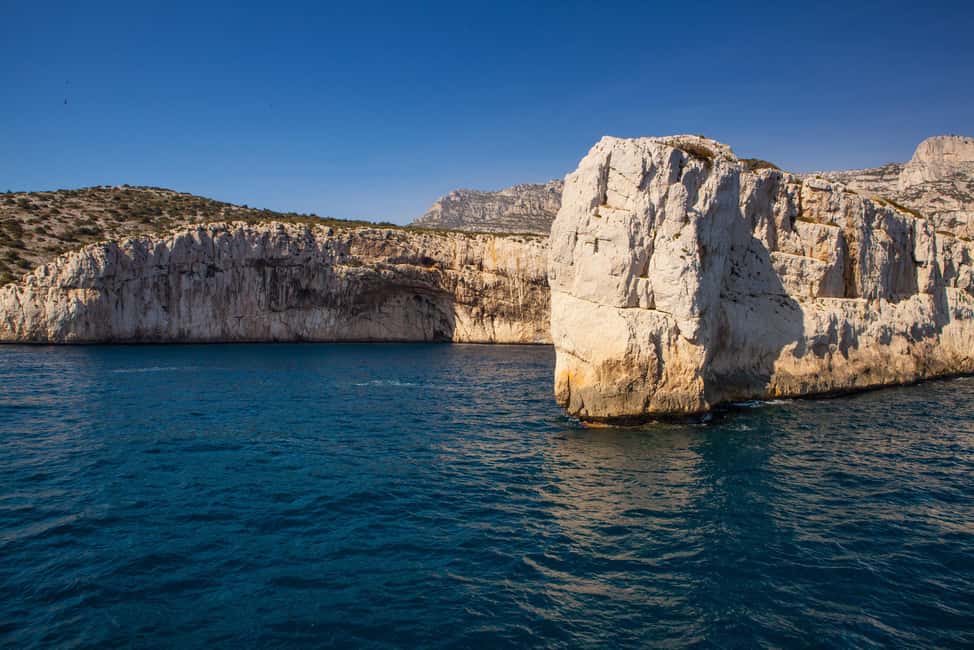
Next comes a very specific moment: you take a look (by glass) at calanque St-Jean de Dieu at the foot of Mont Puget.
This is valuable because it’s a different kind of experience than just watching from the deck. Instead of only viewing the shoreline from outside, the tour sets up an observation method tied to what you’re seeing and where it sits relative to the land. You’re not getting a full walk-through here—this is a viewing stop—so your expectations should be like visiting a viewpoint with a guided explanation, not doing an extended exploration.
If you’re the kind of person who likes when tours include at least one “special format” moment (not just more shoreline), this one is a strong pick. It’s also one of the places where a multilingual booklet helps, because the point of the stop is often the context.
Sugiton and Morgiou: small calanques and the cabanon vibe
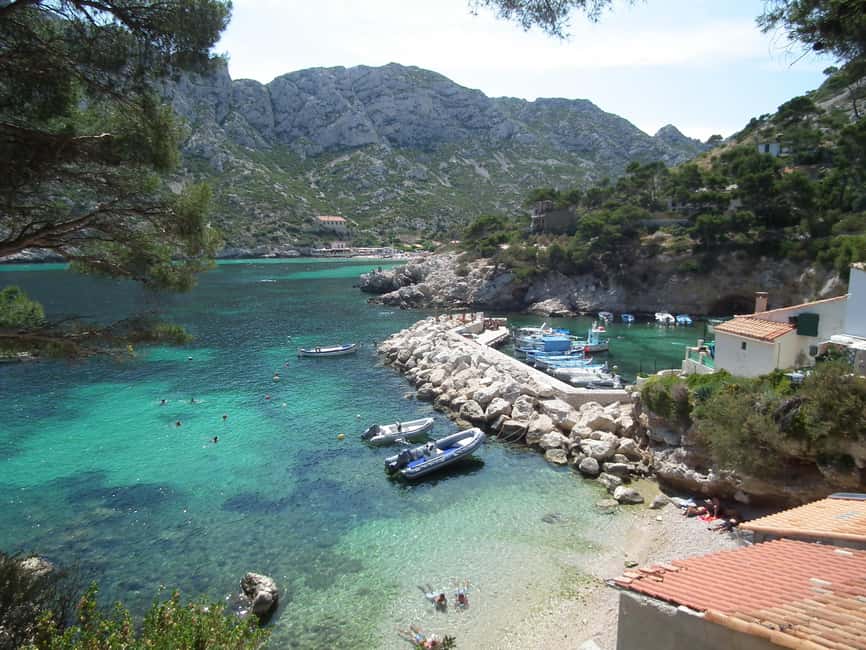
The route continues in smaller calanques, including Sugiton, and then you go behind the famous Marseille cabanons of the calanque de Morgiou.
I like these moments because they break the pattern. After bigger, more famous-feeling stops, you get an in-between scale: smaller spaces, more intimate sightlines, and a chance to notice how the coastline supports human life along the edges.
Sugiton gives you that “pause and look” feeling—then Morgiou adds something different: the cabanon area behind it. If you enjoy seeing how people live around scenic places, this is the kind of detail that makes a cruise feel like more than a postcard loop.
La Triperie and the Cosquer cave: the 37-meter detail
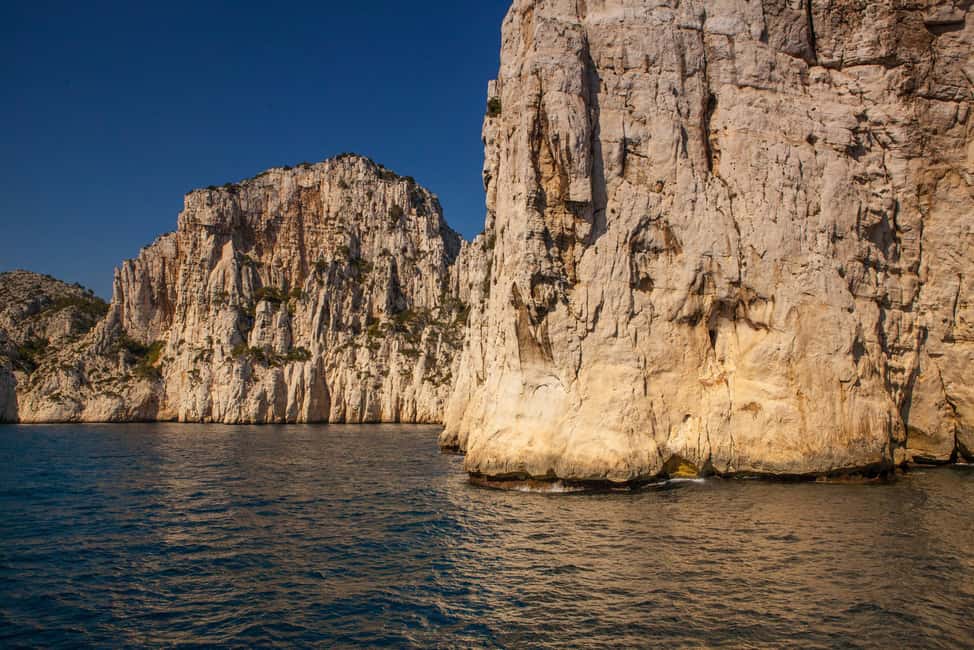
One of the most memorable sections is the small Calanque de la Triperie, home to the Cosquer cave area, 37 meters below the surface of the water. The tour continues here with another viewing-by-glass approach.
That 37-meter figure matters because it tells you what kind of experience you’re getting. You’re not swimming down there, and you’re not doing a land visit to the cave itself. You’re getting a guided look at something that’s physically out of reach, explained in a way that makes it intelligible from the boat.
For you, this is a classic “how do they show this?” highlight. It adds a layer beyond scenery—an element of discovery tied to where things sit relative to the waterline.
Sormiou: ending on the largest calanque
Before returning to Bandol, the tour finishes with a visit to Sormiou, the largest calanque in the National Park.
I like closing a day like this on the biggest stop. It gives your eyes a final anchor before the coastline starts blending together in your mind. Sormiou as the finale also works well because you’re likely already familiar with the names you saw earlier—so the last one feels like a payoff rather than just another checkpoint.
If you want to take photos all day, Sormiou is a good place to do extra work: bring your camera strap secure, wipe salt spray off lenses if needed, and give yourself time to frame shots without rushing.
Guided commentary and the multilingual booklet: why that pairing matters
The tour is guided live in French, and you also get a commentary booklet in English, German, and Spanish. That combination is worth valuing.
Live guidance does two things well:
- It keeps you from misreading what you’re looking at.
- It helps the route flow, so you’re not always guessing what the boat is turning toward.
The booklet helps when:
- You miss a line of French.
- You want to review names and context after the stop.
- Your travel style is more “read and connect” than “listen nonstop.”
And based on the feedback the day’s been getting, the guide’s humour and clarity are a real strength. In a tour that covers many named spots, that kind of personality makes the difference between remembering scenery and remembering place-names.
Comfort, timing, and crowding: what can affect your enjoyment
This cruise is designed to cover a lot, which means the schedule can feel quick. If you’re hoping for long stops, plan mentally for fast photo opportunities and quick repositioning on the boat.
Crowding is another factor to consider. The tour can run with a full boat, and that changes everything: less room to move, more competition for the best viewing side, and fewer chances to get a stable camera angle. The solution is simple—arrive ready to claim your spot early, and be flexible about where you stand.
Finally, remember that beverages aren’t included. Bring water, and consider a small snack if you’re the type who needs energy to enjoy a full day out.
Who this tour is best for (and who should think twice)
This cruise is a great fit if you want one guided day that covers the major calanques of the Parc National des Calanques, including the Cassis core and the big finale at Sormiou. It’s also a good choice if you like learning place-names as you go, not just taking photos.
It may be less ideal if you want to linger. Because you’re covering 13 calanques in a single outing, the day is structured for movement over long stays. If your idea of a perfect trip is slow walking, you might be happier pairing this kind of cruise with separate land time.
One more practical note: the cruise is listed as wheelchair accessible, which is a strong plus for travelers who need barrier-aware options.
Should you book this Bandol calanques cruise?
I’d book it if you want a guided, efficient, name-rich day on the water that hits the highlights in and around Cassis and finishes with Sormiou. For $50, you’re not just buying scenery—you’re buying a guided route plus the sea time, with multilingual support to help you follow what you’re seeing.
I’d think twice if you’re picky about photo time or you know you get frustrated by tight schedules. Also, if crowds reduce your comfort, choose your positioning early and prepare for a busy boat day.
If your goal is a practical “one day, many calanques” experience—with commentary that keeps the route understandable—this is a smart bet.
FAQ
How long is the tour and how much time is spent at sea?
The tour is listed as 1 day, with 3 hours 15 minutes at sea.
What is the price per person?
The price is $50 per person.
What languages are available during the tour?
The live tour guide is French. You also get a commentary booklet in English, German, and Spanish.
Is the tour guided?
Yes, it includes a guided tour.
Are beverages included?
No, beverages are not included.
Where do I meet the boat in Bandol?
You meet directly in front of the Atlantide boats in Bandol harbour.