REVIEW · AY
Champagne Tasting Class and Lunch near Epernay
Book on Viator →Operated by À La Française · Bookable on Viator
Champagne lessons can be surprisingly interactive. In Le Clos Corbier near Épernay, you’ll tour 1850s cellars, learn how Champagne is made, then prove your palate in a blind tasting and aroma workshop.
Two things I really like about this experience are the hands-on training (quiz + smell exercise) and the fact that it ends with a full 3-course lunch rather than a token snack. One practical consideration: private transportation isn’t included, so you’ll want a plan to get to the meeting point.
In This Review
- Why This Small-Group Champagne Class Feels Different
- Meeting at Le Clos Corbier: the Morning Start That Fits the Region
- 1850s Cellars and the Traditional Press: Seeing Champagne Making Up Close
- The Quiz + Olfactory Workshop: Training Your Nose, Not Just Your Tongue
- Snacks and the Blind Tasting: How to Eat and Sip Without Wrecking Your Palate
- Lunch with Champagne Pairings: Pâté en Croûte, Langres, and Ratafia
- What You’ll Learn That You Can Use the Next Time You Order Champagne
- Small-Group Size and English-Friendly Hosting: Why Twelve People Works
- Price and Value for $108.61: When It Pencils Out
- Timing and Logistics That Keep Your Day Stress-Free
- Should You Book This Champagne Class and Lunch Near Épernay?
- FAQ
- How long is the Champagne tasting class and lunch?
- How many people are in the group?
- What language is the tour offered in?
- What’s included in the tasting?
- Can the lunch accommodate allergies or special diets?
- Is the booking refundable if I cancel?
Why This Small-Group Champagne Class Feels Different
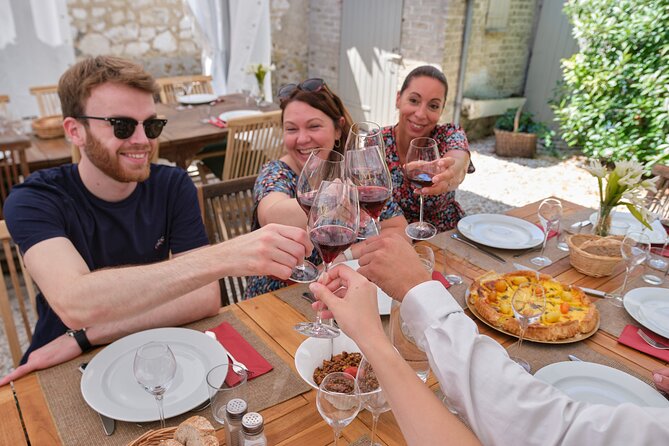
This isn’t one of those tours where you shuffle past a few barrels and call it education. You start with the real process of Champagne making in a working family property, then you sit down for structured tastings where your brain actually has to work.
Best part for me: the format keeps you engaged. You’ll be asked to identify aromas, then later to pick out different Champagnes without seeing what you’re pouring. That turns Champagne from something you admire into something you can describe.
The group stays intimate, with a maximum of twelve people. That matters because it makes the quiz feel like a shared activity instead of a show you watch from the back.
Meeting at Le Clos Corbier: the Morning Start That Fits the Region
You meet at 10:30am in the Aÿ-Champagne / Mareuil-sur-Ay area (the tour lists an address in Aÿ-Champagne). Either way, you’re starting in the heart of Champagne country, inside the vineyard setting rather than at a busier city showroom.
The tour notes it’s near public transportation, which is helpful if you’re doing this as a day trip from Épernay or pairing it with time in Reims. If you’re coming from Paris, one thing that makes this practical is that Le Clos Corbier is described as being about 15 minutes from Épernay by connection, and Paris-to-the-region travel is commonly done by train.
One more detail that affects your day: it’s roughly a 3-hour experience, ending back at the meeting point around 1:30pm. That time window is a sweet spot for people who want to taste and learn without losing a whole day.
You can also read our reviews of more food & drink experiences in Ay
1850s Cellars and the Traditional Press: Seeing Champagne Making Up Close
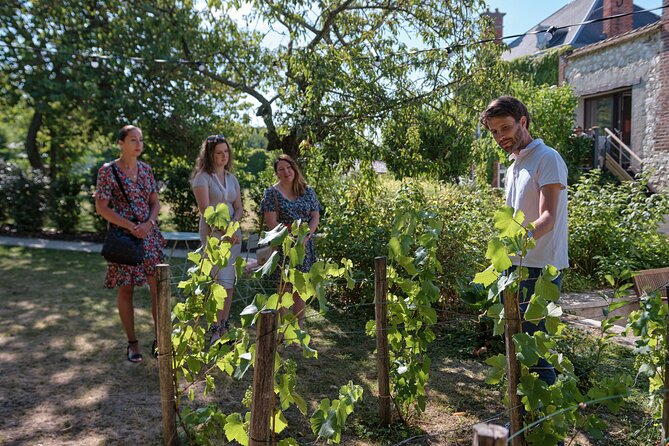
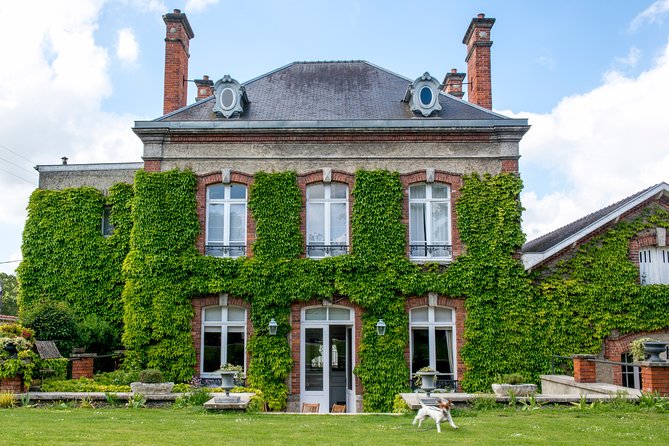
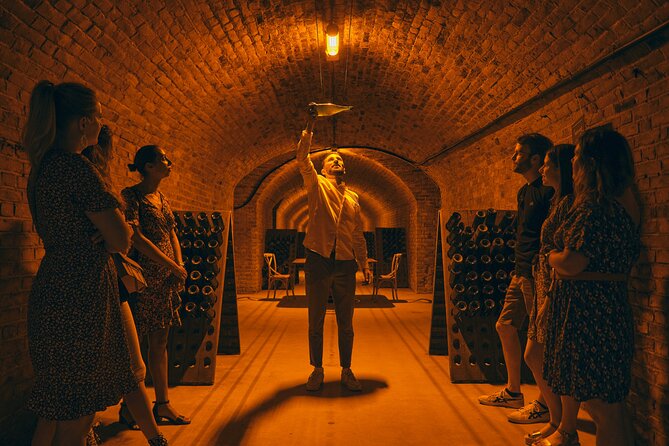
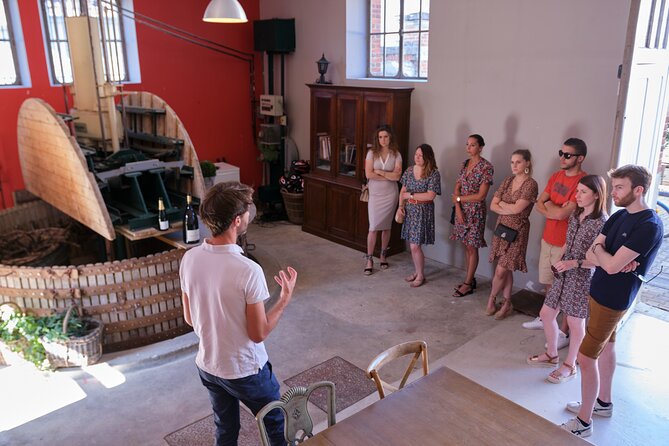
You’re welcomed at the Champagne house at Le Clos Corbier, in the vineyards. Then you head into cellars dug in the 1850s, where the tour focuses on how Champagne is produced—starting with a visit to a traditional press.
Why this part is worth your time: most Champagne tastings focus on what’s in your glass. Here, the tour connects flavor to process. When you can picture the press, you start understanding why the wine base matters, and why Champagne tastes the way it does even before you get to the fun part of tasting.
You also learn the basic Champagne-making story in plain terms, with the guide building toward the later tasting exercises. By the time you sit down, you’re not starting from scratch.
The Quiz + Olfactory Workshop: Training Your Nose, Not Just Your Tongue
After the cellar visit, you take your seat for a tasting class with a Champagne quiz. This isn’t just trivia. The quiz gives you a framework so you can pay attention during the tasting instead of guessing.
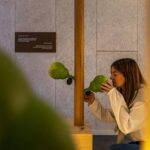
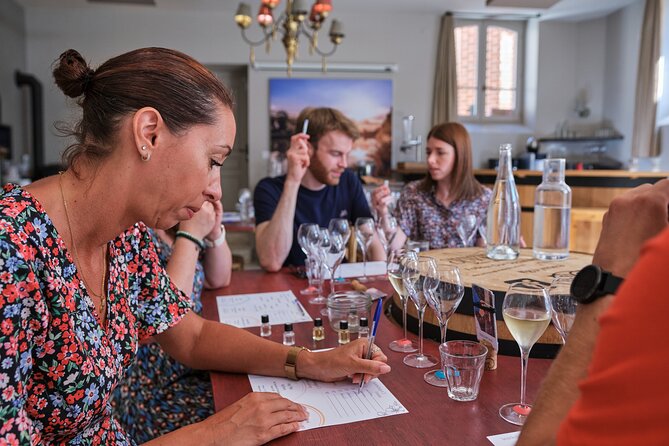
Next comes an olfactory workshop, where you’ll practice identifying aromas and flavors you can find in Champagne. If you’ve ever tasted a glass and thought, I know I like it, but I can’t explain why, this is the fix.
Then the tour gets genuinely competitive (in a friendly way). You’ll do a blind tasting of three different Champagnes from smaller wineries. The idea is simple: taste without labels, then see if you can match aromas and structure to what you’re experiencing.
A few guide names show up repeatedly in past groups, like Estelle, Kevin, Charlotte, Xavier, Emilie, Marie, Amanda, and Batiste. That matters because it suggests the hosts tend to be energetic and interactive, using games to help you remember what you learned.
Snacks and the Blind Tasting: How to Eat and Sip Without Wrecking Your Palate
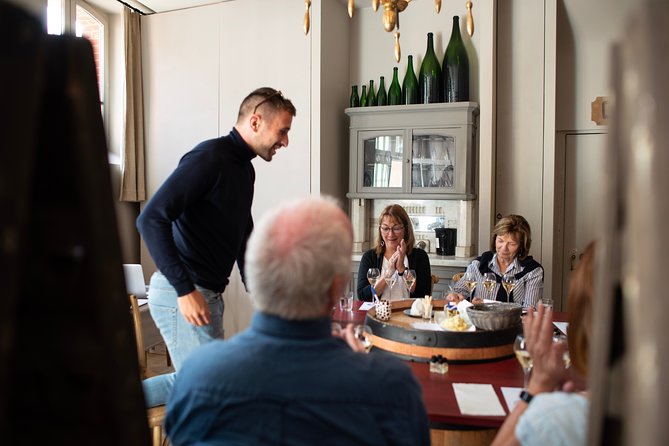
Part of the experience includes local snacks alongside the tasting. That’s not an afterthought. Snacks help you reset your palate between sips and keep the tasting from becoming one long stretch of alcohol.
During the blind tasting, you’ll be identifying differences among Champagnes. This is where your “training” actually pays off. You’re not just drinking; you’re comparing—often by texture, balance, and the way aroma shows up first and taste follows.
A small heads-up: the blind tasting is meant to be fun and educational, but it can feel a little like a game show. If you prefer quiet, you can still play along without being the loudest person in the group.
Lunch with Champagne Pairings: Pâté en Croûte, Langres, and Ratafia
Then comes the reason many people keep coming back: the 3-course lunch paired with Champagne. The tour describes seasonal French regional cuisine and gives examples such as pâté en croûte, Langres, and pink biscuit cake.
Your lunch is structured as:
- Starter: a regional aperitif
- Main: regional specialties
- Dessert: regional specialties
You also taste a variety of Champagnes during the meal. On top of that, you’ll sample the local red wine Coteaux Champenois and the regional liquor Ratafia.
This pairing-heavy lunch is a big value driver. You’re getting both the learning and the reward, and you’re doing it in the same venue where the tasting is happening. It’s also a nice way to understand Champagne beyond small pours. Instead of sipping alone, you’re tasting how it behaves next to food.
Diet note: the lunch can be adapted for allergies or specific diets. One review also highlighted a gluten-free meal accommodation, which is reassuring if you need options beyond the standard menu.
One consideration to keep expectations realistic: this is often described as a warm, casual regional lunch, not a formal, plated restaurant experience. If you’re expecting Michelin-level ceremony, you might find it simpler than that—but many people like that the meal feels true to the region.
You can also read our reviews of more wine tours in Ay
What You’ll Learn That You Can Use the Next Time You Order Champagne
The big practical takeaway is that Champagne gets easier once you’ve been taught how to notice it. After the blind tasting and smell work, you’ll start connecting terms and sensations to real differences in the glass.
You’re learning to:
- recognize aroma families you can actually name
- compare several Champagnes side by side
- understand taste structure beyond sweetness or bubbles
And you’ll get practice explaining your preferences. Even if you don’t go home as a Champagne expert, you’ll be able to ask smarter questions when you’re buying a bottle.
This also changes how the rest of the region feels. Once you’ve tasted multiple styles and connected them to process, vineyard country starts making more sense, even if you never tour another cellar afterward.
Small-Group Size and English-Friendly Hosting: Why Twelve People Works
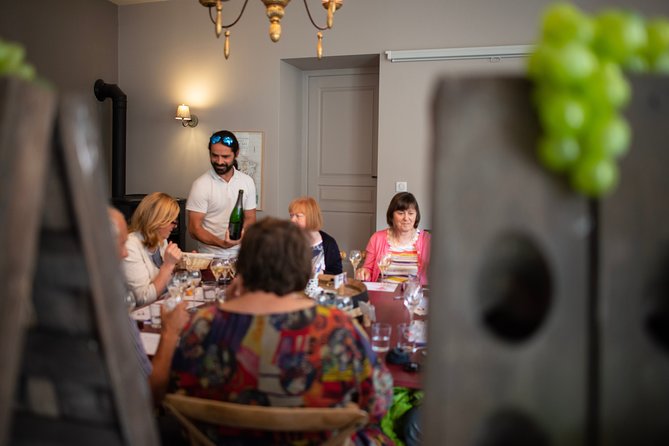
The maximum group size is twelve, which is small enough that the guide can keep things moving and still interact with individuals. That shows up in how the tasting exercises work: quiz questions, scent identification, and the blind tasting all depend on everyone participating.
The tour is offered in English, and past experiences highlight guides who switch smoothly between English and French (one host was specifically noted for speaking both languages). If you’re worried about being stuck with basic English in France, this is one of those tours where the language support is part of the service.
Also, because it’s small, you’ll likely share the table with a mixed group of people. That often turns the lunch into more than just eating—it becomes part of the day’s social charm without turning into a chaotic group bus.
Price and Value for $108.61: When It Pencils Out
At $108.61 per person, the price is only worth it if you value the combo package: cellar visit + multiple tastings + entry fees + lunch.
Here’s what you’re paying for in concrete terms:
- entrance fees for a family-run winery visit and tastings
- 6 tastings total
- a guided experience in English
- a real 3-course lunch with pairings
So even if you were planning to do a tasting anyway, this bundle helps. You’re not just buying a pour; you’re buying time, access to the 1850s cellars, guided training, and a meal that’s designed to pair with what you’re tasting.
The one cost you should account for is transportation to the meeting point. Since private transport isn’t included, your best value comes when you’re already close by or using public options in the area.
Timing and Logistics That Keep Your Day Stress-Free
The schedule is tight and friendly: start at 10:30am, finish around 1:30pm, then you’re back where you started. That makes it easy to plan the rest of your Champagne day trip, whether you’re headed toward Épernay center, Reims, or a second stop in the region.
Also pay attention to the ticket format: it’s a mobile ticket. That’s one less thing to juggle while you’re traveling.
If you can, book ahead. The tour lists an average booking window of about 38 days, which usually means it’s popular and dates can tighten up.
Should You Book This Champagne Class and Lunch Near Épernay?
Book it if you want Champagne education that feels practical and fun, with a blind tasting and an aroma workshop doing real work. You’ll also like it if you care about leaving with a clearer sense of what you enjoy, not just a nice buzz and a bottle photo.
Skip or reconsider if you need private transportation or you prefer a more passive, low-interaction tour. And if you’re expecting an upscale formal lunch experience, this meal may feel more casual and regional than you’re imagining.
FAQ
How long is the Champagne tasting class and lunch?
The experience runs for about 3 hours, starting at 10:30am and ending around 1:30pm.
How many people are in the group?
It’s a small-group tour with a maximum of twelve travelers.
What language is the tour offered in?
The experience is offered in English, with a local English-speaking guide.
What’s included in the tasting?
You get 6 tastings, including the blind tasting of three Champagnes and tasting as part of the class experience. Entrance fees for the winery visit and tastings are included as well.
Can the lunch accommodate allergies or special diets?
Yes. The lunch can be adapted to allergies or specific diets.
Is the booking refundable if I cancel?
Yes. You can cancel up to 24 hours in advance for a full refund.