REVIEW · BORDEAUX
Bordeaux wines : tasting with 4 white wines and cheeses
Book on GetYourGuide →Operated by I love my 2cv Sas Verrevidophobe · Bookable on GetYourGuide
Bordeaux wine gets less scary fast. In a relaxed, small-group session led by Cécilia and Mathilde, I like how you get hands-on training in how to taste, not just what to taste. I also love the left-bank vs right-bank comparison, paired with cheese so the flavors make sense in real time.
One thing to weigh: this experience is not suitable for people with mobility impairments, so check your comfort with the set-up before booking.
In This Review
- Key things to know before you go
- Stepping into Bordeaux at 25 Av. Thiers
- How the 75-minute tasting flows (and why it works)
- Bordeaux basics you’ll actually use: appellations, blends, and tasting steps
- The wine lineup: dry whites from both banks, plus mystery, red comparisons, and sweet
- Cheese pairings that teach you what to notice
- Meet your hosts: Cécilia, Mathilde, and the team energy
- Where the session happens: patio, cellar, or tasting room
- What you take home: the booklet and bottles you can buy
- Price and value check: $46 for a small-group tasting that teaches
- Who should book this Bordeaux tasting (and who might skip it)
- Should you book this Bordeaux wine tasting?
- FAQ
- What’s the duration of the Bordeaux wine tasting?
- How many wines and what kind do I taste?
- Is there food included?
- What’s included in the price?
- Do they offer the tasting in English?
- Is there hotel pickup?
Key things to know before you go

- Small group (max 6) keeps the pace friendly and questions easy.
- Université du Vin-trained hosts guide you through tasting like a pro.
- Aroma game helps you practice smelling fruit and other scents in wine.
- Left bank and right bank dry wines set up Bordeaux styles quickly.
- Cheese pairings show how texture and salt affect what you taste.
- You can buy the wines you tried at the end, if you want to continue at home.
Stepping into Bordeaux at 25 Av. Thiers

This tasting starts at 25 Av. Thiers. Plan to arrive a bit early and call on arrival (or ring the door), because there’s no hotel pickup. If you’re coming by foot or local transit, this is actually easy to manage, but you’ll want to be on time—75 minutes goes fast once you’re tasting.
The vibe is intentionally relaxed. You’re not sitting in a lecture hall. You’re in a room that can shift with the weather: an outdoor patio when conditions are good, a cooler cellar setting, or a specially equipped tasting room when it’s not. That matters more than you might think. Wine is about smell, and a comfortable setting makes it easier to pay attention to tiny differences.
Language options are solid—English, French, and Spanish—and the hosts explain things in a way that makes questions feel normal. From what I’ve seen in the guidance style, the best moments happen when the hosts ask you what you’re noticing, not when you try to guess what you’re supposed to say.
You can also read our reviews of more food & drink experiences in Bordeaux
How the 75-minute tasting flows (and why it works)

The structure is designed to take you from confusion to confidence. You start with an introduction to Bordeaux and then move into guided sensory steps—so you’re not just sipping and hoping it clicks.
A big part of the method is the aroma work. Expect an aroma game where you practice recognizing scents—things like fruit notes and other recognizable smells. This is one of the most useful parts because you’re training your nose the same way you’d train a new muscle: small reps, in a fun format. After that, tasting becomes less mystical and more methodical.
Then comes the wine and food pairing. You’ll taste alongside cheese selections, with guidance on how to connect what you smell and taste with what you’re eating. The pairing isn’t random. The hosts steer you toward the idea that wine changes with food, and food changes with wine—so you’re learning a skill, not just getting a list of pairings.
You also leave with a booklet. It’s not just a souvenir. The point is to help you keep the tasting technique going after the session, so you don’t return home and immediately forget the steps.
Bordeaux basics you’ll actually use: appellations, blends, and tasting steps

This isn’t just a region tour where someone says Bordeaux is famous. The hosts connect Bordeaux to the things you can taste: appellations, terroirs, grape varieties, and blends. You’ll get the bigger picture, then you’ll come right back to what your senses are doing.
Here’s what I find useful about this approach: it keeps Bordeaux from feeling like a brand name. Instead, it becomes a system. When you understand how the region’s labels work and how blends are built, the wines stop being a guessing game.
The tasting technique is the real payoff. You learn what to look for, how to describe what you notice, and how to compare wines without getting stuck on one favorite. That “compare” mindset is key for Bordeaux, because so many bottles are designed to show balance—sweetness vs. acidity, body vs. freshness, and how aromas evolve as the wine sits in your glass.
Also, the hosts are professionally trained wine tasters. They’re not performing. They’re teaching you how to taste so you can do it again on your own.
The wine lineup: dry whites from both banks, plus mystery, red comparisons, and sweet
Even though the experience is centered on Bordeaux wine tasting with white wines and cheese, it’s built like a broader tasting map. You’ll taste a set that includes:
- Dry white wines from both left bank and right bank
- A mystery wine
- Red wines in comparisons that reflect Bordeaux styles across the banks
- A sweet wine finish
This matters if you’re only a white-wine person. You might feel like you’re doing “extra homework,” but it’s actually helpful. Bordeaux whites and reds come from the same region logic. When you taste both sides, you start to understand how the style choices and blending patterns create different moods on the palate.
The mystery wine also keeps your brain awake. It’s not there just for fun—it pushes you to use the tasting technique rather than relying on guesswork or labels. And when you finally taste the sweet wine, it gives you a contrast point. Sweet wines can sound intimidating, but with the guided approach, they become a lesson in balance rather than a sugary surprise.
Cheese pairings that teach you what to notice

Cheese can make a tasting feel more social, but here it’s also a training tool. The pairing is part of the learning: you taste, then you learn how to interpret the combination of wine and cheese.
What you gain is practical awareness:
- Salt and fat can round out sharp edges.
- Certain cheese textures can amplify aroma perception.
- The same wine can feel different depending on what you pair it with.
You don’t need to be a cheese expert. The hosts guide you through what to notice, and that’s the point. If you’ve ever tasted wine with cheese and thought, I like it but I don’t know why, this is exactly where you fix that.
Also, you’ll taste in a small group. That means you can hear how others describe aromas and flavors, which often helps you find your own words.
You can also read our reviews of more wine tours in Bordeaux


Meet your hosts: Cécilia, Mathilde, and the team energy

The guides are the engine of this experience. Cécilia and Mathilde are trained at the Université du Vin, and it shows in how the session stays both structured and relaxed. Their English is described as excellent, and the whole tone stays friendly—questions are welcome.
In one of the notes from the experience feedback, the team’s approach is described as tailored to your preferences. That’s a big deal. Wine tastings can be cookie-cutter. Here, the hosts aim to adjust the pacing and emphasis so you stay engaged instead of overwhelmed by terminology.
And yes, part of the enjoyment is simply talking wine and food in a calm setting. This is the kind of tasting that doesn’t feel like a performance. It feels like learning with people who genuinely enjoy it.
Where the session happens: patio, cellar, or tasting room

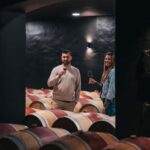
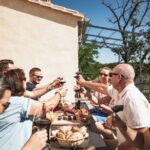
This tasting adapts to the day. If the weather cooperates, you might be tasting on the private patio. If it’s warm or you want a calmer temperature, you could be tasting in the cellar’s cool air. When the conditions aren’t ideal, there’s a specially equipped tasting room all year.
Why does this matter? Because smell depends on your comfort. If you’re cold, distracted, or rushing, you don’t notice subtle changes in aroma. The setting keeps you focused on the senses—the whole point of the training.
What you take home: the booklet and bottles you can buy

Your departure isn’t just, Thanks for coming. You get a booklet designed to help you practice the tasting technique at home. If you follow the steps, your ability to identify aromas and make sense of blends improves fast. It’s one of the easiest ways to turn a one-off tasting into a skill.
And if you end the session with favorites, you’ll find the wines you tasted for sale in the cellar. That’s a nice touch because you can buy the specific bottles tied to what you just learned, not some random “Bordeaux” shelf pick.
Price and value check: $46 for a small-group tasting that teaches

At $46 per person, this isn’t a budget-only tasting, but it also isn’t a luxury splurge. The price makes sense when you look at what you actually get:
- A guided tasting focused on method, not only sipping
- Multiple wines in a structured sequence, including dry whites from both banks
- Cheese pairings
- Water and an aroma game component
- A wine-tasting booklet to keep
- A small group of up to 6, which is where real learning happens
If you’ve ever done a generic tasting where you get a handful of pours and a quick talk, you know the difference. Here, the guided method is the product. And that method can pay off long after you’re back home, especially if you plan to buy wine or visit wineries later.
Who should book this Bordeaux tasting (and who might skip it)
Book it if:
- You want a guided way to learn Bordeaux style differences quickly
- You like hands-on practice, especially aroma work
- You enjoy wine-and-food learning (cheese pairings are part of the lesson)
- You want a small-group setting where you can ask questions
Consider another option if:
- You have mobility constraints, because the experience isn’t suitable for everyone
- You only want one tiny style focus and don’t want any comparisons outside that lane (this tasting is designed as a Bordeaux overview, not a single-genre deep dive)
If you’re strictly a red or strictly a white person, the provider also suggests separate Bordeaux white or Bordeaux red tastings. That may fit your mood better.
Should you book this Bordeaux wine tasting?
I think it’s a smart booking if you want more than a drink. The mix of trained hosts, a practical tasting method, and cheese pairing guidance is what makes this worth your time. The small group size also means you don’t get lost in the crowd.
If you’re new to Bordeaux, this gives you a quick map of how to read the region through taste. If you already like Bordeaux, the aroma game and structured comparisons help you describe and notice more, which makes future bottle shopping easier.
If you’re comfortable with the meeting point (no pickup) and your schedule matches a starting time, this is one of the best ways to build real wine confidence in a short window.
FAQ
What’s the duration of the Bordeaux wine tasting?
The experience runs about 1 hour (listed as 75 minutes).
How many wines and what kind do I taste?
You taste a selection that includes dry white wines from both left bank and right bank, plus other pours such as a mystery wine, red wine comparisons, and a sweet wine.
Is there food included?
Yes. You’ll have wine and food pairing with a selection of cheese, plus water.
What’s included in the price?
Included are 4 glasses of white wine, wine-and-food pairing with cheese, water, a brochure on Bordeaux wines and the tasting method, and an aroma game.
Do they offer the tasting in English?
Yes. The live guide offers English, French, and Spanish.
Is there hotel pickup?
No. You’ll meet at 25 Av. Thiers and need to call or ring on arrival.