REVIEW · MONT ST MICHEL
WW II Private Guided Tour American Landing Beaches in Normandy
Book on Viator →Operated by DDayYourWay · Bookable on Viator
Normandy hits different when you follow the map. This private guided WWII tour strings together the American landing sites from Sainte-Mère-Église to WN 60, with English guide Willem and story-driven stops that connect what you see to what the soldiers faced. I especially like the way he uses original photos to show you the sites then and now, and I like that the route keeps returning to the same big idea: airborne units, roads, and firepower decided everything on June 6, 1944.
The main trade-off is time: plan for about 8–10 hours with steady walking and a few spots that can involve steps or climbing, so comfy shoes matter.
In This Review
- Why This Normandy WWII Tour Feels Different Than a Drive-By
- Sainte-Mère-Église to Utah Beach: where the flank and the first landing stories start
- Sainte-Marie-du-Mont and Carentan: resistance, sniper stories, and why roads mattered
- Pointe du Hoc and Omaha Beach: cliffs, tracks, and the reality of June 6
- Colleville-sur-Mer American Cemetery: space, scale, and time to pay respects
- WN 60 Widerstandsnest 60: climbing into the bunker complex for the best Omaha views
- Price and value: what $915.64 gets your group of up to 5
- What the day feels like hour to hour (and how to prepare)
- Should you book this American landing beaches tour?
- FAQ
- How many people are in the group?
- What does the tour cost?
- How long is the tour?
- Is pickup available?
- Where does the tour start and end?
- What’s included in the price?
- Is lunch included?
- Are museum visits included?
- Is the tour in English, and do I get a ticket on my phone?
- What is the cancellation policy?
Why This Normandy WWII Tour Feels Different Than a Drive-By

- A guide named Willem who mixes humor with real detail, so teens and adults stay engaged
- Original-photos storytelling that helps you picture the same ground during the battle
- Airborne-to-beach connection, not just a beach-and-a-bunker checklist
- Big “respect” stop at the American Cemetery, with enough time to take it in
- WN 60 for views and action, including climbing into former positions
- A route that covers the key American sites, including Utah, Omaha, Pointe du Hoc, and the cemetery
Sainte-Mère-Église to Utah Beach: where the flank and the first landing stories start

You begin around Sainte-Mère-Église, a town tied tightly to the 82nd US Airborne Division. This is where your guide’s job gets fun: turning a name on a map into a set of very specific moments. You’ll visit the church associated with John Steele, the paratrooper who ended up stuck in the steeple—so you can connect the local story to the big cinematic shorthand you may have seen in The Longest Day. It’s not just a landmark stop. It’s a way to understand why airborne drops were so chaotic and why luck mattered—until it didn’t.
Then there’s another human-scale moment: a statue honoring Brigadier General “Teddy” Roosevelt jr. The point isn’t just who he was. It’s that Roosevelt represents the early push and risk-taking on a day that punished hesitation.
From there, you shift to Utah Beach. The walk and the views help you understand why this beach was described as smaller but crucial. The Allies needed to seize a deep-water harbor—Cherbourg mattered because supplies mattered. The tour frames Utah as one of the more successful landings with fewer casualties compared with other beaches, and you’ll hear how that outcome came down to planning, execution, and the particular situation soldiers faced that morning.
You also get the Roosevelt connection again—Utah is the beach where General Teddy Roosevelt came ashore, recognized as the first seaborn general landing on Normandy soil. That repetition is useful. You start seeing the battle as a network, not isolated events.
Practical tip: If you’re a photo person, this is a great early stretch of the day for clear pictures, because the heavy emotional stops (like the cemetery) come later and you’ll want a calmer mind for those.
You can also read our reviews of more guided tours in Mont St Michel

Sainte-Marie-du-Mont and Carentan: resistance, sniper stories, and why roads mattered
Next you move into Sainte-Marie-du-Mont, tied to the 101st Airborne Division. This part of the route is where the tour starts feeling very “operations-focused.” You’re not only learning what happened on the sand; you’re learning why the Allies needed villages and routes secured so units could move, reinforce, and link up.
You’ll see a French resistance monument here, which helps you widen the lens beyond the American units. Normandy wasn’t just a battlefield—it was also a place where locals resisted, gathered information, and created pressure from the ground level.
In the church, the stories get sharp and specific again. Elements of the 101st Airborne Division are described as taking out a German sniper hidden in the steeple. It’s one of those details that sticks because it explains how “sniper threats” weren’t abstract—they shaped movement and survival at very small distances.
From Sainte-Marie-du-Mont, the tour tracks the crossroad the 101st Airborne paratroopers needed before reaching Carentan. That focus on intersections and routes makes you look at the countryside differently. It’s hard to keep calling it “just fields” once you understand that roads and junctions decided whether units connected or got chopped up.
Then comes the darker, more haunting story at the crossroads involving DMC, described as a small Allied tank taken out by German paratroopers who were entrenched around a building that now houses a museum. The tank commander was killed trying to escape, and his body reportedly hung over the turret for days before recovery was finally possible. That’s heavy subject matter, but it’s also historically important. It explains why the fighting could be so relentless: it wasn’t only about movement—it was also about what remained stuck in place.
Carentan itself is next. It sits between Utah and Omaha, and the tour emphasizes why that geography mattered. Carentan became vital for linking the American landing beaches, and the battle for the town lasted from June 10 to June 15. After several days of fighting, the 101st Airborne Paratroopers were relieved by elements of the 2nd Armoured Division and the 29th Infantry Division, described here as coming from Omaha, another reminder that the battle kept snapping pieces together across weeks, not just hours.
A note on pacing: This segment is emotionally strong and story-dense. If your group has kids, you’ll likely appreciate how Willem’s style keeps momentum without turning the history into a lecture. In the feedback you can sense that he knows how to slow down when needed and speed up when the day demands it.
Pointe du Hoc and Omaha Beach: cliffs, tracks, and the reality of June 6

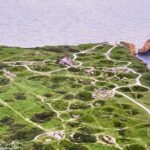
Now you turn toward Pointe du Hoc, famous for its sheer approach. Here the tour sets the scene with the key detail: German long-range gun batteries were placed on top of 100-foot-high cliffs, creating fire that could reach wide areas. Standing near the terrain (even in a brief visit) you start understanding why this wasn’t a simple “walk up and win” problem.
Your guide follows the tracks of the American Rangers, led by Col. James Rudder, who were tasked with destroying those guns. That mission is one of those WWII stories where you don’t need extra drama; the terrain and the goal do the work.
Then it’s on to Omaha Beach, presented as the worst place to be on June 6. If Saving Private Ryan was your entry point, this stop helps you sort what’s cinematic versus what’s factual. You’ll visit the portion of the beach depicted in the film’s opening scene, and the tour uses that as a way to explain what went wrong and how outcomes differed from Utah.
This is one of the strongest parts of the day for many people because it’s also where you get perspective. Omaha isn’t just described as dangerous—it’s explained through units involved, missteps and challenges, and the contrast with other landing zones. I like that the tour doesn’t stop at tragedy. It moves from problems to solutions, highlighting how initiative, determination, and leadership helped troops succeed despite chaotic conditions.
Practical tip: Bring a lens cloth and a water bottle habit. It’s a long day, and the combination of beach air and constant looking can turn a “quick photo stop” into a photo marathon if you’re not careful.
Colleville-sur-Mer American Cemetery: space, scale, and time to pay respects

After the beaches and gun positions, the route shifts into a slower, more grounded emotional register with the Cimetiere Americain de Colleville-sur-Mer. The cemetery overlooks Omaha Beach, so you’re literally processing two things at once: the site of the landing and the lasting cost of it.
The tour frames the site as more than a memorial wall. It covers more than 170 acres and holds more than 9,300 men and women buried there. You also learn that more than 1,500 names are engraved in the wall of the missing.
This stop is often what makes people feel the day didn’t just become “history tourism.” The scale is what hits you—long sightlines, the quiet, and the sense that you’re walking through the aftermath of choices made by real people with real families.
You’ll also have time here as the tour’s last major visit, which matters. You don’t want to sprint through it. You want a chance to stand, read, and move at your own pace.
A consideration: Since this is a cemetery, you’ll want to be mindful of quieter behavior. If your group has someone who finds big emotional settings hard, you’ll be glad this stop is built to allow a slower rhythm rather than a rushed final sprint.
WN 60 Widerstandsnest 60: climbing into the bunker complex for the best Omaha views

The final major battlefield stop is WN 60 (Widerstandsnest 60), described as the best view over Omaha Beach. This is where the tour turns tactical again. You’ll learn how the German strongpoint became the first bunker complex taken by the Allies, and you’ll see original trenches on-site.
Then comes the hands-on part many people love: you can climb into machine-gun and mortar positions. Even if you don’t go all the way up, being close to the angles and firing points helps you understand what “cover” and “sightlines” meant in the battle. It also explains why the Allies needed more than numbers—they needed to locate and neutralize these fixed points.
This stop also helps tie the story together. You’ve seen Utah, you’ve seen Pointe du Hoc, you’ve walked Omaha, and now you’re looking at a piece of the German defensive system from the inside out. The day feels more complete as a result.
Practical tip: Wear shoes with real grip. You’ll likely spend more time looking up and stepping around than you expect, especially if the view motivates everyone in your group to take extra photos.
You can also read our reviews of more private tours in Mont St Michel



Price and value: what $915.64 gets your group of up to 5

At $915.64 per group (up to 5), this tour is priced for people who want more than a generic “see the highlights” day. The big value comes from two things stated clearly in the tour format: private transportation and a private guide. That means you’re not spending hours stuck behind other groups, and you’re not stuck hearing the same short version of the story no matter what your interests are.
If you book with a full group, the per-person cost becomes much easier to swallow. Even if it isn’t cheap, the pricing can make sense when you consider what you’re paying for: time with a guide who connects multiple sites (not just one), plus the ability to ask questions and slow down at the stops that matter to you.
The other value point is flexibility around learning. The tour notes that museum visits are not part of the standard plan, but an exception can be made after consultation. That’s useful if you have one specific museum you want to add without turning the whole day into a ticket-and-line management exercise.
A balanced note: The day is long, and it’s not built around a sit-down lunch. If you hate long days or you need a guaranteed meal break, you’ll want to plan ahead (or arrange your own lunch outside the tour).
What the day feels like hour to hour (and how to prepare)

You should expect a full 8 to 10 hours from start to finish, and the tour returns to the meeting point. The tour is designed as a sequence: begin with airborne-linked places, connect into beach landings, then finish with cemetery and bunker positions.
You’ll also have bottled water included, which sounds small until you’re six hours into Normandy summer or winter weather with everyone thirsty.
A couple more practical points you’ll want to keep in mind:
- The tour is offered in English, so you’ll get the explanations and historical context without translation lag.
- It’s a mobile ticket experience, which makes day-of logistics simpler.
- Pickup is offered, but the exact rendez-vous point is communicated after booking, so check your confirmation message carefully.
My advice to make it smoother: wear layers. The coast can shift from warm to cool fast, and you’ll be walking between sites more than sitting in a dark vehicle. Also bring a small notebook or use your phone notes—when your guide points out a detail (like the DMC tank story or a specific unit connection), you’ll want to remember it for later stops.
Should you book this American landing beaches tour?

If you want a Normandy WWII day that’s more than a scenic drive, I think this is a strong choice. The route covers the key American landing areas—Utah Beach, Omaha Beach, Pointe du Hoc, the American Cemetery, and WN 60—and it does it with a private guide approach that keeps the story connected from airborne missions to what the bunkers were doing.
Book it if:
- Your group cares about how the battle worked, not just where famous places are
- You want time for questions and the ability to go at a human pace
- You’ll appreciate a guide’s humor and photo-based storytelling style (Willem is a big part of why people rave about this day)
Skip it or plan carefully if:
- Your group needs a short day with minimal walking
- You absolutely want a museum visit built into the schedule (you’ll need to request an exception)
If you’re aiming for an unforgettable, grounded WWII experience with real context at every stop, this is the kind of tour that tends to leave people quiet on the drive back.
FAQ
How many people are in the group?
It’s a private tour/activity, and the group size is up to 5 people per group.
What does the tour cost?
The price is $915.64 per group (up to 5).
How long is the tour?
The duration is approximately 8 to 10 hours.
Is pickup available?
Yes, pickup is offered. The specific pickup or rendez-vous point is discussed and communicated in your tour confirmation.
Where does the tour start and end?
The tour starts at Bar-Pmu 3 Rue Koenig, 50480 Sainte-Mère-Église, France, and it ends back at the same meeting point.
What’s included in the price?
Bottled water and private transportation are included.
Is lunch included?
No, lunch is not included.
Are museum visits included?
Museum visits are not part of the standard tour, but an exception can be made after consultation.
Is the tour in English, and do I get a ticket on my phone?
The tour is offered in English, and you receive a mobile ticket.
What is the cancellation policy?
There is free cancellation. You can cancel up to 24 hours in advance for a full refund. Changes made less than 24 hours before the start time are not accepted.