REVIEW · VERSAILLES
Versailles, Gardens & Hamlet: Full-Day Guided Small-Group Tour
Book on Viator →Operated by Alistair Douglas · Bookable on Viator
Versailles is bigger than it looks on postcards. This full-day small-group tour is built around how the Sun King’s world was staged: palace power at your pace, French garden geometry, and a surprising countryside-style escape with Marie-Antoinette’s hamlet. I love that it mixes guided storytelling with time to explore, and you’ll get a plan that helps you avoid the worst “where do we go next?” moments. One consideration: there’s real walking, including a downhill stretch that isn’t friendly for strollers and small kids.
Two things I especially like: first, the tour is led by native English guide Alistair Douglas, and his style is built for hearing every detail without feeling rushed. Second, the garden route includes the kind of stops you can’t fully appreciate on your own—Mirror Basin, Apollo imagery, and the Bosquet d’Encelade myth stop—plus the hamlet and Petit Trianon portion. My only drawback is that lunch and snacks aren’t provided, so plan for food breaks rather than assuming it’ll be handled for you.
In This Review
- Key highlights to know before you go
- Why Versailles Works Best in a 10-Person Max
- Starting at Grille d’Honneur: Louis XIV’s Palace Comes Into Focus
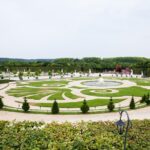
- André Le Nôtre’s Formal Gardens: Symmetry, Geometry, and Big Views
- Orangerie, Latona Fountain, and the King Who Used Design as Power
- Grand Canal, Mirror Basin, and the Best Photo Backdrops
- Ballroom Grove to Apollo Fountain: Myth, Theater, and Sun-King Symbolism
- Bosquet d’Encelade and Colonnade Grove for a Calmer Side of the Grounds
- Petit Trianon, Marie-Antoinette’s Hamlet, and That Pastoral Escape
- Hall of Mirrors and the Timed-Entry Palace Plan
- Price, Pace, and Practical Tips for a Smooth 6–7 Hours
- Should You Book This Versailles Small-Group Tour?
- FAQ
- How long is the Versailles Gardens & Hamlet tour?
- How big is the group?
- Is the tour offered in English?
- Do I enter the Palace of Versailles with a guided tour?
- Is Marie-Antoinette’s hamlet included?
- Are Versailles gardens and fountains included?
- Is there a hop-on hop-off train during the day?
- Why do you ask for a mobile phone number?
Key highlights to know before you go
- Max 10 guests means you can actually ask questions and move at a human pace
- Timed entry to the Palace of Versailles helps you skip long queue stress for your self-guided time
- Fountain shows in season (weekends, April–October) are built into the gardens admission
- André Le Nôtre’s formal garden design is explained as you see it—symmetry makes more sense
- Hop-on hop-off train ticket helps you connect between garden sights efficiently
- Alistair Douglas’s storytelling turns architecture and gardens into something you remember
Why Versailles Works Best in a 10-Person Max
Versailles can feel like a controlled chaos machine. This tour helps a lot because it caps the group at 10 travelers, so the experience stays personal instead of “follow the line and hope you hear something.” You start at 9:30 am, and you’re looking at about 6 to 7 hours, which is long enough to enjoy the place without turning it into a sprint.
I like that you’re not just shuttled from one headline sight to the next. You get frequent stops in the gardens, and the pace is designed for explanation plus breaks, including time built into the schedule for refreshments and restroom stops. It also matters that the guide is a native English professional—clear speech and quick answers keep the day moving.
One practical note up front: this is a moderate fitness day. There’s a 1.5-mile walk that is downhill, and it’s not suitable for strollers or small children (the guidance is +7 years old only). Inside the Palace, strollers aren’t permitted, so if you’re traveling with a stroller, plan to adjust.
You can also read our reviews of more guided tours in Versailles

Starting at Grille d’Honneur: Louis XIV’s Palace Comes Into Focus
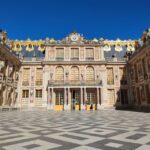
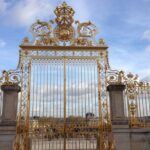
You begin with the Grille d’Honneur, the formal entrance area where Versailles instantly signals power. From here, the tour frames Louis XIV as the central force—how he turned Versailles from a hunting lodge into a royal palace, with construction starting in 1661 and taking over 50 years.
This is a smart opening because it sets your brain up for what you’ll see later. The Palace isn’t just “pretty rooms.” It’s a design system for authority: sightlines, ceremonial spaces, and art choices that all support the Sun King’s message.
You’ll get an admission ticket for this early stop, and the time is short—about 15 minutes—which keeps the day from dragging before you hit the gardens. If you’re the type who likes context before photos, this start angle helps you place what you’re about to walk toward.
André Le Nôtre’s Formal Gardens: Symmetry, Geometry, and Big Views
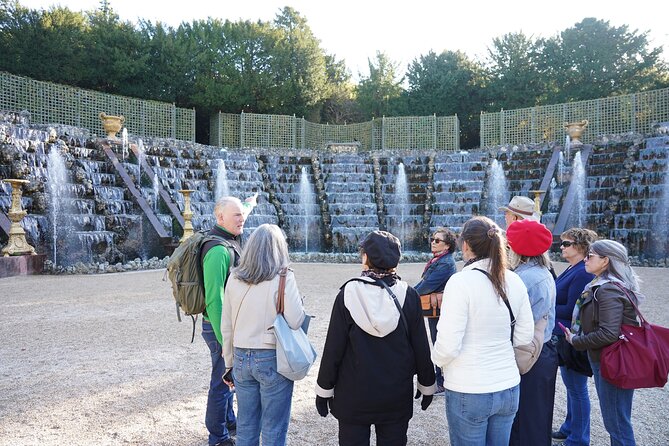
After the Palace kickoff, the tour shifts into the French garden design style created by André Le Nôtre. This is where Versailles stops being a “building visit” and turns into a design lesson you can physically walk through.
You’ll see the formal symmetry and geometric layouts that set the standard for the French garden aesthetic. The tour explains the 17th-century logic behind the design: straight lines as order, perspective as control, and water and stone used to amplify status. Even if you’re not a garden person, the way the route moves helps you notice how the gardens guide your eye.
You’ll spend about 15 minutes on this part, and it’s timed well—enough to understand the theme without feeling like you’re sitting through a lecture. If you’re traveling in peak season, the value here is obvious: you’re not wandering randomly across acres. You’re learning what to look for while you’re looking at it.
Orangerie, Latona Fountain, and the King Who Used Design as Power
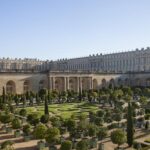
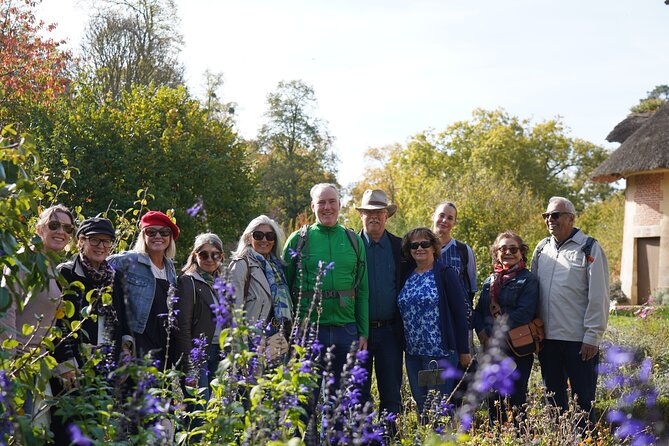
The L’Orangerie stop is one of the most practical “wait, that makes sense” garden moments. Louis XIV wanted exotic citrus fruits, and the Orangerie’s thick walls were built to protect delicate plants from freezing temperatures. It’s an architecture choice with a clear purpose, not just decoration.
Then comes the Latona Fountain, which uses symbolism as a political tool. Here, the tour points out how Louis XIV used architecture and art to assert divine authority—tying the visual language back to the idea of the king’s divine right to rule.
You’ll see these as distinct stops, with short guided time (roughly 10–15 minutes each), and admission included for both. The pacing matters: you get enough story to understand why these features exist, and then you move on before fatigue kicks in.
Tip: in Versailles, the best garden photos often depend on light. If your timing hits later in the day, you’ll still get great views, but the contrast on fountains and water can change—so keep your phone ready but don’t obsess over one perfect shot.
Grand Canal, Mirror Basin, and the Best Photo Backdrops
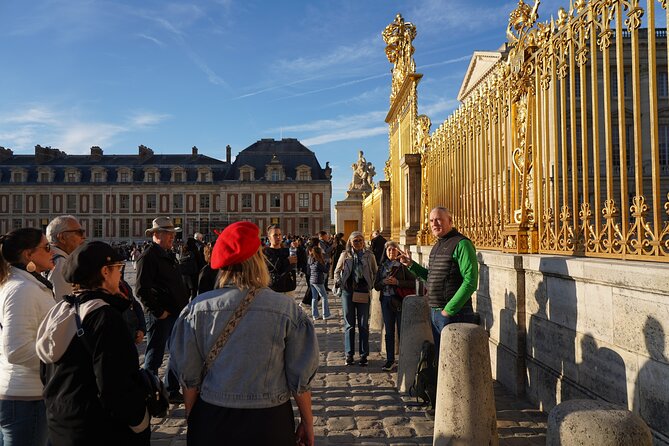
Next, you’re looking out from the Palace area toward the Grand Canal, where the tour highlights classical French formal garden style: symmetry, order, and that constant balance between nature and architecture. This is a broad view moment, and it’s where the scale of Versailles becomes undeniable.
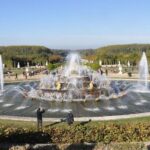
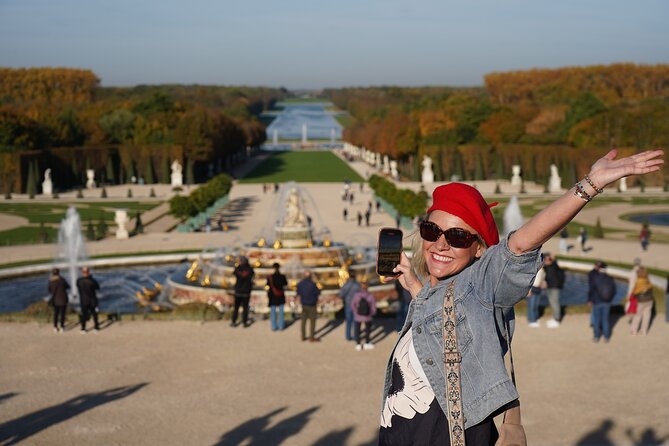
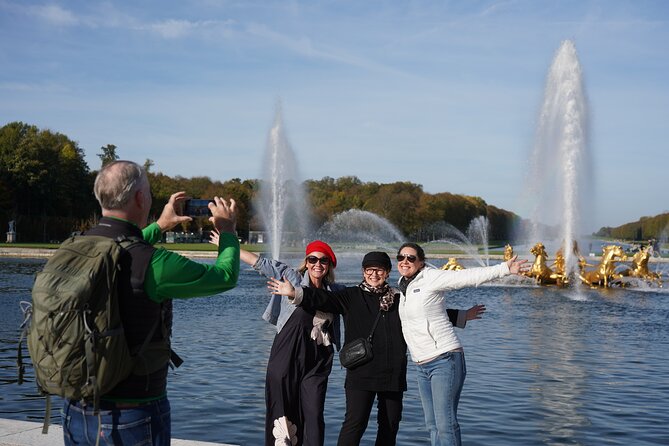
Right in front of the canal, the tour brings you to Bassin du Miroir (Mirror Basin). This is one of the smartest design tricks in the gardens: a rectangular pond positioned to reflect sky, trees, and palace architecture. Even if you’ve seen Mirror Basin photos online, it hits differently when you stand near it and the reflection lines up with the surrounding geometry.
The Mirror Basin stop is about 20 minutes, and admission is free for that specific feature. That timing is helpful because it gives you a little breathing room. You can take photos, watch how the water catches light, and let the setting sink in without feeling like you’re being rushed.
If you care about photos, this is a good place to slow down. The tour’s story context makes it easier to appreciate what you’re photographing, not just what you’re looking at.
A few more Versailles tours and experiences worth a look




Ballroom Grove to Apollo Fountain: Myth, Theater, and Sun-King Symbolism
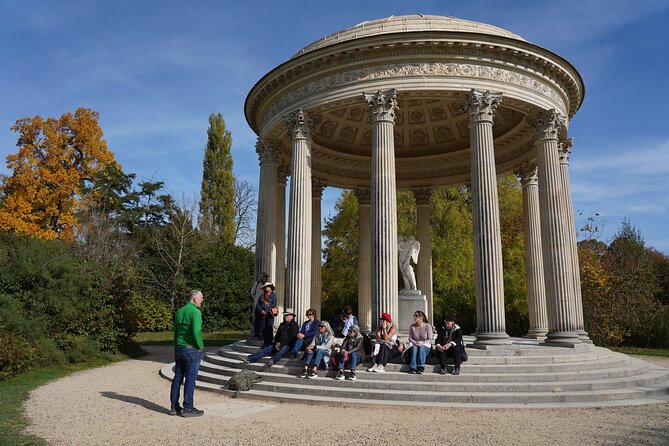
The route keeps the energy moving with the Ballroom Grove (La Salle de Bal). This is tied to Louis XIV’s entertaining life—an outdoor space where dance and the arts mattered. The gardens here include elaborate landscaping and a fountain that acted as a kind of stage backdrop. The tour connects the imagery to Apollo and the Sun King theme, which helps you understand why these garden rooms feel like theater.
Then you reach the Apollo Fountain (Bassin d’Apollon), one of the most iconic visuals in Versailles gardens. You’ll see Apollo rising from the waters in a chariot drawn by four horses, with sea creatures and allegorical sculpture around it. The story link is clear: this isn’t random mythology art—it’s a public statement about the Sun King’s divine association.
You’ll spend about 20 minutes at the Ballroom Grove and 10 minutes at Apollo. Short stops can feel limiting, but in Versailles, they’re efficient. You get the essentials plus enough story to make the myth meaningful.
One thing I like about this approach: you’re not just collecting stops—you’re building a theme across them. From design-as-power to myth-as-politics, it clicks faster when the route follows a logic.
Bosquet d’Encelade and Colonnade Grove for a Calmer Side of the Grounds
Not every Versailles moment is about spectacle. The tour includes Bosquet d’Encelade, where Greek mythology gets woven into the garden design. Named for the giant Enceladus, it features a central fountain with sculptures showing Enceladus’ defeat by Athena and Zeus. It’s a story of divine order vs. chaos, presented through sculpture and water.
If you want a mental reset, this stop can do it. The walk feels slower here because the setting encourages you to focus on details rather than scan for the next headline spot.
After that, you arrive at Colonnade Grove, described as a serene retreat with classical columns, fountains, and carefully tended plantings. The idea is courtly escape—relief from the formalities of palace life.
You’ll spend about 20 minutes at Colonnade. That’s long enough to feel the change of pace, especially after the more dramatic fountain stops. And it’s a good reminder that Versailles gardens aren’t only for spectacle—they’re also for quiet social life.
Petit Trianon, Marie-Antoinette’s Hamlet, and That Pastoral Escape
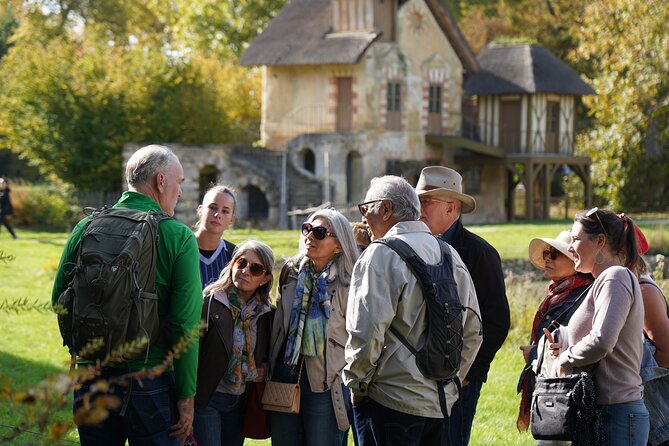
Here’s where the day turns from monarchy theater to something more human-scale. The tour includes Marie-Antoinette’s hamlet, with a guided visit, and it also covers the Petit Trianon area with about 1 hour for exploration.
The hamlet experience is built around her desire to get away from court life. You’ll see the idea of a pastoral village—rustic buildings, farm elements, and a designed “simple life” atmosphere reminiscent of an Austrian peasant setting. It can feel like Versailles doing costume and comfort at the same time: a private world shaped to match her tastes.
The tour time on Petit Trianon matters because it’s part of the story, not just a checkpoint. The palace retreat connects the hamlet to a broader pattern: escape from rigid ceremony, in a carefully controlled royal way.
This is also where some of the most memorable moments tend to happen. The tour’s guide style keeps the mood light, and that helps if you’ve had your fill of formal rooms and want something that feels more like a lived setting.
Hall of Mirrors and the Timed-Entry Palace Plan
The Palace of Versailles visit is handled smartly. You don’t spend the whole time stuck in guided narration. Instead, you get a timed entry ticket for self-guided exploring, and the guide ends the tour with an overview of key highlights.
The guide’s orientation covers the Royal Chapel, Marie-Antoinette’s bedchamber, the State Apartments, and the Hall of Mirrors, then you’re off to explore on your own. That’s a great balance for most people. You get expert framing first, and then you control your pace once inside.
The timed entry is about 1 hour 15 minutes of self-guided time. That’s enough to see the major rooms without feeling like you need to read every label to justify your ticket. And timed entry genuinely helps with the crowd pressure, which is the #1 reason Versailles can feel exhausting instead of inspiring.
A practical tip: choose your priorities before you go in. With limited self-guided time, you’ll enjoy the day more if you have a small list: one “must see” room, one “I’m here for the art” room, and one “I want to wander” zone.
Price, Pace, and Practical Tips for a Smooth 6–7 Hours
At $131.87 per person, you’re paying for a lot more than a guide walking next to you. Your ticket set includes: the Versailles gardens admission with guided tour (and fountain show access weekends, April–October), the Palace timed entry, Marie-Antoinette’s hamlet ticket and guided tour, the hop-on hop-off train ticket in the gardens, and the guided access around major garden features. The small group cap (max 10) also protects value because you’re not fighting for attention.
The pacing is thoughtful: short guided stops in the gardens, then longer time blocks where they matter—like 1 hour for Petit Trianon and 1 hour 15 minutes inside the Palace. It adds up to a full day that still leaves room to breathe.
What you should plan for:
- You arrange your own transportation to Versailles.
- Snacks and lunch aren’t included, so bring a plan for breaks.
- Pack comfortable walking shoes. The day involves meaningful walking.
- Rain jackets aren’t included, so check weather and bring your own if needed.
Also, keep your phone handy. The tour requires your mobile number (including country code) so tickets can be sent if you arrive late and need help rejoining. It’s a small admin detail that can save a stressful moment.
Should You Book This Versailles Small-Group Tour?
I’d book this if you want a Versailles day that feels guided without feeling trapped. The mix of French formal gardens, major fountain symbolism, Marie-Antoinette’s hamlet, and a timed-entry Palace plan makes it a strong value for first-timers. It’s also a great fit if you care about context—Alistair Douglas’s storytelling is a major part of why people leave feeling the visit “clicked.”
Skip it (or consider another option) if you’re chasing total freedom with no schedule and don’t want to walk a downhill route and follow a set day flow. This is a structured experience, and it rewards you most when you’re ready to spend a full day on foot.
If your goal is to see Versailles in a way you can actually remember—buildings plus gardens plus the hamlet—this is a solid choice.
FAQ
How long is the Versailles Gardens & Hamlet tour?
It runs about 6 to 7 hours. The tour starts at 9:30 am and ends at the Palace of Versailles (Place d’Armes).
How big is the group?
The tour has a maximum of 10 travelers, which keeps it small-group rather than crowded sightseeing.
Is the tour offered in English?
Yes, it’s offered in English.
Do I enter the Palace of Versailles with a guided tour?
You’ll get a timed entry Palace ticket for self-guided exploring. Alistair Douglas provides an overview of the key highlights before you go in.
Is Marie-Antoinette’s hamlet included?
Yes. The tour includes Marie-Antoinette’s hamlet ticket and a guided tour, plus time at Le Petit Trianon.
Are Versailles gardens and fountains included?
Yes. You get Versailles gardens admission with a guided tour, and fountain shows are included on weekends during April–October.
Is there a hop-on hop-off train during the day?
Yes. A hop-on hop-off train ticket is included, and it’s used for getting around in the gardens area.
Why do you ask for a mobile phone number?
You’re asked to provide your mobile number (with country code) so the operator can contact you and send tickets if you arrive late. If they only have the operator’s number, they may not be able to reach you directly to help you rejoin.